
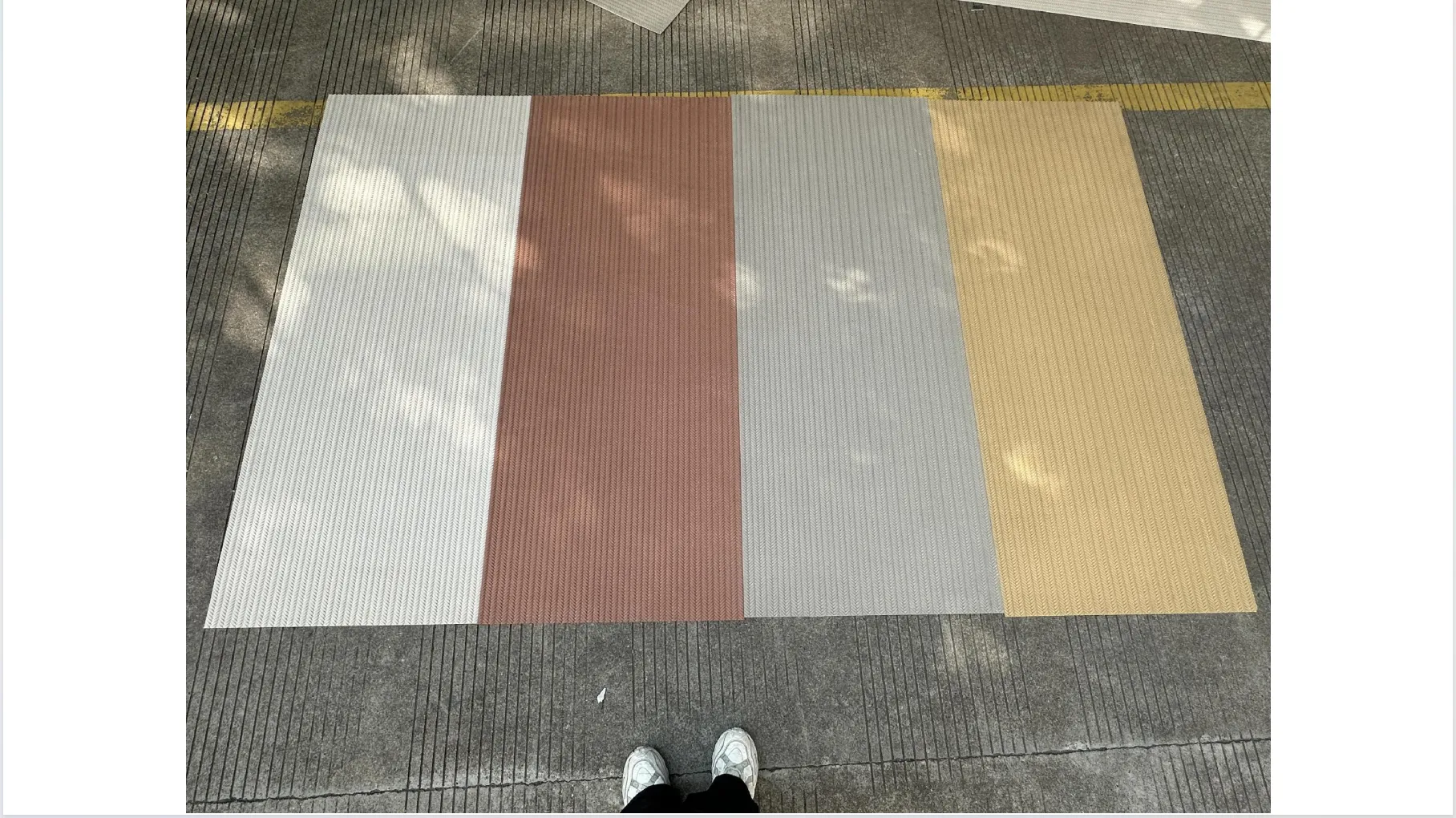
We've all been there: You scroll through a home decor website and fall in love with a stunning image of a living room accented with "lunar peak silvery" panels. The caption gushes about its "modern elegance" and "subtle metallic sheen." You click "add to cart," imagining how it'll elevate your space—only to have your heart sink when the panels arrive, looking more like dull gray plastic than the luminous silver in the photo. What happened? Chances are, that image was a stock photo: staged in a studio with perfect lighting, edited to boost saturation, and completely disconnected from how the material behaves in *your* home's unique light, with *your* furniture, and alongside *your* existing decor.
For MCM flexible stone—a line of lightweight, durable, and versatile cladding materials—this problem is especially pronounced. Unlike traditional stone or wood, MCM (Modified Composite Material) blends natural elements with modern technology to create products that are both strong and flexible, making them ideal for everything from accent walls to exterior facades. But with options like "travertine starry red," "weaving (khaki)," and "wood concrete board," the variety is overwhelming. How do you choose between "travertine vintage gold" and "boulder slab (vintage gold)" when their online thumbnails look nearly identical?
Homeowners often rely on two flawed strategies: relying on generic catalog descriptions ("rustic," "sleek," "organic") or visiting showrooms, which might only have a small sample of the material—too tiny to visualize on a full wall. Neither approach captures the material's true essence: the way its texture catches the morning light, how its color shifts from day to night, or how it complements (or clashes with) your flooring. This is where real photos step in—not the polished, airbrushed kind, but the unfiltered, in-context kind: woven real photos, travertine real photos, wood concrete board real photos, and more.
Real photos—specifically, high-quality, unedited images of MCM flexible stone products installed in real homes, offices, or commercial spaces—are the secret weapon homeowners need. These aren't just snapshots; they're carefully curated visuals that showcase the material in action: up close to highlight texture, in full rooms to show scale, and in different lighting to reveal color accuracy. Let's break down exactly how woven real photos, travertine real photos, and others transform the decision-making process.
One of the biggest challenges with MCM flexible stone is conveying texture. Is "weaving (jacinth)" a tight, structured weave that feels crisp, or a loose, billowy pattern that adds softness? Does "rough granite stone (medium grey)" have a gritty, hand-chiseled texture, or is it more subtly textured, like weathered stone? Stock photos flatten texture, making even the most tactile materials look smooth and one-dimensional. Woven real photos, however, zoom in on the details: the way threads cross over each other, the slight variations in thickness, the way light catches the peaks and valleys of the weave. Similarly, travertine real photos highlight the natural pits and veins of the stone—features that add character but might be deal-breakers if you prefer a uniform look. For example, a travertine real photo of "travertine (starry blue)" might reveal tiny, shimmering flecks embedded in the stone, a detail you'd never notice in a generic catalog image.
Take wood concrete board, for instance. A stock photo might show a flat, gray surface that looks like standard concrete with a wood grain sticker. But wood concrete board real photos tell a different story: they capture the material's hybrid nature, where the warmth of wood grain (complete with knots and subtle color variations) merges with the industrial edge of concrete. You can see how the texture is smooth to the touch in some areas, slightly rough in others—details that matter if you're considering it for a kid's playroom wall (rough might mean splinters!) or a kitchen backsplash (smooth is easier to clean).
Color is tricky. Lighting, screen settings, and editing tools can all distort how a material's hue appears. "Rusty red" might look like a deep, earthy crimson on a website, but in reality, it could lean orange under warm incandescent bulbs or purple in natural daylight. "Lime stone(beige)" might read as bright white in a studio photo but appear soft and creamy in a room with north-facing windows. Travertine real photos solve this by showing the material in *real* spaces: a "travertine (beige)" panel in a kitchen with under-cabinet lighting, a "rona yellow" accent wall in a sunlit bathroom, or "golden travertine(white golden)" in a dimly lit hallway. These photos don't just show the color—they show how it *behaves*.
Consider "lunar peak golden," a popular MCM option. A stock photo might amp up the gold tones to make it look luxurious, but a real photo could reveal that its "golden" hue is actually a soft, (champagne) with hints of beige—much more versatile for pairing with other neutrals. Similarly, woven real photos of "weaving (grey)" can show whether the grey is cool (with blue undertones) or warm (with brown undertones)—a detail that determines if it will clash with your existing blue sofa or complement your warm wood floors.
Even if you love the texture and color of a material, you need to know if it works in *your* room. Will "gobi panel"—inspired by desert landscapes—feel too bold for a small bathroom, or will it add the perfect amount of drama? Is "foamed aluminium alloy board (vintage silver)" sleek enough for a modern kitchen, or does it read too retro? Real photos answer these questions by showing MCM flexible stone in context: on accent walls, backsplashes, fireplace surrounds, even exterior patios. Woven real photos, for example, might showcase a "weaving (beige)" panel used as a headboard backdrop in a bedroom, paired with linen bedding and a jute rug—helping you visualize how it would soften a space. Travertine real photos could feature "travertine (starry green)" in a home office, mounted above a wooden desk with brass accessories, proving it's not just for "tropical" themes but works in contemporary settings too.
Wood concrete board real photos are particularly helpful here. One photo might show the material used as a kitchen island countertop, paired with white marble and black hardware for a high-contrast look. Another could feature it as a bedroom accent wall, layered with string lights and a gallery of wooden frames, highlighting its versatility. These visuals turn abstract ideas ("I want a rustic-modern kitchen") into concrete plans ("I'll use wood concrete board for the island and travertine (vintage gold) for the backsplash").
To illustrate just how powerful real photos are, let's dive into a few MCM flexible stone categories and how their real photos make decision-making easier. The table below highlights key materials, their standout features, and how real photos bring them to life:
| Material Type | Key Feature | Real Photo Highlight | Best For... |
|---|---|---|---|
| Travertine Series (e.g., "travertine (starry red)") | Natural stone texture with unique "starry" flecks; lightweight and moisture-resistant | Travertine real photos zoom in on fleck distribution (some are sparse, others dense) and show how the stone looks wet (e.g., near a shower) vs. dry | Bathroom walls, kitchen backsplashes, feature walls in high-humidity areas |
| Wood Concrete Board | Blends wood grain warmth with concrete durability; eco-friendly and easy to install | Wood concrete board real photos showcase grain patterns (straight vs. swirling) and edge details (smooth vs. rough-cut), plus how it ages over time (minimal fading!) | Bedroom accent walls, living room fireplaces, home offices |
| Weaving Series (e.g., "weaving (khaki)") | Textured, fabric-like panels that add softness and dimension; flexible for curved surfaces | Woven real photos capture the weave density (tight = structured, loose = cozy) and how light filters through the material (subtle shadows add depth) | Headboards, dining room feature walls, ceiling accents |
| Lunar Peak Series (e.g., "lunar peak black") | Metallic, moon-like finish with a smooth, polished texture; modern and bold | Real photos show how the metallic sheen changes with lighting (matte in low light, reflective in bright light) and pairs with other metals (brass, chrome) | Modern entryways, home theaters, commercial lobbies |
Now that you know why real photos matter, how do you actually use them to plan your MCM flexible stone project? Start by seeking out brands or suppliers that prioritize authentic visuals—look for galleries labeled "real photos" or "installation examples," not just "product shots." When browsing, ask yourself: *Does this photo show the material in a room similar to mine?* (A kitchen with natural light vs. a basement with recessed lighting.) *Are there close-up shots of the texture?* (Zoom in—if the image pixelates, it might be a stock photo.) *Do they include photos of the material paired with other decor?* (This helps with ideas!)
Don't be afraid to request specific photos, either. If you're considering "travertine (starry orange)" for a living room with a navy sofa, ask the supplier for travertine real photos of that exact color in a room with blue accents. Most reputable MCM brands will happily share unedited images from past installations—after all, they want you to love the product as much as they do.
Finally, create a mood board using real photos. Paste travertine real photos, wood concrete board real photos, and woven real photos into a document or app like Pinterest, and add images of your existing furniture, paint swatches, and lighting fixtures. Suddenly, you'll see which materials harmonize and which clash. That "rust square line stone" that looked great alone might feel too busy next to your patterned rug—but "slate veil white" from the real photos? It might be the calm, neutral anchor your space needs.
Renovating your home should be exciting, not stressful. MCM flexible stone offers endless possibilities for creating spaces that reflect your style, but only if you can trust that the material you choose will look and feel the way you imagined. Woven real photos, travertine real photos, wood concrete board real photos, and other authentic visuals aren't just marketing tools—they're your renovation co-pilot, guiding you from "I'm not sure" to "This is perfect." So the next time you're scrolling for MCM materials, skip the stock photos and seek out the real deal. Your future self—standing in a room that looks *exactly* like you dreamed it would—will thank you.
Recommend Products












