
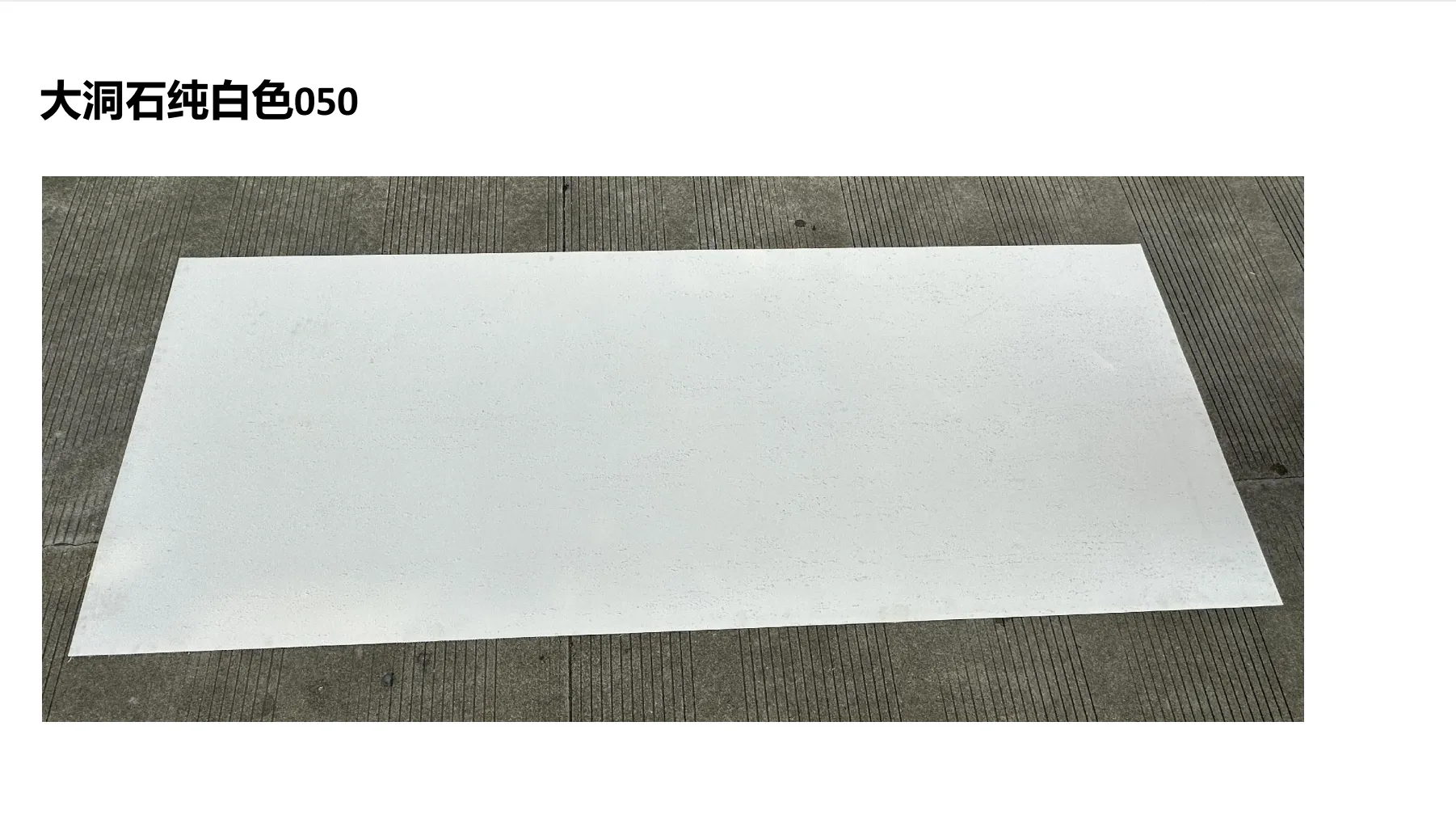
A huge travertine accent wall can completely transform the character of any interior space. The natural beauty of travertine—formed over centuries by mineral-rich spring deposits—creates an atmosphere of timeless elegance that few other materials can match. When you choose to incorporate travertine into your design, you are investing in a material that carries both geological history and architectural prestige.
Large-format travertine panels create an uninterrupted visual flow that smaller tiles simply cannot achieve. When designing a statement wall in a living room, hotel lobby, or commercial space, the scale of the stone surface matters significantly. The continuous veining patterns and natural color variations in travertine become more pronounced and impactful when viewed across a expansive surface area.
Traditional natural travertine, while undeniably beautiful, presents considerable challenges when applied to large wall surfaces. The weight of solid stone slabs requires substantial structural reinforcement. Installation demands specialized teams with expertise in handling heavy materials. The logistical complexity and cost can quickly escalate, making ambitious projects financially prohibitive for many property owners.
Modified Clay Material (MCM) technology has revolutionized how designers and architects approach stone wall installations. MCM flexible stone combines the authentic appearance of natural travertine with engineered properties that overcome the limitations of traditional stone cladding.
These innovative panels feature a genuine stone veneer bonded to a fiber-reinforced composite backing. The result is a product that maintains the visual and tactile qualities of natural travertine while weighing only a fraction of solid stone. Panels typically range from 1.5 to 5 millimeters in thickness, allowing installation on surfaces that could never support conventional stone cladding.
When planning a huge travertine accent wall, structural engineering often becomes the primary concern. Solid stone can weigh between 40 and 80 kilograms per square meter, necessitating steel reinforcement, specialty anchors, and careful load distribution calculations. In contrast, flexible stone panels weigh approximately 3 to 8 kilograms per square meter. This reduction eliminates the need for structural modifications in most projects, opening possibilities for retrofitting existing buildings without invasive construction work.
Traditional stone installation requires skilled masons experienced in mortar application, joint alignment, and heavy material handling. A large accent wall project can take weeks to complete with conventional methods. MCM panels install using polymer-modified adhesives applied directly to prepared surfaces. The lightweight nature allows a smaller team to cover significant wall areas efficiently, reducing labor costs by up to 40 percent and shortening project timelines considerably.
Curved walls, columns, and arched surfaces present particular challenges for traditional stone cladding. Achieving a seamless travertine finish on these elements often requires expensive custom fabrication. The inherent flexibility of MCM panels allows them to conform to curved surfaces without cracking or delaminating. Designers can now specify travertine aesthetics for architectural features previously limited to paint or synthetic coverings.
Coloria Group offers a comprehensive range of MCM products specifically designed for large-scale wall applications. The MCM Big Slab Board Series provides expansive format panels that minimize visible joints, creating the seamless appearance essential for dramatic accent walls. These large-format panels come in dimensions reaching 1200 by 600 millimeters, allowing designers to cover significant surface areas with minimal interruption to the stone pattern.
For projects requiring specific aesthetic treatments, the MCM 3D Printing Series offers textured surfaces that add dimensional depth to accent walls. Linear grooves, wave patterns, and geometric textures transform flat surfaces into architectural features that capture light dynamically throughout the day.
The travertine collection from Coloria includes multiple color variations designed to complement diverse interior schemes. From warm beige and ivory tones to sophisticated silver and dramatic black variations, each option maintains the characteristic natural veining and texture that define genuine travertine. The product line includes options such as Travertine (Vintage Silver), Travertine (Starry Green), and Linear Travertine, providing designers with extensive creative flexibility.
A travertine accent wall serves as a natural focal point in living rooms, defining the space around entertainment areas or seating arrangements. The neutral earth tones typical of travertine complement both contemporary minimalist interiors and more traditional design schemes. When paired with directional LED lighting, the textured surface creates subtle shadow patterns that add dimensional interest throughout the day.
In commercial settings such as hotel lobbies, restaurant feature walls, and office reception areas, a large travertine installation communicates permanence and quality. The material's association with classical architecture lends credibility to hospitality brands seeking to establish a sophisticated identity. MCM panels make these high-impact installations accessible without the prohibitive costs associated with traditional stone cladding.
Successful integration of a travertine accent wall requires thoughtful material pairings. The natural warmth of travertine works beautifully alongside wood elements—whether flooring, furniture, or architectural details. Metal accents in brushed nickel or aged bronze provide contemporary contrast without competing with the stone's organic character.
Coloria's broader product range facilitates cohesive design schemes. Products such as the Bamboo Mat Board, Wood Grain Board, and Concrete Board series allow designers to extend natural material themes throughout a space while maintaining consistent quality and installation characteristics.
Durability represents a critical consideration for any wall cladding investment. MCM panels undergo rigorous testing for fire resistance, frost resistance, and UV stability. Laboratory evaluations confirm performance across temperature fluctuations and humidity variations, with expected service life reaching 80 years under normal conditions.
Maintenance requirements for flexible travertine panels remain minimal compared to traditional stone. The panels achieve Class 0 stain resistance, meaning common substances do not penetrate the surface. Routine cleaning with pH-neutral products maintains the appearance, while periodic application of penetrating sealer—typically every two to three years depending on environmental conditions—ensures continued protection against moisture absorption.
MCM manufacturing processes consume significantly less energy than traditional stone quarrying and processing. The reduced weight also translates to lower transportation emissions, contributing to improved project carbon footprints. Coloria's commitment to sustainable production aligns with green building certification requirements for projects pursuing environmental credentials.
Successful implementation begins with accurate measurement and surface assessment. While MCM panels eliminate structural reinforcement requirements, the substrate must be clean, dry, and reasonably level. Existing painted surfaces typically require primer application to ensure proper adhesive bonding.
Color selection should account for both existing interior elements and lighting conditions. Natural daylight reveals different characteristics of travertine surfaces compared to artificial lighting. Requesting physical samples allows accurate assessment of how specific colors and textures will appear in your particular environment.
Coloria Group provides comprehensive support throughout the specification process, offering technical guidance, material samples, and coordination with installation teams. Their extensive product catalog ensures designers can find precisely the right combination of color, texture, and format for any accent wall project, regardless of scale or complexity.
A huge travertine accent wall represents a significant design commitment—one that rewards careful planning with decades of visual impact. Modern MCM technology makes this commitment accessible to a broader range of projects than ever before, combining the authentic beauty of natural stone with engineered performance advantages that traditional materials cannot match.
Recommend Products












