There are few building materials that stop people in their tracks the way a full wall of
huge travertine does. The warm, honeyed tones, the soft pits and pores, the bold veins that run like rivers frozen in time — it carries a quiet grandeur that no painted finish can imitate. For architects, interior designers, and homeowners alike, huge travertine is more than a surface. It is a statement of permanence, a piece of the earth's own history brought into a building. This article explores why huge travertine has earned its magnificent reputation, and how modern flexible stone technology now makes it practical for projects of every scale.
What Makes Huge Travertine So Magnificent?
Travertine is a form of limestone that forms in hot springs and limestone caves, where mineral-rich water slowly releases calcium carbonate, building up layer after layer over centuries. The result is a stone marked by natural pits, delicate veining, and subtle color variation — no two slabs are ever the same. When that character is scaled up into large-format panels, the effect becomes truly magnificent. Instead of a busy patchwork of small tiles, a huge travertine wall reads as one continuous, flowing surface, letting the stone's natural movement take center stage.
The color palette is part of the appeal. Creamy whites, golden beiges, soft greys, and warm earth tones give huge travertine a versatility that suits both classic and contemporary architecture. In bright daylight the surface glows softly; under warm lighting it feels intimate and grounded. This is why designers keep returning to it for feature walls, hotel lobbies, and residential interiors where they want a space to feel alive rather than manufactured.
A Legacy That Spans Two Thousand Years
The magnificence of huge travertine is not a modern invention. Ancient Roman builders recognized it two millennia ago, quarrying massive blocks from the Tivoli region east of Rome to construct the Colosseum, the Pantheon, and countless aqueducts and public baths. The Colosseum, completed in 80 CE, still stands today with its exterior of travertine largely intact — a living proof of the stone's durability through earthquakes, wars, and centuries of weather. When you choose huge travertine today, you are connecting your project to that same lineage of craftsmanship and permanence.
Why Architects Love It Today
Modern architects value huge travertine for the same reasons the Romans did, plus a few new ones. Its natural texture adds depth and warmth to minimalist facades, while its neutral tones pair easily with wood, metal, and glass. Large-format panels reduce visible joints, creating cleaner, more seamless elevations that photograph beautifully. And because the stone ages gracefully, buildings clad in travertine only grow more characterful with time — a rare quality in an industry full of materials designed to be replaced.
The Practical Challenge of Real Stone
There is, however, a reason huge travertine was once reserved for grand monuments. Real stone slabs are heavy, expensive to transport, and demanding to install. They place significant load on walls and structures, and cutting or shaping them for curved surfaces is difficult and costly. For many residential and commercial projects, the logistics of natural stone simply do not add up — which is where modern material innovation changes the game.
The Modern Answer: MCM Flexible Stone
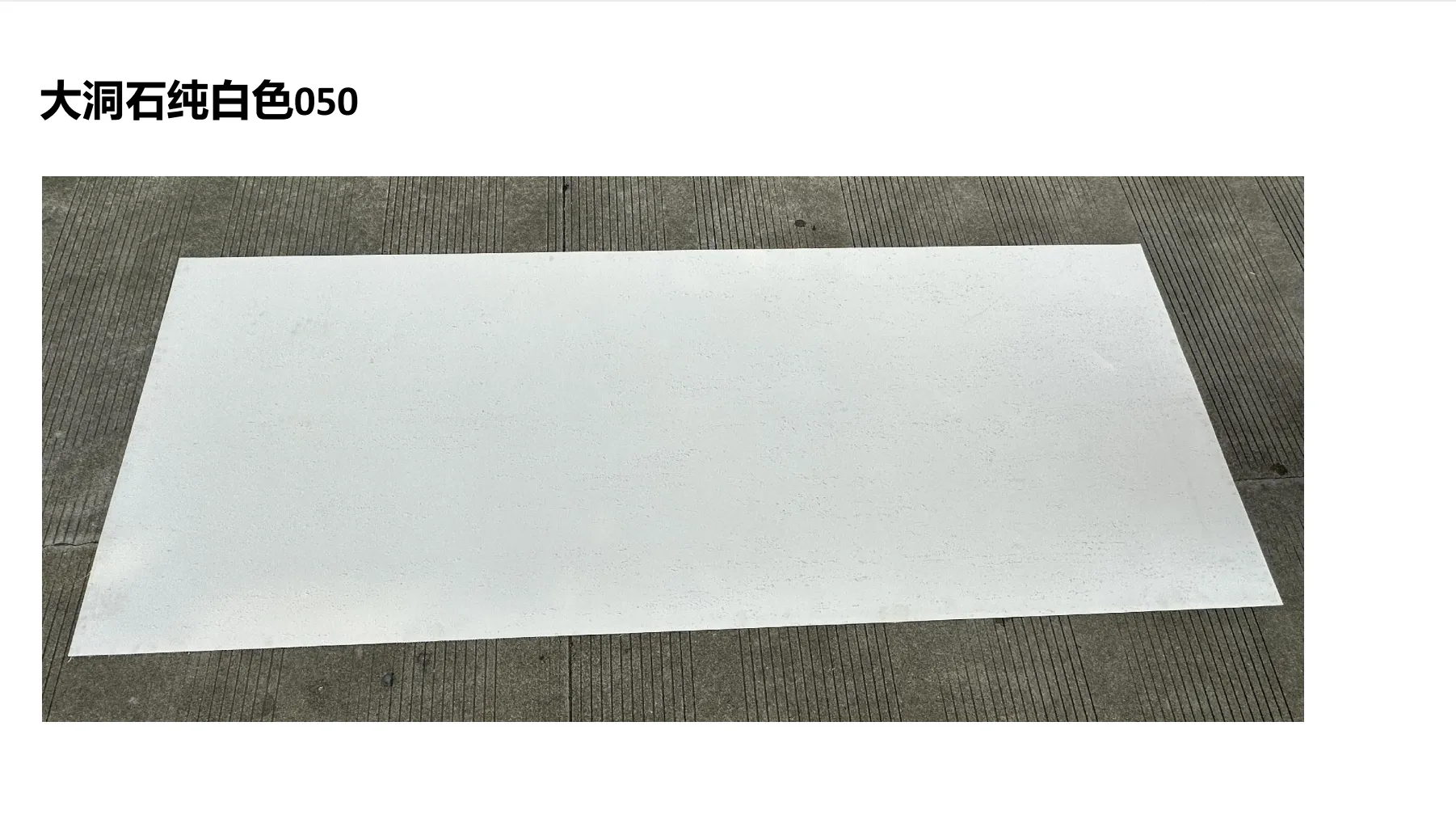
Modified clay material, or MCM, technology recreates the look and texture of natural travertine in a flexible, lightweight board. Coloria Group's
huge travertine panels, produced within the
MCM 3D printing series, capture the large and small pits, the veining, and the rough, historic character of natural travertine so faithfully that it is difficult to tell the difference at a glance. The advantages over real stone are substantial:
- Lightweight: Far lighter than natural stone, placing far less burden on walls — a major advantage for high-rise buildings and renovation projects where structural load matters.
- Flexible: The panels can bend to a degree, allowing them to wrap around columns, arches, and curved walls that would be impractical or impossible with rigid stone.
- Ultra-thin: At just a few millimeters thick, the panels save valuable space and are far easier to cut, carry, and install on site.
- Cost-effective: Lower material and installation costs make the magnificent look of huge travertine accessible to a far wider range of projects.
This is the essence of
MCM flexible stone: the timeless beauty of natural stone, delivered in a format that modern construction can actually use.
Where to Use Huge Travertine Panels
MCM huge travertine panels are suited to both interior and exterior applications. Common uses include exterior wall cladding for commercial buildings and villas, feature walls in hotel lobbies and offices, fireplace surrounds, and accent walls in living rooms and bedrooms. The flexibility of the material also makes it an excellent choice for columns, curved partitions, and other architectural details where real stone would require expensive custom fabrication.
Installation Tips for a Flawless Finish
Getting the best result from flexible stone panels comes down to a few simple practices. First, prepare the base properly: the wall should be clean, dry, and free of cracks, hollows, dust, and oil stains before any adhesive is applied. Second, use a dedicated flexible stone adhesive and apply it with a toothed trowel using the full-surface method rather than spot pasting, which can leave hollow areas behind. Third, mind the conditions — avoid installation in windy, rainy, or extremely hot or cold weather, and keep the surface out of direct sun for the first day after application. Following these steps will give you a smooth, durable finish that keeps its magnificent appearance for years.
Bringing the Magnificence to Your Project
Huge travertine has been admired for over two thousand years, and thanks to MCM technology, that admiration no longer has to stay out of reach. Whether you are an architect specifying a striking facade, a contractor looking for a practical cladding solution, or a homeowner dreaming of a warm, natural feature wall,
huge travertine panels from Coloria Group offer the look of natural stone without the weight, cost, or installation headaches. To learn more about available sizes, colors, and finishes, or to request samples for your next project, visit
Coloria Group's product page or contact the team directly. Together, we build the future — one magnificent surface at a time.