
Travertine has a way of making a building look instantly more considered. Its warm, earthy tones and naturally pitted surface have dressed everything from Roman amphitheatres to modern hotel lobbies. The catch has always been the format. Natural travertine slabs are heavy, expensive to transport, and awkward to install on anything but a flat, load-bearing wall. That is why the huge travertine maxi slab has become one of the most talked-about formats in facade and interior cladding. It delivers the full visual drama of natural travertine in panels large enough to run floor to ceiling, with almost no joints, but at a fraction of the weight and cost.
Large-format panels have quietly taken over modern architecture. Open-plan interiors, minimalist facades, and seamless design all reward surfaces with fewer interruptions. With a huge travertine maxi slab, the natural veining and pitted texture of the stone flow across the wall without being chopped up by grout lines every few hundred millimetres. The result is a cleaner, more expensive-looking finish that photographs well and reads as one continuous material.
Not every huge travertine slab is cut from natural stone. A growing share of the market is made from modified clay material, or MCM, a flexible building material that reproduces the look and texture of natural travertine stone. Coloria Group, a Foshan-based manufacturer founded in 2010, produces huge travertine panels in this format. The panels are built from modified clay that is moulded and coloured to imitate the pitted, layered surface of real travertine, then formed into large flexible sheets. Because the material is clay-based rather than quarried, the texture, colour, and holes of natural travertine are reproduced consistently from panel to panel, something natural stone can never guarantee.
The appeal of a huge travertine maxi slab is not just the size. It is the combination of properties that makes it practical where natural stone is not:
Because of these properties, huge travertine maxi slabs are used in places where natural stone is impractical:
Getting a good result comes down to preparation and the right adhesive. A few points worth passing to your installer:
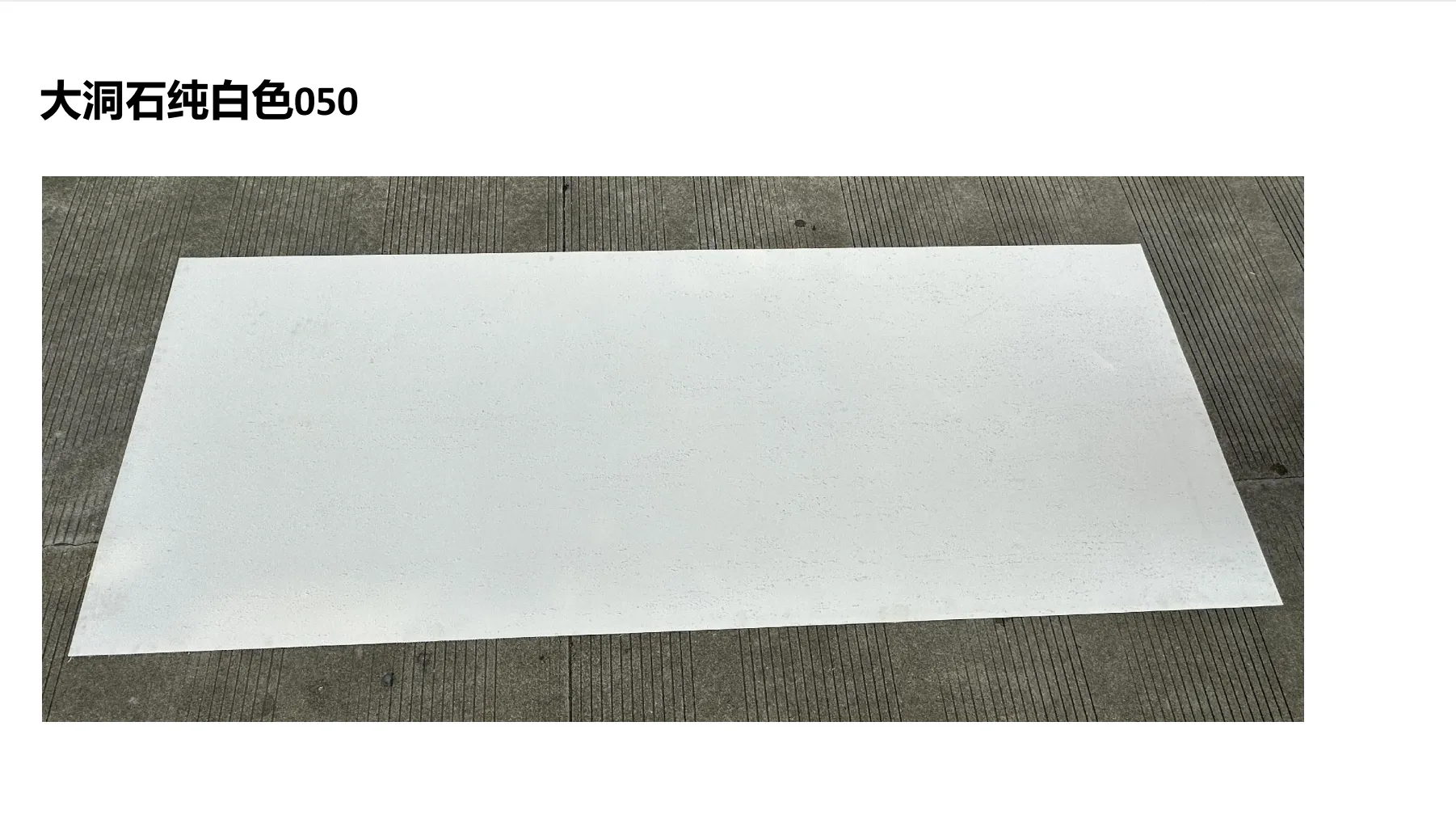
Before you order, think about colour and finish. Huge travertine panels are available in beige, pure white, concrete grey, and gradient yellow, among other tones. Beige is the classic choice for warm, Mediterranean interiors; white suits clean, minimalist spaces; grey works well on contemporary facades. Ask for samples and check the panel-to-panel consistency, the flexibility of the sheet, and the realism of the surface texture. It is also worth confirming the maximum panel size the supplier can produce, because that determines how seamless your wall can be.
Coloria Group is a one-stop supplier of building materials for residential and commercial projects, with a focus on MCM flexible building materials. The company's huge travertine panels are part of a wider range that includes MCM big slab boards, project boards, 3D-printed series, and flexible stone. With an office in Foshan and an agent in Saudi Arabia drawing on decades of local experience, Coloria supplies projects across the Middle East and beyond, and its team can advise on the right panel for your climate and application.
A huge travertine maxi slab gives you the look of natural travertine without the weight, cost, and installation headaches. It suits modern facades, hotel interiors, curved surfaces, and renovation work where natural stone is simply not practical. If you are planning a project and want to see how these panels look in person, the Coloria team can send samples and talk through sizes, colours, and pricing. Reach them at info@coloriaclaystone.com or +86-0757-82666790.
Recommend Products












