
Walk into any space—whether a soaring corporate lobby, a cozy home, or a historic museum—and what strikes you first? Often, it's the materials. The texture of a wall, the sheen of a countertop, the warmth of a wooden panel—these elements don't just fill a room; they shape how we feel in it. For decades, architects and designers have chased materials that blend beauty, durability, and creativity. Today, that chase has led to a groundbreaking intersection: MCM 3D printing technology, and at its heart, the stunning versatility of huge travertine and a universe of complementary materials that are redefining architectural possibility.
MCM, or Modified Composite Material, isn't your average building material. Imagine a material that's lightweight yet stronger than traditional stone, flexible enough to curve around a grand staircase, and eco-friendly to boot. That's MCM. What makes it revolutionary? It marries natural elements—like stone, wood, and minerals—with advanced polymers, creating a hybrid that's both sustainable and endlessly customizable. But MCM alone is just the canvas; 3D printing is the brush that turns that canvas into art.
The MCM 3D printing series takes this a step further. Traditional manufacturing often limits design to straight lines and simple shapes—if a material is heavy or brittle, intricate curves or custom textures become impractical. 3D printing shatters those limits. By layering MCM composites with precision, manufacturers can create everything from delicate, lace-like patterns to bold, geometric slabs that mimic the raw beauty of natural stone. Suddenly, a wall isn't just a barrier; it's a storytelling medium.
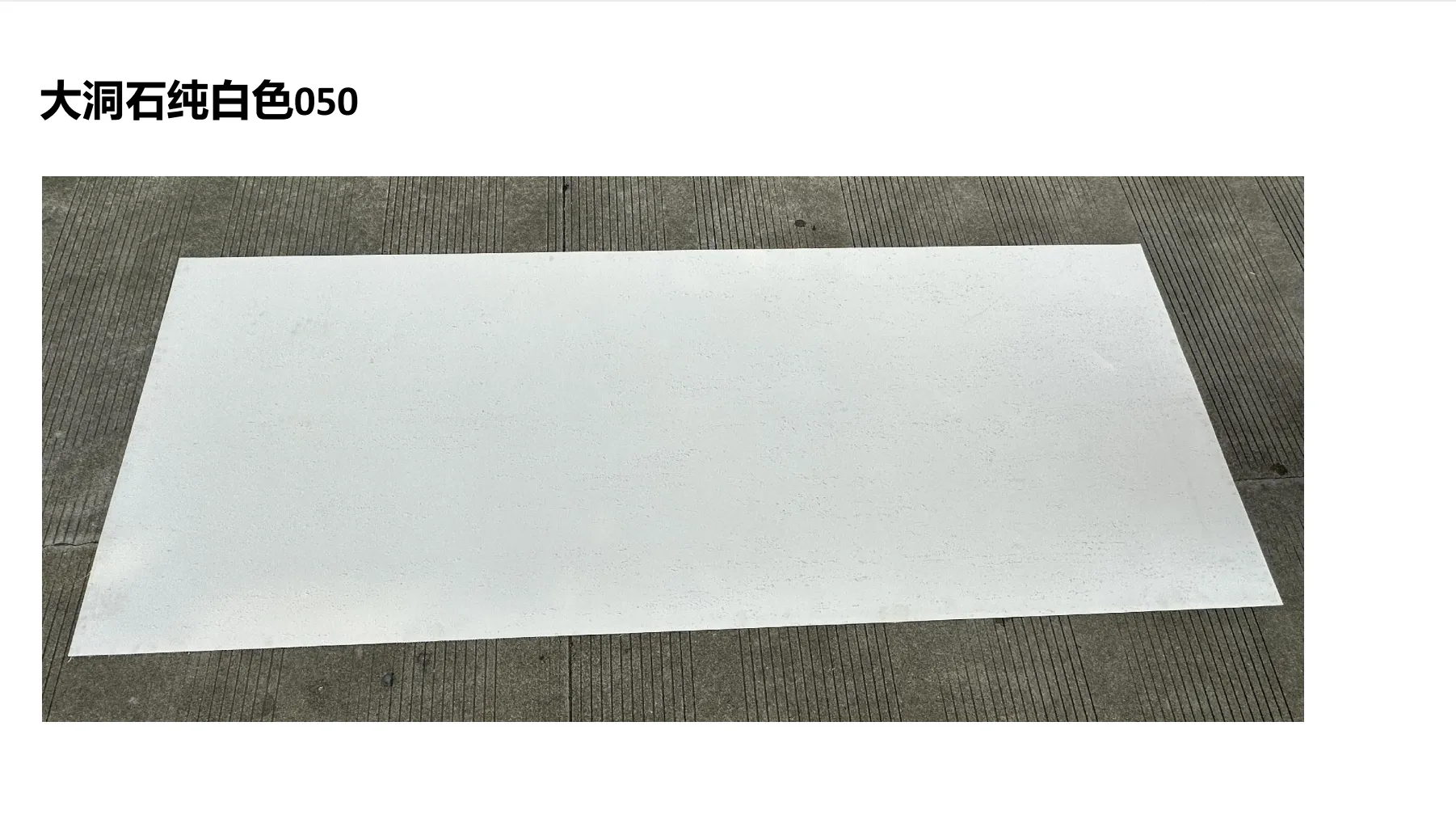
At the forefront of this innovation is huge travertine—a star in the MCM lineup. Travertine has long been beloved for its earthy tones, porous texture, and timeless elegance. Think of the ancient Roman Colosseum, where travertine blocks have stood for millennia, weathered but unbowed. But traditional travertine is heavy, hard to transport, and limited in size. Enter huge travertine, reimagined through MCM 3D printing.
Travertine (Starry Green) is a perfect example. Picture a slab so large it spans an entire wall, its surface rippling with soft beige and cream, dotted with tiny, iridescent flecks that catch the light like stars in a night sky. This isn't just stone—it's a window to the cosmos, installed in a boutique hotel lobby where guests pause mid-step, transfixed. Thanks to 3D printing, that "starry" effect isn't a happy accident of nature; it's a deliberate design choice, achievable in any color, from the deep blues of Travertine (Starry Blue) to the warm oranges of Travertine (Starry Orange) .
But huge travertine isn't just about aesthetics. Its MCM base makes it 70% lighter than natural travertine, meaning it can be used in high-rise buildings without adding excessive weight to structures. It's also resistant to moisture, fire, and fading—so that starry green wall in the hotel lobby? It'll look just as vibrant in 50 years as it does today.
What makes MCM 3D printing truly transformative is its ability to complement huge travertine with a dizzying array of materials, each with its own personality. Let's take a closer look at some standouts that are turning heads in the architectural world:
If huge travertine is earthy and organic, the Lunar Peak series is celestial. Available in silvery, golden, and black finishes, these MCM panels evoke the moon's cratered surface—moody, mysterious, and utterly modern. Lunar Peak silvery , with its cool, metallic sheen, has become a favorite for tech company headquarters, where it pairs sleek glass facades with a touch of otherworldly intrigue. Lunar Peak golden , on the other hand, adds warmth to luxury spaces, like rooftop bars or high-end boutiques, where its subtle shimmer feels both opulent and understated.
When you hear "stone," "flexible" isn't the first word that comes to mind. But flexible stone —another MCM marvel—defies expectations. Thin, lightweight, and surprisingly bendable, it's perfect for curved surfaces that traditional stone would crack under. Imagine a museum with a sweeping, wave-like wall that seems to flow from floor to ceiling, clad in lime stone (beige) flexible panels. Or a home's indoor fountain, where the stone wraps gently around the water feature, creating a seamless blend of nature and design. Flexible stone isn't just functional; it's playful, inviting architects to dream in curves, not just corners.
For spaces that crave a modern, industrial edge, foamed aluminium alloy board delivers—especially in vintage silver, vintage gold, or classic gold finishes. Unlike solid aluminium, foamed aluminium is lightweight and has a unique, cellular structure that adds texture and depth. Foamed aluminium alloy board (vintage silver) has become a staple in urban lofts and boutique restaurants, where its matte, weathered look pairs beautifully with wood grain board or rough granite stone. It's durable enough for exterior cladding but refined enough for interior accents, proving that industrial doesn't have to mean cold.
For those drawn to earthy, sustainable design, rammed earth board is a revelation. Traditional rammed earth—compacted layers of soil, clay, and straw—has been used for centuries, but it's heavy and hard to scale. MCM 3D printed rammed earth board retains that same warm, terracotta-like texture but in a lightweight, flexible form. Available in shades like matcha green, gradient, or soft beige, it's perfect for eco-friendly homes or wellness centers, where its natural hue and tactile surface create a sense of calm. Walk into a room with rammed earth walls, and you'll swear you can feel the quiet strength of the earth itself.
So, how do these materials go from a designer's sketch to a finished wall? 3D printing is the magic here. Unlike traditional manufacturing, which often requires molds or cutting tools that limit shape and size, 3D printers build MCM composites layer by layer, using digital designs. This means a huge travertine slab with a custom starry pattern can be printed in one piece, without seams. A wave panel that curves gently over a fireplace? No problem. Even intricate details—like the thread texture on a travertine accent wall or the wood line patterns on a bamboo mat board—are printed with precision, ensuring consistency across even large projects.
This level of customization is a game-changer for architects. Instead of choosing from a handful of standard sizes or finishes, they can collaborate with manufacturers to create materials that fit their vision exactly. Want a boulder slab (vintage black) facade that mimics the look of ancient rock formations for a cultural center? 3D printing makes it possible. Dream of a travertine (starry red) feature wall in a theater, where the color deepens under stage lights? The technology adapts to that, too.
With so many options, how do designers choose? Here's a snapshot of some standout materials, their personalities, and where they shine:
| Material | Core Finish | Best For | Mood |
|---|---|---|---|
| Huge Travertine (Starry Green) | Matte with iridescent flecks | Lobbies, feature walls, luxury spaces | Elegant, cosmic, awe-inspiring |
| Lunar Peak Silvery | Metallic, crater-like texture | Tech offices, modern homes | Futuristic, sleek, sophisticated |
| Foamed Aluminium Alloy (Vintage Silver) | Weathered, cellular texture | Urban lofts, restaurants, exterior cladding | Industrial, edgy, warm |
| Rammed Earth Board (Matcha Green) | Earthy, compacted texture | Eco-homes, wellness centers | Calming, grounded, sustainable |
| Wood Grain Board | Natural wood-look texture | Residential interiors, cafes | Warm, inviting, timeless |
In an era where sustainability is non-negotiable, MCM 3D printing technology stands out for its eco-friendly credentials. Traditional stone mining and manufacturing consume vast amounts of energy and generate waste. MCM, by contrast, uses recycled materials in its composites, and 3D printing minimizes waste by only using the exact amount of material needed for a project. Many MCM materials are also recyclable at the end of their life, closing the loop on sustainability.
Take fair-faced concrete , a staple in modern design. Traditional concrete is carbon-intensive, but MCM 3D printed fair-faced concrete uses less cement and incorporates recycled aggregates, reducing its carbon footprint without sacrificing strength or aesthetics. Similarly, polish concrete —often used for floors and countertops—gains a new lease on sustainability with MCM, as it requires less water and energy to produce than traditional polished concrete.
What's next for MCM 3D printing? The possibilities are as limitless as the imagination. As the technology advances, we'll likely see even more customization—think materials that change color with temperature, or 3D printed panels embedded with sensors that regulate a building's temperature. We might also see a rise in biophilic design, where materials like lunar peak golden or bali stone are paired with living plants to blur the line between indoor and outdoor spaces.
For architects and designers, this means the only limit is creativity. Want to build a home that looks like it's carved from a single piece of huge travertine ? Possible. Dream of a museum where the walls undulate like waves, clad in flexible stone ? Doable. The MCM 3D printing series isn't just changing materials; it's changing how we think about space itself.
At the end of the day, architecture is about more than function. It's about storytelling—telling the story of a brand, a family, a culture. MCM 3D printing technology, with its crown jewel of huge travertine and a galaxy of supporting materials, gives designers the tools to tell those stories in richer, more vivid ways. Whether it's the timeless elegance of travertine, the modern edge of foamed aluminium, or the earthy warmth of rammed earth, these materials don't just fill a space—they make it unforgettable.
So the next time you step into a building and find yourself pausing to touch a wall or marvel at a surface, remember: behind that material is a revolution. A revolution of creativity, sustainability, and possibility. And it's only just beginning.
Recommend Products












