
It's a crisp Monday morning in the design studio. Sunlight slants through the floor-to-ceiling windows, catching dust motes as they dance over a blueprint spread across the table. The client—a boutique hotel chain with a vision for a flagship property that blends modernity with warmth—leans in, pointing to a sketch of a sweeping, curved lobby wall. "We want this to feel like it's been carved by time, but not weigh the building down," they say. The lead designer, Maria, pauses, pen hovering. She knows the material choice here will make or break the project: too rigid, and the curve becomes a logistical nightmare; too flimsy, and it won't stand up to the hotel's bustling foot traffic. This is where the conversation often turns to two heavyweights in the architectural world: MCM flexible stone, like the striking Huge Travertine, and traditional rigid slabs. Both have their merits, but knowing when to reach for one over the other is the difference between a space that sings and one that merely exists.
In this article, we'll dive into the nuances of these two material categories, with a spotlight on Huge Travertine MCM flexible stone—a standout in the MCM lineup—and how it stacks up against rigid slabs. By the end, you'll have a clearer sense of which material deserves a spot in your next project, whether you're designing a cozy café or a soaring skyscraper.
First, let's unpack what MCM flexible stone actually is. MCM, or Modified Composite Material, is a revolutionary category of building materials designed to mimic the look and feel of natural stone, wood, or metal—without the bulk or brittleness. At its core, MCM is a sandwich of layers: a durable, lightweight substrate (often fiberglass or aluminum) coated with a thin veneer of real stone, resin, or other natural materials. The result? A panel that's flexible enough to bend, yet tough enough to withstand the elements.
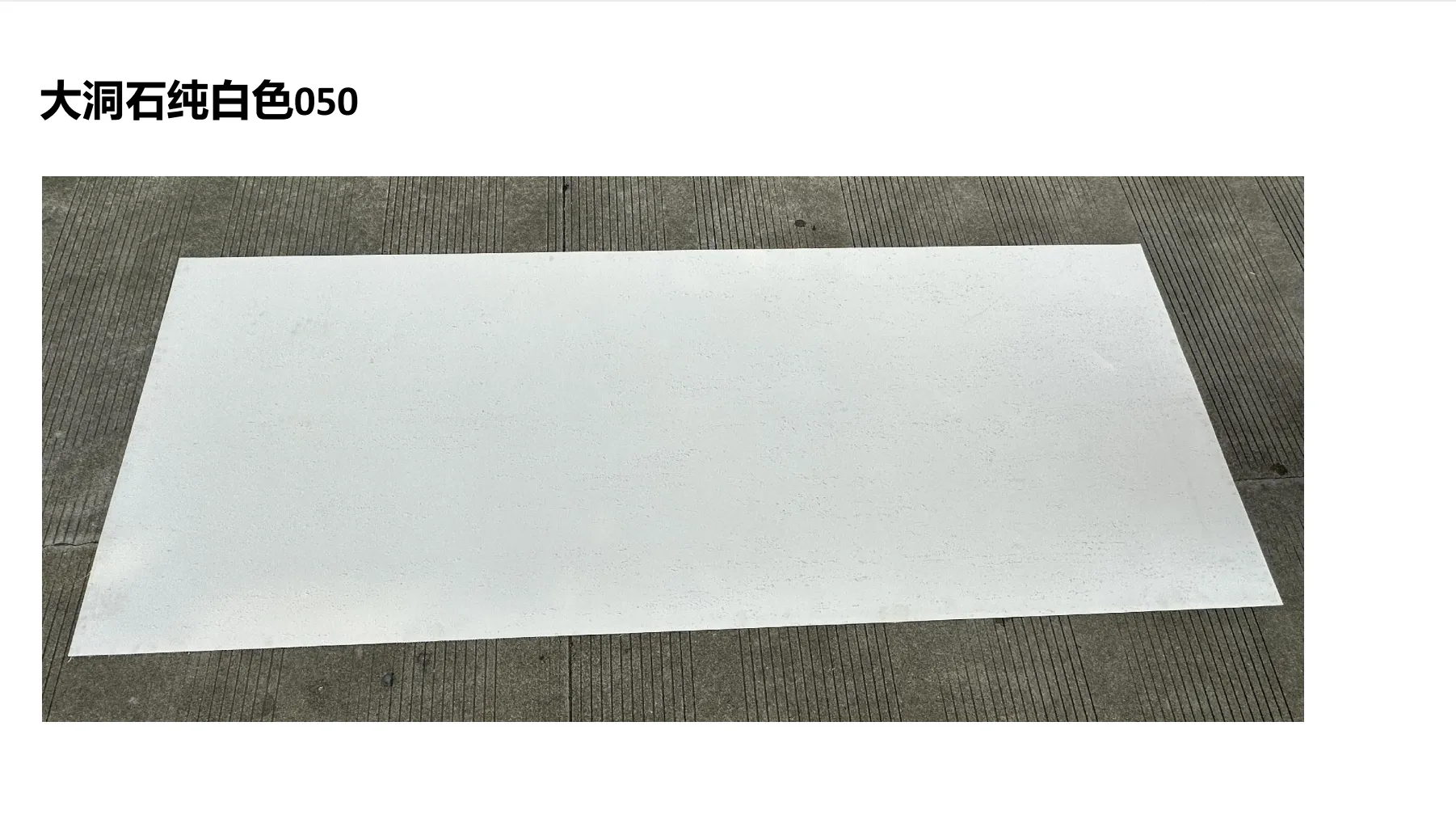
Huge Travertine is a star in this lineup. Picture the earthy elegance of traditional travertine—those soft, honeyed tones, the subtle pitting that tells a story of mineral deposits over millennia—but reimagined as a lightweight, bendable panel. Unlike natural travertine slabs, which can weigh upwards of 150 pounds per square meter, Huge Travertine MCM panels tip the scales at a mere 4-6 kg/m². That's a game-changer for projects where weight is a concern, whether due to structural limits or installation logistics.
But what truly sets Huge Travertine apart is its flexibility. Imagine wrapping it around a curved column in a hotel lobby, or shaping it to follow the undulating lines of a retail store's facade. It bends without cracking, conforming to organic shapes that would shatter rigid stone. And because it's factory-manufactured, the color and texture are consistent across panels—no more hunting for matching slabs in a quarry. For designers craving the authenticity of natural stone with the freedom to dream in curves, this is a material that feels almost… alive.
Now, let's turn to rigid slabs—the tried-and-true veterans of the architectural world. These are the materials we've relied on for centuries: natural stone slabs (marble, granite, limestone), concrete panels, even thick ceramic tiles. Think of the grand marble floors in historic museums, the granite countertops in luxury kitchens, or the limestone facades of government buildings. Rigid slabs are all about solidity, permanence, and that unbeatable "heft" that signals quality.
Take Fair-faced Concrete, for example. Its raw, industrial aesthetic has made it a favorite for modernist designs, offering a uniform, matte finish that ages gracefully. Or Lunar Peak Golden, a type of engineered stone that mimics the shimmer of moonlight on rock, with a density that resists scratches and stains. These materials are thick—often 2-5 cm for natural stone, 5-10 cm for concrete—and rigid, meaning they hold their shape under pressure. They're also heavy: a standard 120x60 cm granite slab can weigh over 100 kg, requiring cranes and specialized installers to maneuver into place.
Rigid slabs excel in spaces where stability is non-negotiable. Their thickness and density make them ideal for high-traffic areas like airport terminals or shopping malls, where they can withstand years of footfalls, luggage wheels, and the occasional dropped suitcase. They also offer a timeless appeal—natural stone, in particular, develops a unique patina over time, telling the story of the space it inhabits. For projects that aim to evoke tradition, permanence, or sheer luxury, rigid slabs still hold a powerful allure.
To truly understand when to choose Huge Travertine MCM flexible stone over rigid slabs, let's break down their key differences across the factors that matter most to designers, builders, and clients.
| Factor | Huge Travertine MCM Flexible Stone | Rigid Slabs (e.g., Natural Stone, Fair-faced Concrete, Lunar Peak) |
|---|---|---|
| Flexibility | Highly flexible (can bend up to 30 degrees without cracking) | Brittle; minimal to no flexibility (will crack under bending stress) |
| Weight | Lightweight (4-6 kg/m²) | Heavy (100-200 kg/m² for natural stone; 80-150 kg/m² for concrete) |
| Installation | Easy; can be cut on-site with basic tools; adhesive or mechanical fixing | Complex; requires cranes, specialized lifting equipment, and skilled masons |
| Durability | Resistant to impact, moisture, and UV rays; suitable for interior/exterior use | Highly durable (natural stone is scratch/stain-resistant); prone to chipping at edges |
| Design Versatility | Excels at curves, undulating surfaces, and custom shapes | Best for flat, large surfaces (floors, walls, countertops) |
| Cost | Mid-range (lower material cost than natural stone; lower installation labor costs) | High (expensive material + high installation/labor costs due to weight) |
| Environmental Impact | Lower carbon footprint (less raw material extraction; lightweight = lower transport emissions) | Higher (quarrying natural stone is resource-intensive; heavy transport = more emissions) |
Huge Travertine MCM isn't just a "better" material—it's a different material, tailored to specific project needs. Here are the scenarios where it shines brightest:
Remember Maria, the designer from the intro? Her curved hotel lobby wall is a textbook case for MCM. Rigid slabs would require cutting and piecing, leaving unsightly seams that break the flow. Huge Travertine, on the other hand, wraps around curves seamlessly, creating a continuous, sculptural effect. This is also true for projects like amphitheaters, rounded retail displays, or even furniture with curved surfaces—anywhere a rigid material would feel forced or fragmented.
Older buildings often have structural limits that can't handle the weight of rigid stone slabs. Imagine restoring a 1920s apartment building with delicate floor joists—adding 200 kg/m² limestone would risk compromising the structure. Huge Travertine's lightweight nature (4-6 kg/m²) eliminates that risk, allowing designers to update interiors or exteriors without reinforcing the building. It's also easier to install in tight spaces, like narrow hallways or stairwells, where cranes can't reach.
Wind loads, seismic activity, and sheer height make high-rise facades a challenge for heavy materials. Rigid slabs can act like sails in strong winds, increasing stress on the building's frame. Huge Travertine, with its low weight and flexibility, moves with the building during sway, reducing strain. Plus, installation is faster: panels can be carried up by hand or with small lifts, rather than relying on expensive crane time. For a 50-story tower aiming for a stone-like exterior without the structural headaches, MCM is a no-brainer.
Pop-up shops, exhibition booths, or event venues often need to look high-end but be disassembled and reused. Rigid slabs are permanent—once installed, they're hard to remove without damage. Huge Travertine panels, however, are lightweight and easy to uninstall, making them perfect for temporary designs that still demand the elegance of natural stone. Imagine a pop-up wine bar with a travertine-inspired facade that can be packed up and transported to the next event—no waste, no heavy lifting.
None of this is to say rigid slabs are obsolete. There are still scenarios where their heft, density, and traditional appeal make them the better choice.
Think of a shopping mall at peak hours, with thousands of feet pounding the floors daily. Rigid slabs—like polished granite or Lunar Peak Golden—are built for this. Their thickness (5-10 cm) and density make them resistant to indentations, scratches, and wear. MCM panels, while durable, are thinner (usually 3-5 mm) and better suited for walls or low-traffic floors. For a subway station platform that needs to last 50 years with minimal maintenance, rigid stone slabs are the reliable workhorse.
Some projects demand authenticity above all else. A 18th-century mansion being restored to its former glory might require matching the original limestone slabs used in its construction. Rigid natural stone, with its unique veining and patina, can blend seamlessly with existing materials, preserving the building's historical integrity. MCM, while convincing, might feel "too perfect" next to centuries-old stone, lacking the subtle variations that tell the structure's story.
There's a reason luxury hotels still use marble slabs in their lobbies: that unmistakable "thud" when you walk on them, the cool, dense feel underfoot, the way light reflects off their polished surface. Rigid slabs exude opulence in a way that lightweight materials sometimes struggle to match. For a five-star hotel aiming for that "grand" vibe, a marble or granite lobby floor—heavy, solid, and timeless—sends a clear message of luxury.
Industrial kitchens, laboratories, or chemical processing plants need materials resistant to harsh cleaners, acids, or solvents. Natural stone slabs, especially granite, are highly resistant to chemical damage. MCM panels, while durable, have a resin layer that can degrade over time with prolonged exposure to strong chemicals. In these cases, the density of rigid stone provides an extra layer of protection.
At the end of the day, choosing between Huge Travertine MCM flexible stone and rigid slabs isn't just about technical specs—it's about the story you want your space to tell. Do you want it to feel organic, dynamic, and adaptable? MCM's flexibility and lightness can help create that narrative, wrapping the space in natural beauty that moves with life. Or do you want to evoke permanence, tradition, and unshakable luxury? Rigid slabs, with their heft and history, speak to that.
Maria, the designer from our opening scenario, eventually chose Huge Travertine MCM for her hotel's curved lobby wall. The result? A space that feels both ancient and modern, where the stone-like panels flow like water around the curves, welcoming guests into a world that's warm, dynamic, and uniquely human. And in the hotel's grand ballroom, she opted for polished marble slabs—solid, timeless, and ready to host decades of weddings, galas, and memories.
So the next time you're staring at a blueprint, pen hovering, remember: there's no "better" material—only the right one for the story you're trying to tell. Whether you reach for the flexibility of Huge Travertine MCM or the solidity of rigid slabs, let the space's purpose, personality, and people guide your choice. After all, great design isn't just about materials—it's about how they make us feel.
Recommend Products












