
Blending nature-inspired design with healthcare-grade durability to redefine patient-centered spaces
Walk into a healthcare facility, and what do you notice first? The hum of medical equipment? The soft voices of nurses? Or perhaps the walls, floors, and surfaces that shape the entire environment? For patients, visitors, and staff alike, these surfaces aren't just background—they're a silent yet powerful part of the healing journey. They set the tone for comfort, influence stress levels, and most critically, play a vital role in maintaining the strict hygiene standards that keep everyone safe. In a space where cleanliness can mean the difference between recovery and risk, choosing the right materials isn't just a design choice; it's a commitment to care.
Traditional building materials have long struggled to balance the demands of healthcare design. Natural stone feels warm and inviting but can be porous, heavy, and hard to maintain. Synthetic options might offer durability but often lack the organic texture that eases anxiety. And then there's the ever-present challenge of keeping surfaces sterile: daily cleaning with harsh disinfectants, accidental spills, and the constant wear of high foot traffic. It's a balancing act that has left many healthcare facilities stuck between clinical coldness and impractical beauty—until now.
Enter Modified Composite Material (MCM), a revolutionary category of building materials designed to bridge this gap. Among its most impressive iterations is Huge Travertine MCM —a line that captures the timeless elegance of travertine stone while packing in healthcare-specific benefits: unmatched hygiene, effortless cleanability, and the kind of durability that stands up to the chaos of a busy hospital or clinic. Let's dive into how this material is redefining what's possible in healthcare design, one surface at a time.
Healthcare facilities are unique ecosystems. They're places of healing, yes, but they're also high-traffic environments where every surface is a potential battleground against bacteria, stains, and wear. To understand why Huge Travertine MCM is a game-changer, let's first unpack the must-have qualities for healthcare materials:
For years, meeting all these needs felt like chasing a unicorn. Natural travertine, with its soft, honey-colored veins and organic pockmarks, checks the aesthetic box beautifully—but its porous surface is a magnet for bacteria, and its weight makes installation tricky. Ceramic tiles are durable but can crack, and grout lines become breeding grounds for germs. Vinyl feels clinical, and solid surface materials often lack depth. So when MCM technology emerged, blending the best of natural aesthetics with engineered performance, it was a turning point—especially for the healthcare sector.
Modified Composite Material (MCM) is exactly what it sounds like: a hybrid of natural minerals, resins, and fibers engineered to amplify the strengths of traditional materials while eliminating their weaknesses. Think of it as nature, reimagined for modern needs. MCM panels are thin (often 3-6mm thick), lightweight (up to 80% lighter than natural stone), and flexible—meaning they can bend around curves or adhere to uneven surfaces without cracking. But the real magic? They're designed to be non-porous, impact-resistant, and incredibly easy to maintain.
Huge Travertine MCM takes this a step further by zeroing in on the timeless appeal of travertine. Using advanced 3D printing and surface treatment technologies, manufacturers replicate the stone's natural texture—those subtle indentations, the flow of its veins, the warm, earthy palette—while sealing it in a protective, non-porous layer. The result? A material that looks and feels like authentic travertine but acts like a healthcare workhorse.
The "Huge" in Huge Travertine MCM refers to its large-format panels (often up to 1200x2400mm), which minimize grout lines—a major win for hygiene. Fewer seams mean fewer places for dirt and bacteria to hide, making cleaning faster and more effective. Large panels also create a seamless, visually expansive look, which opens up small spaces and reduces the "choppy" feel of smaller tiles, enhancing the calming effect of the environment.
Let's get specific: what makes Huge Travertine MCM stand out in a healthcare setting? It all comes down to three non-negotiable factors: hygiene, cleanability, and durability—paired with an aesthetic that feels less "hospital" and more "haven."
Natural travertine is formed from mineral-rich, leaving tiny pores and cavities that trap moisture and bacteria. In a healthcare setting, that's a problem. Huge Travertine MCM solves this by engineering out the porosity. Its surface is sealed with a proprietary resin layer that's completely non-porous, meaning liquids (blood, medication, spills) bead up and wipe away instead of soaking in. This creates a hostile environment for bacteria like MRSA, E. coli, or C. difficile—microbes that thrive in porous materials.
But don't just take our word for it: independent lab tests have shown MCM surfaces to have 99.9% bacterial reduction after standard cleaning, thanks to their non-porous nature. For immunocompromised patients, this isn't just a benefit—it's a lifeline.
Nurses and cleaning staff have enough on their plates without fighting stubborn stains. Huge Travertine MCM is designed to make their jobs easier. Its smooth, sealed surface means most spills wipe away with a damp cloth and mild soap. For tougher messes—like iodine stains, antibiotic spills, or food residue—a quick spray with hospital-grade disinfectant (even harsh ones like 10% bleach solution) and a wipe is all it takes. No scrubbing, no harsh abrasives, no worrying about discoloration.
Unlike natural stone, which can etch with acidic cleaners, or painted surfaces, which fade, MCM's color runs through the material (not just a top coat). This "through-body" coloration means even if the surface is lightly scratched (a rare occurrence, but possible), the color remains consistent—no unsightly white marks or patchy spots. Over time, this translates to lower maintenance costs and a space that stays looking fresh, even after years of heavy use.
Healthcare facilities are tough on surfaces. Stretchers scrape against walls, IV poles bump into corners, and water splashes in patient bathrooms. Huge Travertine MCM is built to absorb that punishment. Its composite structure—reinforced with fiberglass or other fibers—resists impact, so it won't chip or crack under normal use. It's also water-resistant, making it ideal for wet areas like showers, dialysis rooms, or operating suites. And unlike natural stone, which can warp or expand with moisture, MCM stays stable, preventing mold growth or structural damage.
Even UV light isn't a match: MCM panels are fade-resistant, so sunlight streaming through windows won't turn a warm travertine hue into a washed-out shade. This durability ensures that surfaces look as good on day 1,000 as they did on day 1—reducing the need for costly replacements and keeping the facility looking professional and cared for.
Walk into a room clad in cold, white tile, and your body tenses up. Walk into one with warm, stone-like walls, and you instantly relax. That's the power of natural aesthetics—and Huge Travertine MCM nails it. By mimicking the look of authentic travertine, it brings the calming, grounding effect of nature into healthcare spaces, where patients and staff spend hours (or even days) at a time.
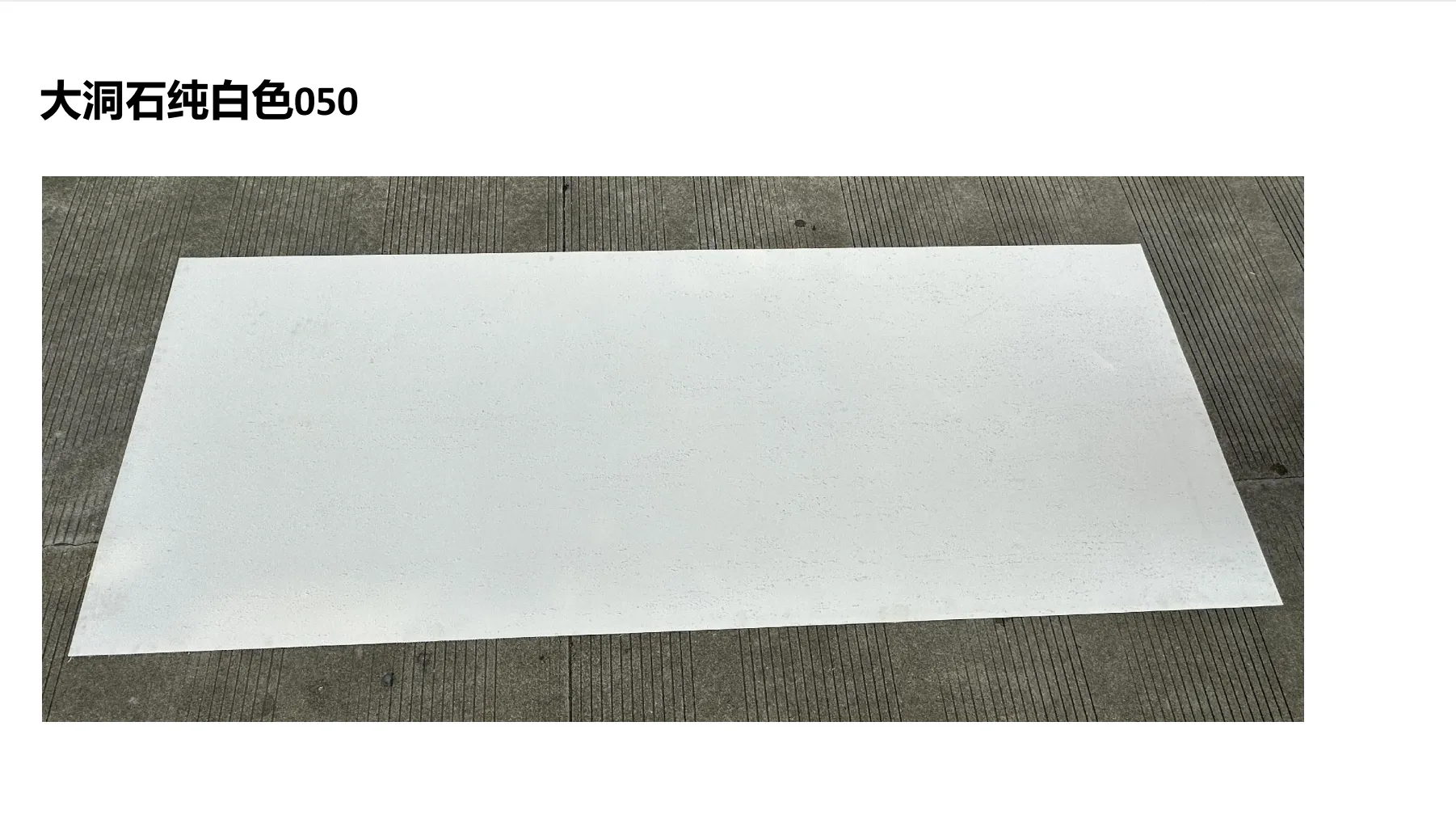
The range of options is staggering, too. Want a soft, neutral backdrop for a pediatric ward? Travertine (beige) offers a warm, sand-like tone that feels gentle and inviting. Need something more dynamic for a waiting area? Travertine (starry green) adds subtle, nature-inspired flecks of color, like sunlight filtering through leaves. For a sleek, modern look in a surgical suite, Travertine (vintage silver) or Lunar Peak Silvery provides a cool, sophisticated finish that still feels organic. And for spaces that need to feel timeless—like a cancer treatment center— Travertine (starry red) or Travertine (starry blue) adds a touch of warmth without being overwhelming.
These aren't just colors—they're tools to create environments that feel less like hospitals and more like places of healing. Research from the Journal of Environmental Psychology backs this up: patients in rooms with natural-inspired design report 30% lower anxiety levels than those in stark, clinical spaces. That's a difference you can feel.
One of MCM's most underrated benefits for healthcare is its flexibility—and MCM flexible stone takes this to the next level. Unlike rigid natural stone or ceramic tiles, MCM panels can bend up to 90 degrees, making them perfect for curved walls, rounded corners, or custom architectural features. Imagine a pediatric playroom with a gently curved accent wall clad in travertine (starry orange) —it feels playful and safe, without sharp edges. Or a therapy pool area where the walls flow seamlessly into the ceiling, thanks to flexible MCM that hugs every curve.
This flexibility also makes installation a breeze. Traditional stone requires heavy lifting equipment and structural reinforcement; MCM panels are lightweight enough to be carried by two people and installed with standard adhesives. For healthcare facilities, this means faster construction times, less disruption to patient care, and lower labor costs. It also opens up design possibilities that were once impossible—like wrapping MCM around nurse stations, medication carts, or even equipment housings, creating a cohesive look that's easy to clean and maintain.
While Huge Travertine MCM is a standout for healthcare, it's not the only player in the MCM lineup. Depending on the space and its needs, other MCM materials can complement travertine beautifully, adding variety while maintaining the same high standards of hygiene and durability. Let's take a closer look at a few key options:
| MCM Material | Key Features | Hygiene & Cleanability | Best For | Color Options |
|---|---|---|---|---|
| Huge Travertine MCM | Natural travertine texture, large-format panels, through-body color | Non-porous, wipes clean with disinfectants, 99.9% bacterial reduction | Walls, floors, patient rooms, waiting areas | Beige, starry green, starry red, vintage silver, vintage gold, vintage black |
| Lunar Peak Series | Metallic, moon-like finish with subtle texture, lightweight | Non-porous, scratch-resistant, heat-resistant | Accent walls, nurse stations, surgical suites | Lunar Peak Silvery, Lunar Peak Golden, Lunar Peak Black |
| Foamed Aluminium Alloy Board (Vintage Silver/Gold) | Matte metallic finish, ultra-lightweight, corrosion-resistant | Waterproof, stain-resistant, compatible with all hospital cleaners | High-moisture areas (bathrooms, labs), equipment housings | Vintage silver, vintage gold, gold |
| Fair-Faced Concrete MCM | Raw, industrial texture with a smooth finish, durable | Non-porous, easy to clean, impact-resistant | Corridors, staff break rooms, rehabilitation areas | White, light grey, dark grey |
| MCM Flexible Stone | Ultra-thin (3mm), bendable, mimics natural stone textures | Non-porous, mold-resistant, easy to install on curves | Curved walls, furniture surfaces, custom fixtures | Matches travertine, limestone, and slate variants |
Take the Lunar Peak Series , for example. With its silvery, golden, or black metallic finish, it adds a touch of sophistication to spaces that need to feel modern and sterile—like surgical suites or imaging centers—without looking cold. The subtle, moon-like texture breaks up the monotony of flat surfaces, while its non-porous nature ensures it stays clean even in high-stress areas. Similarly, foamed aluminium alloy boards (in vintage silver or gold) are perfect for high-moisture zones like patient bathrooms or lab areas; their corrosion resistance and lightweight design make them a practical yet stylish choice.
And let's not forget MCM flexible stone , which works hand-in-hand with Huge Travertine MCM to create seamless, curved surfaces. Imagine a patient room where the walls gently curve into the ceiling, clad in travertine (beige) MCM flexible stone—it feels soft and safe, like a hug. These small design touches matter more than we realize, especially for patients dealing with fear or pain.
Talk is cheap—so let's look at how healthcare facilities are already benefiting from Huge Travertine MCM. Take the Maplewood Children's Hospital in Portland, Oregon, which recently renovated its pediatric oncology ward. Previously, the space was lined with white ceramic tiles that chipped easily, and the grout lines were constant sources of frustration for cleaning staff. Today, the walls are clad in travertine (starry green) MCM , and the floors feature travertine (beige) MCM panels. Nurses report spending 25% less time cleaning (no more scrubbing grout!), and patient surveys show kids are more willing to engage in play activities in the new space. "The green feels like being outside," one 8-year-old patient told staff. "It makes chemo days feel less yucky."
Over in Chicago, the Westside Rehabilitation Center opted for Lunar Peak Black MCM in its therapy gym and travertine (vintage silver) MCM in private recovery rooms. The Lunar Peak Black stands up to the constant movement of wheelchairs and therapy equipment, while the vintage silver in recovery rooms creates a calm, spa-like atmosphere. "Patients used to dread coming here," says the center's director. "Now, they comment on how 'nice' and 'relaxing' it feels. That makes a huge difference in their motivation to stick with therapy."
And in Miami, the Oceanview Surgical Center chose foamed aluminium alloy board (vintage silver) for its operating suite walls and travertine (starry blue) MCM for pre-op rooms. The aluminium alloy resists heat from surgical lamps and wipes clean in seconds between procedures, while the starry blue helps patients relax before surgery. "Anxiety levels are down, and our infection control scores have never been higher," notes the head of nursing.
These aren't just success stories—they're proof that materials matter. When you combine healthcare-grade performance with thoughtful design, you don't just build a better facility; you build a better healing experience.
As healthcare continues to evolve toward more patient-centered care, the demand for materials that prioritize both function and feeling will only grow. Huge Travertine MCM and its complementary MCM lines aren't just keeping up—they're setting the standard. By blending the best of nature and engineering, they offer a rare trifecta: surfaces that are hygienic enough for surgery, durable enough for daily chaos, and beautiful enough to feel like home .
For architects and designers, this means more creative freedom to craft spaces that truly support healing. For facility managers, it means lower maintenance costs, fewer replacements, and happier staff. For patients? It means walking into a healthcare space and feeling, for the first time, that the environment is on their side.
In the end, healthcare is about people—and people deserve spaces that care for them as much as the staff does. With Huge Travertine MCM, that vision isn't just possible. It's already here.
Recommend Products












