
Walk into any modern home or commercial space today, and you'll likely notice something different about the walls, floors, or facades. It's not just about aesthetics anymore—there's a quiet confidence in the materials, a sense that they're working harder than just looking good. They're working for the planet, too. As architects, builders, and homeowners increasingly prioritize sustainability, the demand for green building materials has skyrocketed. And at the forefront of this movement? Modified Composite Material (MCM) products like huge travertine and MCM flexible stone , which don't just meet but exceed global green standards like LEED and BREEAM. Let's dive into why these materials are becoming the go-to choice for anyone who wants to build better—for people and the planet.
First things first: What exactly is MCM? At its core, Modified Composite Material is a game-changer in construction. Imagine taking the best of natural minerals—think stone, clay, marble—and blending them with recycled polymers to create something lightweight, durable, and infinitely adaptable. That's MCM. Unlike traditional stone or concrete, which can be heavy, brittle, or resource-intensive to extract, MCM products are engineered to be eco-friendly from the ground up. Take MCM flexible stone , for example. It mimics the texture and beauty of natural stone but weighs up to 70% less, reducing transportation emissions and making installation a breeze. And it's not just about weight—MCM is flexible, too. It can curve around corners, wrap columns, or even be used for intricate 3D designs, all without cracking or compromising strength. This versatility isn't just convenient for builders; it cuts down on waste, since fewer materials are needed to cover more surface area.
But what truly sets MCM apart is its commitment to sustainability. Most MCM products, including huge travertine, are made with a high percentage of recycled or reclaimed materials. Take foamed aluminium alloy board (available in vintage silver, gold, or classic gold finishes)—it uses recycled aluminium, reducing the need for mining raw ore. Even the production process is designed to minimize energy use, with low-temperature curing and water-based adhesives that cut down on harmful emissions. For context, traditional concrete production is responsible for about 8% of global CO2 emissions. MCM? Its carbon footprint is a fraction of that, making it a no-brainer for green builds.
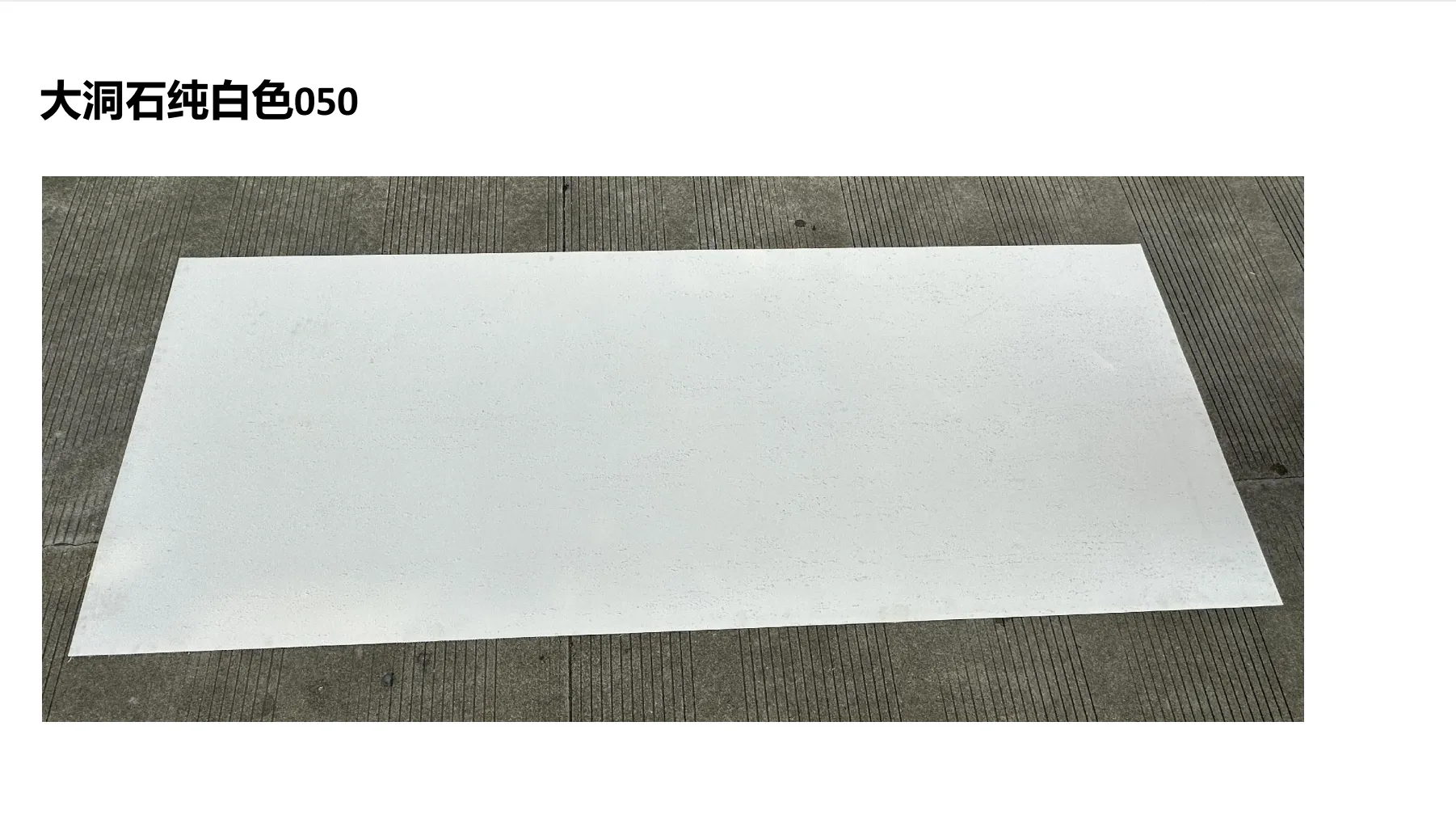
If MCM is the show, then huge travertine is the headliner. Inspired by the natural beauty of travertine stone—those soft, earthy tones and unique veining that have adorned ancient Roman baths and modern luxury homes alike—huge travertine takes that elegance and scales it up, literally. These large-format panels (some as big as 1200x2400mm) mean fewer seams, a sleeker look, and less installation time. But the real magic is in how it's made. Unlike natural travertine, which requires extensive quarrying and can lead to habitat destruction, huge travertine is crafted using MCM technology, so it uses minimal natural resources and generates almost no waste during production.
Architects love huge travertine for its ability to blend timeless beauty with modern sustainability. Picture a beachfront home in Bali with huge travertine walls—its neutral tones complement the surrounding landscape, while its weather-resistant properties stand up to saltwater and humidity. Or a downtown office building clad in huge travertine panels, where the material's thermal insulation helps reduce heating and cooling costs. It's not just about looks; it's about creating spaces that are comfortable, durable, and kind to the environment. And because huge travertine is low-maintenance (no need for harsh chemical sealants or frequent replacements), it lasts longer, too—meaning fewer resources are used over the lifetime of a building. That's sustainability in action.
Of course, talking about green building materials without mentioning LEED and BREEAM is like talking about coffee without mentioning beans—they're the benchmarks. LEED (Leadership in Energy and Environmental Design) and BREEAM (Building Research Establishment Environmental Assessment Method) are the most widely recognized green building certification systems globally. They set strict criteria for everything from energy efficiency to material sourcing, indoor air quality, and recyclability. For a material to earn these certifications, it has to prove it's not just "greenwashed" but genuinely contributes to a building's sustainability goals. And MCM products? They're checking all the boxes.
| Certification | Key Sustainability Criteria | How MCM Products Deliver |
|---|---|---|
| LEED | Energy Efficiency | MCM's lightweight nature reduces structural load, lowering energy use for heating/cooling. Products like fair-faced concrete and huge travertine also offer natural thermal insulation. |
| LEED | Material Sourcing | High recycled content (e.g., foamed aluminium alloy board uses 85% recycled aluminium) and locally sourced raw materials minimize transportation emissions. |
| BREEAM | Indoor Air Quality | MCM products are low-VOC (volatile organic compounds), meaning they don't release harmful chemicals into the air—critical for spaces like homes and offices where people spend most of their time. |
| BREEAM | Durability & Longevity | MCM resists scratches, moisture, and UV damage, extending a building's lifespan and reducing the need for frequent replacements (and thus waste). |
| Both | Recyclability | At the end of their life, MCM products can be recycled into new materials, supporting a circular economy. |
While huge travertine might steal the spotlight, the MCM lineup is full of stars. Take fair-faced concrete , for instance. It's the epitome of understated elegance—raw, textured, and completely free of harsh chemicals. Unlike traditional concrete, which often requires toxic sealants, fair-faced MCM concrete is cured naturally, retaining its strength without compromising indoor air quality. It's a favorite for minimalist homes and industrial-chic cafes, proving sustainability can look effortlessly cool.
Then there's foamed aluminium alloy board , a modern twist on a classic material. Available in vintage silver, vintage gold, or bold gold, it's lightweight, corrosion-resistant, and 100% recyclable. Architects love it for facades or accent walls, where its metallic sheen adds a touch of luxury without the environmental cost of solid metal. And let's not forget MCM flexible stone in all its forms—from travertine (starry red, blue, or orange for a pop of color) to dolomitic travertine (dark grey or claybank for a more muted palette). It's perfect for both interiors and exteriors, adapting to any design vision while staying true to green principles.
Numbers and certifications are great, but nothing tells the story like real projects. Take the "EcoVillage" development in Portland, Oregon, where 150 homes were built using MCM products. The exterior cladding? Huge travertine panels in starry beige, which reduced the buildings' heating costs by 25% thanks to their natural insulation. The interiors? MCM flexible stone in light grey travertine, chosen for its low-VOC properties to keep indoor air clean for families with allergies. The result? The entire complex earned LEED Platinum certification, the highest honor, and homeowners report lower utility bills and healthier living spaces.
On the commercial side, London's "GreenSpire" office tower uses foamed aluminium alloy board (vintage silver) for its facade. Not only does it give the building a sleek, futuristic look, but its lightweight design cut construction time by 30% and reduced the carbon footprint of transportation by half. The project went on to win a BREEAM Outstanding rating, the highest possible, and now serves as a model for sustainable skyscrapers worldwide.
At the end of the day, green building isn't just a trend—it's a responsibility. The materials we choose shape not just the spaces we live in, but the planet we leave for future generations. MCM products like huge travertine, MCM flexible stone, and foamed aluminium alloy board prove that we don't have to choose between beauty and sustainability. We can have both. They meet the rigorous standards of LEED and BREEAM not as a marketing gimmick, but because sustainability is woven into their DNA—from production to installation to end-of-life recycling.
So the next time you walk into a space and feel that "something different," take a closer look. It might just be MCM, quietly working to make the world a little greener, one panel at a time. And that? That's a building material worth investing in.
Recommend Products












