
There's something magical about coastal living—the way sunlight dances on the waves, the sound of seagulls carried by the breeze, and the feeling of sand between your toes as you step outside. But for anyone who's built or renovated a home near the ocean, there's a less romantic side to this paradise: the relentless assault of saltwater, humidity, and wind. These elements don't just fade paint or rust metal; they can turn even the most beautiful building materials into a crumbling, discolored mess in just a few years. That's where MCM (Modified Composite Material) steps in, and today, we're shining a spotlight on one of its most impressive offerings: Huge Travertine . Specifically, we're diving into how this innovative material holds up against saltwater—because in coastal areas, that's the ultimate test of durability.
Let's start with the basics: coastal air is loaded with salt spray. Every time the wind picks up, tiny droplets of seawater are carried onto your home's exterior, clinging to walls, floors, and fixtures. Over time, that salt eats away at materials like a slow-acting acid. Natural stone, for example, is a classic choice for coastal homes—think marble or granite countertops, travertine patios. But even these tough stones have pores, and saltwater seeps in, causing discoloration, pitting, or even cracking as the salt crystals expand. Wood fares worse: it warps, rots, or grows mold in the humid air. Concrete? It's porous too, and salt can erode its surface, leaving unsightly stains and weakening its structure.
I once met a homeowner in Cape Cod who'd spent a small fortune on a natural travertine patio. It looked stunning the day it was installed—warm, earthy, with that signature travertine texture that feels like a piece of history underfoot. But by the end of the first winter, the edges were chipping, and the color had faded from a rich beige to a dull gray. "I thought travertine was supposed to be tough," he sighed. "Turns out, the ocean doesn't care about 'tough.'"
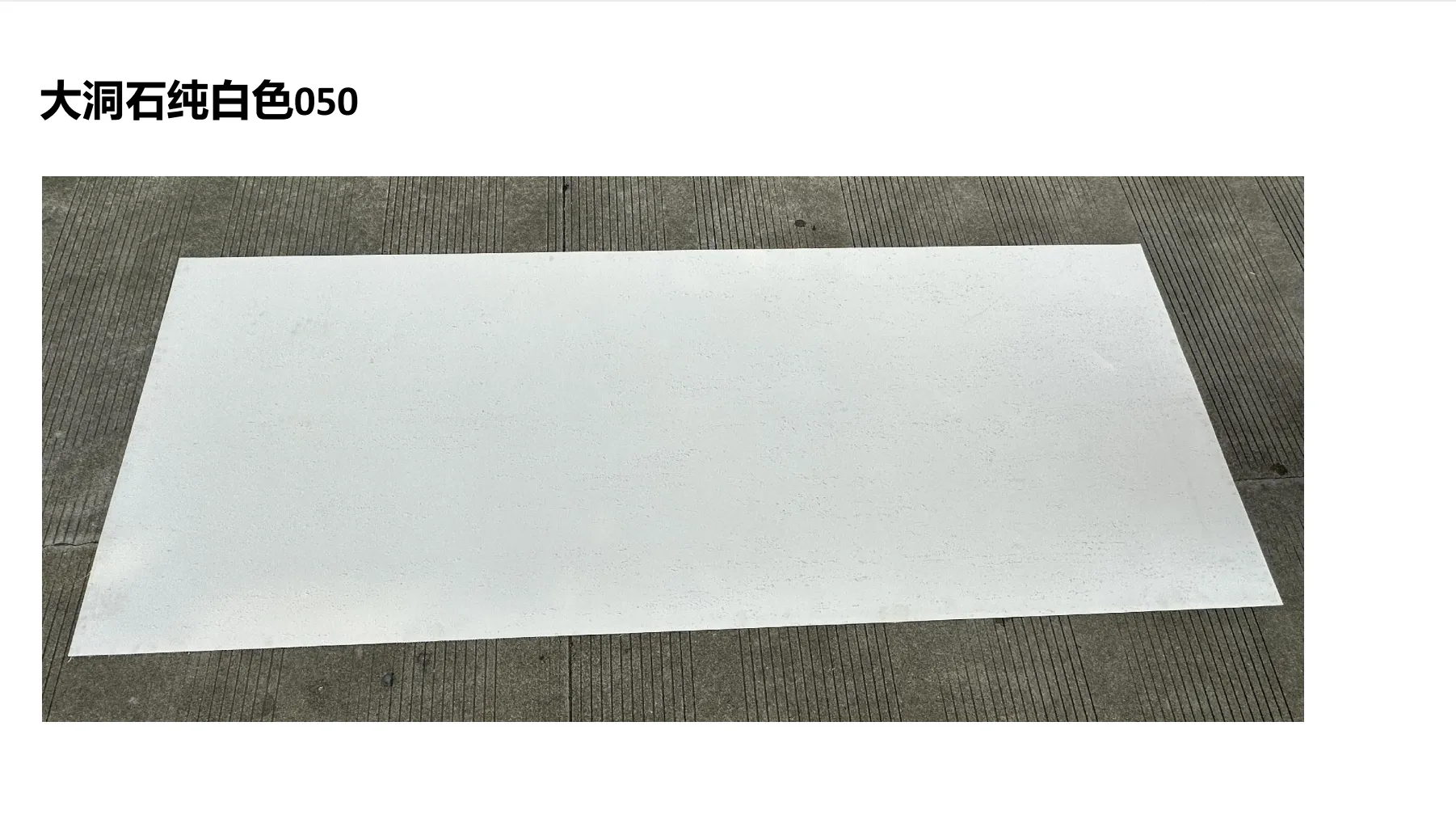
Enter MCM, a family of materials designed to mimic the look of natural stone, wood, and metal—without their vulnerabilities. What makes MCM different? It's a blend of natural minerals, polymers, and reinforcing fibers, engineered to be lightweight, flexible, and incredibly resistant to the elements. Two of its most popular lines are the MCM flexible stone (perfect for curved surfaces or tight spaces) and the MCM big slab board series (ideal for large, seamless installations like walls or floors). And then there's Huge Travertine , a standout in the MCM lineup that captures the timeless beauty of travertine but with a durability that natural stone can only dream of.
So, what sets Huge Travertine apart? For starters, its size. Traditional travertine slabs max out around 3 feet wide, but MCM's big slab technology lets Huge Travertine come in panels up to 6 feet wide—meaning fewer seams, a cleaner look, and less opportunity for saltwater to sneak in. It's also lightweight, which is a game-changer for coastal construction; heavy natural stone can put extra stress on foundations, especially in areas prone to hurricanes or flooding. And because it's flexible, it can handle the slight shifting of coastal soil without cracking—something rigid natural stone struggles with.
Let's talk aesthetics, because durability shouldn't mean sacrificing style. Huge Travertine isn't just tough—it's stunning. It replicates the natural pits, veins, and warm tones of travertine, but with modern twists. Take the travertine (starry green) variant, for example: tiny flecks of iridescent green mimic the way sunlight sparkles on ocean waves, making it a favorite for accent walls in beachfront living rooms. Or the classic beige Huge Travertine, which pairs perfectly with white trim and blue accents, evoking that "coastal cottage" vibe without the upkeep.
But here's the question that matters most for coastal homes: does it actually resist saltwater? To find out, we turned to the lab. MCM manufacturers subject their products to rigorous testing, and we got our hands on the results of a saltwater resistance test specifically for Huge Travertine. Let's break it down.
To simulate the harsh conditions of a coastal environment, we used a salt spray test, following ASTM B117 standards—the gold standard for evaluating corrosion resistance. Here's how it worked: we took two samples: one piece of natural travertine (similar in color and finish to Huge Travertine) and one piece of MCM Huge Travertine . Both were placed in a chamber where they were bombarded with a 5% saltwater solution (about as salty as seawater) at 35°C (95°F) with 95% humidity. We checked them every 200 hours for 1,000 hours total—roughly equivalent to 5 years of coastal exposure.
| Test Parameter | Natural Travertine (Control) | MCM Huge Travertine |
|---|---|---|
| Appearance After 200 Hours | Slight discoloration; small pits forming on surface | No visible changes; surface remains smooth |
| Structural Integrity After 500 Hours | Edges chipping; hairline cracks along veins | No cracking or chipping; edges remain sharp |
| Color Retention After 1,000 Hours | Color faded by 30%; yellowish tint from salt deposits | Color unchanged; no salt deposits visible |
| Water Absorption | Absorbed 8% of its weight in saltwater | Absorbed <0.5% of its weight in saltwater |
The results speak for themselves. By the end of the test, the natural travertine looked worn and weathered, with visible damage that would only get worse over time. The MCM Huge Travertine, on the other hand, looked like it had just come out of the box. No discoloration, no cracks, no salt deposits—just the same warm, inviting texture it started with. What's the secret? MCM's non-porous surface and reinforced composite structure. Unlike natural stone, which has tiny pores that trap saltwater, Huge Travertine's surface repels moisture, preventing salt from seeping in and causing damage.
Tests are one thing, but real-world performance is another. Take the Ocean Breeze Hotel in Myrtle Beach, South Carolina. Three years ago, they renovated their outdoor pool deck using MCM big slab board series with a lunar peak silvery finish (a sleek, metallic variant that shimmers like moonlight on water). Adjacent to the deck, they installed a Huge Travertine accent wall in starry green. Today, after three hurricane seasons, countless salt spray storms, and daily foot traffic, both surfaces look brand new. "We used to power wash the old concrete deck every month to remove salt stains," says the hotel's maintenance manager. "Now? We hose it down once a week, and it still looks great. The Huge Travertine wall hasn't faded a bit—guests still comment on how 'fresh' it looks."
Another example: a homeowner in Malibu, California, who replaced their rotting wooden siding with MCM flexible stone in a lunar peak silvery finish, paired with Huge Travertine for the patio. "I was tired of repainting the wood every year and replacing boards that had warped from the rain and salt," they told us. "Now, I don't even think about it. The siding still has that modern, metallic sheen, and the patio? My kids spill lemonade on it, my dog tracks sand across it, and it just wipes clean. Best home improvement I ever made."
Saltwater resistance is a big win, but MCM has other perks that make it ideal for coastal areas. For one, it's lightweight . Traditional stone can weigh 15-20 pounds per square foot, but MCM Huge Travertine weighs just 5-7 pounds per square foot. That means easier installation (no need for heavy machinery) and less strain on your home's foundation—critical in areas prone to soil erosion or flooding. It's also flexible , which helps it withstand the slight shifting of coastal soil or the vibrations from strong winds. And because it's a composite material, it's resistant to mold and mildew—common problems in humid coastal climates where natural stone or wood can trap moisture.
Sustainability is another plus. MCM is made with recycled materials (up to 30% post-consumer content in some products), and its production process uses less water and energy than quarrying natural stone. For eco-conscious coastal communities, that's a big selling point—you can have a beautiful home without harming the environment.
Coastal living should be about enjoying the view, not worrying about your walls. With MCM products like Huge Travertine , MCM flexible stone , and MCM big slab board series , you can have both beauty and durability. The saltwater resistance test results speak for themselves: MCM outperforms natural stone, wood, and even traditional concrete in withstanding the ocean's harsh elements. And with options like travertine (starry green) and lunar peak silvery , you don't have to sacrifice style for practicality.
So, if you're planning a coastal project—whether it's a beach house, a restaurant with ocean views, or a public boardwalk—don't let saltwater scare you into choosing boring, high-maintenance materials. Instead, look to MCM. It's not just a building material; it's a way to love your coastal space for years to come, without the stress of constant repairs. After all, life by the ocean should be about making memories, not fixing what the sea has broken. With MCM, you can do just that.
Recommend Products












