
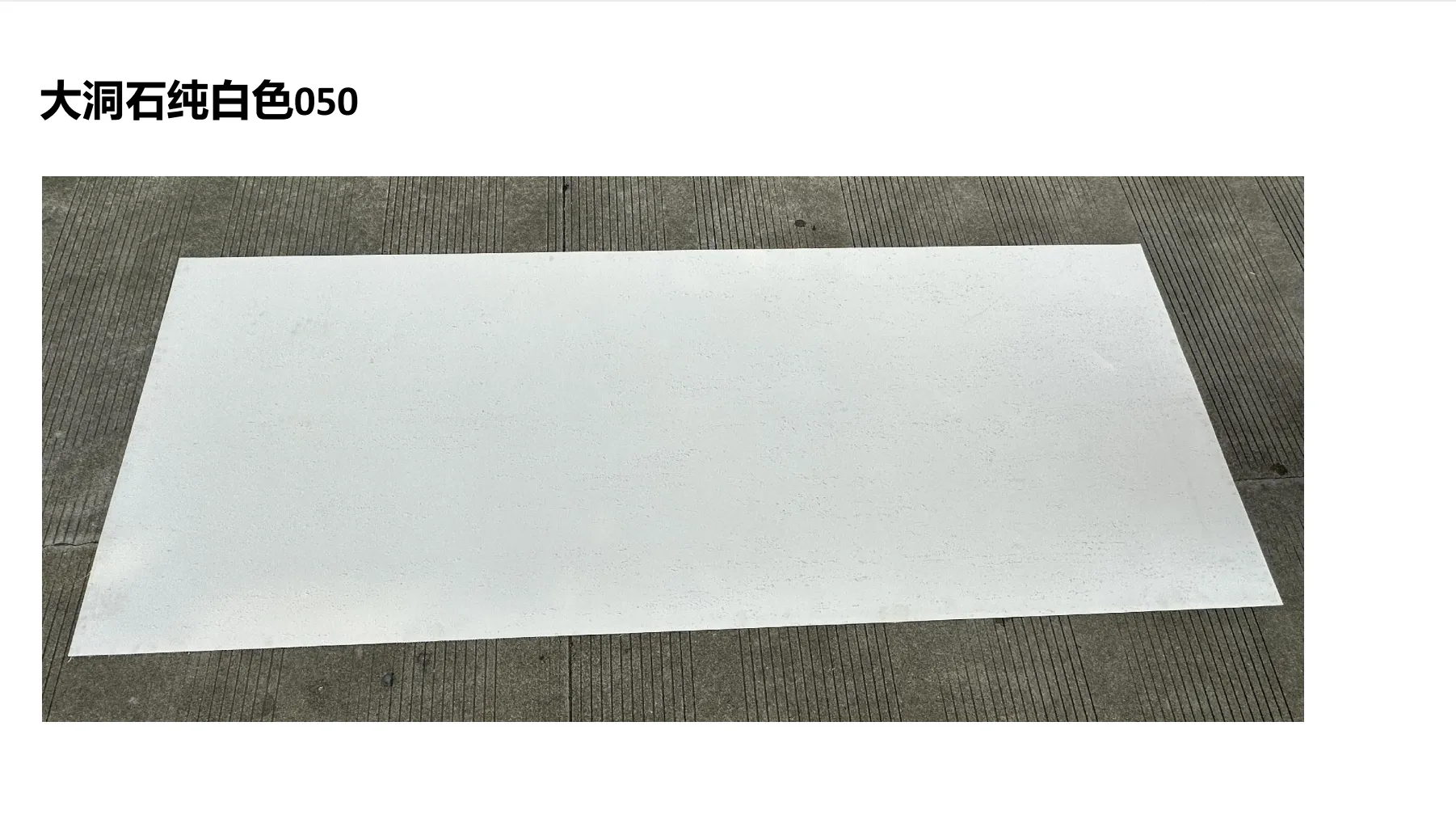
Walk into any modern boutique hotel, upscale restaurant, or cutting-edge office space today, and you'll likely find walls or facades that stop you in your tracks—textured, tactile, and uniquely beautiful. Chances are, those surfaces are made from MCM materials. Short for Modified Composite Material, MCM has revolutionized architectural design with its durability, versatility, and stunning aesthetics. Among its most sought-after offerings? Huge travertine MCM slabs. These grand, statement-making pieces bring the warmth of natural stone with the flexibility of modern engineering, making them a favorite for designers aiming to blend luxury with functionality.
But here's the question that often follows the "wow" moment: How long does it take to get these custom huge travertine slabs made? For architects racing to meet project deadlines, interior designers coordinating with contractors, or property owners eager to see their vision come to life, lead time isn't just a logistical detail—it's a critical piece of the puzzle. In this article, we'll pull back the curtain on the manufacturing journey of custom huge travertine MCM slabs, exploring the factors that shape their lead time, why patience is part of the process, and how you can plan effectively to keep your project on track.
Before we dive into lead times, let's take a moment to appreciate what makes MCM materials—especially huge travertine slabs—so special. Unlike traditional natural stone, which is heavy, brittle, and limited in size, MCM is a composite of natural minerals, polymers, and fibers. This blend creates a material that's lightweight (up to 70% lighter than solid stone), flexible (able to bend without cracking), and customizable in ways that natural stone simply can't match. Think of it as the perfect marriage of nature's beauty and human ingenuity.
Huge travertine MCM slabs take this innovation a step further. Ranging from 4 feet by 8 feet up to 10 feet by 12 feet or more, these slabs minimize seams, creating a seamless, immersive surface that transforms spaces. Whether it's the soft veining of travertine (beige) , the dramatic sparkle of travertine (starry green) , or the industrial chic of travertine (vintage silver) , each variant tells a different story. And because they're part of MCM's broader lineup—including the project board series , 3D printing series , and big slab board series —they can be paired with complementary materials like flexible stone or foamed aluminium alloy board for a cohesive design.
Lead time, in manufacturing terms, is the total time from when an order is placed to when the finished product arrives at your doorstep. For standard, off-the-shelf MCM products—say, a pack of weaving (khaki) panels or linear travertine (claybank) tiles—lead times might be as short as 2–4 weeks. But custom huge travertine slabs? That's a different story. These aren't mass-produced items; they're crafted to order, with every detail tailored to the client's specifications. As a result, lead times typically range from 6–12 weeks, and in some cases, longer. But why?
To put it simply: great things take time. Crafting a custom huge travertine MCM slab isn't just about mixing materials and pressing them into a mold. It's a journey of precision, artistry, and rigorous quality control. Let's break down the key factors that influence how long that journey takes.
Every huge travertine MCM slab starts with raw materials, and the availability of these materials is the first domino in the lead time chain. Travertine itself is a natural mineral, but not all travertine is created equal. Variants like travertine (starry red) or travertine (starry blue) require specific mineral deposits, which may be rarer or located in remote regions. For example, sourcing the iridescent particles that give starry green its glow might involve coordinating with suppliers in specialized quarries, adding a week or two to the timeline.
Then there's the MCM base. The polymers and fibers used to bind the minerals must meet strict quality standards—after all, these are the components that give the slab its strength and flexibility. If a batch of polymer resin is delayed or fails quality checks, production can't proceed. It's a reminder that even the most advanced manufacturing processes are still at the mercy of supply chains and material integrity.
If material sourcing is the foundation, customization is the blueprint—and it's often the biggest driver of lead time. No two custom huge travertine slabs are alike, and the more unique your design, the more time it will take to produce. Let's say you want a slab with a wave panel texture, combined with semicircle board edges, and finished in a custom travertine (starry orange) hue. That's not a standard recipe; it requires engineering a new mold, testing color pigments, and adjusting the 3D printing or casting process to achieve the desired texture.
The 3D printing series is a perfect example of how customization impacts time. 3D printing allows for incredibly intricate designs—think thread -like veining or gobi panel -inspired textures—that would be impossible with traditional casting. But 3D printers work layer by layer, and a huge slab might require hundreds of layers, each needing to dry or cure before the next can be added. A simple 3D-printed pattern might add 1–2 weeks to lead time; a highly complex, multi-textured design could add 4–6 weeks or more.
Even "small" customizations matter. Want the slab to have a rough granite stone (dark grey) finish on one edge and a polished marble veil white finish on the other? That requires multiple finishing steps, each with its own setup and quality checks. The takeaway? The more specific your vision, the more time the production team needs to bring it to life.
Imagine walking into a busy kitchen during dinner service. The chefs are working as fast as they can, but there's only so much oven space, so many pots, and so many hands. MCM manufacturing facilities are a bit like that—they have finite capacity, and during peak seasons (think spring and fall, when construction ramps up), demand for custom slabs can spike. If your order comes in during a busy period, you might find yourself waiting a bit longer as the team balances existing orders with new ones.
This is especially true for the big slab board series , which requires specialized equipment. Not all MCM factories have the machinery to produce slabs larger than 6 feet by 8 feet; those that do often have only 1–2 production lines dedicated to huge slabs. If one of those lines is down for maintenance or tied up with a large commercial order (like a hotel chain ordering 500 slabs), your lead time could stretch by several weeks.
But here's the silver lining: MCM manufacturers prioritize quality over speed. Rushing production to meet a deadline could result in air bubbles, uneven coloring, or weak spots in the slab—flaws that would compromise both aesthetics and performance. So while waiting might be frustrating, it's a sign that your slab is getting the attention it deserves.
If you've ever ordered a custom piece of furniture or clothing, you know that the final inspection can make or break the product. The same goes for huge travertine MCM slabs. These aren't just decorative—they're structural, often used on exterior facades or high-traffic interiors. A single defect could lead to water damage, cracking, or even safety issues down the line. That's why quality control (QC) is non-negotiable, and it adds time to the process.
QC starts early: raw materials are tested for purity and consistency. Then, during production, samples are pulled from each batch to check thickness, flexibility, and color match. After the slab is formed, it undergoes a battery of tests: impact resistance (to ensure it can withstand bumps), water absorption (to prevent mold or staining), and UV stability (to resist fading in sunlight). Finally, a team of inspectors examines the slab visually, checking for scratches, uneven edges, or veining inconsistencies. If a slab fails any of these tests, it's rejected—and the process starts over.
It's a rigorous process, but it's what ensures that when your slab arrives, it's not just beautiful, but built to last. As one MCM production manager put it: "We'd rather delay an order by a week than send out a slab that doesn't meet our standards. Our clients trust us to deliver excellence, and we take that trust seriously."
You've sourced the materials, customized the design, navigated production, and passed QC—now, your slab is ready to ship. But getting a huge, delicate MCM slab from the factory to your project site is no small feat. These slabs are large, but they're also surprisingly lightweight, which means they can be damaged by rough handling or extreme weather. As a result, shipping requires specialized packaging (custom crates, foam padding) and carriers experienced in transporting oversized, fragile goods.
Domestic shipping might take 3–5 days, but international orders? That's a different ballgame. Ocean freight can add 3–6 weeks, plus time for customs clearance, port delays, and final delivery to the site. And if your project is in a remote area—say, a mountain resort or an island—you might need to arrange for secondary transportation, like flatbed trucks or even helicopters. All of these variables add layers of time to the overall lead time.
To give you a better sense of what to expect, let's compare lead times across some of MCM's most popular series, including how they stack up against custom huge travertine slabs. Keep in mind that these are averages—your specific order could be faster or slower depending on the factors we've discussed.
| MCM Series | Typical Lead Time (Standard Products) | Typical Lead Time (Custom Products) | Key Factors Affecting Time |
|---|---|---|---|
| Project Board Series | 2–4 weeks | 4–6 weeks | Limited customization options; high production volume |
| 3D Printing Series | 3–5 weeks | 8–12 weeks | Intricate designs require longer printing and curing times |
| Big Slab Board Series (Standard Sizes) | 4–6 weeks | 6–8 weeks | Large size requires specialized equipment; moderate customization |
| Big Slab Board Series (Huge Custom Travertine) | N/A (custom-only) | 10–16 weeks | Oversized dimensions, high customization, strict quality control |
Now that you understand why lead times for custom huge travertine MCM slabs are what they are, let's talk about how to manage them effectively. With a little planning, you can minimize delays and ensure your project stays on track.
This might seem obvious, but it's worth repeating: the earlier you place your order, the better. Ideally, you should finalize your material selection and design specs 3–4 months before you need the slabs on-site. This gives the manufacturer time to source materials, schedule production, and address any unexpected delays (like a material shortage or a design tweak).
Miscommunication is a common cause of delays. The more detailed your design brief, the fewer revisions and back-and-forths you'll have. Include specs like slab dimensions, thickness (typically 3–6mm for MCM), texture (e.g., ripple board , sawing wood board ), color (with Pantone or RAL codes if possible), and finish (matte, polished, honed). If you have reference images or samples, share them—visuals are often clearer than words.
Some manufacturers offer rush production for an additional fee. This might involve prioritizing your order on the production line, expediting material sourcing, or paying for faster shipping. But be warned: rush orders can increase the risk of quality issues, and they're not always available during peak seasons. If you do go this route, make sure to clarify what "rush" entails (e.g., 8 weeks instead of 12) and get the new timeline in writing.
Even with the best planning, delays happen. A good rule of thumb is to add 2–3 weeks to the manufacturer's quoted lead time when creating your project timeline. This buffer gives you room to breathe if shipping is delayed, if a slab needs to be reworked, or if your contractor's schedule shifts.
The Challenge: The hotel was set to open in 14 weeks, and the design required 12 custom slabs (each 8 feet by 10 feet) with a unique wave panel texture. The client was concerned about meeting the deadline.
The Solution: The manufacturer and client worked together to streamline the process. The client finalized designs 16 weeks before opening (adding a 2-week buffer), provided detailed 3D models of the wave panel texture, and opted for air freight instead of ocean shipping. The manufacturer prioritized the order, using existing travertine (starry blue) pigment stocks and allocating a dedicated 3D printing line.
The Result: Slabs were produced in 10 weeks, shipped in 5 days, and installed 1 week ahead of schedule. The lobby became the hotel's signature feature, with guests raving about the "otherworldly" blue wave wall.
At the end of the day, lead time for custom huge travertine MCM slabs is about more than just a number on a calendar. It's about the craftsmanship that goes into turning raw materials into a work of art, the care that ensures your slab will stand the test of time, and the collaboration between you and the manufacturer to bring your vision to life. Yes, 6–12 weeks (or more) is a long time to wait—but when you see that first slab installed, with its perfect color, texture, and size, you'll understand why every moment was worth it.
So, whether you're designing a boutique café, a corporate headquarters, or your own dream home, remember: great design isn't rushed. It's crafted. And with a little planning, communication, and trust in the process, your custom huge travertine MCM slabs will arrive not just on time, but ready to transform your space into something extraordinary.
Recommend Products












