
Walk into any thoughtfully designed space, and you'll notice it immediately—the way light dances across surfaces, turning walls into canvases and buildings into stories. Building materials aren't just structural; they're silent storytellers, shaping how we feel about a place. Among these storytellers, travertine has long held a revered spot, with its warm tones, natural veining, and timeless elegance. But today, a new chapter is being written: enter huge travertine MCM —a material that marries the ancient charm of travertine with cutting-edge Modified Composite Material (MCM) technology, elevating building aesthetics through the art of light reflection.
In this article, we'll explore how huge travertine MCM transforms light into a design tool, why it's becoming a go-to choice for architects and designers, and how it fits alongside other innovative MCM series like MCM flexible stone and MCM 3D printing series . Whether you're designing a grand hotel facade or a cozy residential interior, understanding how these materials interact with light can turn a good space into an unforgettable one.
Travertine has been gracing buildings for millennia. Think of the Colosseum's weathered arches or the opulent interiors of Roman baths—travertine's porous, sedimentary texture has always exuded a sense of history and warmth. Its natural pits and veins, formed by mineral-rich water over centuries, create a surface that doesn't just reflect light—it interacts with it. Sunlight filters through those tiny pores, casting soft, dappled shadows that shift throughout the day, making spaces feel dynamic and alive.
But traditional travertine has its limitations. Quarried in large blocks, it's heavy, making installation cumbersome and costly. Its porosity, while charming, can also make it prone to staining and weathering over time. That's where MCM technology steps in. MCM, or Modified Composite Material, is a game-changer: a lightweight, durable composite that captures the look and feel of natural stone but with enhanced performance. And when applied to travertine—especially in "huge" formats (slabs up to 1200x2400mm)—it unlocks a new level of design freedom.
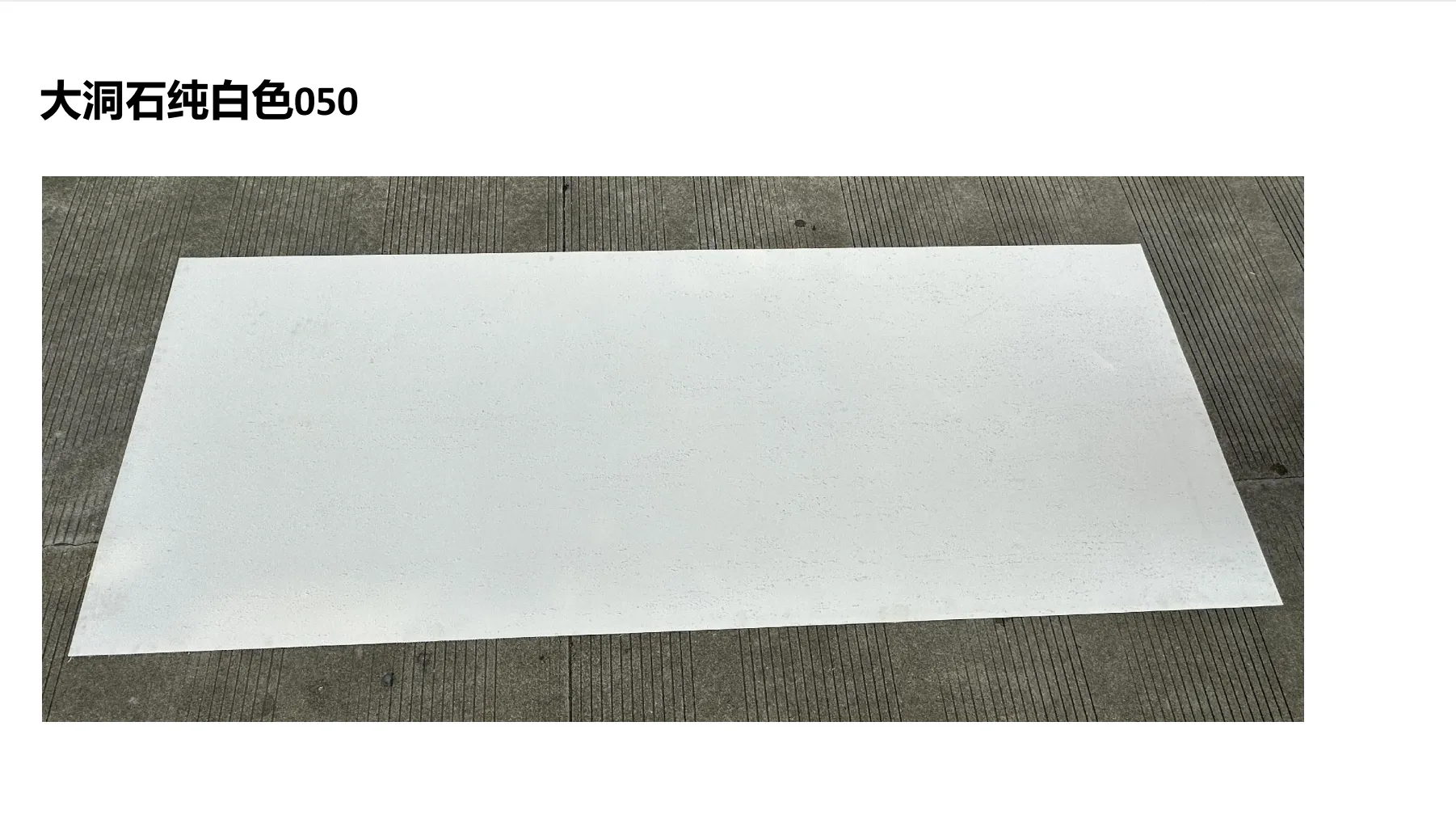
Huge travertine MCM panels retain all the visual appeal of natural travertine—those signature honeyed tones, the subtle play of light on its surface—but with benefits that modern construction demands: reduced weight (up to 80% lighter than natural stone), increased flexibility (ideal for curved or irregular surfaces), and improved resistance to moisture, UV rays, and wear. Suddenly, travertine isn't just for floors or small accent walls; it can clad entire buildings, creating seamless, light-filled facades that make a statement.
At the heart of huge travertine MCM's appeal is its relationship with light. Light reflection isn't just about shine—it's about how a material absorbs, scatters, or bounces back light to create mood, depth, and dimension. Travertine, by nature, is a master of diffuse reflection : its porous surface scatters light in multiple directions, softening harsh rays and creating a warm, inviting glow. This is why travertine interiors feel cozy yet spacious, even on overcast days.
MCM technology amplifies this effect. By engineering the composite matrix to mimic travertine's natural texture at a microscopic level, manufacturers can control porosity and surface irregularities, fine-tuning how light interacts with the material. For example, a honed huge travertine MCM finish will scatter light more evenly, creating a soft, matte luminosity, while a lightly polished finish might add subtle specular highlights—small, bright reflections that catch the eye and add a touch of luxury.
Consider travertine (starry green) —a variant that adds a whimsical twist to traditional travertine. Its surface is dotted with tiny, iridescent particles that catch light like stars in a night sky. In a daytime setting, sunlight turns these particles into flecks of emerald and gold, while artificial light at night transforms them into a twinkling display. It's a perfect example of how MCM can take a natural stone's inherent light-play and elevate it into something truly magical.
Huge travertine MCM is just one star in the MCM galaxy. To truly appreciate its versatility, it helps to see how it complements other MCM series, each with its own light-reflective superpowers. Let's take a closer look at a few key players:
| MCM Series | Key Features | Light Reflection Properties | Ideal Applications |
|---|---|---|---|
| Huge Travertine Series | Large-format slabs (up to 1200x2400mm), natural travertine texture, available in tones like beige, starry green, and vintage gold. | Diffuse reflection with subtle specular highlights; warm, golden undertones enhance natural light. | Facade cladding, lobby walls, hotel interiors, residential accent walls. |
| MCM Flexible Stone | Ultra-thin (as thin as 3mm), bendable panels that mimic stone textures like lunar peak silvery and rust mosaic stone. | Variable—matte to semi-gloss; metallic tones (e.g., lunar peak silvery) offer cool, reflective sheen. | Curved surfaces, column wraps, furniture accents, ceiling panels. |
| MCM 3D Printing Series | Custom 3D textures (e.g., wave panels, thread patterns) for unique, tactile surfaces. | Directional reflection—textures can be designed to channel light into specific patterns (e.g., wave panels create rippling light effects). | Feature walls, art installations, retail storefronts, exhibition spaces. |
Take MCM flexible stone , for instance. Its thin, bendable nature makes it perfect for curved surfaces, where light hits at varying angles. A wall clad in lunar peak silvery flexible stone, with its cool, metallic sheen, can reflect light in a way that makes a small room feel larger—its smooth, slightly reflective surface bounces light deeper into corners, eliminating shadows. Pair that with huge travertine MCM on an adjacent wall, and you create a dynamic interplay of warm and cool reflections, adding layers of visual interest.
Then there's the MCM 3D printing series , which pushes the boundaries of what's possible. Imagine a hotel lobby with a feature wall printed in a "wave panel" texture using MCM 3D technology. As sunlight streams through floor-to-ceiling windows, the undulating surface scatters light like water, creating rippling patterns that move across the space throughout the day. It's not just a wall—it's a performance, with light as the lead actor.
Huge travertine MCM isn't just a theoretical delight—it's transforming real spaces, one project at a time. Let's dive into a few examples that showcase its light-reflective magic:
The Azure Hotel's facade is a masterclass in light and texture. Clad in huge travertine MCM slabs in a warm beige tone, the building glows at sunrise, as the first rays of light bounce off its surface, turning the exterior into a golden beacon. What makes this design clever is the strategic use of both honed and lightly polished finishes. The lower floors, which receive less direct sunlight, use a polished finish to maximize reflection, while the upper floors use a honed finish to avoid glare. The result? A facade that looks cohesive yet dynamic, adapting to the sun's position throughout the day.
Inside, the lobby features a 20-foot-tall accent wall of travertine (starry green) MCM. Here, the starry particles catch the lobby's chandelier light, creating a constellation-like effect that guests can't help but pause to admire. "It's not just a wall—it's a conversation starter," says lead architect Maria Gonzalez. "The way the green tones shift with the light—from deep emerald at noon to soft jade at dusk—adds a layer of luxury that feels organic, not forced."
For this residential complex, sustainability was as important as aesthetics. The design team chose huge travertine MCM for the exterior cladding, not just for its beauty but for its eco-friendly credentials (MCM uses 60% less natural stone than traditional travertine, reducing quarrying impact). The material's lightweight nature also cut down on structural support costs, a win-win for both the environment and the budget.
But the real "aha" moment came with the light reflection. The complex's north-facing apartments, which typically struggle with dim natural light, now feature huge travertine MCM accent walls in their living rooms. The material's diffuse reflection scatters what little sunlight there is, brightening the space without the harshness of mirrored surfaces. "Tenants often comment on how 'airy' their apartments feel, even on cloudy days," notes project manager James Lin. "It's the travertine doing the work—turning weak light into something warm and usable."
A tech campus designed for creativity, the Innovation Hub needed a material that felt modern yet inviting. The solution? A mix of MCM 3D printing series wave panels and huge travertine MCM. The wave panels, with their undulating texture, line the entrance walkway, catching morning light and casting rippling shadows that guide visitors toward the door. Inside, the atrium features a curved wall of huge travertine MCM, which softens the industrial feel of the exposed steel beams. "We wanted a space that felt innovative but not cold," explains designer Klaus Mueller. "The travertine's warmth balances the 3D-printed panels' edginess, and the way light moves across both materials throughout the day keeps the space feeling alive."
To truly appreciate huge travertine MCM, it helps to compare it with the alternatives. Let's start with natural travertine: while undeniably beautiful, it's heavy (up to 20kg per square meter), making installation labor-intensive and requiring reinforced structures. Its porosity also means it stains easily—coffee spills, rainwater, and even foot traffic can leave marks over time. MCM solves these issues: at just 4-6kg per square meter, it's lightweight enough for most standard walls; its composite core is non-porous, resisting stains and moisture; and it's UV-stable, so those warm tones won't fade in harsh sunlight.
Then there's other cladding materials like ceramic tiles or fiber cement boards. While durable, these often lack the depth and organic feel of travertine. Ceramic tiles, for example, have a uniform, glossy finish that can create harsh reflections, making spaces feel sterile. Fiber cement, on the other hand, tends to have a flat, matte look that absorbs light rather than reflecting it, leading to darker interiors. Huge travertine MCM hits the sweet spot: it has the depth of natural stone, the durability of composites, and the light-reflective properties that make spaces feel warm and inviting.
Another competitor? Solid surface materials like quartz or acrylic. While these offer consistent color and pattern, they often look "too perfect"—lacking the natural variation that makes travertine so charming. "Clients tell us they want spaces that feel 'lived-in' but luxurious," says Sarah Chen. "Huge travertine MCM gives them that: the natural veining and light play make it feel authentic, like it's been part of the building for decades, even if it's brand new."
So, how can you make the most of huge travertine MCM's light-reflective properties in your next project? Here are a few tips from industry experts:
As our cities grow and evolve, the demand for building materials that blend beauty, performance, and sustainability will only increase. Huge travertine MCM is at the forefront of this movement, proving that you don't have to sacrifice tradition for innovation. By harnessing the power of light reflection, it transforms buildings from mere structures into experiences—spaces that feel warm, alive, and deeply human.
Looking ahead, we can expect even more exciting developments. Imagine MCM 3D printing series panels that are custom-designed to mimic the light patterns of specific locations—say, the way sunlight filters through a forest canopy or reflects off a mountain lake. Or huge travertine MCM with embedded, energy-harvesting particles that capture sunlight and convert it into electricity, making buildings both beautiful and self-sustaining. The possibilities are endless, and MCM technology is leading the charge.
In the end, great architecture is about more than just function—it's about emotion. It's about how a space makes you feel when you walk in, how the light hits the walls, and how the materials tell a story. With huge travertine MCM, that story is one of timeless elegance, innovative engineering, and a deep respect for the natural world. It's a story that light helps write, one reflection at a time.
So whether you're designing a skyscraper, a boutique hotel, or your own home, remember: the right material can turn light into magic. And with huge travertine MCM, that magic is just a slab away.
Recommend Products












