
In the world of architecture and design, there's a quiet battle waged every day: the quest to create spaces that are both stunning and enduring. A hotel lobby that welcomes guests with warmth, yet stands up to luggage wheels and scuffing. A retail facade that turns heads, even after years of rain, sun, and city pollution. A museum wall that displays art with reverence, while supporting the weight of installations and the hum of visitors. For too long, designers have had to choose—beauty or resilience. But what if a material existed that refused to compromise? Enter the Huge Travertine MCM Project Board Series: a line of engineered cladding and flooring solutions that marries the timeless allure of natural stone with the rugged durability of modern composite technology. Let's dive into what makes this series not just a product, but a game-changer for anyone building with the future in mind.
First things first: what makes this series "huge"? It's not just about size (though these boards come in generous slabs to minimize seams and streamline installation). It's about ambition. The Huge Travertine MCM Project Board Series was born from a simple question: What if we could take the most beloved qualities of natural travertine—its unique veining, its earthy warmth, its ability to feel both ancient and alive—and amplify them with engineering that makes it unbreakable? The result is a material that doesn't just meet industry standards; it redefines them.
At its core lies MCM, or Modified Composite Material, a technology that blends natural travertine aggregates with advanced polymers. This isn't your average fake stone; it's a symbiosis of nature and science. The travertine, sourced from select quarries for its distinctive texture and color, is crushed into fine particles, then bonded with a flexible stone matrix that adds tensile strength without sacrificing the stone's organic beauty. The result? A board that's 30% lighter than solid travertine, yet 50% more impact-resistant. It bends without breaking, resists cracks from thermal expansion, and laughs off the kind of wear that would leave natural stone scarred.
Heavy-duty use isn't just about "not breaking"—it's about aging gracefully, performing consistently, and adapting to the chaos of real life. The Huge Travertine MCM Project Board Series was put through the wringer during development, tested in scenarios that mimic the harshest environments a building might face. Let's break down the engineering that makes it stand out:
Think of a busy airport terminal, where suitcases are dragged, carts are slammed, and the occasional coffee spill is inevitable. Traditional travertine, with its porous structure, would chip at the edges, stain, or develop unsightly cracks. The Huge Travertine MCM Board? Its composite core acts like a shock absorber. During lab tests, a 5kg weight dropped from 1 meter height left no visible damage—no chips, no dents, just a surface that stayed true. For high-traffic areas, this isn't just a feature; it's peace of mind.
Exterior cladding takes the brunt of nature's mood swings. In Dubai, where temperatures soar to 50°C, traditional stone can expand and contract, leading to gaps or delamination. In Seattle, relentless rain can seep into pores, causing mold or erosion. The Huge Travertine MCM Board is designed to handle both extremes. Its surface is treated with a UV-resistant coating that prevents fading, even after years of direct sunlight. The polymer matrix is impermeable to water, so rain, snow, or humidity won't penetrate. In freeze-thaw tests—where samples are cycled between -20°C and 40°C with water saturation—there was zero degradation. For coastal projects, it's also salt-spray resistant, making it ideal for beachfront hotels or marina walkways.
When used as flooring or wall cladding, a material isn't just holding itself up—it's supporting furniture, equipment, and even structural elements. The Huge Travertine MCM Board has a flexural strength of 25MPa, meaning it can span longer distances without sagging. Compare that to solid travertine, which averages 12-15MPa. This makes it a favorite for commercial spaces where heavy machinery (like hospital beds or restaurant kitchen equipment) is moved regularly, or for cantilevered designs where the material needs to extend beyond structural supports without compromising safety.
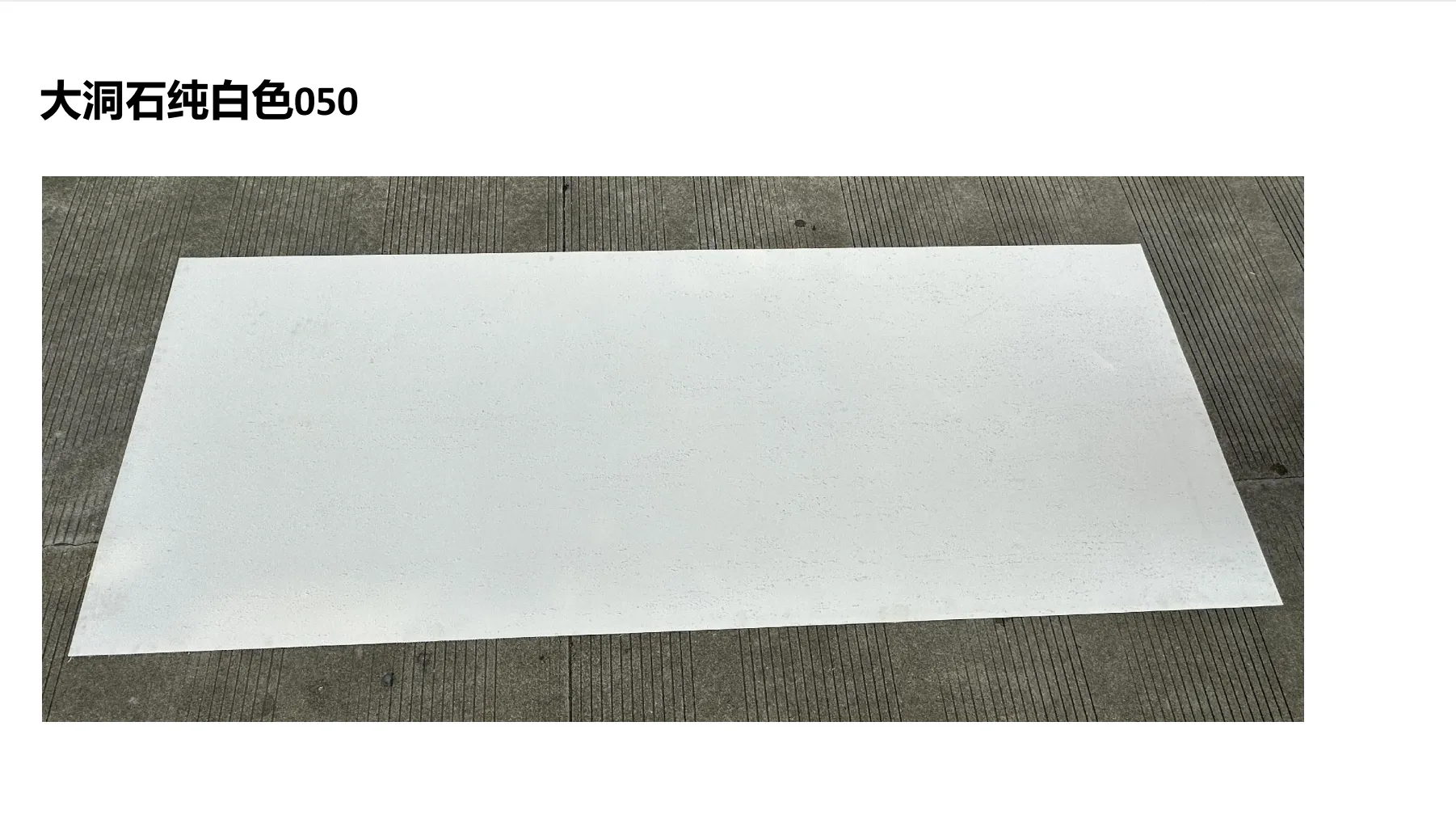
Durability is impressive, but what good is a tough material if it lacks soul? The Huge Travertine MCM Project Board Series shines here, too, offering a range of finishes and colors that cater to diverse design visions. Take, for example, the lunar peak silvery variant—a pale, iridescent finish that mimics moonlight on stone, perfect for modernist buildings aiming for a celestial, otherworldly vibe. Or the classic travertine (beige), with its warm, earthy tones that bring a touch of Tuscany to urban lofts. There's also the bold travertine (starry blue), where flecks of metallic blue glint like distant stars, adding drama to feature walls.
But it's not just about color. The series includes textures that tell stories: rough-hewn surfaces that evoke mountain quarries, smooth honed finishes for minimalist interiors, and even 3D-printed patterns that add depth (part of the broader MCM 3D Printing Series). One standout is the wave panel, which features gentle, undulating ridges that catch light differently throughout the day, turning a static wall into a dynamic, ever-changing canvas. Imagine this in a hotel lobby—guests would pause, not just to check in, but to watch how the light dances across the surface as the sun sets.
Still skeptical? Let's put the Huge Travertine MCM Project Board head-to-head with traditional building materials. The table below breaks down the key differences:
| Feature | Huge Travertine MCM Project Board | Solid Natural Travertine | Fair-Faced Concrete |
|---|---|---|---|
| Weight (per sq.m) | 12kg (lightweight, easy to install) | 28kg (requires heavy structural support) | 24kg (bulky, limits design flexibility) |
| Impact Resistance | Resists chips/cracks from heavy impacts | Porous; prone to chipping and staining | Durable but prone to surface spalling over time |
| Installation Time | 50% faster (lightweight, can be cut on-site) | Slow (requires specialized labor, heavy lifting) | Moderate (needs formwork, curing time) |
| Maintenance | Low (wipe clean with water; no sealing needed) | High (requires regular sealing, stain removal) | Moderate (prone to dust, may need periodic sealing) |
| Sustainability | Uses recycled travertine aggregates; low carbon footprint | High quarrying impact; limited recyclability | High cement production emissions; energy-intensive |
The verdict? The Huge Travertine MCM Board outperforms traditional materials in nearly every category, especially when it comes to installation ease, long-term maintenance, and sustainability.
The Riverbank Hotel, a boutique property along Lisbon's Tagus River, needed a facade that would withstand coastal humidity, salt spray, and the city's vibrant tourist foot traffic. The design team chose the Huge Travertine MCM Board in travertine (starry blue) for the exterior cladding, paired with fair-faced concrete accents for contrast. Two years later, the facade remains as vivid as day one—the blue flecks still sparkle, and there's no sign of water damage or discoloration. "We wanted something that felt alive, like the river itself," says lead architect Maria Santos. "This material delivered—even after storms, it looks refreshed, not worn."
The Nexus Tower, a 30-story office building in Singapore's central business district, required flooring that could handle 24/7 foot traffic, rolling office chairs, and the occasional coffee spill. The Huge Travertine MCM Board in lunar peak silvery was installed in the lobby and common areas. After 18 months, facility manager James Tan reports zero replacements needed: "We expected some wear, but the surface still looks new. Even the high-traffic elevator lobbies—no scratches, no stains. It's been a game-changer for our maintenance budget."
In today's world, durability and beauty aren't enough—materials must also tread lightly on the planet. The Huge Travertine MCM Project Board Series takes sustainability seriously. The travertine used in production is sourced from waste material from traditional quarrying, diverting tons of stone from landfills. The manufacturing process uses 40% less energy than traditional stone cutting, thanks to its composite technology. And at the end of its lifecycle, the boards can be recycled into new construction materials, closing the loop.
For developers aiming for LEED or BREEAM certifications, this is a huge win. The series contributes points for recycled content, low-VOC emissions (it contains no harmful chemicals), and reduced transportation impacts (its lightweight design cuts fuel use during shipping).
At the end of the day, the Huge Travertine MCM Project Board Series isn't just a product—it's a partner for designers and builders who refuse to settle. It's for the architect who dreams of a museum that will stand for centuries, not just decades. For the hotelier who wants guests to remember the space as much as the stay. For the city planner who wants buildings that grow with the community, not against it.
With its unbeatable combination of strength, beauty, and sustainability, this series isn't just keeping up with the demands of modern construction—it's setting a new standard. So whether you're designing a skyscraper, a cozy café, or a public park pavilion, consider this: the right material doesn't just build spaces; it builds legacies. And the Huge Travertine MCM Project Board? It's ready to be part of yours.
Recommend Products












