
Architecture is more than just walls and roofs—it's the language of spaces, telling stories of culture, innovation, and human ingenuity. For centuries, natural stone has been the poet of this language, gracing cathedrals, palaces, and homes with its timeless beauty. But as our world evolves, so do our needs: we crave materials that honor tradition while embracing progress, that marry aesthetics with practicality, and that tread lightly on our planet. Enter the era of Modified Composite Material (MCM) —and at the forefront of this revolution, the Huge Travertine MCM Slabs stand tall, redefining what's possible in architectural design.
Walk into any iconic building, and you'll likely find natural stone: the warm beige of travertine in a Roman villa, the sleek gray of granite in a modern skyscraper. But for all its grandeur, natural stone comes with a heavy price—literally. Its weight strains structures, its extraction disrupts ecosystems, and its installation demands armies of laborers. Architects and designers have long dreamed of a material that captures stone's essence without its limitations. That dream? It's now a reality, and it goes by the name of mcm big slab board series —specifically, the showstopping Huge Travertine MCM Slabs.
Let's start with the obvious: natural stone is heavy. A single slab of marble or granite can weigh hundreds of pounds, requiring reinforced foundations, specialized lifting equipment, and structural engineers to ensure buildings can bear the load. For older buildings or renovation projects, this becomes a logistical nightmare—retrofitting structures to support stone often means skyrocketing costs and delayed timelines. Even in new construction, the weight limits design possibilities: cantilevered overhangs, curved walls, or lightweight facades become nearly impossible.
Then there's sustainability. Quarrying natural stone involves massive energy use, habitat destruction, and waste—up to 30% of extracted stone is discarded as rubble. Transporting these heavy slabs across the globe adds to the carbon footprint, making "green architecture" a contradiction when stone is the material of choice. And while stone is durable, it's not indestructible: freeze-thaw cycles crack it, saltwater erodes it, and stains can mar its surface permanently. Repairing or replacing damaged stone? Expensive and time-consuming.
Designers also face limitations in customization. Natural stone is a product of nature, so each slab is unique—but that uniqueness can be a curse. Matching veining or color across a large project is tricky, leading to inconsistent aesthetics. Want a specific shade of green or a metallic finish? You're at the mercy of what the earth provides. For modern projects that demand precision and creativity, natural stone often feels like a restrictive, not a liberating, choice.
Enter Modified Composite Material, or MCM—a game-changer that's redefining architectural cladding. MCM is exactly what it sounds like: a composite of materials (typically a mineral core bonded to aluminum skins) engineered to mimic the look and feel of natural stone, wood, or metal—without the drawbacks. Lightweight, flexible, and highly customizable, MCM has quickly become the go-to for architects who refuse to compromise on beauty or practicality.
At the heart of MCM's appeal is its mcm flexible stone technology. Unlike rigid natural stone, MCM panels bend and conform to surfaces, allowing for curved walls, intricate facades, and even 3D-printed designs that were once unthinkable. And when we talk about size, the mcm big slab board series takes things to the next level. These aren't your average small tiles—we're talking large-format slabs that reduce grout lines, create seamless surfaces, and amplify the "wow" factor of any space.
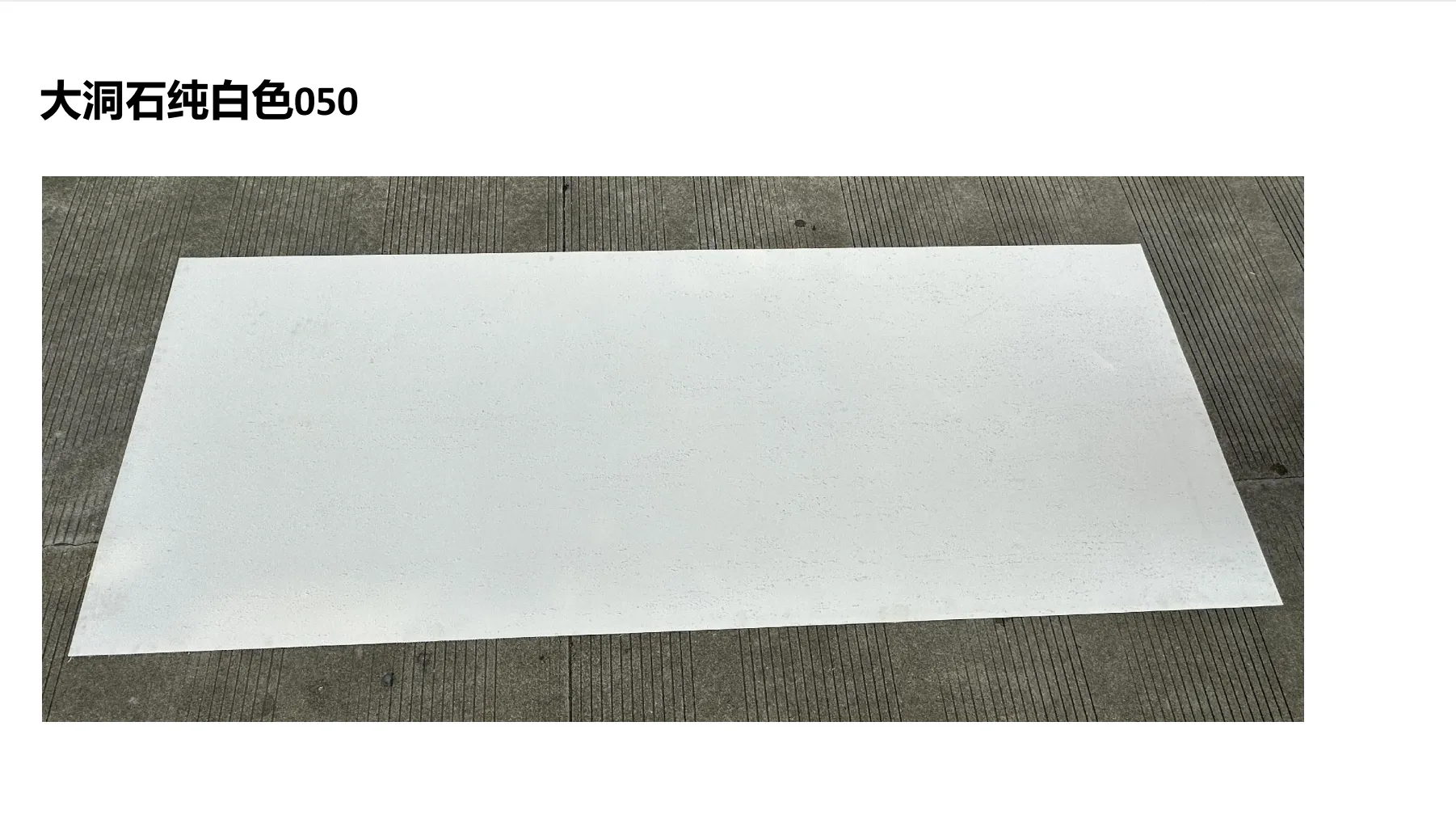
But the real star of the show? The Huge Travertine MCM Slabs . Designed to replicate the timeless elegance of travertine—a natural stone beloved for its porous texture, warm tones, and organic veining—these slabs capture every nuance of the real thing. Think the honeyed beige of classic travertine, the subtle pits that tell a story of geological formation, and the soft sheen that catches the light. But here's the twist: they weigh up to 75% less than natural travertine, install in a fraction of the time, and come in a range of colors and finishes that natural stone could never match.
Let's dive deeper into what makes Huge Travertine MCM Slabs so special. First, the aesthetics. Travertine has been a staple in architecture since ancient Rome—think the Colosseum or the Trevi Fountain—thanks to its warm, earthy charm. Natural travertine's unique pores (formed by mineral-rich water evaporating) give it a tactile, lived-in quality that feels both rustic and refined. The Huge Travertine MCM Slabs replicate these pores with precision, using advanced printing techniques that mimic nature's randomness. Run your hand over an MCM slab, and you'll swear it's the real deal—until you lift it. At just 3-5 kg per square meter, it's light enough for one person to carry, making installation a breeze.
But it's not just about looks. These slabs are built to last. The mineral core is fire-resistant, water-resistant, and impervious to mold and mildew—perfect for humid climates or outdoor spaces. The aluminum backing adds strength, while the protective coating resists scratches, stains, and UV rays, ensuring the color stays vibrant for decades. Unlike natural travertine, which requires regular sealing to prevent staining, MCM slabs need minimal maintenance: a quick wipe with soap and water is all it takes to keep them looking fresh.
Design versatility is another win. The mcm big slab board series includes not just travertine, but a spectrum of finishes that cater to every aesthetic. Want to channel the cosmos? Check out travertine (starry green) —a variation with subtle green veining that shimmers like starlight trapped in stone. Craving something more modern? lunar peak silvery offers a sleek, metallic sheen that evokes moonlit mountain tops, perfect for minimalist or industrial spaces. These aren't just materials—they're tools for storytelling, letting architects and homeowners craft spaces that reflect their vision, not just the limitations of nature.
| Feature | Natural Travertine | Huge Travertine MCM Slabs |
|---|---|---|
| Weight (per sq.m) | 20-30 kg | 3-5 kg |
| Installation Time | 3-5 days (requires heavy machinery) | 1-2 days (can be installed by 2-3 people) |
| Sustainability | High carbon footprint (quarrying, transport) | Low carbon footprint (recyclable materials, minimal waste) |
| Customization | Limited by natural variation | Unlimited colors/finishes (e.g., starry green, lunar peak silvery) |
| Maintenance | Requires sealing every 1-2 years | Minimal (soap and water cleaning) |
| Durability | Prone to cracking, staining, and erosion | Resistant to fire, water, UV rays, and scratches |
One of the best things about Huge Travertine MCM Slabs is their versatility. They're equally at home in residential and commercial projects, indoors and out. Let's explore some common applications:
Imagine walking into a modern home with a soaring entryway clad in Huge Travertine MCM Slabs. The seamless, large-format panels create a sense of grandeur, while the warm travertine tones make the space feel inviting. In kitchens, these slabs work beautifully as backsplashes—resistant to heat and stains, they add texture without overwhelming the room. Bathrooms? Perfect. Their water resistance means you can use them on walls, showers, even floors, without worrying about mold. And for outdoor patios or pool surrounds, they stay cool underfoot and won't crack in freeze-thaw conditions—unlike natural stone.
Restaurants, hotels, and office lobbies are embracing Huge Travertine MCM Slabs for their ability to make a statement without breaking the budget. A boutique hotel might use travertine (starry green) on its facade to stand out in a crowded street, while a corporate office could opt for lunar peak silvery for a sleek, professional look. Retail spaces love them too—their lightweight nature means they can be installed on elevated surfaces or used to create eye-catching display walls that draw customers in.
Here's where mcm flexible stone truly shines. Many historical buildings have delicate structures that can't support the weight of natural stone. Huge Travertine MCM Slabs offer a way to restore these buildings to their former glory without compromising structural integrity. For example, a 19th-century townhouse with crumbling stone cladding could be retrofitted with MCM slabs that match the original travertine's color and texture, preserving the building's character while adding modern durability.
In an era where sustainability is no longer a buzzword but a necessity, MCM checks all the boxes. Let's start with production: MCM uses recycled materials (like aluminum) and requires far less energy to manufacture than natural stone quarrying. Quarrying natural stone involves blasting, heavy machinery, and massive amounts of water—MCM production, by contrast, is a controlled, low-waste process that generates minimal emissions.
Transportation is another eco-win. Since MCM slabs are lightweight, they require fewer trucks to transport, reducing fuel consumption and carbon emissions. A single truck can carry 10 times more MCM panels than natural stone slabs, cutting down on trips and congestion.
And at the end of their lifecycle? MCM panels are fully recyclable. Unlike natural stone, which ends up in landfills when replaced, MCM can be broken down and repurposed into new panels or other aluminum products. It's a closed-loop system that aligns with the circular economy—something every environmentally conscious builder and homeowner can get behind.
But sustainability isn't just about the planet—it's about people too. Installing natural stone is labor-intensive and risky, with workers often facing injuries from heavy lifting. MCM's lightweight nature reduces the risk of accidents, making job sites safer. Plus, faster installation means less disruption for homeowners or business owners, getting projects finished on time and under budget.
Architecture is about more than buildings—it's about creating spaces that inspire, function, and endure. For too long, designers have had to choose between beauty and practicality, tradition and innovation. MCM, and specifically the Huge Travertine MCM Slabs, erases that choice.
Whether you're building a modern home, renovating a historic landmark, or designing a commercial space that needs to stand out, Huge Travertine MCM Slabs offer the best of both worlds: the timeless elegance of natural travertine, the durability of engineered materials, and the design freedom to bring even the wildest visions to life. And with the mcm big slab board series expanding every year, the possibilities are only growing.
So here's to the future of architecture—a future where materials are light, not heavy; sustainable, not wasteful; and where beauty and brains go hand in hand. It's a future built on innovation, and it starts with MCM. Because when you can have the look of natural stone without the hassle, why settle for anything less?
Recommend Products












