
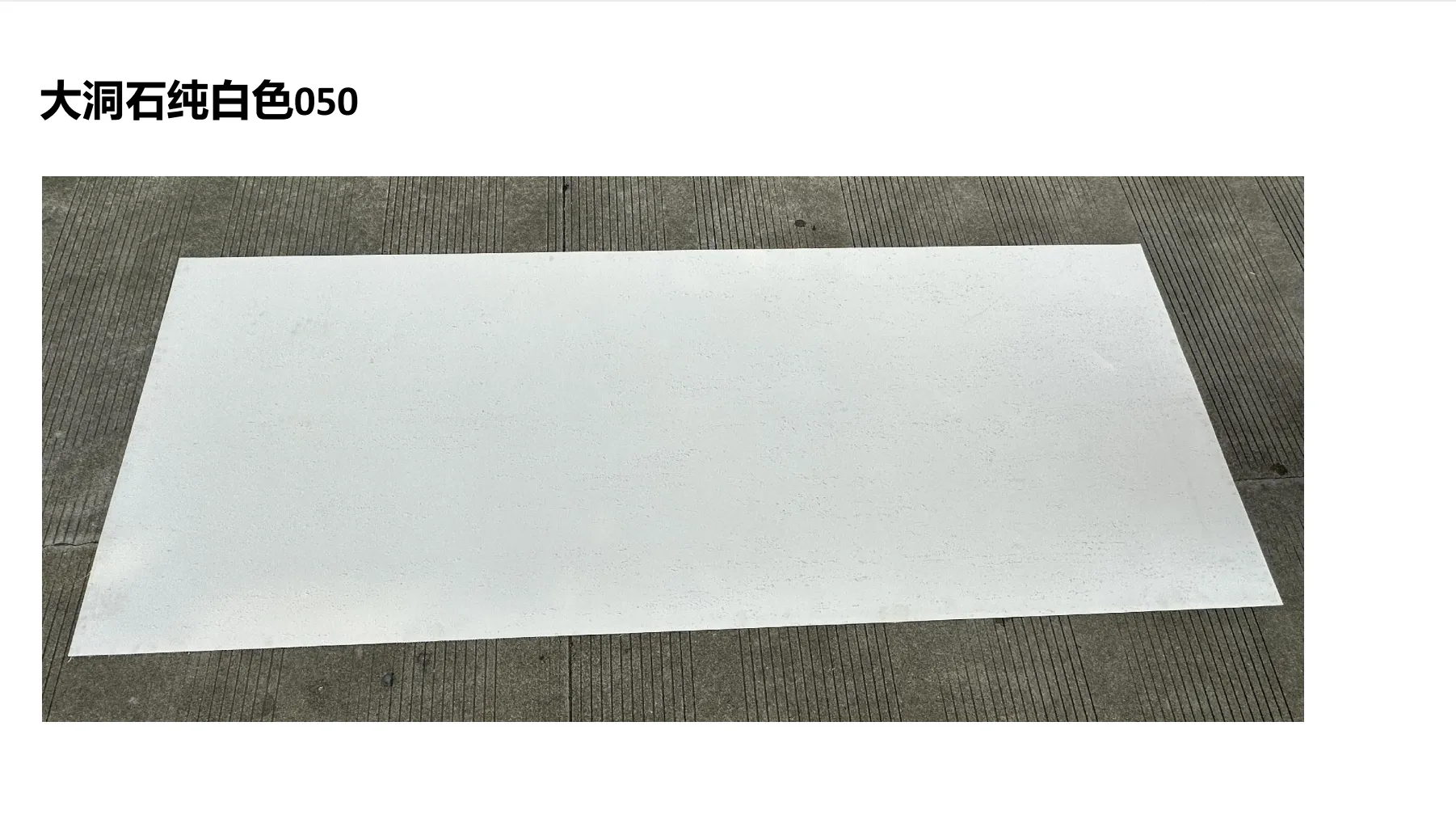
It's a sweltering July afternoon in Phoenix, and Maria, an architect, stands in front of a recently completed commercial building. The exterior, clad in what looks like traditional travertine, glows warmly in the sun. But as she runs her hand along the surface, she's not just admiring its beauty—she's checking for cracks. "Last year, a client's building using solid stone started spalling after just two seasons," she says, shaking her head. "The desert heat would expand the stone during the day, then the cool nights would contract it. The stress was too much." Today, though, she's smiling. "This project used Huge Travertine MCM . I'm confident it'll look this good in 10 years."
Temperature fluctuations are the silent enemies of building materials. From the icy winters of Canada to the scorching summers of Dubai, every structure faces the daily (and seasonal) stress of expansion and contraction. For architects, contractors, and homeowners, choosing materials that can handle these swings isn't just about aesthetics—it's about durability, safety, and long-term value. Enter MCM flexible stone technology, and in particular, Huge Travertine MCM. Let's dive into why this innovative material is changing the game when it comes to thermal stability.
Thermal expansion is simple in theory: most materials expand when heated and contract when cooled. The problem? When a material can't expand or contract freely, or when adjacent materials expand at different rates, stress builds up. Over time, that stress leads to cracks, warping, or even structural failure. In buildings, this can mean:
For example, imagine a home in Colorado with a stone fireplace. In winter, the fire heats the stone, causing it to expand. In summer, the AC chills the room, making the stone contract. Without a material that can flex with these changes, the mortar holding the stones together will crack, and eventually, the stones themselves may loosen. That's why the coefficient of thermal expansion (CTE) —a measure of how much a material expands per degree of temperature change—is one of the most critical specs architects check.
For decades, builders relied on "tried and true" materials like solid natural stone, brick, or fair-faced concrete . While these have their merits, their thermal performance leaves much to be desired. Let's break down the issues:
Solid Natural Stone (e.g., Traditional Travertine): Beautiful, yes, but heavy and rigid. Solid travertine has a CTE of about 7-9 μm/m·°C (micrometers per meter per degree Celsius). That might sound small, but over a 10-meter wall, a 50°C temperature swing (common in desert regions) would lead to 0.35-0.45 mm of expansion—enough to crack mortar or loosen panels.
Fair-Faced Concrete: A staple in modern architecture for its raw, industrial look. However, its CTE is even higher than travertine, around 10-12 μm/m·°C. While it's stronger than stone, it's prone to "map cracking" in extreme climates—fine, spiderweb-like cracks that mar its appearance and let in moisture.
Brick: Brick has a lower CTE (around 5-7 μm/m·°C) but is heavy and porous. When paired with mortar (which has a different CTE), the differential expansion often leads to spalling—the surface of the brick flaking off.
The bottom line? Traditional materials weren't engineered for the extreme climate swings we're seeing more of today, thanks to climate change. They're stuck in a bygone era of milder weather and lower durability expectations.
Modified Composite Material (MCM) isn't new, but its application in building materials has revolutionized durability. MCM flexible stone is exactly what it sounds like: a thin layer of natural stone (or stone-like material) bonded to a flexible, lightweight backing. The result? A material that looks and feels like natural stone but behaves like a high-performance composite.
The magic is in the construction. Traditional stone is solid and rigid; MCM is a sandwich of sorts: a 1-3mm natural stone veneer (like travertine) glued to a backing of fiberglass, aluminum, or polymer. This backing isn't just lightweight (about 3-5 kg/m², compared to 20-30 kg/m² for solid stone)—it's flexible. That flexibility allows the material to expand and contract without cracking. It's like the difference between a rigid metal ruler and a bendable plastic one: the plastic can handle more stress before breaking.
But MCM's benefits don't stop at flexibility. Its low weight reduces structural load, making installation easier and safer. It's also water-resistant, fire-retardant, and resistant to UV rays—all bonuses for exterior use. And when it comes to thermal expansion? MCM has been engineered to have a low, consistent CTE, meaning it expands and contracts minimally, even in extreme temperatures.
Huge Travertine MCM takes MCM technology and scales it up—literally. Designed for large-format applications (think exterior cladding, feature walls, or outdoor patios), it retains the classic travertine look—with its signature porous texture and earthy tones—while packing in MCM's performance benefits. But what makes it stand out in thermal stability?
Low Thermal Expansion Coefficient: Huge Travertine MCM has a CTE of approximately 4-5 μm/m·°C—nearly half that of solid travertine. To put that in perspective: over a 10-meter wall, a 50°C temperature swing would cause just 0.2-0.25 mm of expansion. That's about the thickness of a piece of paper—hardly enough to cause stress.
Flexible Backing: Even if minor expansion occurs, the flexible backing absorbs the stress. Unlike solid stone, which transfers stress to mortar or adjacent panels, Huge Travertine MCM "gives" slightly, preventing cracks. This is especially critical in regions with rapid temperature changes, like deserts (day-night swings of 30°C+) or coastal areas (humidity amplifies thermal stress).
Uniform Performance: Natural stone can have inconsistencies in CTE due to mineral variations. MCM, being a composite, has uniform properties across every panel. That means no surprises—you know exactly how the material will behave, regardless of which batch it comes from.
Let's take a real example: a resort in Qatar, where summer temperatures regularly hit 45°C (113°F) and drop to 25°C (77°F) at night. The architects chose Travertine (starry green) —a variant of Huge Travertine MCM with a deep green base and shimmering, star-like flecks—for the exterior cladding. Why? They needed a material that could handle 20°C daily swings without failing.
After two years, the results are in: the cladding looks as pristine as the day it was installed. "We did thermal imaging tests," says the project engineer, Ahmed. "The MCM panels expanded uniformly, and the flexible backing prevented any stress on the seams. Compare that to the resort next door, which used solid limestone—they're already patching cracks."
Travertine (starry green) isn't just stable—it's also stunning. Its unique coloration adds a touch of luxury, proving that performance doesn't have to mean sacrificing aesthetics. "Clients want beauty and durability," Ahmed adds. "With Huge Travertine MCM, we don't have to choose."
To truly understand Huge Travertine MCM's stability, let's compare its thermal expansion coefficient to other common building materials. The table below shows CTE values (in μm/m·°C) for key materials:
| Material | Thermal Expansion Coefficient (μm/m·°C) | Weight (kg/m²) | Flexibility |
|---|---|---|---|
| Huge Travertine MCM | 4-5 | 3-5 | High (can bend up to 120° without cracking) |
| Solid Natural Travertine | 7-9 | 25-30 | Low (rigid, prone to cracking under stress) |
| Fair-Faced Concrete | 10-12 | 22-25 | Low (brittle, susceptible to map cracking) |
| Lunar peak silvery (MCM) | 3.5-4.5 | 2.5-4 | Very High (flexible backing + metallic finish) |
The numbers tell a clear story: Huge Travertine MCM expands and contracts half as much as solid travertine and fair-faced concrete. When paired with its low weight and high flexibility, it's no wonder it's becoming the go-to choice for climate-challenged projects.
Take Lunar peak silvery , another MCM product, as an example. With a CTE of 3.5-4.5 μm/m·°C, it's even more stable than Huge Travertine MCM. Its metallic, silvery finish makes it a favorite for modern, industrial designs, proving that MCM offers stability across a range of aesthetics.
While thermal stability is a star feature, Huge Travertine MCM has plenty of other benefits that make it a top choice for builders:
Huge Travertine MCM isn't just for desert resorts or cold-climate homes. It's versatile enough for almost any project, including:
Even in moderate climates, where temperature swings are less extreme, Huge Travertine MCM offers peace of mind. "I use it on all my projects now," says Maria, the architect from Phoenix. "Why risk it with traditional materials when MCM gives me both beauty and longevity? My clients sleep better knowing their buildings won't need costly repairs in five years."
In a world where climate extremes are becoming the norm, choosing building materials that can handle temperature fluctuations isn't optional—it's essential. Huge Travertine MCM, with its low thermal expansion, flexibility, and durability, is more than a material; it's an investment in the future. Whether you're building a home in the Rockies, a hotel in Dubai, or a storefront in New York, it offers the rare combination of aesthetics, performance, and peace of mind.
So, the next time you're planning a project, ask yourself: "Will this material still look good in 10 years?" With Huge Travertine MCM, the answer is a resounding yes. After all, the best buildings aren't just built for today—they're built to weather every season, every temperature swing, and every challenge that comes their way. And with MCM flexible stone, that future looks a lot more stable.
Recommend Products












