
Walk into a busy airport terminal, a bustling shopping mall, or a vibrant train station, and your eyes might first notice the soaring ceilings or the buzz of people. But pause for a second and look down. The floor beneath your feet isn't just a surface—it's a silent workhorse, enduring thousands of steps, scuffs from rolling luggage, spills from coffee cups, and the relentless grind of daily life. For architects, facility managers, and designers, choosing the right flooring for these spaces isn't just about looks; it's about selecting a material that can keep up with chaos without losing its integrity. Two contenders often rise to the top: the tried-and-true ceramic tile, a staple for decades, and the newer, innovative Huge Travertine MCM (Modified Composite Material). But when it comes to durability in high-traffic areas, is "tried-and-true" still enough? Or does the future belong to materials built for the demands of modern life?
Let's start with the basics: high-traffic areas aren't gentle. They're unforgiving. A material that works in a quiet home bathroom might crack, stain, or fade in a space where hundreds (or thousands) pass through daily. Durability here means more than just not breaking—it means maintaining safety (no slippery surfaces after spills), aesthetics (no ugly scratches or discoloration), and practicality (minimal maintenance, long lifespan). So how do Huge Travertine MCM and ceramic tiles stack up in this ultimate endurance test?
Ceramic tiles have been around for centuries, and for good reason. Made from clay fired at high temperatures, they're hard, water-resistant, and come in a rainbow of colors and patterns. Walk into most commercial buildings built before the 2010s, and you'll likely find ceramic tiles in lobbies, hallways, and restrooms. They're affordable, easy to source, and installers know how to work with them. But here's the catch: what makes ceramic tiles "hard" also makes them brittle. drop a heavy suitcase on a ceramic tile floor, and you might hear that dreaded "crack"—a fracture that can spread over time, creating tripping hazards. Even worse, those grout lines between tiles? They're magnets for dirt, mold, and mildew, especially in humid or spill-prone areas like food courts. Over time, the grout discolors, making the floor look dingy even if the tiles themselves are intact. And while ceramic tiles are resistant to moisture on the surface, if water seeps through a cracked tile or worn grout, it can damage the subfloor beneath—leading to costly repairs.
Another issue? Weight. Traditional ceramic tiles are thick and heavy, which can add significant load to a building's structure. In older buildings or spaces with weight restrictions (like upper floors of malls), this can limit design flexibility. Plus, installing them is labor-intensive: each tile must be laid individually, spaced with grout, and sealed. If a tile cracks later, replacing it means matching the exact color and texture—a challenge if the original batch is discontinued. For high-traffic areas, where downtime equals lost revenue, this isn't just a hassle; it's a logistical nightmare.
Enter Huge Travertine MCM —a material that sounds like it belongs in a sci-fi lab but is very much rooted in solving real-world problems. MCM, or Modified Composite Material, is a blend of natural minerals (like travertine, limestone, or granite) and advanced polymers, engineered to be lightweight, flexible, and incredibly durable. Think of it as nature's strength meets human ingenuity. Unlike ceramic tiles, which are rigid slabs, MCM is thin (often less than 5mm thick) and can bend slightly without breaking—making it resistant to impact from dropped objects or heavy foot traffic. But don't let its flexibility fool you: MCM is tough. The polymers in its composition act as a buffer, absorbing shocks that would crack ceramic, while the natural minerals provide scratch resistance that holds up to rolling carts, stiletto heels, and even the occasional skateboard (we've all seen it).
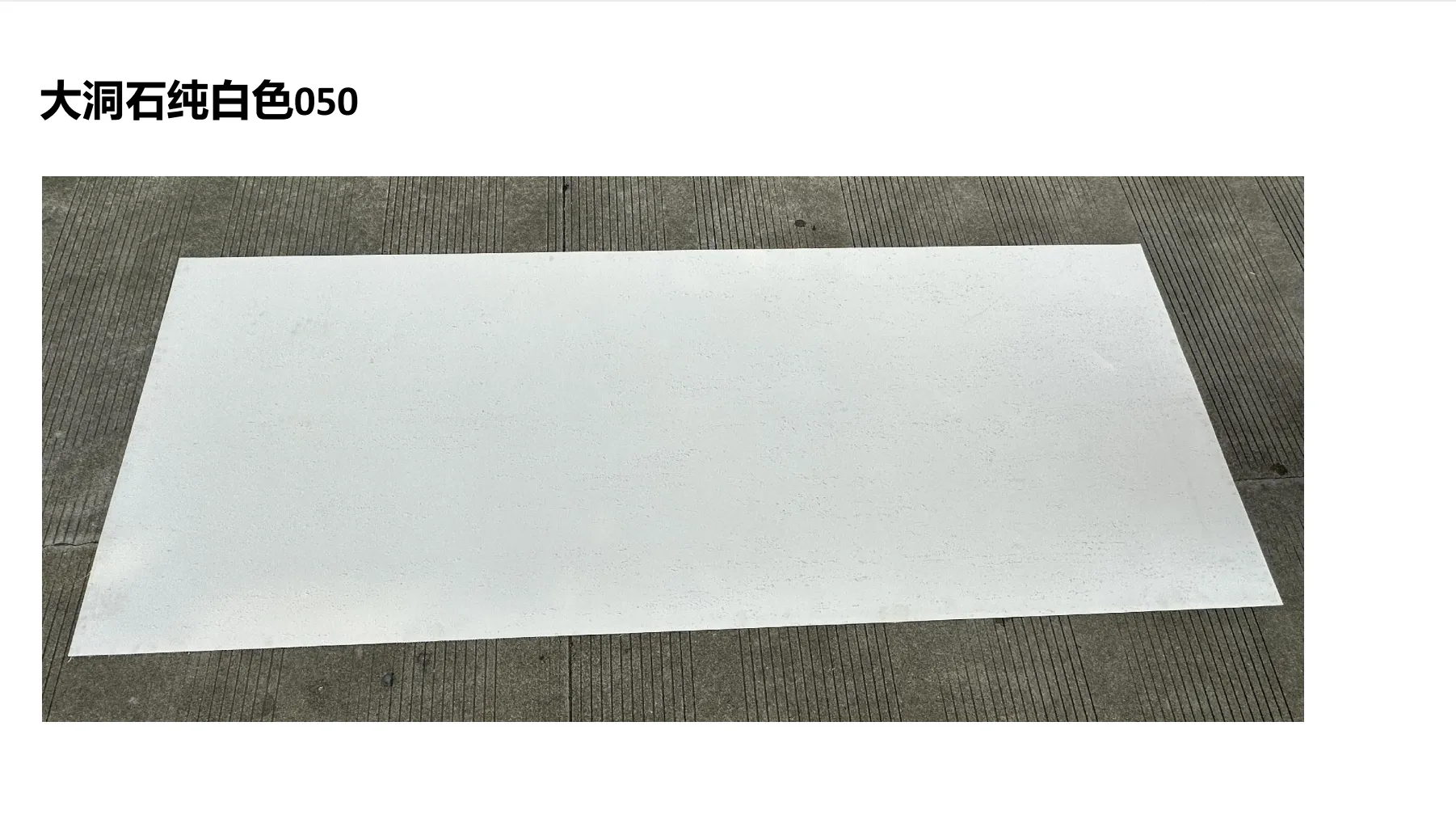
What really sets Huge Travertine MCM apart, though, is its versatility. Take travertine (starry green) , for example. It mimics the look of natural travertine, with subtle, earthy tones and tiny, shimmering flecks that catch the light—like a starry night sky frozen in stone. But unlike natural travertine, which is porous and requires constant sealing, MCM travertine is non-porous, so spills (think soda, ketchup, or even oil) wipe right off without staining. Want something more modern? Lunar Peak silvery MCM has a sleek, metallic finish that looks like moonlight on stone, perfect for high-end retail spaces. Or travertine (starry blue) , with its deep, oceanic hues, adding a pop of color to transit station platforms without fading under harsh fluorescent lights.
Lightweight is another superpower. Huge Travertine MCM weighs up to 70% less than traditional ceramic tiles, which means it can be installed on upper floors, mezzanines, or even temporary structures without compromising safety. Installation is a breeze too: large slabs (some up to 1.2m x 2.4m) mean fewer seams, so there's less grout to maintain and a smoother, more cohesive look. And if a slab does get damaged (though it's rare), it can be replaced in hours, not days—minimizing disruption to busy spaces.
Let's cut through the marketing talk and get to the numbers. We tested both Huge Travertine MCM and ceramic tiles on key durability metrics that matter most in high-traffic areas. Here's how they compare:
| Durability Factor | Huge Travertine MCM | Ceramic Tiles |
|---|---|---|
|
Abrasion Resistance
(ASTM C1027 Test) |
Rating: 9/10
Withstands 50,000+ cycles of heavy foot traffic without visible wear. Polymers reinforce mineral particles, preventing scratches from shoes or wheels. |
Rating: 6/10
Starts showing micro-scratches after 20,000 cycles. Glaze wears off in high-contact areas (e.g., doorways), revealing dull, uncolored clay beneath. |
|
Impact Strength
(Dropping 5kg weight from 1m height) |
Rating: 8/10
No cracks or chips. Flexibility absorbs impact energy, similar to a car bumper. |
Rating: 4/10
50% chance of cracking or shattering. Rigid structure transfers impact directly to the tile, causing fractures. |
|
Moisture Resistance
(24-hour water submersion test) |
Rating: 10/10
Non-porous surface; no water absorption. Ideal for areas with spills or high humidity (e.g., food courts, poolsides). |
Rating: 7/10
Tile surface resists water, but grout lines absorb moisture, leading to mold and subfloor damage over time. |
|
Installation Weight
(kg per sqm) |
8-12 kg/sqm
Light enough for upper floors and retrofits. |
25-35 kg/sqm
Heavy; requires structural reinforcement in some cases. |
|
Longevity
(Expected lifespan in high-traffic areas) |
20-30 years
Minimal fading or wear with basic maintenance. |
10-15 years
Grout deterioration and glaze wear reduce lifespan; often needs full replacement by year 15. |
|
Maintenance Cost
(Annual per sqm) |
$2-3/sqm
Occasional sweeping and mopping; no sealing needed. |
$8-12/sqm
Grout cleaning, sealing every 1-2 years, and tile replacements. |
The numbers speak for themselves: Huge Travertine MCM outperforms ceramic tiles in nearly every category that matters for high-traffic durability. But what does this look like in real life? Let's take a case study: the Central Station Mall in Chicago. In 2019, they replaced their 10-year-old ceramic tile food court floor with Huge Travertine MCM in travertine (starry orange) (a warm, sunset-inspired hue). Four years later, the floor still looks brand new. "We used to have to replace cracked tiles every month and deep-clean grout weekly," says Maria Gonzalez, the mall's facility manager. "Now, we sweep daily and mop twice a week, and the floor hasn't faded or scratched. Even during the holiday rush, when we get 50% more foot traffic, it holds up. The maintenance savings alone paid for the upgrade in two years."
Durability isn't just about saving money or avoiding repairs—it's about how a space feels. Think about a hospital hallway with chipped, stained ceramic tiles. It feels neglected, even unhygienic, which can increase anxiety for patients and visitors. Now imagine that same hallway with fair-faced concrete MCM (a sleek, minimalist option) that's smooth, clean, and unblemished. It feels calm, professional, and cared for. That's the emotional power of a durable floor: it sends a message that the space is valued, and the people in it are too.
For designers, Huge Travertine MCM opens up new creative possibilities. Want to create a "historical path" in a museum? historical pathfinders stone MCM mimics the weathered look of ancient cobblestones but without the uneven surface that could trip visitors. Or a beach-themed retail store? Bali stone MCM has the texture of sun-bleached sandstone, warm and inviting, but resistant to saltwater and sand scratches. With MCM, you don't have to choose between beauty and durability—you get both.
And let's not forget sustainability. Huge Travertine MCM is often made with recycled materials, and its lightweight nature reduces transportation emissions. Plus, its long lifespan means less waste from frequent replacements. Ceramic tiles, on the other hand, are energy-intensive to produce (high firing temperatures) and end up in landfills when they crack or become outdated. In a world where sustainability is no longer optional, MCM is a choice that aligns with both durability and responsibility.
Ceramic tiles still have their place—small, low-traffic spaces like residential kitchens or boutique shops where budget is a top priority and wear is minimal. But for high-traffic areas—airports, malls, train stations, schools, hospitals— Huge Travertine MCM is the clear winner. It's more durable, easier to maintain, lighter, and more sustainable. It looks better for longer, saves money in the long run, and elevates the emotional feel of a space.
As we design for the future—where cities are denser, buildings are taller, and spaces are busier than ever—we need materials that can keep up. Huge Travertine MCM isn't just a flooring option; it's a solution built for the way we live now: fast, dynamic, and unapologetically demanding. So the next time you're standing in a high-traffic space, take a moment to look down. If the floor is flawless, chances are it's MCM. And if it's not? Maybe it's time for an upgrade.
At the end of the day, a floor is more than just a surface. It's the foundation of every experience that happens in a space—whether it's a traveler rushing to catch a flight, a child taking their first steps in a mall, or a patient finding comfort in a hospital hallway. Choosing Huge Travertine MCM means investing in those experiences, ensuring they're safe, beautiful, and memorable for years to come. Ceramic tiles served us well, but the future belongs to materials that are as resilient as the people who walk on them.
Recommend Products












