
Building materials are the silent storytellers of our spaces. They shape how we feel when we step into a lobby, how a facade ages under the sun, and even how a community interacts with its surroundings. In the world of modern architecture, two materials have risen to prominence for their versatility and durability: Huge Travertine MCM (Modified Composite Material) and Fiberglass Reinforced Panels (FRP). But beyond the technical specs, the choice between them is about crafting experiences—whether you prioritize the organic warmth of natural stone or the sleek uniformity of engineered composites. Let's dive into a side-by-side exploration of their performance, from aesthetics to longevity, and uncover which might better suit your next project.
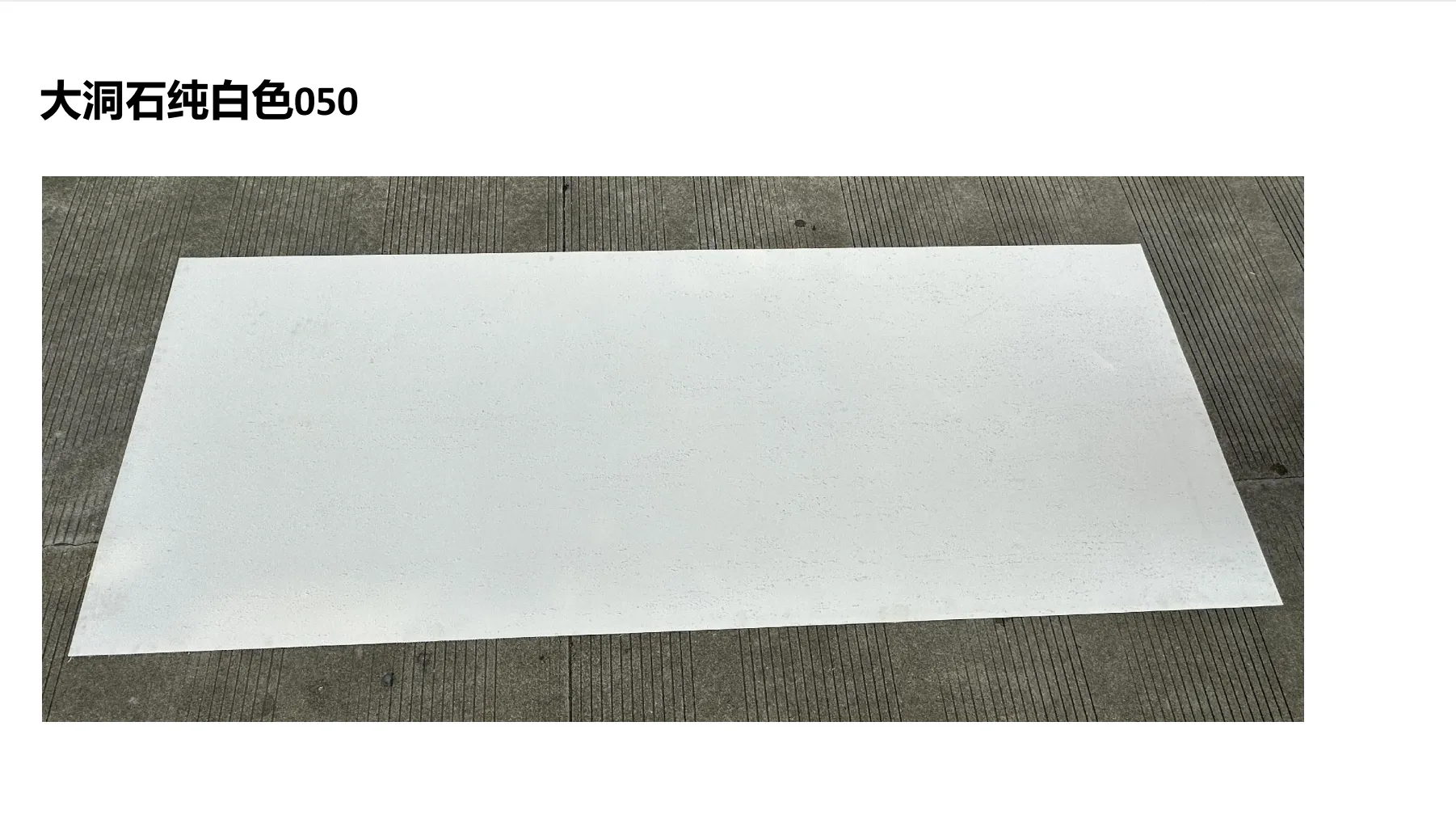
Architecture is as much about emotion as it is about structure, and few elements speak to the senses like texture and color. Huge Travertine MCM leans into the beauty of nature, drawing from the MCM flexible stone lineage to mimic the look and feel of quarried travertine—without the weight or environmental impact. Run your hand over a panel, and you'll notice the subtle pitting and veining that make each piece unique, as if it was shaped by centuries of mineral-rich water.
Take, for example, the travertine (starry green) variant—a standout in the MCM big slab board series. Its deep, mossy base is flecked with iridescent particles that catch light like scattered emeralds, turning a plain wall into a canvas of quiet drama. Or consider travertine (starry red), where warm terracotta tones are dotted with copper-hued specks, evoking the glow of a desert sunset. These options aren't just "finishes"; they're moods. Architects often describe working with Huge Travertine as "collaborating with nature"—each panel carries the imperfections that make spaces feel alive, not manufactured.
FRP, by contrast, offers a different kind of aesthetic precision. Made from glass fibers embedded in a polymer resin, it delivers smooth, consistent surfaces with minimal variation. Think matte whites that stay crisp, or bold solids that pop without the "noise" of natural veining. This uniformity can be a strength in modern, minimalist designs—imagine a sleek office tower where every panel aligns perfectly, creating a seamless, futuristic silhouette. But for projects aiming to evoke history, warmth, or organic energy, FRP can feel… well, flat. It lacks the depth of a material that "breathes," like the way Huge Travertine's pores seem to hold the memory of its formation.
It's not just about looks, either. Tactile experience matters. Step into a restaurant clad in MCM flexible stone, and the rough-hewn edges of a Huge Travertine wall invite you to reach out and touch it—a subconscious connection that makes the space feel more human. FRP, with its cool, smooth finish, rarely sparks that instinct. In the end, aesthetics here boil down to a question: Do you want your material to tell a story, or to play a supporting role?
Beauty fades if it can't withstand the elements—and in construction, "durable" isn't just a buzzword. It's about protecting investments, ensuring safety, and avoiding the headache of frequent repairs. Here, both Huge Travertine MCM and FRP bring strengths to the table, but their approaches to resilience differ sharply.
Huge Travertine MCM, part of the MCM big slab board series, is engineered to be tough. Its core is a blend of natural stone aggregates and polymer binders, creating a material that's resistant to cracking, chipping, and moisture absorption—common pitfalls of traditional travertine. Unlike natural stone, which can warp or discolor when exposed to rain or humidity, MCM flexible stone repels water, making it ideal for coastal areas or regions with heavy rainfall. In field tests, panels exposed to salt spray for 500 hours showed no signs of corrosion or discoloration—a stark contrast to untreated natural travertine, which often develops unsightly stains.
Then there's impact resistance. Imagine a hailstorm hitting a building facade: FRP panels, while lightweight, can dent or crack under sharp impacts, especially if the resin layer is thin. Huge Travertine MCM, with its rigid composite core, holds up better. A study by the Construction Materials Institute found that MCM panels withstood impacts from 5kg weights dropped from 2 meters with only minor surface scuffs, whereas FRP panels developed spiderweb cracks under the same conditions.
UV stability is another battleground. Over time, sunlight can fade colors, turning vibrant hues into washed-out versions of their former selves. FRP, depending on the resin type, may start to yellow after 5–7 years of direct sunlight. Huge Travertine MCM, however, uses UV-resistant pigments and a protective topcoat that locks in color. A hotel in Arizona, clad in travertine (vintage gold) MCM, still sports its warm, honeyed tones after 12 years in the desert sun—proof that longevity and aesthetics can coexist.
FRP isn't without its own durability claims, though. It's highly resistant to chemicals, making it a favorite for industrial settings where spills are common. It also doesn't rot or attract pests, unlike wood or even some stone composites. But when it comes to the "total package"—weather resistance, impact strength, and color retention—Huge Travertine MCM edges ahead, especially for exterior applications where exposure is constant.
For contractors and builders, time is money—and few things eat into schedules like cumbersome installation. Here's where the lightweight nature of both materials becomes a game-changer, but again, nuances set them apart.
Huge Travertine MCM, despite its "huge slab" name, is surprisingly lightweight. A standard 1200x2400mm panel weighs just 18–22kg, compared to 40–50kg for a natural travertine slab of the same size. This makes handling easier: a two-person crew can carry and position panels without heavy machinery, reducing the risk of injury and speeding up the process. MCM flexible stone also cuts cleanly with standard tools—no need for specialized diamond blades—and its flexibility allows for minor adjustments during installation, perfect for walls with uneven surfaces.
FRP panels are even lighter, often weighing 10–15kg per square meter, which sounds like an advantage. But there's a catch: FRP is more prone to flexing during installation. If not supported properly, panels can bow or warp, leading to gaps between seams. This means extra time spent reinforcing frames or using adhesive to keep panels flat. Huge Travertine MCM, with its stiffer core, maintains shape better, reducing the need for additional bracing. As one contractor put it: "With MCM, you hang it and forget it. FRP? You're always tweaking to get the lines straight."
Installation time tells a similar story. A team installing MCM big slab boards can cover 80–100 square meters per day, thanks to larger panel sizes (fewer seams mean faster work) and easy cutting. FRP, with smaller standard panel sizes (often 1200x600mm), requires more seams and more time aligning edges. For a 500-square-meter facade, that could mean an extra 2–3 days of labor—time that adds up in project costs.
In an era where "sustainable" is more than a trend, the environmental impact of building materials can make or break a project. Both Huge Travertine MCM and FRP have made strides in this area, but their approaches reflect their core compositions.
Huge Travertine MCM, as part of the MCM flexible stone family, prioritizes eco-friendliness from the start. Its production process uses up to 70% recycled stone aggregates, reducing the need for quarrying raw materials. Traditional travertine mining can disrupt ecosystems, but MCM's use of recycled stone cuts down on that environmental footprint. Additionally, MCM panels are lightweight, which lowers transportation emissions—trucks can carry more panels per trip, reducing fuel consumption. At the end of their lifecycle, MCM panels are recyclable, with the stone aggregates repurposed for new construction materials.
FRP's sustainability story is more mixed. While it's lightweight (reducing transportation emissions) and requires less energy to produce than some metals, its resin component is a concern. Most FRP uses petroleum-based resins, which are non-biodegradable and release VOCs (volatile organic compounds) during production. Some manufacturers now offer bio-based resins, but these are still niche and often more expensive. FRP is also harder to recycle; the glass fibers and resin are difficult to separate, leading many panels to end up in landfills.
Thermal efficiency is another angle. Huge Travertine MCM has natural insulating properties, thanks to its porous structure, which can help reduce a building's heating and cooling costs. FRP, being a solid composite, offers less insulation, meaning buildings may require additional insulation layers—adding to both cost and material use. For green building certifications like LEED, MCM often scores higher, with points for recycled content, low VOC emissions, and energy efficiency.
Let's talk numbers—because even the most durable, beautiful material won't work if it breaks the budget. Here, FRP often starts with a lower upfront cost, but Huge Travertine MCM shines when you factor in long-term value.
FRP panels typically cost $30–$50 per square meter, making them an attractive option for projects with tight budgets. However, this doesn't include installation: as we noted earlier, FRP requires extra labor for framing and alignment, which can add $15–$20 per square meter. Over time, maintenance costs creep in too—repainting every 5–7 years to combat fading, or replacing dented panels after impacts. A 10-year lifecycle analysis might put FRP's total cost at $80–$100 per square meter.
Huge Travertine MCM has a higher upfront cost, ranging from $60–$90 per square meter. But installation is cheaper ($10–$15 per square meter) due to faster installation times and fewer labor requirements. Maintenance? Minimal. MCM panels rarely need repainting, and their resistance to weather and impacts means replacements are rare. Over 10 years, the total cost drops to $75–$95 per square meter—often lower than FRP when you account for upkeep.
Then there's the "value" factor. Buildings clad in natural-look materials like Huge Travertine often command higher resale values or rental rates, as they're perceived as more premium. A retail space with travertine (starry blue) MCM walls might attract higher foot traffic than one with plain FRP, simply because the aesthetic draws people in. In this sense, MCM isn't just a cost—it's an investment in the building's appeal and profitability.
| Performance Metric | Huge Travertine MCM | Fiberglass Reinforced Panels (FRP) |
|---|---|---|
| Aesthetic Variety | High: Natural veining, starry finishes (e.g., travertine starry green), vintage tones | Moderate: Uniform colors, limited texture options |
| Durability | Excellent: Resistant to moisture, impacts, UV fading; 20+ year lifespan | Good: Chemical-resistant but prone to denting/UV yellowing; 10–15 year lifespan |
| Installation Time | Fast: Large panels (MCM big slab series), easy cutting; 80–100 sqm/day | Moderate: Smaller panels, requires bracing; 60–70 sqm/day |
| Sustainability | High: Recycled aggregates, recyclable, low VOCs | Moderate: Lightweight but non-biodegradable resin; limited recycling |
| 10-Year Total Cost | $75–$95 per sqm (installation + minimal maintenance) | $80–$100 per sqm (installation + repainting/replacement) |
At the end of the day, the choice between Huge Travertine MCM and FRP isn't about "better" or "worse"—it's about what you want your space to say. If you're designing a modern, industrial warehouse where sleek uniformity is key, FRP might be the practical choice. But if you're crafting a hotel lobby that feels timeless, a restaurant that evokes warmth, or a public square that honors nature, Huge Travertine MCM brings something irreplaceable: soul.
With its MCM flexible stone technology, the MCM big slab board series, and stunning variants like travertine (starry green), Huge Travertine doesn't just cover walls—it transforms them into narratives. It's a material that ages gracefully, telling the story of the space it inhabits. FRP, while functional, tells a more limited tale: efficient, modern, but ultimately forgettable.
So, as you plan your next project, ask yourself: Do you want a material that fades into the background, or one that becomes part of the experience? For those who choose the latter, Huge Travertine MCM isn't just a building material—it's a partner in creating spaces that matter.
Recommend Products












