
Architecture has never been just about bricks and beams—it's about telling stories. Every building whispers a narrative, and the materials chosen are its vocabulary. Walk through a historic district, and you'll feel the weight of stone walls that have stood for centuries; step into a sleek modern lobby, and glass and steel hum with the energy of now. Today's designers aren't just building structures—they're curating experiences. And in this quest to blend tradition with innovation, two materials have emerged as unlikely stars: Huge Travertine MCM and glass facades. Alone, they each have their strengths. Together? They create magic.
Let's start with the obvious: Modern design often feels caught between two desires. We crave the warmth of natural materials—the kind that make a space feel lived-in, human. But we also love the lightness of contemporary aesthetics—openness, transparency, the illusion of boundary-free living. Too much stone, and a space can feel heavy, stuck in the past. Too much glass, and it risks feeling cold, like a fishbowl. The solution? Marry the earthy texture of MCM flexible stone (specifically, the grandeur of Huge Travertine) with the airy elegance of glass. It's a dance of opposites that results in something far more compelling than either could achieve alone.
If you've ever run your hand over a travertine tile, you know its charm: those tiny, honeycomb-like pores, the soft veining that looks like nature's own brushstrokes, the warm beige and gold tones that feel like a hug from the earth. Travertine has been a favorite for millennia—think of the Colosseum or the ancient baths of Rome. But here's the problem with traditional travertine slabs: they're heavy. Like, "needs a crane and a team of workers" heavy. They're also porous, which means they stain easily, and installing large pieces often results in visible seams that break up the design.
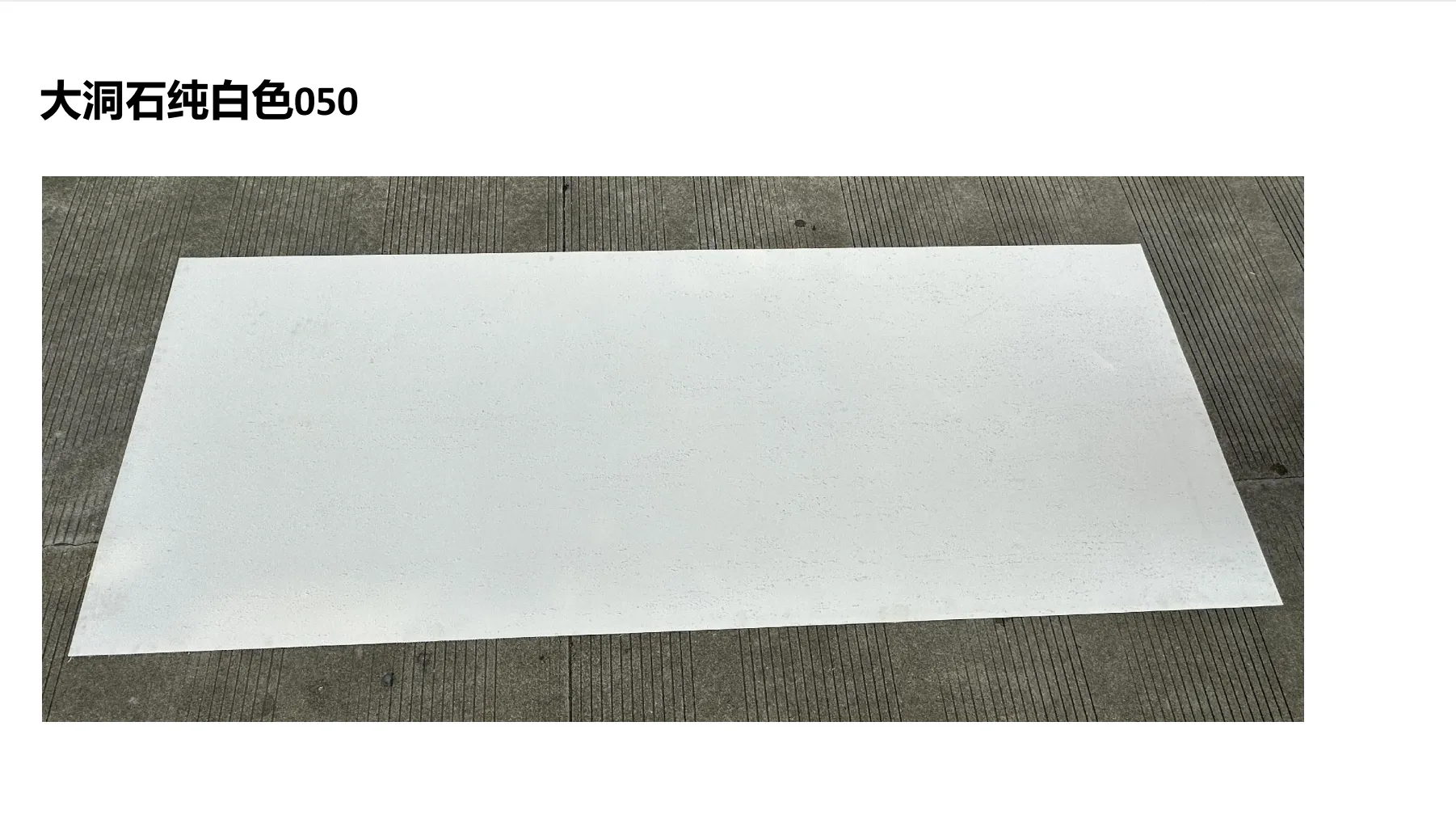
Enter Huge Travertine MCM . MCM stands for Modified Composite Material, and it's a game-changer. Imagine taking all the beauty of natural travertine—the texture, the color, the organic character—and compressing it into a panel that's lightweight (about 1/5 the weight of natural stone), flexible (it can bend slightly to follow curves), and durable enough to withstand rain, snow, and harsh UV rays. That's MCM. And "Huge"? That refers to the large-format panels—we're talking 1200x2400mm or even bigger—so when you install them, there are almost no visible joints. It's like wrapping a building in a single, seamless blanket of stone.
| Characteristic | Huge Travertine MCM | Traditional Travertine Slabs |
|---|---|---|
| Weight | Lightweight (8-12 kg/m²) | Heavy (40-50 kg/m²) |
| Installation | Easy, can be installed with adhesives; minimal labor | Requires heavy machinery; complex structural support |
| Durability | Weather-resistant; stain-proof coating options | Porous; prone to staining and cracking |
| Aesthetic | Large-format, seamless look; consistent texture | Visible joints; natural variation may be uneven |
| Sustainability | Recycled materials; low carbon footprint | High mining impact; wasteful cutting process |
But what really makes Huge Travertine MCM shine is its versatility. Take the Travertine (Starry Green) variant, for example—those tiny pores aren't just texture; they're filled with a subtle, iridescent green fleck that catches the light, like someone sprinkled stardust into the stone. Or Travertine (Vintage Gold) , where the natural veining is deepened with a warm, aged finish, making it feel like a relic from a bygone era but built to last in the 21st century. These aren't just materials—they're storytellers. A restaurant using Starry Green might evoke a forest at twilight; a boutique hotel with Vintage Gold could feel like a European villa reimagined for today.
Now, let's turn to glass facades—the darlings of modern architecture. There's a reason they're everywhere: glass doesn't just let light in; it dissolves the line between inside and out. Stand in a room with floor-to-ceiling glass, and suddenly the city skyline or the forest outside becomes part of the decor. It's airy, it's optimistic, it says, "We're open to the world."
But here's the catch: glass is a chameleon. In the morning, it's a canvas for sunlight, turning a room into a sunlit sanctuary. By midday, if it's not treated, it can turn that same room into a greenhouse, driving up AC bills. At night? Without the sun to soften it, glass can feel like a cold barrier—you're inside, looking out at darkness, and the space feels hollow, lacking in warmth. And let's talk about privacy: unless you opt for frosted or tinted glass, you're basically on display. Great for a gallery, maybe not so great for a bedroom.
Don't get me wrong—glass is incredible. Low-e (low emissivity) coatings have made it energy-efficient, and advancements in double-glazing mean it can insulate as well as brick. But even with these upgrades, glass alone struggles to create that "lived-in" feeling. It needs a partner—something with texture, something with history—to ground it.
Here's the secret designers have known for years: the best spaces aren't built with one material—they're built with contrasts. Rough and smooth. Light and dark. Warm and cool. That's where Huge Travertine MCM and glass come in. Travertine's tactile, earthy texture softens glass's sleekness, while glass's transparency prevents travertine from feeling like a cave. Together, they create spaces that are both grounded and uplifting.
Picture this: a corporate headquarters in the heart of the city. The lower three floors are clad in Huge Travertine MCM —large, unbroken panels of Travertine (Vintage Silver) , which has a subtle metallic sheen that catches the morning light. The texture is undeniable—you can almost feel the stone's history just looking at it. Then, above the third floor, the building erupts into glass: floor-to-ceiling, clear, and sparkling. From the street, it's a statement: "We honor tradition, but we're not stuck in it." The travertine grounds the building, giving it a sense of permanence, while the glass reaches for the sky, signaling ambition. It's not just a building—it's a story.
It's all about balance. If you're designing a boutique hotel in a historic district, you might lean heavier on travertine to blend in with the neighborhood's stone architecture, using glass sparingly in windows and skylights to keep the focus on the material's warmth. For a tech startup's office, though, you might flip the script: 70% glass to foster collaboration and creativity, with travertine accents—like a feature wall in the lobby or cladding on the elevator core—to add texture without overwhelming the space.
Take the Lunar Peak series , for example—variants like Lunar Peak Silvery or Lunar Peak Golden. These MCM panels have a subtle metallic finish that shimmers like moonlight. Pair Lunar Peak Silvery with frosted glass, and you've got a lobby that feels futuristic yet cozy, like stepping into a space station designed by a minimalist poet. The silvery stone adds just enough warmth to keep the glass from feeling clinical, while the glass amplifies the stone's shimmer by reflecting light.
Materials aren't just about looks—they should guide how we use a space. Glass is perfect for public areas where you want openness: lobbies, conference rooms, cafes. Travertine MCM, with its durability and sound-dampening qualities, works better for private or high-traffic zones: hallways, reception desks, outdoor patios.
Imagine a residential complex: the exterior uses Huge Travertine MCM on the ground floor—think entryways, mailrooms, and communal lounges—creating a sense of arrival and security. Above that, glass facades for the apartments, so residents wake up to views of the city or park. Inside, the kitchens and living rooms have glass sliding doors to the balcony, while the bedrooms feature travertine accent walls behind the headboard, adding warmth and blocking out noise from the street. It's a home that feels both connected to the world and like a private retreat.
Let's talk about a real scenario (inspired by projects we've seen, but with a personal twist). A client once came to us wanting a beachfront restaurant that felt "tropical but not kitschy." They wanted to highlight the ocean views but didn't want the space to feel like a generic beach bar. Our solution? Travertine (Starry Blue) MCM panels for the lower half of the walls—those starry flecks in the stone mimicked the ocean's sparkle at night—paired with floor-to-ceiling glass windows facing the water. The travertine added warmth (no more cold, sticky plastic booths!) and a touch of luxury, while the glass ensured diners never missed a sunset. The result? A restaurant where people lingered, not just for the food, but because the space itself felt like a hug from the coast.
Another example: a university library. The goal was to create a space that felt both studious and inspiring. We used fair-faced concrete (a keyword, but let's tie it back) for the structural elements, but wrapped the reading nooks in wood grain board MCM for warmth, and lined the atrium with glass and Huge Travertine MCM in a soft beige. The travertine absorbed sound, making the atrium a quiet place to study, while the glass brought in natural light—no more harsh fluorescent bulbs. Students started calling it "the cave of knowledge"—a nod to the travertine's earthy feel and the glass's openness to ideas.
At the end of the day, architecture isn't about materials—it's about people. We don't remember buildings for their square footage; we remember how they make us feel. Huge Travertine MCM and glass facades, when combined, create spaces that feel both rooted and aspirational. They say, "We respect where we've been, but we're excited for where we're going."
So the next time you walk past a building that stops you in your tracks, take a closer look. Chances are, it's not just stone or just glass—it's a conversation between the two. And that conversation? It's one worth listening to.
Recommend Products












