
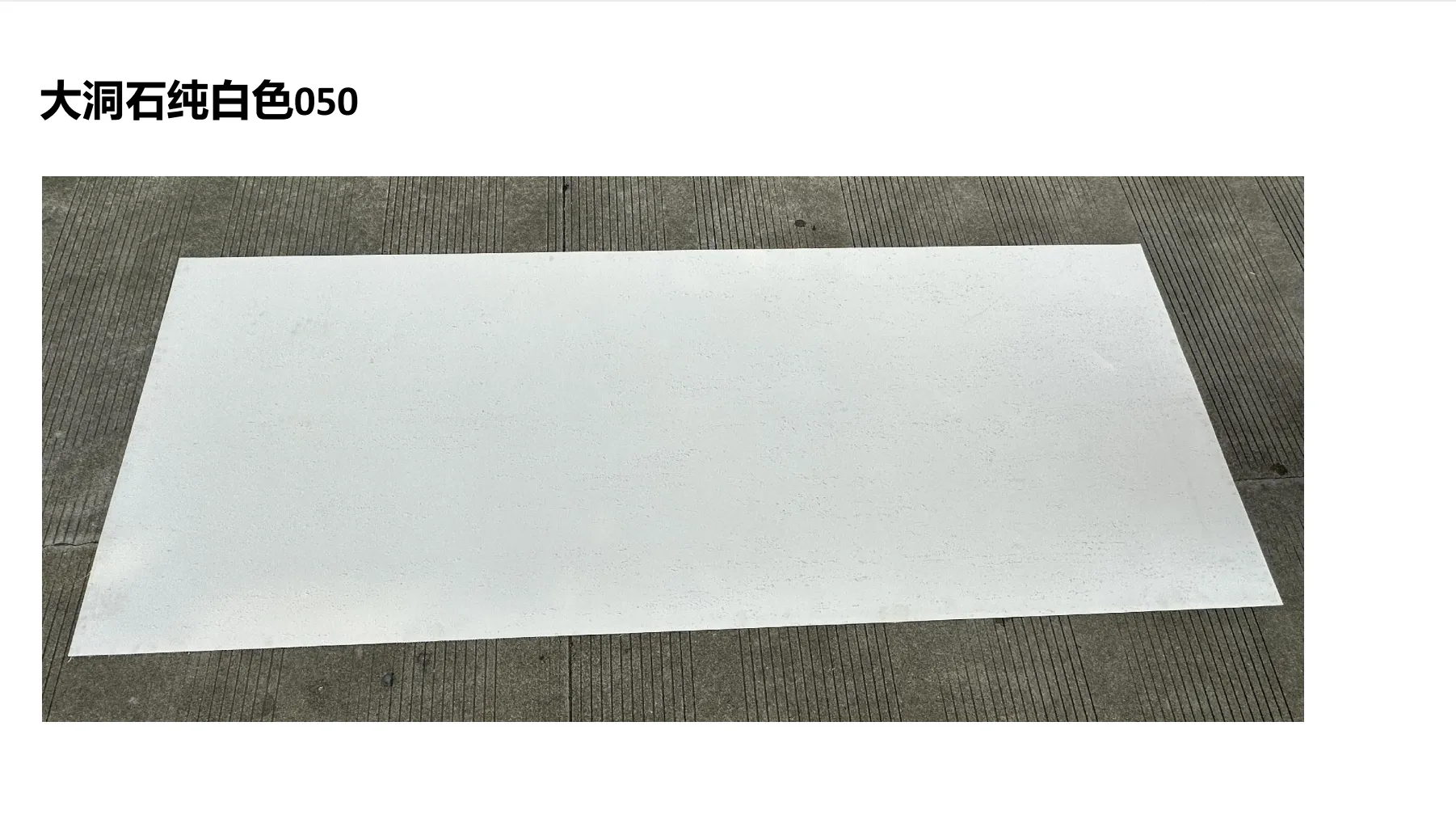
If you've ever wandered through an ancient Roman forum or marveled at the steps of the Colosseum, you've probably encountered travertine. That warm, porous stone with its unique veining and earthy tones has been a staple in architecture for millennia, and it's easy to see why. It feels timeless—like a bridge between the past and present. But here's the thing: while natural travertine has an undeniable charm, it's not without its headaches. Heavy, pricey, and sometimes tricky to work with, it's left many designers and builders wondering if there's a better way. Enter Huge Travertine MCM —a modern take on a classic material that's been turning heads in the construction world. Today, we're breaking down how it stacks up against natural travertine in three big categories: cost, weight, and sustainability. Let's dive in.
Before we start nitpicking numbers, let's make sure we're on the same page. Natural travertine is a type of limestone formed by mineral deposits from hot springs. It's quarried from the earth in large blocks, then cut into slabs, polished (or left rough), and shipped to job sites. It's the real deal—raw, unaltered stone that carries the marks of millions of years of geological history.
Huge Travertine MCM , on the other hand, is a modified composite material (MCM) designed to mimic the look and feel of natural travertine but with a few key upgrades. Think of it as travertine's tech-savvy cousin. MCM is made by bonding layers of natural stone particles (often recycled) with a polymer resin, creating a thin, flexible sheet that's lightweight but surprisingly durable. And while it's engineered, it doesn't skimp on aesthetics—you'd be hard-pressed to tell the difference between a well-made MCM panel and a natural travertine slab at first glance.
So why does this matter? Because when you're choosing materials for a project—whether it's a home renovation or a commercial build—you're not just picking a pretty face. You're weighing practicality, budget, and increasingly, your environmental footprint. Let's break down how these two stack up.
Let's talk dollars and cents—because at the end of the day, budget often dictates big decisions. Natural travertine has a reputation for being a premium material, and that reputation isn't unfounded. Let's walk through the costs step by step, from the moment the stone is pulled from the ground to the second it's installed on your wall or floor.
First, there's extraction. Quarrying natural travertine is no small feat. Workers use heavy machinery to blast or cut blocks from the earth, a process that's labor-intensive and time-consuming. Then, those blocks need to be transported to processing facilities, where they're sliced into slabs, polished, and shaped. Each step adds to the price tag. And if you're after a specific finish—like a honed or tumbled look—that's extra processing, which means extra cost.
Transportation is another biggie. Natural travertine slabs are heavy (we'll get to that in the next section), so shipping them from quarries (often in places like Italy, Turkey, or Iran) to your local job site isn't cheap. Fuel costs, import taxes, and the need for specialized carriers can send the price soaring. By the time it reaches your contractor, a square foot of high-quality natural travertine can run anywhere from $15 to $30—sometimes more for rare colors or finishes.
But wait, there's more. Installation isn't included in that price. Because natural travertine is heavy and brittle, it requires skilled labor. Installers need to reinforce subfloors or walls to support the weight, and cutting the stone to fit can lead to waste (which you're still paying for). Plus, natural travertine is porous, so it needs to be sealed regularly to prevent staining—a maintenance cost that adds up over time.
Now, let's contrast that with Huge Travertine MCM. Since MCM is a composite material, it's made using a blend of natural stone particles (often recycled from quarry waste) and a polymer binder. This manufacturing process is more efficient: it uses less raw material, requires less energy than quarrying, and produces less waste. That translates to a lower base cost. On average, MCM panels cost between $8 and $18 per square foot—significantly less than natural travertine for a comparable look.
Transportation? A breeze. MCM panels are lightweight and flexible, so they can be stacked and shipped in larger quantities without the need for heavy-duty trucks. That cuts down on fuel costs and reduces the carbon footprint of shipping—win-win. And installation? Because they're so light, you don't need to beef up structural supports. Contractors can handle them with standard tools, and since they're flexible, they can be installed on curved surfaces or uneven walls without cracking. Less labor time means lower installation costs, too.
Maintenance is minimal, too. MCM is non-porous (thanks to that polymer binder), so it resists stains, mold, and mildew. No need for regular sealing—just a quick wipe with soap and water, and it looks good as new. Over time, those savings on maintenance and installation can make MCM a far more cost-effective choice than natural travertine, even if the upfront per-square-foot cost seems similar.
Let's talk about weight—the elephant in the room (pun intended). When it comes to building materials, how heavy something is isn't just a matter of convenience; it's a matter of safety, feasibility, and even design possibilities. Natural travertine and Huge Travertine MCM couldn't be more different here, and that difference has a ripple effect on every stage of a project.
Natural travertine slabs are dense. A standard 2cm-thick slab weighs around 18 to 20 pounds per square foot. If you're using thicker slabs (3cm or more), that jumps to 25 to 30 pounds per square foot. Now, imagine covering a 1,000-square-foot wall with that. That's 20,000 to 30,000 pounds of stone hanging on your building. That's not just a lot of weight—it's a structural concern.
For homeowners, this might mean reinforcing floor joists or upgrading foundation supports before installation. For commercial projects, architects have to factor in the added load when designing the building's framework, which can increase construction costs and limit design flexibility. Want to use travertine on a high-rise facade? You'll need extra steel beams to hold it up, which adds time and money to the project.
Installation is another headache. Moving 30-pound slabs around a job site isn't easy. You might need cranes or forklifts just to get them to the right floor, and once there, a team of workers to maneuver them into place. This isn't just slow—it's risky. Heavy slabs can slip, leading to injuries or damaged materials (which, again, you're paying for).
Now, let's flip the script with lightweight flexible stone sheets like Huge Travertine MCM. These panels typically weigh in at just 3 to 5 pounds per square foot—less than a quarter of the weight of natural travertine. That's a game-changer.
First, structural stress? Practically nonexistent. You can install MCM on existing walls or floors without reinforcing them, which opens up a world of possibilities for renovations. Want to clad your kitchen backsplash in travertine-look panels? No need to tear out your drywall first. Building a new home? Your architect can design with more flexibility—think cantilevered surfaces or large, sweeping facades—without worrying about overloading the structure.
Installation becomes a breeze, too. A single worker can carry a stack of MCM panels up a flight of stairs or across a roof without breaking a sweat. No cranes, no forklifts, no extra labor. And because the panels are flexible, they can conform to curved surfaces—like a rounded archway or a cylindrical column—something natural travertine would crack under. This flexibility also makes them forgiving of minor imperfections in the substrate, reducing the need for extensive prep work.
Even shipping benefits from the lightweight design. Since MCM panels are so light, trucks can carry more panels per trip, reducing the number of deliveries needed. For international projects, this means lower shipping costs and faster delivery times. It's a small detail, but when you're managing a tight construction timeline, every day counts.
These days, sustainability isn't just a buzzword—it's a priority. More and more builders, designers, and homeowners are asking: "What impact does this material have on the planet?" When it comes to natural travertine and MCM, the answer might surprise you.
Let's start with the obvious: natural travertine is a finite resource. Quarrying it involves digging large holes in the earth, which can disrupt ecosystems, destroy habitats, and contribute to soil erosion. In some cases, quarries have been linked to water pollution, as chemicals from processing leach into nearby rivers or groundwater. And because travertine forms slowly—over thousands of years—once a quarry is exhausted, it's gone for good.
The processing stage isn't much better. Cutting and polishing natural travertine requires a lot of water—up to 20,000 gallons per day for a single processing plant. That's a significant strain on local water supplies, especially in drought-prone regions where many travertine quarries are located. And all that cutting and polishing produces waste: leftover stone dust and scraps that often end up in landfills, since they're too small to be used for anything else.
Transportation, as we mentioned earlier, is also a sustainability issue. Shipping heavy slabs across the globe burns fossil fuels, releasing CO2 into the atmosphere. And once installed, natural travertine's need for regular sealing means more chemicals (like sealants) being applied over time—some of which can off-gas harmful VOCs (volatile organic compounds) into your home or building.
MCM, on the other hand, was designed with sustainability in mind. Let's start with raw materials. Most MCM manufacturers use recycled stone particles—scraps and dust from natural stone quarries that would otherwise end up in landfills. By repurposing this waste, MCM reduces the demand for new quarrying, easing pressure on natural resources.
The manufacturing process is also far more eco-friendly. MCM production uses less water and energy than natural stone processing, and many manufacturers run their facilities on renewable energy (think solar or wind power). Some even capture and reuse water from the production line, further reducing their environmental impact. And because MCM panels are made in controlled factory settings, there's less waste—scraps can be recycled back into the manufacturing process, creating a closed-loop system.
Transportation, as we discussed, is lighter on the planet thanks to MCM's low weight. Less fuel burned means fewer emissions, and many MCM manufacturers source their materials locally, further cutting down on shipping distances. Plus, MCM is often certified by green building programs like LEED (Leadership in Energy and Environmental Design) or Green Globes, which recognize its low environmental impact.
But here's the best part: MCM is built to last. Unlike natural travertine, which can chip, crack, or stain over time, MCM panels are resistant to wear and tear. They won't fade in sunlight, and they can withstand extreme temperatures—from freezing winters to scorching summers—without deteriorating. That means less need for replacement, which reduces the overall demand for new materials. And when they do reach the end of their lifespan, many MCM panels can be recycled into new products, closing the loop even further.
Still on the fence? Let's put it all together in a quick comparison. Here's how Huge Travertine MCM and natural travertine stack up across the board:
| Factor | Natural Travertine | Huge Travertine MCM |
|---|---|---|
| Cost (per sq ft) | $15–$30 (materials only) | $8–$18 (materials only) |
| Weight (per sq ft) | 18–30 lbs | 3–5 lbs |
| Installation Difficulty | High (requires structural reinforcement, skilled labor) | Low (lightweight, flexible, minimal prep needed) |
| Maintenance | High (regular sealing, prone to staining) | Low (no sealing needed, easy to clean) |
| Environmental Impact | High (quarrying, water usage, transportation emissions) | Low (recycled materials, energy-efficient production, recyclable) |
| Design Flexibility | Limited (heavy, brittle, hard to curve) | High (lightweight, flexible, works on curves/uneven surfaces) |
| Durability | Moderate (prone to chipping, cracking, staining) | High (resistant to chips, stains, fading, extreme temps) |
Numbers and tables are great, but let's talk about real projects. Take the renovation of the historic Smith Hotel in downtown Chicago, for example. The owners wanted to update the exterior to match the building's 1920s charm but needed a material that wouldn't damage the original brickwork (which couldn't support heavy stone). They initially considered natural travertine but quickly realized the weight would require reinforcing the entire facade—a $200,000 expense. Instead, they opted for Huge Travertine MCM panels. The lightweight material installed directly over the existing brick, saving them the reinforcement cost and cutting installation time by half. Today, the hotel's exterior looks just as timeless as natural travertine, but with a fraction of the hassle and cost.
Or consider the Greenview Community Center in Portland, Oregon—a LEED Platinum-certified building that prioritized sustainability. The design team wanted a warm, natural look for the interior walls but refused to use materials with high environmental impact. They chose MCM flexible stone sheets in a travertine finish, which not only qualified for LEED credits but also reduced the building's overall carbon footprint. The center's director noted, "We wanted to show that you don't have to sacrifice beauty for sustainability. MCM let us do both."
At the end of the day, the choice between Huge Travertine MCM and natural travertine depends on your priorities. If you're restoring a historic landmark and authenticity is non-negotiable, natural travertine might be worth the cost and effort. But for most projects—residential, commercial, or renovation—MCM offers a compelling alternative.
It's more affordable, easier to work with, and gentler on the planet. It looks just as good as natural travertine, lasts longer, and requires almost no maintenance. And with its lightweight design, it opens up possibilities for creative, bold designs that natural stone simply can't match.
Travertine has earned its place in history, but that doesn't mean we can't improve on it. MCM is proof that innovation and tradition can go hand in hand—giving us the best of both worlds: the beauty of natural stone, with the practicality of modern materials. So the next time you're planning a project, ask yourself: Do I want the stone of the past, or the solution of the future? For most of us, the answer is clear.
Recommend Products












