
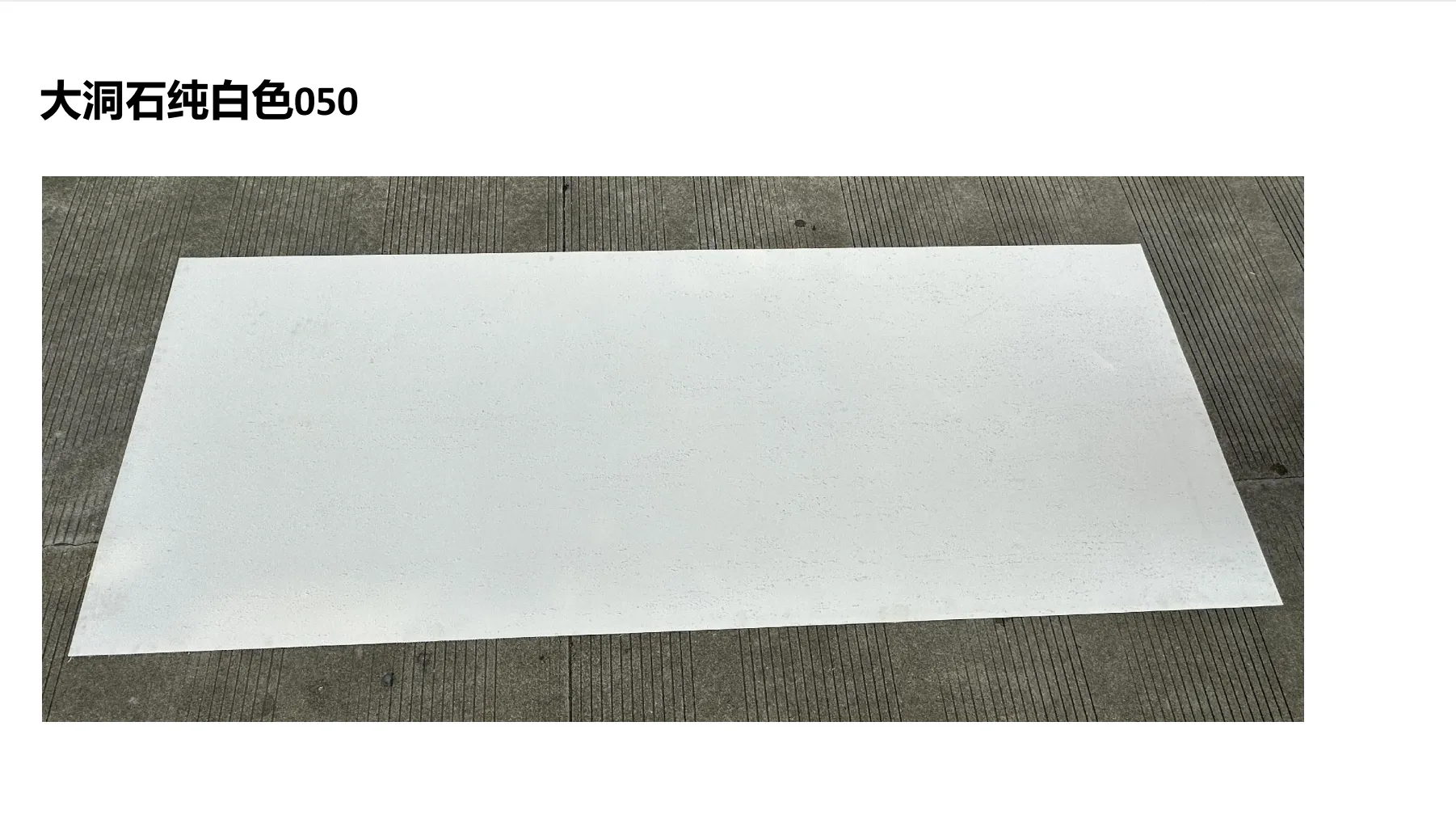
First things first: MCM stands for Modified Composite Material, a tech-forward solution that's been turning heads in the construction industry. Think of it as nature's best qualities—like the unique veining of travertine or the texture of stone—blended with cutting-edge engineering. Huge Travertine MCM, specifically, is part of the MCM big slab board series, designed to mimic the look and feel of natural travertine but with a critical upgrade: flexibility and reduced weight. Unlike traditional stone slabs that are quarried, cut, and shipped as heavy, rigid blocks, MCM flexible stone is crafted by bonding natural stone particles with a lightweight, durable backing. The result? A material that's thin, bendable (yes, bendable!), and significantly lighter than its natural counterpart—without sacrificing strength.
But don't let the "flexible" part fool you. This isn't some flimsy substitute. Huge Travertine MCM is built to handle the demands of large-scale installations, from high-traffic commercial spaces to outdoor plazas exposed to the elements. Its secret lies in the composite structure: the stone particles provide that authentic aesthetic, while the backing adds tensile strength and impact resistance. And when we talk about "huge" slabs, we mean it—these boards come in sizes that minimize seams, creating a seamless, luxurious look that's hard to achieve with smaller, heavier traditional stones.
Let's get to the numbers that matter. Traditional natural travertine slabs can weigh anywhere from 20 to 30 kilograms per square meter (kg/m²), depending on thickness. That might not sound like much until you multiply it by hundreds or thousands of square meters in a large project. Suddenly, you're looking at structural engineers calculating load-bearing limits, cranes on-site for days, and installation timelines stretching longer than planned. Huge Travertine MCM flips that script. Thanks to its composite design, it clocks in at a mere 6 to 8 kg/m²—less than half the weight of traditional travertine. But here's the kicker: despite being lighter, its weight capacity (i.e., how much weight it can support and withstand over time) is comparable to natural stone.
Why does this matter? For starters, it reduces the strain on a building's structure. Imagine a 10,000-square-meter commercial facade: using traditional travertine would add 200,000 to 300,000 kg of weight to the building. With MCM big slabs, that number drops to 60,000 to 80,000 kg—a massive difference that can simplify structural designs, lower foundation costs, and even open up new architectural possibilities (think cantilevered structures or lightweight facades that traditional stone couldn't support).
Installation crews are singing its praises too. Lifting a 8 kg/m² slab is a two-person job, not a six-person one. No need for heavy machinery cluttering the site or slowing down progress. This means faster installation times, lower labor costs, and fewer delays—music to the ears of project managers working on tight deadlines. And because the slabs are flexible, they can even be curved or bent slightly to fit unique architectural shapes, like rounded walls or vaulted ceilings, without cracking. Traditional stone? Good luck bending that without it shattering.
If you're wondering where this material truly excels, look no further than the projects that make cities iconic. Let's break down a few key applications:
Still on the fence? Let's put Huge Travertine MCM head-to-head with traditional travertine and even other common materials like fair-faced concrete or foamed aluminium alloy board in a quick comparison:
| Feature | Huge Travertine MCM (MCM Big Slab Series) | Traditional Natural Travertine | Fair-Faced Concrete | Foamed Aluminium Alloy Board |
|---|---|---|---|---|
| Weight per m² | 6–8 kg | 20–30 kg | 22–25 kg | 4–6 kg (similar weight, but different aesthetic) |
| Installation Time (per 100 m²) | 1–2 days (small crew) | 3–5 days (large crew + machinery) | 2–3 days (requires formwork) | 1–2 days (similar speed, but metallic look) |
| Structural Load Requirement | Low (ideal for retrofits/light structures) | High (needs reinforced support) | High (heavy on foundations) | Low (but limited to metallic finishes) |
| Aesthetic Versatility | High (mimics natural stone, multiple colors/patterns like starry red, vintage gold) | High (authentic, but limited by quarry availability) | Low (industrial look, limited customization) | Medium (metallic finishes, modern but not stone-like) |
| Durability (Weather/Impact) | Excellent (resistant to cracking, fading, moisture) | Good (but prone to chipping, requires sealing) | Good (but can stain, hard to repair) | Excellent (rust-resistant, lightweight) |
Beyond the weight capacity and installation perks, there's a bigger reason projects are choosing MCM big slab series: it's a sustainable choice. Traditional stone quarrying is resource-intensive, with heavy machinery, water usage, and waste. MCM, on the other hand, uses natural stone particles (often from quarry waste) and a minimal amount of synthetic binders, reducing its environmental footprint. Plus, its lightweight nature cuts down on transportation emissions—fewer trucks needed to haul materials to the site.
And let's not forget about design freedom. With Huge Travertine MCM, you're not limited to the colors or patterns found in local quarries. Want the look of travertine (starry blue) for a coastal-themed mall? Done. Prefer the warmth of travertine (vintage gold) for a luxury hotel lobby? No problem. The MCM big slab series offers a range of finishes, from polished to matte, and even textures that mimic rough-hewn stone or smooth marble. It's like having a paint palette of natural stone at your fingertips.
At the end of the day, construction is about solving problems—whether that's meeting a deadline, staying under budget, or creating a space that inspires. Huge Travertine MCM, as part of the MCM big slab board series, checks all those boxes. Its weight capacity isn't just a number on a spec sheet; it's the difference between a project that feels like a struggle and one that flows smoothly. It's the reason architects can stop compromising on design, contractors can finish early, and building owners can enjoy a stunning, durable space for decades to come.
So, the next time you walk into a grand lobby or admire a sleek building facade, take a closer look. Chances are, you're not just looking at stone—you're looking at the future of construction: lightweight, strong, and beautiful. And that future? It's built on MCM.
Recommend Products












