
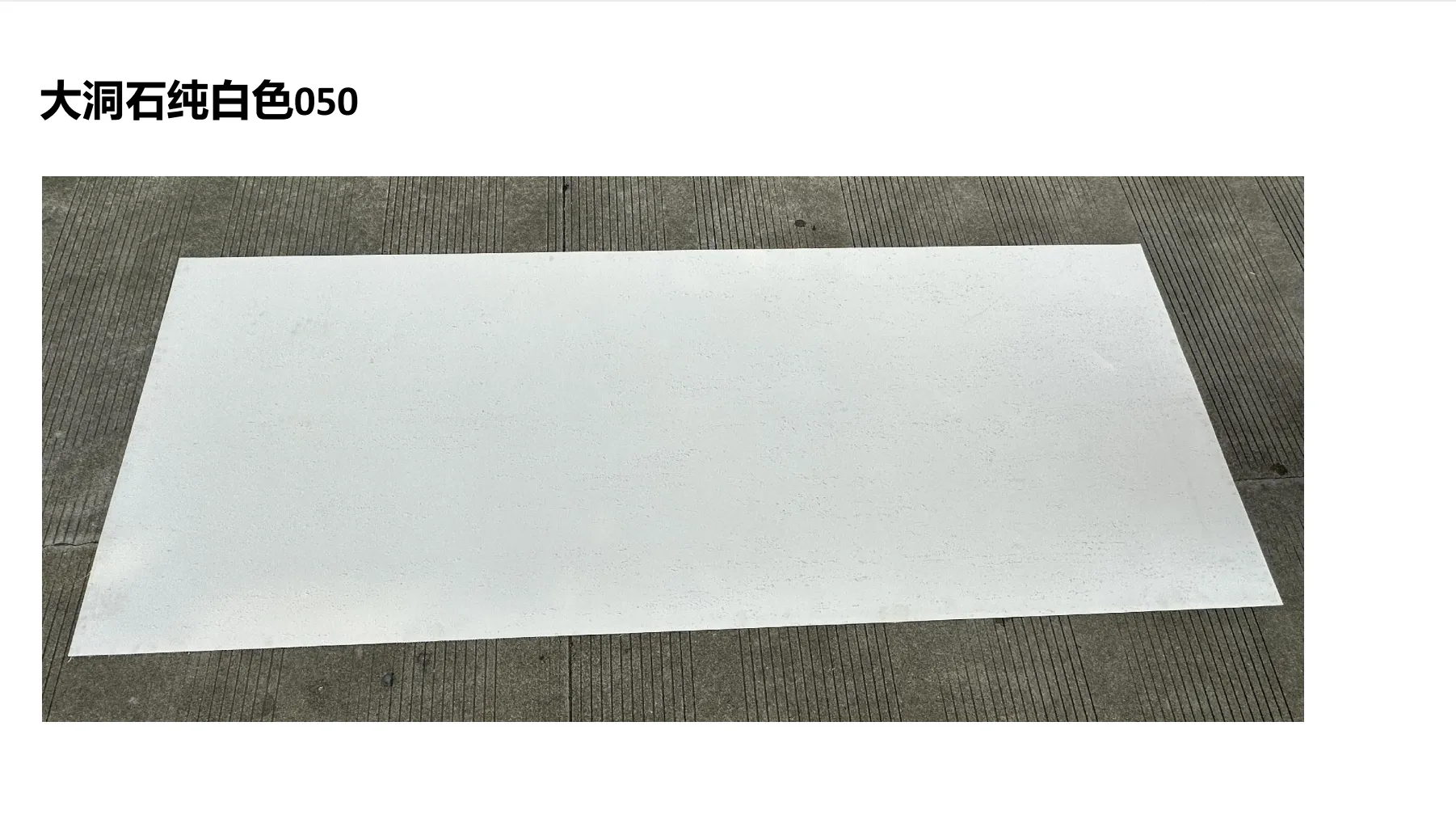
In the realm of modern architecture and interior design, huge travertine panels have emerged as a revolutionary solution that combines the timeless elegance of natural stone with unprecedented practical advantages. These monumental-scale panels represent a significant advancement in building material technology, offering architects and designers new possibilities for creating stunning stone facades without the structural and logistical challenges traditionally associated with large-format natural stone.
Huge travertine monumental panels are large-format flexible stone products engineered to replicate the authentic appearance and texture of natural travertine while eliminating the inherent limitations of quarried stone. Unlike conventional travertine slabs that can weigh between 25 to 30 kilograms per square meter, these innovative panels weigh merely 3 to 8 kilograms per square meter, representing a structural load reduction of over 85 percent.
The manufacturing process involves processing natural stone powder into a composite material bonded with polymer technology. This creates a product that maintains the characteristic porous texture, natural veining patterns, and warm color variations that make travertine such a sought-after material for luxury architectural projects. Available in sizes up to 2400 by 1200 millimeters, these panels enable seamless coverage across expansive wall surfaces with minimal visible joints.
The transformation from rigid stone blocks to MCM flexible stone technology introduces several critical advantages that fundamentally change how architects approach stone specification:
Lightweight Construction: At only 3 to 5 millimeters thick, huge travertine panels dramatically reduce structural requirements. Buildings previously unable to support traditional stone cladding can now achieve the same aesthetic without costly reinforcement work.
Exceptional Flexibility: The material can bend to a minimum radius below 100 millimeters, enabling application on curved columns, arched doorways, and rounded architectural features that would be impossible with conventional stone.
Waterproof Performance: Unlike natural travertine which requires regular sealing to prevent moisture penetration, these panels are inherently waterproof due to their composite construction.
Fire Safety Rating: The material carries fireproof certification, meeting stringent building codes for public facilities including schools, hospitals, and commercial buildings.
UV Stability: Integrated UV stabilizers protect the surface color from solar degradation, maintaining appearance on south-facing facades for decades.
The huge travertine monumental series offers designers a curated palette that captures the essence of natural travertine formations:
Flexible stone panels in huge travertine format excel across diverse architectural contexts:
Commercial Building Facades: Office towers, shopping centers, and public buildings benefit from reduced structural load while achieving the prestigious stone appearance that commands attention in urban landscapes. The large format minimizes joint lines across expansive exterior surfaces.
Interior Feature Walls: Hotel lobbies, corporate reception areas, and luxury retail spaces gain immediate visual impact from the authentic travertine texture. The panels can wrap corners and follow architectural angles without visible seams.
Curved Architectural Elements: Columns, archways, and rounded walls that were previously impossible to clad with natural stone now receive seamless coverage. The flexibility enables design freedom that transforms architectural vision into reality.
Renovation Projects: Existing buildings can receive stone cladding upgrades without structural modification. The panels bond directly over current tile, plaster, or concrete surfaces, minimizing disruption during renovation work.
Successful installation of huge travertine panels requires attention to specific technical requirements:
1. Substrate Preparation: The base surface must be structurally sound, clean, and free from contaminants including dust, oil, and loose material. Any hollow areas should be repaired before installation begins.
2. Adhesive Application: Use polymer-modified tile adhesive specifically formulated for flexible stone products. Apply adhesive using the scraper method rather than spot-pasting to ensure full coverage and prevent hollow spots.
3. Panel Placement: Press panels firmly onto the adhesive surface during the working time. For curved applications, pre-bend the panel against the surface before final adhesive contact.
4. Environmental Conditions: Installation should proceed when temperatures are between 5 and 40 degrees Celsius. Avoid application during rain, snow, or winds exceeding force level 5.
5. Surface Protection: If adhesive contaminates the panel surface, allow it to dry completely before gently scraping clean. Never wipe wet adhesive from the textured surface.
The environmental profile of huge travertine panels presents several advantages for sustainable building practices:
The manufacturing process uses processed stone powder rather than quarrying complete stone blocks, significantly reducing land disturbance and extraction energy. Transportation carbon footprint decreases proportionally with the weight reduction—a container of flexible panels covers substantially more surface area than traditional stone shipments.
Renovation projects benefit from the ability to apply panels over existing surfaces without demolition waste. This prevents the embodied carbon cost of removing and disposing of old materials while extending the functional lifespan of building envelopes.
The durability characteristics—waterproof, UV-stable, fireproof, and crack-resistant—contribute to extended service life that defers replacement cycles and their associated environmental impacts.
Huge travertine monumental panels represent a paradigm shift in stone cladding technology. By combining the authentic aesthetic of natural travertine with revolutionary flexibility, lightweight construction, and comprehensive technical performance, these panels open new possibilities for architectural expression previously constrained by the limitations of traditional stone.
Whether specifying for commercial facades requiring fire certification, interior feature walls demanding design flexibility, or renovation projects needing minimal structural impact, huge travertine panels deliver the complete package of aesthetic excellence and practical performance that modern architecture demands.
Recommend Products












