
Walk down any industrial district, and you'll notice something striking: the buildings that stand the test of time aren't just functional—they tell a story. Their exteriors, weathered but resilient, speak to the care that went into choosing materials that don't just look good on day one, but grow more characterful with each passing year. For architects and builders, this balance of durability and design has long been a puzzle—especially when it comes to focal elements like exterior pillars. Enter marble pillars: a classic choice, but one that's often underestimated for its industrial potential. Today, we're diving into why these pillars are becoming a go-to for modern industrial exteriors, how real photos bring their true value to life, and why pairing them with materials like travertine or MCM flexible stone creates solutions that last.
Anyone who's ever worked on an industrial building project knows the drill: exteriors take a beating. Sun, rain, wind, even the occasional hailstorm—these elements don't care about aesthetics. They test materials to their limits, turning cheap options into eyesores within a decade. But here's the thing: industrial spaces aren't just factories or warehouses anymore. Many are repurposed into creative hubs, offices, or community centers, where curb appeal matters as much as structural integrity. That's where the challenge lies: finding materials that can handle the weather and make a statement.
Take, for example, a converted textile mill in Chicago I visited last year. Its red brick exterior was charming, but the wooden pillars flanking the entrance had rotted after just 15 years. The renovation team replaced them with something unexpected: marble pillars with a rough-hewn finish. Today, those pillars don't just support the overhang—they anchor the building's identity. Their creamy-white surface, streaked with faint gray veins, contrasts beautifully with the brick, and after five harsh winters, they still look as sturdy as the day they were installed. That's the magic of choosing materials that marry durability with design.
When most people hear "marble," they think of grand lobbies or fancy countertops. But industrial marble pillars are a different beast. Quarried from dense, high-quality stone and often finished with a honed or bush-hammered texture (no polished surfaces here—we're talking grip and grit), they're built to resist scratches, stains, and water damage. Unlike softer stones, marble's low porosity (when sealed properly) means it won't absorb moisture and crack in freezing temperatures. And while it might develop a patina over time—those subtle color changes from sun exposure—that's not a flaw. It's a mark of character, turning a static pillar into a piece that reflects the building's journey.
I spoke with Elena, an architect who specializes in industrial adaptive reuse, about this recently. "Clients used to shy away from marble for exteriors, thinking it was too 'fragile,'" she told me. "But once they see how it ages—how the veins become more pronounced, how the surface weathers into something unique—they're sold. A marble pillar doesn't just last ; it evolves. That's exactly what industrial spaces need: materials with stories."
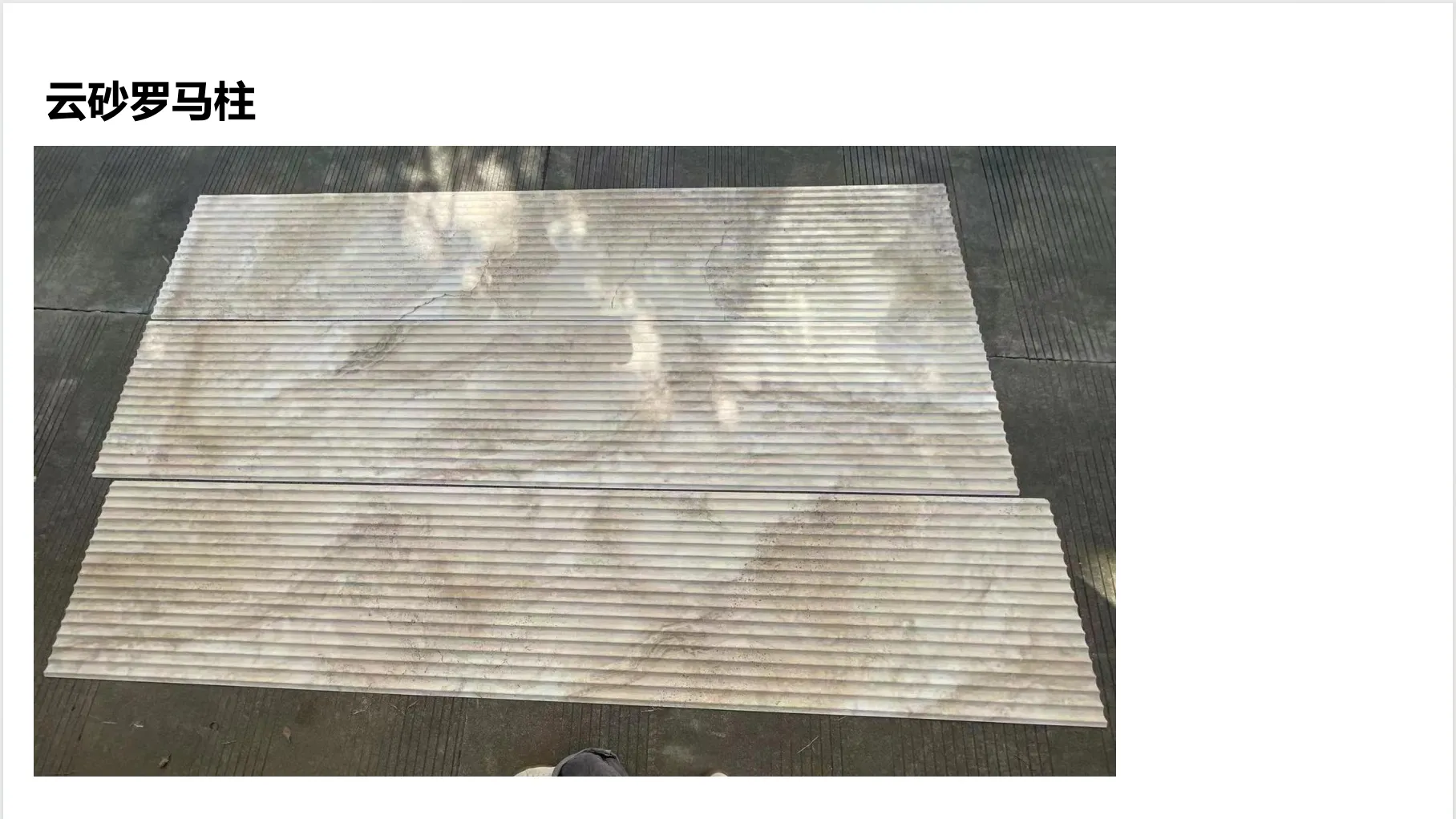
Here's a secret architects and contractors learn early: material swatches lie. A tiny sample of marble might look uniform, but in reality, a full-sized pillar could have variations in color, veining, or texture that drastically change the end result. That's where real photos come in. When you're choosing marble pillars for an industrial exterior, seeing high-resolution images of full installations—captured in different lighting, from different angles, even in different weather conditions—isn't just helpful. It's essential.
Take the "travertine (starry green)" variant, for instance. On a swatch, it might look like a muted green stone. But in real photos of a warehouse conversion in Portland, you can see how the "starry" flecks catch the afternoon sun, turning the pillars into focal points that draw the eye. Or consider "lunar peak silvery"—a material often paired with marble for accent panels. In photos, its cool, metallic sheen contrasts beautifully with marble's warmth, creating a dynamic exterior that feels both modern and timeless. Without those real images, you're just guessing how these materials will interact in the real world.
Real photos also show "imperfections" that become selling points. A close-up of a marble pillar might reveal a small pit or a slightly uneven edge—details that would make a perfectionist cringe, but that add depth to an industrial space. These aren't flaws; they're reminders that the material is natural, authentic, and built to wear like a well-loved jacket, not a disposable trend.
Marble pillars are stars, but even stars need a supporting cast. The best industrial exteriors use a mix of materials to balance strength, cost, and style. Let's talk about two standouts: MCM flexible stone and travertine.
MCM (Modified Composite Material) flexible stone is a game-changer for industrial projects. Imagine a material that looks like natural stone but weighs a fraction of the real thing, bends without breaking, and installs in half the time. That's MCM flexible stone. It's perfect for cladding large areas around marble pillars, adding texture without adding stress to the building's structure. I worked on a brewery renovation last year where we paired marble pillars with MCM flexible stone in "rust square line" finish. The result? The pillars stood tall as the focal point, while the stone cladding added a rugged, industrial edge that complemented the brewery's vibe. And because MCM is resistant to mold and mildew, it's holding up beautifully in the damp Pacific Northwest climate.
Travertine has been used in architecture for millennia, and for good reason. Its porous surface, filled with tiny holes (called "vugs"), gives it a unique texture that hides scuffs and scratches—ideal for areas where people (or machinery) might brush against the exterior. "Travertine (vintage silver)" is a favorite among industrial designers for its cool, understated look. When paired with marble pillars, it creates a contrast between smooth and rough, light and dark, that feels intentional but not forced. A client once told me, "I love how the travertine looks like it's been there forever, even when it's new. It makes the whole building feel rooted in history."
To help you visualize how these materials stack up, here's a breakdown of their key features, durability, and best uses. Think of it as a cheat sheet for when you're standing in front of a wall of samples, trying to decide what will work for your project.
| Material | Key Features | Durability Rating (1-5) | Best For | Visual Appeal |
|---|---|---|---|---|
| Marble Pillars | Dense, low-porosity stone; available in honed/bush-hammered finishes; heat and water resistant when sealed. | 4.5 | Entranceways, focal points, structural support. | Creamy base with natural veining; develops warm patina over time. |
| Travertine (Vintage Silver) | Porous with vugs; lightweight compared to marble; natural slip resistance. | 4 | Cladding, walkways, accent walls around pillars. | Cool silver-gray with subtle texture; hides wear well. |
| MCM Flexible Stone (Rust Square Line) | Composite material; flexible, lightweight, mold/mildew resistant. | 5 | Large-scale cladding, curved surfaces, budget-friendly alternatives to stone. | Rustic, industrial look with linear patterns; consistent color. |
| Lunar Peak Silvery | Metallic sheen; durable alloy core; weather-resistant coating. | 4.5 | Accent panels, trim work, modern industrial designs. | Bright, silvery finish with a slight iridescence; reflects light beautifully. |
Industrial buildings aren't just structures—they're investments. The materials you choose today will shape how that building is perceived, used, and maintained for decades. Marble pillars, paired with complementary materials like MCM flexible stone or travertine, offer something rare: durability that doesn't compromise on design, and beauty that only deepens with time. And real photos? They're the bridge between the abstract (a material sample) and the concrete (how that material will look on your building, in your climate, ten years from now).
So the next time you're planning an industrial exterior, don't just think about what's tough. Think about what tells a story. Think about marble pillars standing tall, their surfaces marked by the years but unbroken. Think about travertine cladding that softens the edges, or MCM stone that wraps the building in texture. These aren't just materials—they're partners in creating spaces that last. And isn't that the point of good architecture? To build something that outlives us, and looks good doing it.
Recommend Products












