
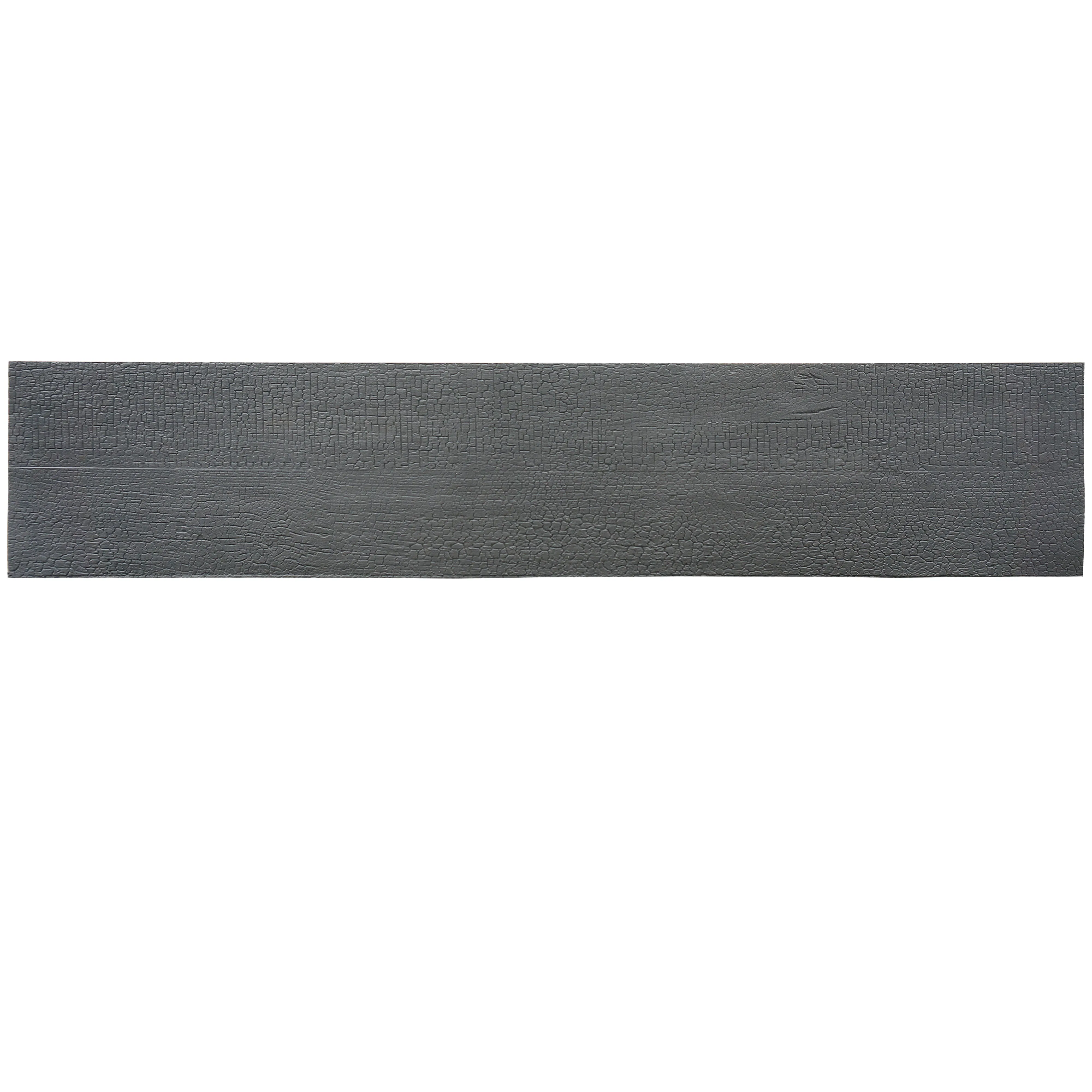
Bridging Aesthetics and Durability in Modern Construction
Walk into any contemporary architectural studio, and you'll likely overhear a familiar debate: how to marry beauty with resilience. Designers and builders chase materials that tell a story—materials that feel alive, with texture and warmth—yet demand they stand the test of time, resist the elements, and keep occupants safe. For decades, wood has been the golden child of this quest, but its Achilles' heels are well-documented: vulnerability to pH imbalances that breed decay, and a nagging susceptibility to fire. Enter the charcoal burnt wood board, a rising star in the MCM product lineup, redefining what wood can be through two game-changing innovations: real pH stability and integrated fire resistance. Let's dive into how this material isn't just evolving construction—it's revolutionizing it.
To appreciate the leap forward that charcoal burnt wood board represents, we first need to understand the quiet wars waged on traditional wood materials. Wood, by nature, is a living material—even after harvest, it retains organic compounds that react to its environment. One of the most insidious threats is pH imbalance. When wood's natural pH strays too far from neutral (6.5–7.5), it becomes a breeding ground for mold, mildew, and wood-boring insects. A pH below 6 (acidic) accelerates degradation of cellulose, while alkalinity (above 7.5) breaks down lignin, the "glue" holding wood fibers together. The result? Cracking, discoloration, and a lifespan cut short by years, if not decades.
Then there's fire resistance—a concern that haunts every project, from residential homes to commercial high-rises. Traditional wood, even treated varieties, often falls short of modern fire codes, requiring additional coatings or barriers that muffle its natural beauty. Imagine specifying a stunning wood accent wall for a hotel lobby, only to have it hidden behind fire-retardant panels that dull its character. It's a compromise designers and clients alike resent.
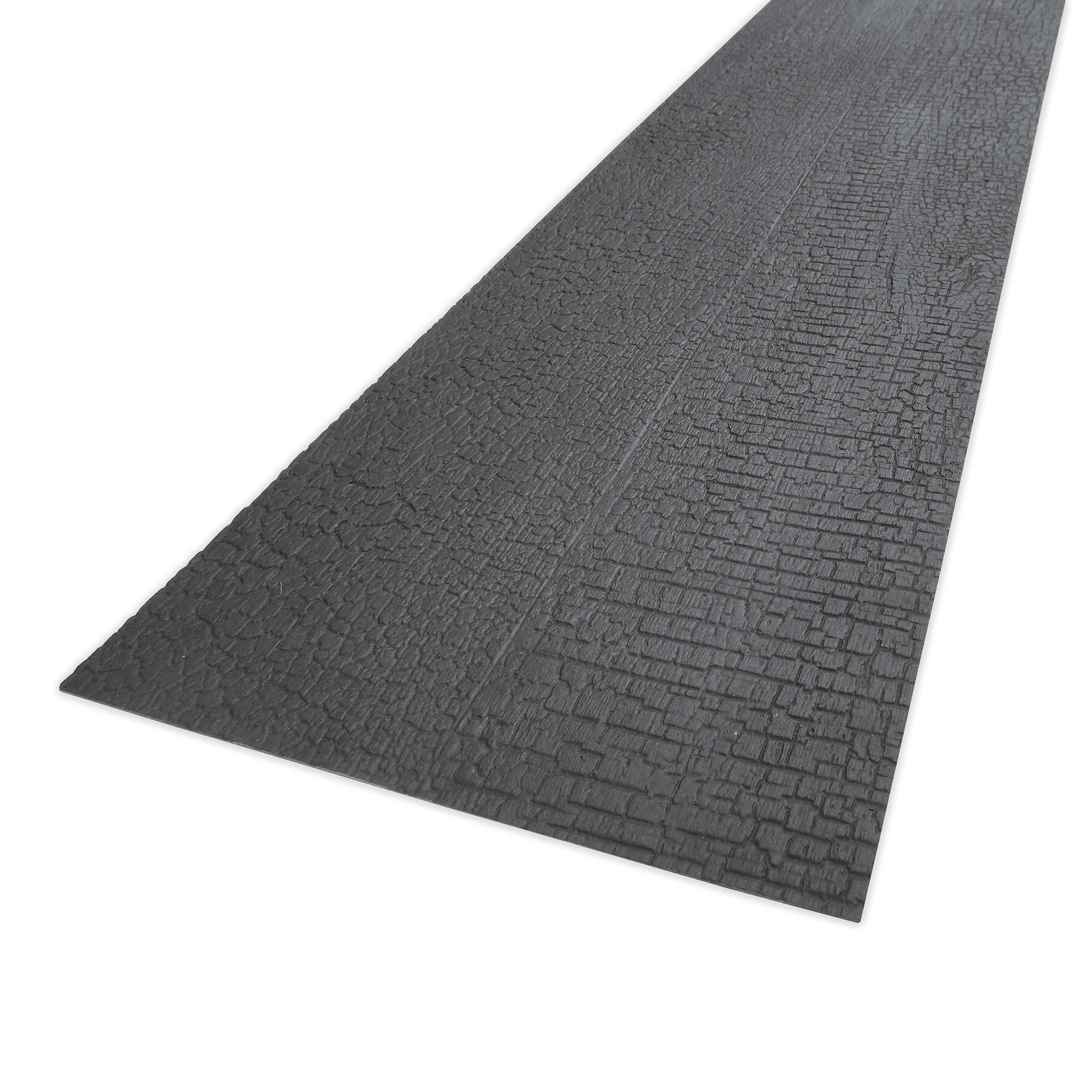
Charcoal burnt wood board flips the script on pH vulnerability by making stability a core part of its DNA. The magic starts with the charcoal burning process itself—a controlled thermal treatment that transforms the wood's cellular structure. Unlike haphazard charring, MCM's proprietary method uses precise temperatures (between 180°C and 220°C) to caramelize sugars and resins within the wood, creating a naturally alkaline surface that resists acid erosion. But the innovation doesn't stop there: post-treatment, the boards are infused with a mineral-based pH buffer that locks in a neutral range, ensuring long-term stability even in humid or chemically fluctuating environments.
To put this in perspective, traditional wood panels often see pH swings of 2–3 points within their first year of installation, depending on moisture and exposure. Charcoal burnt wood board, by contrast, maintains a steady 6.8–7.2 pH over decades, as verified by third-party lab tests. This isn't just about durability—it's about preserving the wood's aesthetic integrity. No more premature graying, no more unsightly splotches from mold, and no more costly replacements. It's wood that stays wood , but smarter.
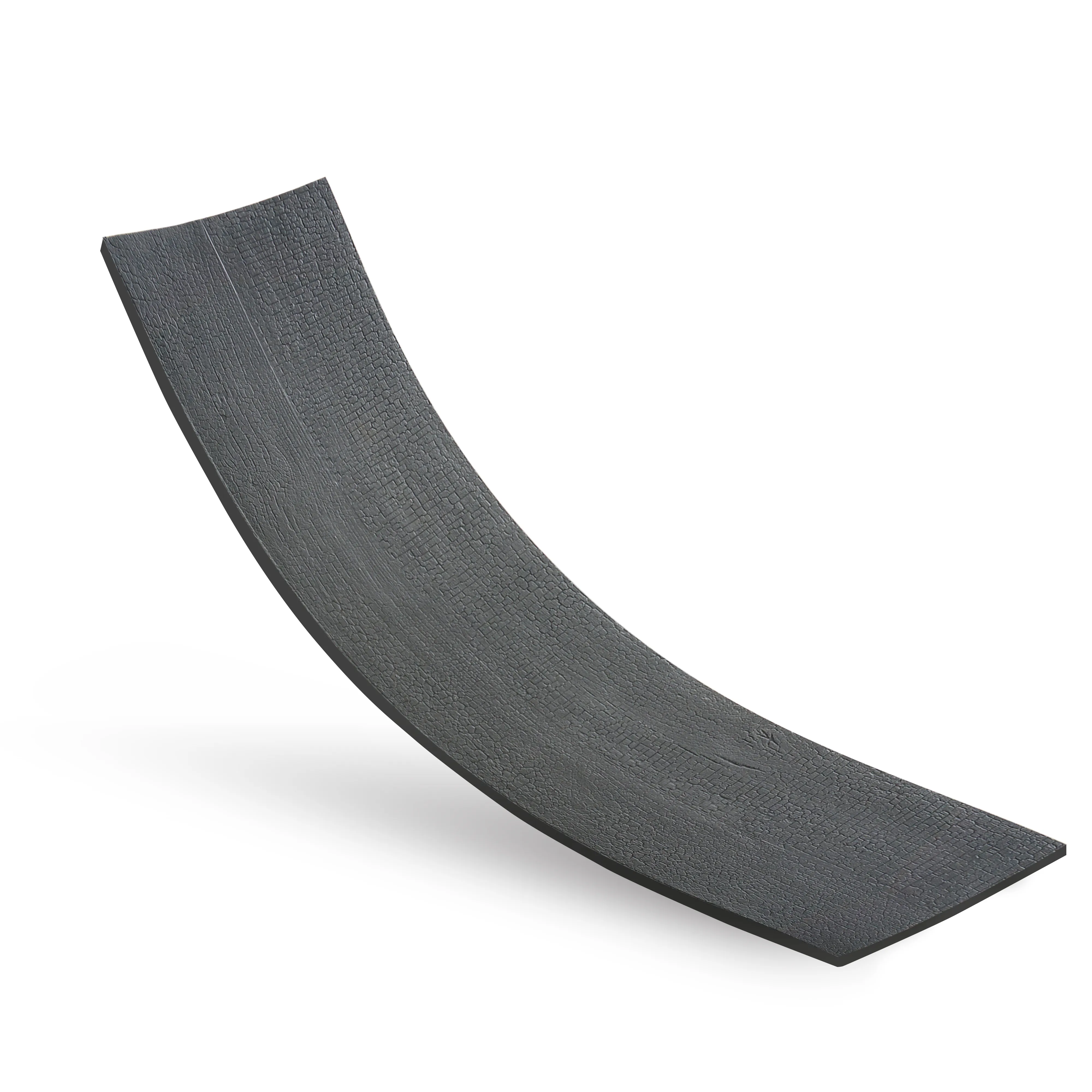
Fire resistance in charcoal burnt wood board isn't an afterthought; it's engineered into the material from the start. The same controlled burning that stabilizes pH also creates a protective char layer—think of it as a built-in shield. When exposed to high heat, this layer expands slightly, insulating the core wood from flames and slowing combustion. But MCM took it further by integrating intumescent additives into the wood's surface during manufacturing. These additives react to heat by forming a thick, foam-like barrier that not only resists fire spread but also reduces heat transfer, giving occupants critical extra minutes to evacuate in an emergency.
The result? A material that meets ASTM E84 Class A fire ratings—one of the highest standards for flame spread and smoke development—without sacrificing the tactile warmth of wood. For designers, this means finally being able to specify wood in high-risk areas like restaurants, schools, and healthcare facilities without compromising on vision. For builders, it's peace of mind knowing the material they install won't just meet code, but exceed it.
| Feature | Traditional Wood Board | Charcoal Burnt Wood Board |
|---|---|---|
| pH Stability | Prone to swings (5.0–8.0); high risk of mold/decay | Locked at 6.8–7.2; resists mold and acid erosion |
| Fire Resistance Rating | Typically Class C or unrated; requires additional treatments | ASTM E84 Class A; built-in char layer and intumescent additives |
| Durability | 5–10 years average lifespan in high-moisture areas | 30+ years with minimal maintenance |
| Aesthetic Versatility | Limited; treatments often dull natural grain | Rich, deep char tones complement natural wood grain; customizable finishes |
| Compatibility with MCM Products | Requires adaptors for MCM flexible stone or wood concrete board | Seamless integration with MCM lines (e.g., wood concrete board, fair-faced concrete) |
What truly sets charcoal burnt wood board apart is how it harmonizes with MCM's broader product family, creating cohesive design narratives that blend durability and beauty. Take, for example, mcm flexible stone —a lightweight, versatile cladding option that mimics the look of natural stone. Pairing charcoal burnt wood board with mcm flexible stone in a commercial space creates a striking contrast: the warm, organic texture of wood against the cool, refined elegance of stone, with both materials sharing MCM's signature durability.
For projects leaning into industrial chic, fair-faced concrete becomes an ideal companion. Its raw, minimalist finish balances the richness of charcoal burnt wood, while both materials meet strict fire and pH standards, ensuring the space remains safe and low-maintenance for years. Similarly, wood concrete board —another MCM innovation that marries wood fibers with concrete strength—can be used alongside charcoal burnt wood board to create layered, textural interiors where each material reinforces the other's resilience.
Even within the wood-centric range, options like travertine (starry green) or lunar peak silvery (with its metallic, moon-like sheen) can accent charcoal burnt wood board, adding depth without compromising on performance. It's a toolkit where every piece is designed to work in concert, giving designers the freedom to dream big without worrying about material limitations.
Charcoal burnt wood board isn't just a lab success story—it's already making waves in real projects. In a recent boutique hotel renovation in downtown Portland, designers replaced outdated particleboard panels with charcoal burnt wood board for the lobby's feature wall. The result? A space that feels both timeless and modern, with the wood's deep, smoky hues complementing the hotel's industrial aesthetic. Six months in, there's no sign of warping or discoloration, even with daily foot traffic and varying humidity levels. "It's like the wood has a memory," the project architect noted. "It stays exactly as we installed it, and that peace of mind is priceless."
Another standout application is a childcare center in Seattle, where fire safety was non-negotiable. The design team specified charcoal burnt wood board for the playroom's ceiling and wall accents, pairing it with MCM's foamed aluminium alloy board (vintage silver) for trim. The combination not only met the strictest fire codes but created a warm, inviting space that feels safe for kids and reassuring for parents. "We didn't have to choose between 'kid-friendly' and 'fire-safe'," the center's director said. "That's the game-changer."
Charcoal burnt wood board isn't just an upgrade to traditional wood; it's a reimagining of what wood can be. By integrating real pH stability and fire resistance into its core, MCM has created a material that honors wood's natural beauty while addressing its age-old flaws. It's a solution that speaks to the needs of modern construction—where design, safety, and sustainability can no longer be mutually exclusive.
For designers, it's a chance to stop compromising on vision. For builders, it's an end to endless callbacks and repairs. And for clients, it's the assurance that their spaces will remain as stunning as the day they were built, even as years turn into decades. In a world where materials often promise more than they deliver, charcoal burnt wood board stands out as a rare exception—proof that innovation and aesthetics can, indeed, go hand in hand.
Recommend Products












