
For architects and designers, the search for materials that blend strength, beauty, and adaptability is a never-ending journey. It's a quest that often leads to frustration: traditional stone is heavy and rigid, concrete lacks warmth, and synthetic options feel disconnected from nature. But in recent years, a quiet revolution has been unfolding in the world of building materials—one that's redefining what "cloud stone" can be. Enter innovations like MCM flexible stone, 3D-printed concrete panels, and vintage-finish foamed aluminium alloys. These aren't just products; they're tools that let creators dream bigger, build smarter, and craft spaces that breathe with life.
Think about the last time you walked through an older building. The marble floors might have been stunning, but you could feel their weight in the creak of the structure. The limestone walls, while elegant, chipped easily, requiring constant upkeep. Traditional stone has always been a double-edged sword: durable yet unwieldy, beautiful yet unforgiving. For decades, designers accepted these trade-offs—until the rise of cloud stone technology.
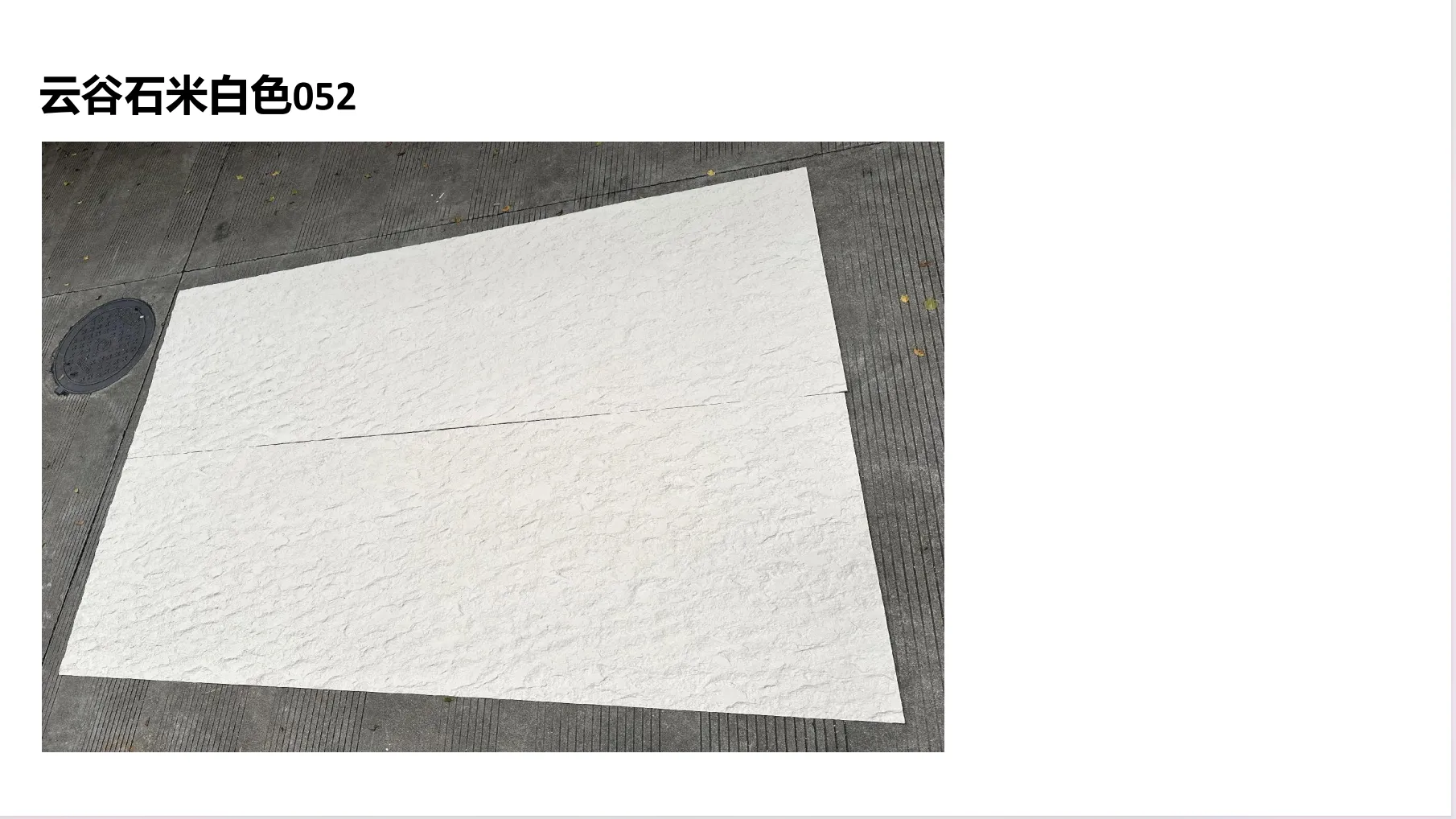
Cloud stone, a term encompassing lightweight, versatile cladding materials, emerged from a simple question: What if we could keep the soul of natural stone—its texture, its depth, its connection to the earth—while stripping away its limitations? The answer lies in materials like MCM flexible stone, a game-changer that's quietly transforming facades, interiors, and even furniture design.
MCM (Modified Composite Material) flexible stone isn't just a material—it's a rebellion against rigidity. Imagine a slab of stone that bends like leather, hangs like fabric, and weighs a fraction of its natural counterpart. That's MCM in action. Crafted from a blend of mineral aggregates, modified polymers, and natural pigments, it marries the best of nature and technology. Unlike traditional stone, which often cracks under stress or sags under its own weight, MCM flexible stone can curve around corners, wrap columns, or even drape over curved surfaces without losing structural integrity.
Take the case of the Riverbank Arts Center in Portland, a 2024 project that became a showcase for MCM's potential. The architects wanted a facade that mimicked the flow of the nearby Willamette River—soft, undulating, alive. Traditional stone would have required massive steel supports and limited the design to harsh angles. MCM flexible stone, however, allowed them to create a 120-foot curved wall that ripples like water, weighing 70% less than natural stone and cutting installation time by half. "It felt like working with a living material," said lead designer Maria Hernandez. "We could adjust, adapt, and let the building's form follow its function, not the other way around."
But MCM's magic isn't just in flexibility. It's also in sustainability. Traditional stone quarrying leaves scars on landscapes; MCM, by contrast, uses recycled mineral waste and low-VOC binders, reducing its carbon footprint by up to 40%. And its durability? A test panel installed on a coastal restaurant in Miami in 2019 still looks brand-new, despite salt spray, hurricane-force winds, and daily sun exposure. "We expected to replace it after five years," said the restaurant owner. "Seven years later, it's become a landmark. The texture hasn't faded, the color hasn't shifted—it's like it's getting better with age."
While MCM reimagines stone, foamed aluminium alloy boards are redefining metal. These aren't your average industrial aluminium panels. With finishes like vintage silver, vintage gold, and brushed metal, they blend the raw strength of aluminium with the warmth of aged materials, creating surfaces that feel both modern and timeless.
Foamed aluminium alloy boards start with a revolutionary manufacturing process: molten aluminium is injected with gas, creating a matrix of tiny bubbles that reduce weight by 60% while maintaining 80% of the strength of solid aluminium. The result? A panel that's light enough to hang from drywall but tough enough to withstand a hailstorm. Then comes the finishing touch: a patina treatment that mimics the look of metal that's aged gracefully—think the warm glow of a vintage brass lamp or the soft sheen of an old silver tray.
Consider the Vintage & Co. Boutique in Chicago, which opted for foamed aluminium alloy board (vintage gold) for its interior walls. The goal was to evoke the charm of a 1920s Parisian salon without the upkeep of real brass or copper. "Traditional metal panels would have scratched easily, and real brass would have tarnished unevenly," said designer James Lin. "The vintage gold foamed aluminium? It's got that lived-in elegance, but it wipes clean with a cloth. Our clients run their hands over it—they can't believe it's not real aged metal."
These boards aren't just for interiors, either. The Skyline Office Tower in Dubai used foamed aluminium alloy board (vintage silver) for its exterior sunshades. The lightweight panels reduced the building's overall load, allowing for a sleeker, more energy-efficient design, while the silver finish reflects sunlight, cutting cooling costs by 15%. "It's a material that works as hard as it looks," said project engineer Ahmed Patel. "Beauty and brains—you don't often get both."
Travertine has long been a favorite in design circles for its porous, honeycombed texture—a reminder of the mineral springs where it forms. But travertine (starry blue) takes this natural beauty a step further, turning stone into a canvas for celestial wonder. Imagine a wall that shimmers like a night sky, with flecks of iridescent blue and silver that catch the light. That's the starry blue variant, crafted by infusing travertine with synthetic mica particles during the manufacturing process, creating a finish that's both organic and otherworldly.
The Luminance Hotel in Tokyo's Ginza district used travertine (starry blue) in its lobby, pairing it with warm wood accents and soft lighting. "We wanted guests to feel like they were stepping into a dream," said interior designer Yuki Tanaka. "The starry blue travertine does that. In the morning, it's a soft, muted blue; at night, under our LED spotlights, it erupts with tiny 'stars.' People stop, take photos, linger. It's not just a wall—it's an experience."
What makes starry blue travertine unique is its balance of control and randomness. Unlike painted or printed finishes, the mica particles are embedded in the stone itself, ensuring the "stars" never fade or chip. And because each slab is hand-finished, no two are exactly alike—adding a layer of authenticity that mass-produced materials can't match. "It's nature's art, enhanced by human ingenuity," said geologist and material scientist Dr. Elena Kim. "We're not replacing the stone's soul; we're helping it tell a new story."
If starry blue travertine evokes the night sky, lunar peak silvery captures the moon's rugged, otherworldly texture. Inspired by NASA's lunar surface images, this material features a matte, pockmarked finish that mimics the moon's craters and ridges—rough to the touch, yet surprisingly soft in appearance. It's a material that feels both ancient and futuristic, making it a favorite for spaces that aim to inspire awe.
The Cosmic Museum of Science in Berlin used lunar peak silvery for its entrance hall, where it wraps around a 30-foot-tall exhibit on space exploration. "We wanted visitors to feel like they were stepping onto the moon's surface," said exhibit designer Karl Weber. "Lunar peak silvery delivers that. Kids run their hands over it, adults lean in to examine the texture—it's interactive without being intrusive. It turns a wall into a conversation starter."
But lunar peak silvery isn't just for museums. It's finding its way into residential design, too. A 2025 penthouse in New York's Tribeca neighborhood features a lunar peak silvery accent wall in the living room, paired with floor-to-ceiling windows overlooking the city. "At night, with the skyline behind it, the wall looks like it's floating in space," said homeowner and art collector Julian Reeves. "It's a reminder that even in the heart of the city, we're part of something bigger."
3D printing has revolutionized industries from healthcare to aerospace, and now it's making its mark on cloud stone technology with 3D art concrete boards. These aren't your average gray slabs; they're custom-designed, intricately patterned panels that push the boundaries of what concrete can do. Using large-scale 3D printers, manufacturers can create textures that mimic natural rock formations, geometric patterns, or even abstract art—all without the need for molds or expensive tooling.
The Pine Ridge Retreat, a luxury in Colorado, used 3D art concrete boards for its outdoor patio walls. The owners wanted a texture that matched the surrounding Rocky Mountains—rough, craggy, authentic. Traditional concrete would have required hand-carving, which is time-consuming and inconsistent. 3D printing, however, allowed them to scan a section of local rock and replicate it exactly across 50 panels, creating a seamless wall that looks like it was hewn from the mountain itself. "It's like bringing a piece of the landscape into the home," said owner Sarah Lopez. "Guests think we quarried it on-site; they can't believe it came out of a printer."
But 3D art concrete's versatility extends beyond mimicry. The Urban Canvas Gallery in Seattle commissioned a series of abstract panels for its facade, each printed with a unique wave pattern that changes as you walk by. "We wanted the building to be a piece of art itself," said gallery director Marcus Chen. "3D printing let us turn that vision into reality. Each panel is a brushstroke, and the building is our canvas."
What's next for 3D art concrete? Manufacturers are experimenting with color gradients, embedded lighting, and even self-healing formulas that repair small cracks over time. "We're not just printing materials—we're printing possibilities," said tech lead Rachel Torres of ConcreteLab, a pioneer in 3D concrete printing. "The future of design isn't about what we can make; it's about what we can imagine."
| Feature | Traditional Stone (Marble/Granite) | Cloud Stone Innovations (MCM, 3D Concrete, etc.) |
|---|---|---|
| Weight | Heavy (20-30 lbs/sq ft) | Lightweight (5-10 lbs/sq ft) |
| Flexibility | Rigid; prone to cracking under stress | Flexible; can bend/wrap without damage |
| Sustainability | High carbon footprint (quarrying, transportation) | Low carbon footprint (recycled materials, reduced waste) |
| Customization | Limited by natural variation; hard to replicate patterns | Highly customizable (3D printing, color additives, textures) |
| Installation | Requires heavy machinery and skilled labor | Lightweight; can be installed with basic tools, reducing time/cost |
At the end of the day, cloud stone technology isn't just about materials—it's about people. It's about the architect who can finally realize their vision for a curved library wall. The homeowner who wants a kitchen backsplash that reflects their personality, not just trends. The community that gains a landmark building that feels like it belongs, not just exists.
Take the case of the Greenhaven Community Center in Phoenix, which opened in early 2025. The designers used a mix of MCM flexible stone (in earthy terracotta), foamed aluminium alloy board (vintage gold), and lunar peak silvery panels to create a space that feels both modern and rooted in the desert landscape. "We wanted it to be a place where people feel connected—to each other, to the environment, to something bigger," said project coordinator David Gomez. "These materials help with that. The terracotta MCM warms the space, the vintage gold adds a touch of joy, and the lunar peak silvery keeps it grounded. It's not just a building; it's a gathering spot, a storyteller."
That's the true innovation of cloud stone technology: it's not replacing natural materials—it's elevating them. It's taking the warmth of stone, the strength of metal, the versatility of concrete, and weaving them into something new: materials that don't just build spaces, but inspire experiences. As designer Maria Hernandez put it: "We don't just design with these materials—we collaborate with them. They have a voice, and it's time we listened."
What's next for cloud stone technology? The possibilities are as limitless as the imagination. Researchers are experimenting with self-cleaning coatings that repel dirt and pollutants, making maintenance a breeze. Others are exploring bio-based binders that further reduce environmental impact, turning cloud stone into a truly carbon-negative material. And as 3D printing technology advances, we may soon see on-site printing of entire facades, eliminating transportation costs and waste.
But perhaps the most exciting frontier is customization. Imagine a world where you can upload a photo of your favorite beach, and a manufacturer 3D prints a cloud stone panel that replicates the texture of the sand, the color of the water, the pattern of the waves. A world where every building tells a unique story, every wall reflects a personal vision. That's the promise of cloud stone technology—not just to build better, but to build more meaningfully.
In the end, cloud stone isn't just a trend; it's a shift in how we think about materials. It's a reminder that innovation and tradition don't have to be opposites—that we can honor the past while building the future. And in that balance, we find something truly powerful: spaces that don't just exist, but live.
Recommend Products












