

Walk down any street in a modern city, and you'll notice something: buildings are no longer just boxes. They're statements. Their exteriors tell stories—of creativity, of sustainability, of the people who designed them. But for decades, architects and designers have faced a tough choice: stick with traditional materials that look great but are heavy, hard to customize, and bad for the environment, or compromise on aesthetics for something more practical. That is, until now.
Enter COLORIA GROUP, a global player in the building materials industry with a knack for turning "impossible" into "let's do it." Specializing in modified cementitious materials (MCM), they've been quietly redefining what's possible for building exteriors and interiors. Today, we're diving into one of their most talked-about innovations: Bali Stone wall cladding, and how 3D printing technology is taking it from "impressive" to "revolutionary."
First things first: let's clear up what Bali Stone actually is. No, it's not quarried from the beaches of Bali (though that would be cool). Instead, it's part of COLORIA's MCM Flexible Stone series—a line of lightweight, flexible cladding panels designed to mimic the look and feel of natural stone, but without the hassle. Think of it as nature's beauty, reimagined with 21st-century engineering.
Bali Stone, in particular, draws inspiration from the lush, organic textures of Bali's landscapes. Picture the weathered stone walls of a traditional Balinese villa, the smooth pebbles along the shores of Seminyak, or the rough-hewn texture of a temple courtyard. Now, imagine capturing that essence in a panel that weighs a fraction of real stone, can bend around corners, and won't crack under pressure. That's Bali Stone in a nutshell.
| Feature | Traditional Natural Stone | MCM Bali Stone |
|---|---|---|
| Weight | Heavy (20-30 kg/m²) | Lightweight (3-5 kg/m²) |
| Flexibility | Brittle—easily cracks | Flexible—can bend up to 30° without breaking |
| Installation | Needs heavy machinery and skilled labor | Can be installed by a small team with basic tools |
| Customization | Limited by natural deposits | Endless—textures, colors, and patterns tailored to your project |
| Environmental Impact | High carbon footprint (quarrying, transportation) | Low-carbon—recycled materials, energy-efficient production |
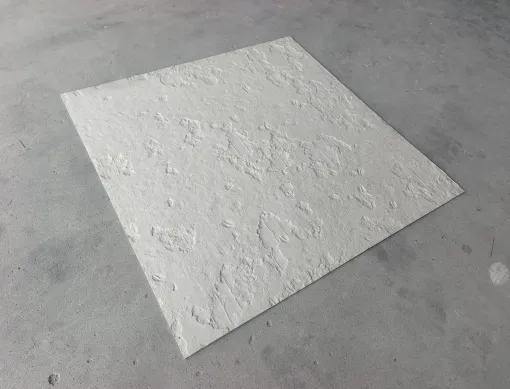
Okay, so Bali Stone sounds great—but what makes it truly innovative? That's where COLORIA's MCM 3D Printing Series comes into play. You've heard of 3D printing for small gadgets or even houses, but applying it to building cladding? That's next-level.
Here's the deal: traditional stone cladding is made by cutting slabs from quarried rock, which limits the complexity of textures. You can get a smooth finish or a rough one, but intricate patterns? Forget it. 3D printing changes that. COLORIA's 3D printers lay down layers of MCM material with pinpoint precision, creating textures that would be impossible with traditional methods. Want a Bali Stone panel that looks like it's covered in tiny seashells? Done. How about a wave-like pattern that flows across the entire facade? No problem. The printer doesn't just replicate nature—it elevates it.
But it's not just about looks. 3D printing makes production faster and more efficient. Traditional stone cutting involves a lot of waste—up to 30% of a quarried block ends up as scrap. With 3D printing, COLORIA uses exactly the amount of material needed, slashing waste and keeping costs down. And because the process is automated, they can produce custom panels in days, not weeks. Imagine an architect sketching a unique texture on Monday and seeing it on a physical panel by Friday. That's the speed 3D printing brings to the table.
Bali Stone might be the star here, but it's part of a bigger family: COLORIA's MCM Flexible Stone series. These panels are designed to solve one of the biggest headaches in construction: weight. Traditional stone cladding adds so much weight to a building that it requires extra structural support, driving up costs and limiting design options. Flexible Stone? It's so light that it can be installed on wood frames, metal studs, even existing walls without any extra reinforcement. That opens up a world of possibilities—think retrofitting old buildings with a fresh look, or adding unique textures to high-rise facades that couldn't handle heavy materials before.
And let's talk durability. You might think something lightweight would be flimsy, but MCM Flexible Stone is tough. It's water-resistant, fire-retardant, and can handle extreme temperatures—from the scorching heat of Saudi Arabia (where COLORIA has a local office, by the way) to the freezing winters of northern Europe. Plus, it won't fade in the sun or crack in humidity. In short, it's built to last, even in the harshest environments.
But what really sells it? The feel. Run your hand over a Flexible Stone panel, and you'd swear it's real stone. The texture is so authentic that even seasoned masons do a double-take. That's because COLORIA doesn't just mimic the look—they replicate the microscopic details of natural stone, from the rough grain to the subtle color variations. It's nature, but better.
Of course, not every project is about intricate textures. Sometimes, you want clean, bold lines—large, seamless panels that make a building look sleek and modern. That's where COLORIA's MCM Big Slab Board Series comes in. These panels are huge—up to 3 meters long and 1.5 meters wide—meaning fewer seams, faster installation, and a more polished finish.
Pair Big Slab Boards with Bali Stone, and you've got a designer's dream. Imagine a commercial building with a base of Bali Stone for warmth and texture, topped with smooth Big Slab Boards for a modern contrast. Or a residential complex where Big Slab Boards form the main facade, with Bali Stone accents around windows and entryways. The possibilities are endless, and because both are part of COLORIA's MCM family, they're designed to work together seamlessly—same installation systems, same durability, same commitment to sustainability.
And let's not forget customization. Big Slab Boards can be printed with patterns, too—thanks again to 3D printing technology. Want a marble-like finish without the weight? Done. How about a concrete look that's actually eco-friendly? No problem. COLORIA's design team works closely with architects to turn their visions into reality, whether it's a subtle texture or a bold graphic.
At this point, you might be thinking, "Okay, Bali Stone and 3D printing sound cool, but why should I care?" Here's the thing: the construction industry is one of the biggest contributors to global carbon emissions. Quarrying stone, transporting heavy materials, and generating waste—all of it takes a toll on the planet. COLORIA's MCM products are changing that.
MCM is made from recycled materials, including industrial byproducts that would otherwise end up in landfills. The production process uses 70% less energy than traditional stone manufacturing, and because the panels are lightweight, transportation emissions are cut by half. Plus, they're 100% recyclable at the end of their life. In a world where sustainability is no longer a "nice-to-have" but a "must-have," COLORIA is leading the charge.
Then there's the cost. Traditional stone cladding isn't just heavy—it's expensive. Between quarrying, cutting, transporting, and installing, costs can skyrocket. MCM products slash those costs by up to 40%. Lighter panels mean cheaper shipping. Easier installation means fewer labor hours. Less waste means lower material costs. It's a win-win for both your budget and the planet.
COLORIA isn't just a manufacturer—they're a partner. With decades of experience and a presence in markets like Saudi Arabia, they understand the unique challenges of building around the world. Need a custom Bali Stone texture for a project in Dubai? Their local team can help with design and samples. Working on a tight deadline in Europe? Their production facilities can ramp up to meet your timeline. They offer a one-stop solution, from initial design to final installation, ensuring that your project runs smoothly from start to finish.
And it's not just about selling products. COLORIA invests in training contractors and architects, teaching them how to get the most out of MCM materials. They provide technical support, installation guides, and even on-site training if needed. Because at the end of the day, their success depends on your success.
Bali Stone wall cladding, powered by 3D printing technology, isn't just a new product—it's a new way of thinking about building materials. It's proof that you don't have to choose between beauty and practicality, between sustainability and durability. With COLORIA's MCM series, you can have it all: textures that look like they were shaped by nature, the flexibility to design without limits, and the peace of mind that comes with knowing you're doing your part for the planet.
So the next time you walk past a building with a facade that makes you stop and stare, take a closer look. It might just be Bali Stone. And if it is, you'll know: that's not just a wall. That's innovation in action.
Recommend Products












