
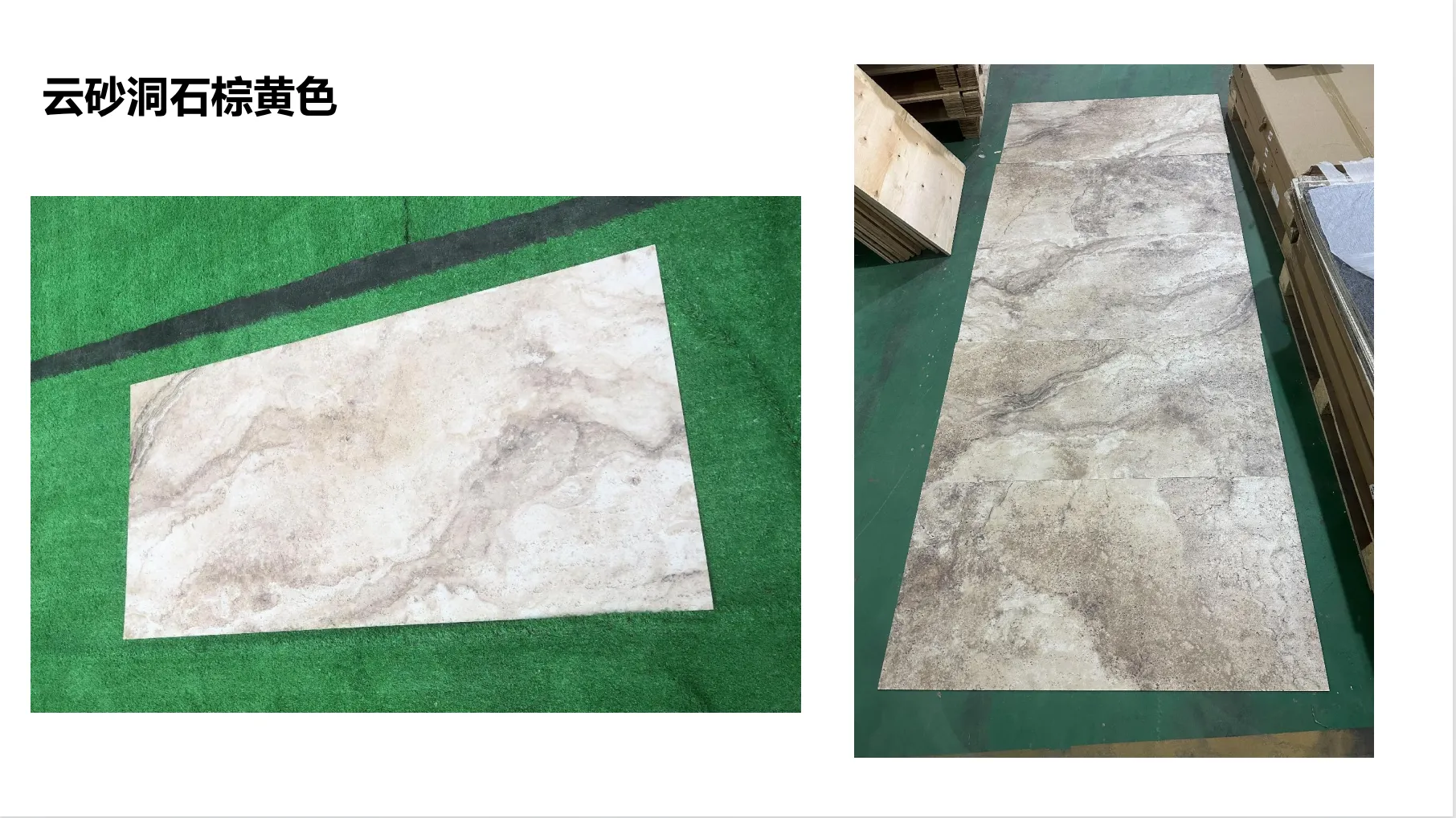
In the world of architecture and design, materials are more than just building blocks—they're storytellers. They carry texture, history, and the potential to transform spaces into experiences. Among these materials, Dolomitic Travertine (Claybank) stands out as a timeless favorite, cherished for its warm, earthy hues, unique veining, and organic charm. But for designers and craftsmen, its beauty comes with a challenge: how to unlock its full potential by cutting it into complex shapes that push the boundaries of traditional design. Enter innovative cutting techniques—methods that blend technology, precision, and artistry to turn this natural stone into something extraordinary. In this article, we'll explore the journey of Dolomitic Travertine (Claybank) from raw block to intricate masterpiece, diving into the challenges, breakthroughs, and future of cutting complex shapes in stonework.
Before we delve into cutting techniques, let's get to know the star of the show: Dolomitic Travertine (Claybank). This stone is a type of sedimentary rock formed by the precipitation of calcium carbonate, often in hot springs or limestone caves. What sets it apart from regular travertine is its higher dolomite content, which gives it enhanced durability and a distinct, muted claybank tone—think soft terracotta meets warm sand, with veins that range from pale cream to deep taupe. It's a material that feels both ancient and modern, making it a staple in projects ranging from rustic villas to sleek urban interiors.
But here's the catch: Dolomitic Travertine (Claybank) is not just hard—it's complex . Its surface is porous, with tiny cavities formed by gas bubbles during its formation, and its veining is irregular, meaning no two blocks are identical. These characteristics make it tricky to cut into non-linear, intricate shapes. Traditional methods, which rely on manual tools and brute force, often lead to chipping, cracking, or misalignment, wasting material and compromising the design. For example, trying to carve a wave-like curve or a geometric lattice into a slab of Dolomitic Travertine (Claybank) with a hammer and chisel is like trying to sculpt a rose with a butter knife—possible, but frustratingly imprecise and risky.
This is where the demand for innovation arises. Today's designers aren't just asking for squares and rectangles; they want curves that flow like rivers, angles that challenge perception, and patterns that tell stories. Think of a hotel lobby with a feature wall made of interlocking Dolomitic Travertine (Claybank) panels shaped like falling leaves, or a restaurant bar with a countertop that mimics the undulating dunes of a desert. These visions require cutting techniques that respect the stone's natural properties while giving designers the freedom to dream big. And thanks to advancements in technology, those dreams are now within reach.
To appreciate the value of innovative cutting techniques, it's important to first understand why traditional methods struggle with Dolomitic Travertine (Claybank) and complex shapes. Let's start with the basics: traditional stone cutting relies on tools like chisels, saws, and hammers—tools that have been used for centuries. While these methods have their place (and their charm, in the case of hand-chiseled textures), they're ill-suited for the precision and complexity demanded by modern design.
Take "Big Axe Chiseling Stone," a technique that's been around for generations. As the name suggests, it involves using a large axe-like chisel to chip away at the stone, creating rough-hewn textures and simple shapes. It's a method that celebrates imperfection, which is beautiful in contexts like rustic fireplaces or garden pathways. But when tasked with cutting a 3D lattice or a spiral staircase tread from Dolomitic Travertine (Claybank), it's inefficient and unpredictable. The axe's force can cause the stone to fracture along its natural fault lines, ruining hours of work. Material waste is also a major issue—traditional methods often remove up to 30% more stone than necessary, driving up costs and environmental impact.
Another traditional approach is diamond-tipped sawing, which uses circular blades embedded with diamond particles to cut straight lines. While more precise than chiseling, it's limited to 2D shapes—straight edges, right angles, maybe a gentle curve if the blade is flexible. But when designers want complex 3D shapes—think a wall panel with recessed patterns that cast shadows at different times of day, or a sculptural column with undulating grooves—diamond saws hit a wall. They can't pivot, tilt, or adjust depth with the nuance needed to create those details without damaging the stone.
Then there's the issue of time. Traditional methods are labor-intensive. A single complex shape might take a skilled craftsman days to complete, and even then, the margin for error is high. In a world where construction timelines are tight and budgets are finite, this isn't feasible. Designers need solutions that are fast, reliable, and consistent—solutions that can replicate a complex shape across multiple panels with pinpoint accuracy, ensuring that every piece fits together like a puzzle.
If traditional methods are the past, innovative cutting techniques are the future—and they're here to stay. These methods combine cutting-edge technology with a deep understanding of stone's properties, allowing craftsmen to cut Dolomitic Travertine (Claybank) into shapes that were once thought impossible. Let's explore the most impactful ones, and how they're reshaping the industry.
CNC (Computer Numerical Control) milling has revolutionized stone cutting, and for good reason. At its core, CNC milling uses computer-aided design (CAD) software to create a 3D model of the desired shape, then translates that model into instructions for a robotic arm fitted with diamond-tipped tools. The result? Precision that's measured in fractions of a millimeter, and consistency that manual methods can never match.
For Dolomitic Travertine (Claybank), CNC milling is a game-changer. The robotic arm can pivot, rotate, and adjust its speed and pressure based on the stone's density—slowing down when it hits a veiny section, speeding up on smoother areas. This adaptability minimizes chipping and waste, ensuring that even intricate details like Linear Travertine (Claybank) patterns or spiral grooves are cut cleanly. Imagine a staircase where each step is a unique, curved slab of Dolomitic Travertine (Claybank), with edges that fit together so seamlessly they look like they were carved from a single block. That's the magic of CNC.
But CNC isn't just about precision—it's about efficiency. A complex shape that might take a craftsman a week to hand-cut can be completed by a CNC machine in hours, freeing up artisans to focus on the creative aspects of the project. And because the design is digital, it's easy to replicate. Need 50 identical wave-shaped panels for a facade? Simply upload the CAD file, and the machine will produce each one with near-perfect consistency. This scalability is a boon for large-scale projects, where uniformity is key.
If CNC milling is the workhorse of innovative cutting, laser cutting is the artist. Using a high-powered laser beam, this technique melts, burns, or vaporizes the stone along a pre-programmed path, leaving behind edges that are smooth, precise, and almost glass-like. For Dolomitic Travertine (Claybank), which has a porous surface, laser cutting is ideal for creating delicate details—think filigree patterns, intricate latticework, or even custom logos etched into the stone.
What makes laser cutting unique is its ability to cut through the stone without physical contact. Traditional tools exert pressure on the stone, which can cause cracks; lasers, on the other hand, interact with the stone at a molecular level, minimizing stress and damage. This is especially important for complex shapes with thin, fragile sections—like a decorative screen with cutouts that mimic tree branches. With a laser, those thin sections remain intact, preserving the design's integrity.
Laser cutting also offers unparalleled design flexibility. Since the laser is controlled by software, it can execute curves, angles, and patterns that would be impossible with manual tools. Want a wall panel that features a 3D art concrete board real photo-inspired design, with overlapping circles and geometric shapes? The laser can follow the CAD model exactly, ensuring that every line is crisp and every curve is smooth. And because the laser leaves minimal heat-affected zone (the area around the cut that might be discolored or weakened), the stone's natural beauty remains uncompromised.
3D printing has taken the world by storm, and stone cutting is no exception. While 3D printing stone directly is still in its early stages, it's already proving to be a powerful tool for creating complex shapes in Dolomitic Travertine (Claybank)—indirectly. Here's how it works: instead of cutting a slab into a shape, 3D printing is used to create a mold or a template that guides the cutting process. For example, if a designer wants a custom-shaped sink basin from Dolomitic Travertine (Claybank), a 3D printer can create a precise mold of the basin, which is then used to shape the stone with CNC or laser tools. This hybrid approach combines the design freedom of 3D printing with the durability of natural stone.
But the future of 3D printing and stone is even more exciting. Companies are experimenting with "stone 3D printing," where a mixture of stone dust, resin, and binders is extruded layer by layer to create custom shapes, which are then cured and polished. While this technique is still being refined, it holds promise for Dolomitic Travertine (Claybank) by allowing designers to create shapes that are hollow, lightweight, or impossibly intricate—shapes that would be impossible to cut from a solid slab. Imagine a pendant light fixture made of 3D-printed Dolomitic Travertine (Claybank) dust, shaped like a cluster of leaves, with each vein and curve designed to cast dappled shadows. It's a marriage of natural beauty and futuristic technology.
Water jet cutting is another innovative technique that's making waves in stonework. As the name suggests, it uses a high-pressure stream of water (mixed with abrasive particles like garnet) to cut through the stone. The stream travels at speeds of up to 900 mph, making it powerful enough to slice through Dolomitic Travertine (Claybank) like a hot knife through butter—without generating heat, which can damage the stone's structure.
What sets water jet cutting apart is its versatility. It can cut through thick slabs (up to 12 inches or more) and create shapes with intricate details, from sharp angles to smooth curves. Because the water stream is thin (as narrow as 0.005 inches), it can create tight corners and small cutouts that would be impossible with CNC or laser tools. For example, a backsplash made of Dolomitic Travertine (Claybank) with a mosaic of tiny, interlocking shapes? Water jet cutting can make that happen, with edges so precise they fit together like a jigsaw puzzle.
Water jet cutting is also eco-friendly. Unlike laser cutting, which uses energy-intensive beams, or traditional saws, which produce a lot of dust, water jet cutting generates minimal waste and uses recycled water in many cases. For designers and builders focused on sustainability, this is a major plus.
To truly understand the impact of innovative cutting techniques, let's compare them side by side with traditional methods. The table below breaks down key factors like precision, material waste, and suitability for complex shapes:
| Technique | Precision | Material Waste | Complexity Handling | Time Efficiency | Best For |
|---|---|---|---|---|---|
| Big Axe Chiseling Stone | Low (±2-5mm) | High (25-30%) | Simple shapes, rough textures | Very slow (days per piece) | Rustic, artisanal projects |
| Manual Diamond Sawing | Moderate (±1-2mm) | Moderate (15-20%) | Straight lines, basic curves | Slow (hours per piece) | Standard slabs, rectangular cuts |
| CNC Milling | High (±0.1-0.5mm) | Low (5-10%) | 3D shapes, intricate details | Fast (minutes to hours) | Custom furniture, staircases |
| Laser Cutting | Very High (±0.01-0.1mm) | Very Low (3-5%) | Delicate patterns, etchings | Fast (minutes per piece) | Decorative panels, logos |
| Water Jet Cutting | High (±0.1-0.3mm) | Low (5-8%) | Thick slabs, tight corners | Moderate to Fast (varies by thickness) | Mosaics, thick structural pieces |
| 3D Printing (Mold/Template) | Very High (±0.05-0.2mm) | Very Low (2-5%) | Impossible-to-cut shapes | Depends on method (hours to days) | Custom prototypes, unique designs |
In 2024, a boutique hotel in Scottsdale, Arizona, wanted to make a statement with its exterior facade. The design brief called for a wall that would evoke the rolling sand dunes of the nearby Sonoran Desert—curved, organic, and impossible to achieve with traditional stone cutting. The material of choice? Dolomitic Travertine (Claybank), for its warm, desert-like hue and natural texture. The challenge? Cutting over 200 unique, wave-shaped panels that would fit together to create a seamless, flowing facade.
The project team turned to a combination of CNC milling and 3D printing to bring the vision to life. First, the design team created a 3D model of the facade using CAD software, with each panel's shape tailored to its position in the "dune" pattern. Then, 3D printers produced small-scale prototypes of each panel to test the fit and adjust the design. Once finalized, the CAD files were sent to a CNC milling machine, which carved each panel from 2-inch-thick slabs of Dolomitic Travertine (Claybank).
To ensure the panels were lightweight and durable enough for the facade, the team also incorporated MCM flexible stone—a composite material that reinforces the back of each travertine panel, reducing the risk of cracking during installation. The result? A facade that looks like it was sculpted by the wind, with each panel's curve and angle working in harmony to create movement and depth. When the sun sets, the Claybank hue glows, and the shadows cast by the curves make the wall feel alive.
The project was a resounding success, with the facade becoming a local landmark. Guests often comment on how the wall "feels" like the desert, even though it's made of stone. From a practical standpoint, the use of CNC and 3D printing reduced material waste by 18% compared to traditional methods, saving the hotel thousands of dollars. And because the panels were cut with such precision, installation took just two weeks instead of the projected four, keeping the project on schedule.
Perhaps the most rewarding part? The 3D art concrete board real photo of the finished facade went viral on design platforms, inspiring other architects to push the boundaries of what's possible with Dolomitic Travertine (Claybank) and innovative cutting techniques.
Innovative cutting techniques aren't just about creating beautiful designs—they offer tangible benefits for designers, builders, and clients alike. Let's break down the most impactful ones:
Traditional stone cutting is notoriously wasteful, with up to 30% of the stone ending up as dust or scraps. Innovative methods like CNC milling and water jet cutting, however, are designed to minimize waste by cutting with precision. The result? Less stone is needed, which lowers material costs and reduces the environmental impact of mining and transportation. For large projects, this can translate to savings of tens of thousands of dollars.
Gone are the days when designers were limited to rectangles and circles. With CNC, laser, and water jet cutting, the only limit is imagination. Want a spiral staircase with each step shaped like a seashell? A fireplace surround with a mosaic of Dolomitic Travertine (Claybank) and Linear Travertine (Claybank) in a geometric pattern? A feature wall with cutouts that spell out a quote in negative space? All of these are now possible. This freedom allows designers to create spaces that are truly unique and reflective of their clients' personalities.
Innovative cutting techniques don't just make stone look better—they make it stronger. By cutting with precision, these methods avoid creating weak points in the stone (like cracks or chips) that can lead to structural issues over time. Additionally, techniques like laser cutting and water jet cutting produce smooth edges that are safer to handle during installation, reducing the risk of injury for workers. When combined with materials like MCM flexible stone, the result is a finished product that's both beautiful and built to last.
Sustainability is no longer a trend—it's a requirement. Innovative cutting techniques align with this goal by reducing waste, energy use, and carbon footprints. For example, water jet cutting uses recycled water in many cases, and CNC machines are more energy-efficient than traditional saws. Laser cutting, while energy-intensive, produces less dust and emissions than manual cutting. And because these techniques extend the life of the stone (by avoiding damage), they reduce the need for replacement, further lowering environmental impact.
As technology continues to evolve, the future of cutting Dolomitic Travertine (Claybank) into complex shapes looks brighter than ever. Here are a few trends to watch:
Artificial intelligence is set to play a bigger role in stone cutting, from design to execution. Imagine AI software that analyzes a slab of Dolomitic Travertine (Claybank), maps its veining and density, and then suggests the optimal way to cut it to minimize waste and highlight the stone's natural beauty. Or AI-driven CNC machines that can adjust their cutting parameters in real time, based on feedback from sensors that detect changes in the stone's hardness or porosity. This level of adaptability could take precision to new heights.
While 3D printing pure Dolomitic Travertine (Claybank) is still in its infancy, advances in composite materials are making it possible to create stone-like products that are lighter, stronger, and more customizable. For example, companies are experimenting with mixing Dolomitic Travertine (Claybank) dust with recycled plastics or resins to create filaments for 3D printers. These composites can be printed into complex shapes that would be impossible with solid stone, opening up new possibilities for furniture, decor, and even structural elements.
Cutting complex shapes is just one part of the process—installing them is another challenge. AR technology could simplify this by overlaying a digital model of the finished design onto the construction site, allowing workers to see exactly where each Dolomitic Travertine (Claybank) panel should go. This would reduce installation time, minimize errors, and ensure that the final result matches the designer's vision perfectly.
The ultimate goal for sustainable stone cutting is zero waste. Innovators are working on techniques that use every bit of the stone—from the slab to the dust. For example, stone dust generated during cutting could be recycled into 3D printing filaments, grout, or even new stone tiles. This closed-loop system would not only reduce waste but also create new revenue streams for stone companies.
Dolomitic Travertine (Claybank) has been a beloved material for centuries, but it's only now, thanks to innovative cutting techniques, that we're truly unlocking its potential. From CNC milling to laser cutting, water jets to 3D printing, these methods are transforming how we think about stone—turning it from a static material into a canvas for creativity. They're allowing designers to dream bigger, builders to work smarter, and clients to enjoy spaces that are as functional as they are beautiful.
But innovation doesn't mean leaving tradition behind. Techniques like Big Axe Chiseling Stone still have a place in creating artisanal, one-of-a-kind pieces that celebrate imperfection. The future lies in blending the best of both worlds—using technology to enhance precision and efficiency, and craftsmanship to infuse soul and character into the stone.
As we look ahead, one thing is clear: Dolomitic Travertine (Claybank) will continue to be a star in the world of design. And with innovative cutting techniques leading the way, its story is only just beginning. Whether it's a hotel facade that mimics desert dunes, a staircase that seems to flow like water, or a sculpture that challenges our perception of stone, the possibilities are endless. After all, in the hands of visionaries and innovators, even the oldest materials can teach us something new.
Recommend Products












