

Imagine walking down a street where buildings don't just stand—they breathe . Their exteriors aren't cold, rigid surfaces, but textures that shift with the light, curves that soften the skyline, and colors that whisper of far-off places. This isn't a scene from a futuristic movie; it's the reality unfolding in modern architecture, thanks to materials that bridge nature's beauty with human ingenuity. Today, we're diving into one such game-changer: Bali Stone Wall Cladding, a star product under COLORIA GROUP's MCM Flexible Stone series. Let's explore how this innovative material is redefining what buildings can feel like, look like, and mean to the people who live and work around them.
For decades, architects and designers have been in a love-hate relationship with natural stone. We adore its timeless elegance—the way marble veining tells a story of millennia, or how granite's speckles echo starlit nights. But let's be honest: natural stone is a bit of a diva. Heavy as a boulder (literally), it demands massive structural support, making it impossible for lightweight buildings or curved designs. Installing it? A logistical nightmare involving cranes, thick mortar, and teams of workers. And if it cracks? Good luck matching that unique vein pattern for repairs. worst of all, its rigidity boxes creativity in—if your design dreams involve a wave-like facade or a spiral entryway, traditional stone would just shake its head and say, "Not happening."
"We once worked with a client who wanted a curved lobby wall that mimicked the rolling hills of Bali," recalls Maya Lin, a senior architect at a Dubai-based firm. "Natural stone was out of the question—it would have required reinforcing the entire structure. Then we discovered Bali Stone. Overnight, that 'impossible' curve became a centerpiece. The material bent like a ribbon, kept the stone's organic texture, and even weighed less than drywall. It was like giving the building a backbone made of silk."
This is where MCM Flexible Stone steps in—and Bali Stone is its most charming ambassador. Born from COLORIA GROUP's decades of expertise in modified cementitious materials, it's stone, but not as we know it. Think of it as natural stone's cooler, more adaptable cousin: same depth, same earthy warmth, but with the flexibility to dance around corners, climb curved surfaces, and even "hug" unconventional architectural shapes. Suddenly, the rules of what a building's exterior can be are being rewritten.
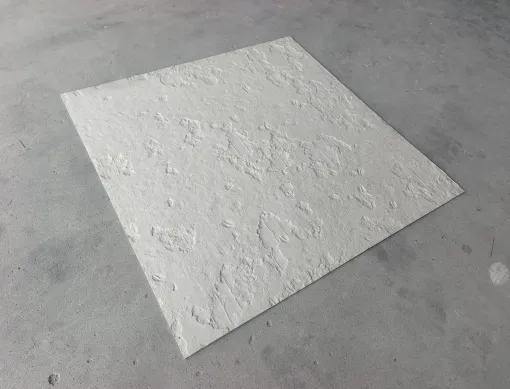
Let's get technical— but in a way that won't make your eyes glaze over. Bali Stone is part of COLORIA's MCM (Modified Cementitious Material) family, which sounds fancy, but here's the gist: it's a blend of natural stone powder, eco-friendly cement, and a special fiber mesh that acts like the "elastic" in your favorite jeans. This combo gives it two superpowers: lightweight strength and bendable durability . A typical 1m² panel weighs just 4-5kg—compare that to natural stone's 25-30kg! That's like swapping a backpack full of books for a featherweight jacket.
| Aspect | Traditional Natural Stone | Bali Stone (MCM Flexible Stone) |
|---|---|---|
| Weight (per m²) | 25-30kg | 4-5kg |
| Installation Time | 2-3 days for 50m² (with heavy machinery) | 1 day for 100m² (hand-installed) |
| Design Flexibility | Limited to flat/straight surfaces | Curves, waves, spirals—anything goes |
| Environmental Impact | High carbon footprint (quarrying, transportation) | Low energy production, 100% recyclable |
| Maintenance | Prone to cracks, needs sealing every 1-2 years | Weather-resistant, no sealing required |
Bali Stone isn't just a material—it's a mood. Its earthy, relaxed vibe makes it perfect for spaces that want to feel connected to nature, but its durability means it can handle the chaos of city life too. Let's look at real-world spots where it's already turning heads:
In a boutique hotel in Bali (fitting, right?), the exterior uses Bali Stone in soft beige and starry blue. The walls curve gently, mirroring the ocean's waves, and the starry blue panels catch the sunset, turning the building into a glowing lantern. "Guests say it feels like staying inside a seashell," the hotel manager. "And since it's water-resistant, we don't worry about salt spray or monsoons. It's low-maintenance luxury."
A trendy café in downtown Riyadh swapped its cold concrete walls for Bali Stone in warm terracotta. The panels wrap around the outdoor seating area, creating a cozy nook that feels like a Balinese hut in the middle of the city. "Customers used to stay 30 minutes; now they linger for hours," the owner notes. "The stone absorbs sound, so it's not noisy, and the texture makes every Instagram post pop. It's become part of our brand."
A tech company in Dubai wanted its headquarters to feel "innovative but human." They paired Bali Stone with COLORIA's MCM Big Slab Board (large, sleek panels) for the facade. The result? A building that looks sharp and modern from afar, but up close, the Bali Stone adds tactile warmth—like a high-tech gadget wrapped in natural linen. "Employees say it makes the office feel less 'sterile' and more 'inspiring,'" the facilities director reports. "Who knew a wall could boost morale?"
Bali Stone is a standout, but it's even better when it's part of a team. COLORIA's MCM family has other rockstars, and together, they turn "good design" into "unforgettable spaces." For example, pair Bali Stone's organic texture with MCM Big Slab Board's smooth, large-format panels, and you get a facade that balances chaos and order—like a forest meeting a city skyline. Or mix it with 3D-printed MCM elements (from the MCM 3D Printing Series) for a futuristic twist: imagine Bali Stone's earthy waves next to geometric 3D patterns, creating a wall that looks like art, not just cladding.
"We recently designed a museum where the entrance features Bali Stone in starry green, paired with MCM Flexible Stone's 'lunar peak silvery' panels," says a lead designer at a global architecture firm. "The green mimics a starry night, the silver evokes moonlight, and together, they tell a story of nature and exploration. Without the flexibility of these materials, we'd have needed 10x the budget and 3x the time. Now, it's the most Instagrammed spot in the building."
Let's talk about the planet—because any material worth its salt in 2026 needs to be kind to our home. Bali Stone checks all the eco-boxes: it's made with recycled stone powder (so we're not mining new quarries), uses low-energy production, and is 100% recyclable at the end of its life. Even better, its lightweight nature cuts down on transportation emissions—trucks can carry 5x more panels than traditional stone, meaning fewer trips, less fuel, and a smaller carbon footprint.
"Sustainability isn't a 'nice-to-have' for us—it's a dealbreaker," says an environmental consultant who works with green building projects. "Bali Stone helps clients meet LEED and BREEAM certifications because it's low-VOC, energy-efficient to install, and reduces the building's overall weight (which lowers energy use for heating and cooling). It's proof that beauty and responsibility can go hand in hand."
So, what's next for Bali Stone and flexible cladding? As architects push for more "human-centric" design—buildings that feel less like machines and more like living, breathing entities—materials like this will become essential. We're already seeing trends toward "biophilic design" (connecting people to nature through architecture), and Bali Stone is a poster child for that: it brings the outdoors in, even in the heart of a city. Add in advances in customization (think panels that change color with temperature, or textures that react to light), and the possibilities are endless.
At the end of the day, Bali Stone isn't just a building material. It's a bridge between the past and the future—honoring the timeless beauty of natural stone while embracing the flexibility and sustainability of modern technology. It's for the dreamers who want buildings to do more than function: to inspire, to connect, and to tell stories. And in a world that often feels rushed and disconnected, isn't that exactly what we need? Buildings that don't just stand—they speak to us.
So, the next time you pass a building with a wall that makes you stop and think, "Wow, that's beautiful," take a closer look. It might just be Bali Stone—quietly revolutionizing how we build, one flexible, earthy, stunning panel at a time.
Recommend Products












