
Walk through any city park, residential garden, or commercial plaza, and you'll notice something subtle yet profound: the ground beneath your feet, the walls that frame your view, the surfaces that invite you to pause—these are the silent storytellers of a space. Materials shape how we feel in a landscape, whether it's the warmth of wood under palms, the coolness of stone on a summer day, or the texture of a wall that feels like a handshake from the earth. Among these materials, one stands out for its ability to blend modernity with organic charm, strength with softness: Dark Grey Dolomitic Travertine. In recent years, landscape architects and designers have fallen for its understated elegance, finding innovative ways to weave it into the fabric of our outdoor spaces. Let's explore how this unassuming stone is redefining what's possible in landscape architecture.
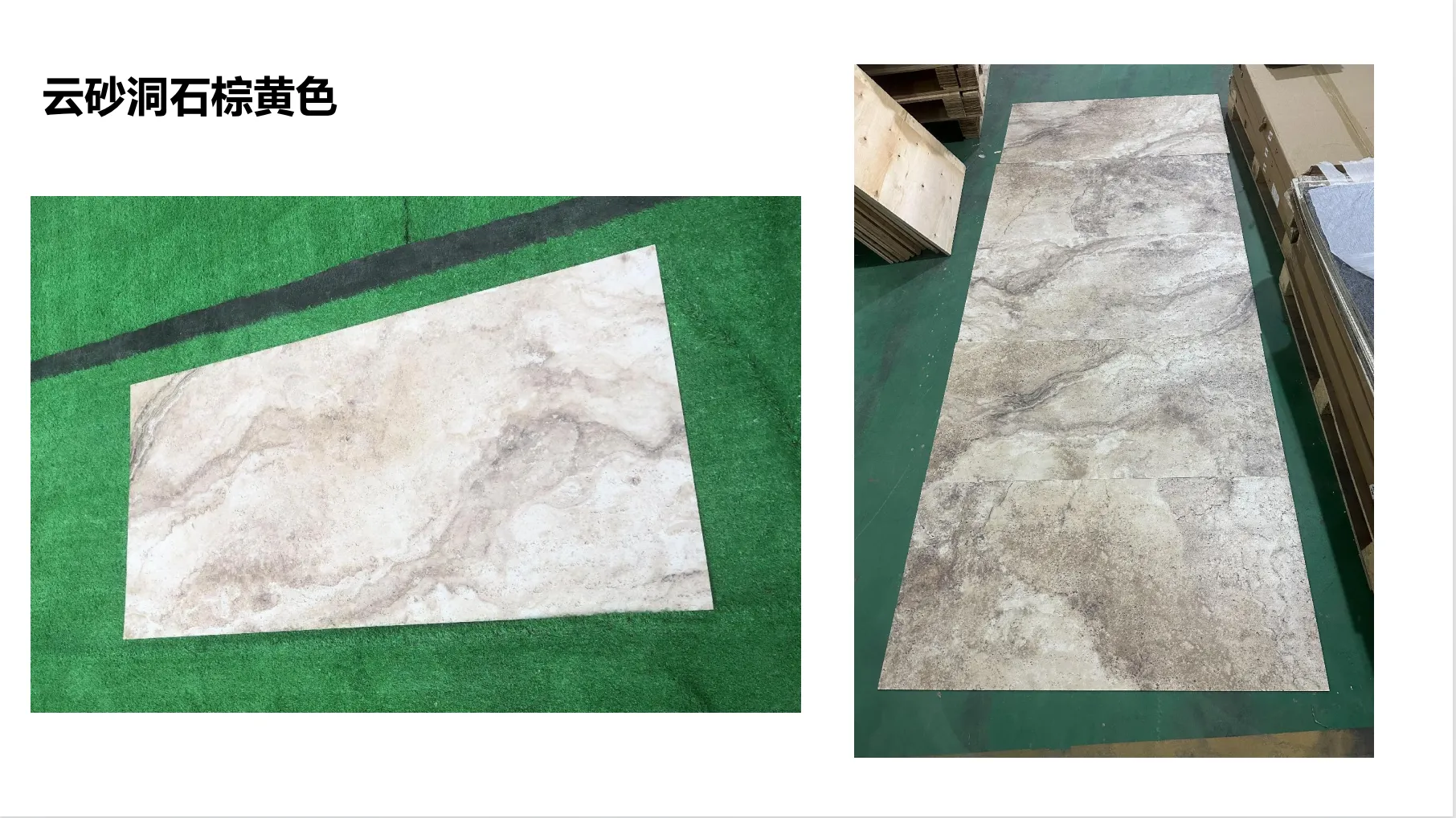
Before diving into its uses, let's get to know the material itself. Dark Grey Dolomitic Travertine isn't your average stone. Born from the slow dance of mineral-rich waters and geological time, it's a type of travertine infused with dolomite, a mineral that gives it a distinctive density and a moody, slate-like hue. Unlike the bright beiges or whites of traditional travertine, its dark grey base is streaked with whispers of lighter veins—some thin as thread, others bold as brushstrokes—creating patterns that feel both random and intentional, like a storm cloud frozen in stone.
Run a hand over its surface, and you'll notice a texture that's paradoxically smooth and rough. Polished versions feel cool and sleek, perfect for modern settings, while honed or brushed finishes have a matte, tactile quality that invites touch. "It's a stone with personality," says Elena Marquez, a landscape designer with over 15 years of experience. "Some stones feel static, but this one? It changes with the light. At dawn, the veins glow soft silver; at dusk, they deepen to charcoal. It's like having a living element in the landscape."
Durability is another feather in its cap. Resistant to weathering, scratches, and stains, it holds up to heavy foot traffic in public spaces and the whims of nature in gardens. Unlike marble, which etches easily, or limestone, which can be porous, Dark Grey Dolomitic Travertine strikes a balance between beauty and brawn. "I once used it in a plaza in Chicago, where winters are brutal—salt, ice, freezing temperatures," recalls Marquez. "Five years later, it still looks like the day it was installed. No cracks, no discoloration. That's the kind of reliability designers dream of."
So, how exactly are designers pushing the boundaries with this stone? Let's step into a few landscapes where Dark Grey Dolomitic Travertine takes center stage, proving it's more than just a paving material—it's a tool for storytelling.
Cities are noisy, chaotic, and full of visual clutter. Public plazas, then, need to be oases of calm—and Dark Grey Dolomitic Travertine is emerging as a go-to material for creating that sense of tranquility. Take, for example, the recently redesigned Riverfront Plaza in Denver, where designer Mia Chen chose large-format Dark Grey Dolomitic Travertine slabs for the main seating area. "We wanted a space that felt grounded, even amid the skyscrapers," Chen explains. "The stone's dark grey color absorbs some of the visual noise, while its natural patterns add warmth so it doesn't feel sterile."
In the plaza, the stone isn't just flat pavement. Chen's team used MCM 3D Printing Series technology to create custom, curved edges on some slabs, mimicking the flow of the nearby river. "3D printing let us push the stone beyond rigid rectangles," she says. "Now, when you sit on those curved edges, you feel like you're sitting by water, not a concrete jungle." The result? A space where people linger—reading, chatting, watching kids chase bubbles—drawn in by the stone's quiet invitation to slow down.
Another clever touch: embedding LED lights along the stone's veins. At night, the veins glow faintly, turning the plaza into a constellation of light. "It's magic," Chen laughs. "People take photos, post them online, and suddenly the plaza isn't just a place—it's a destination. All because of how we used the stone's natural beauty."
In residential settings, where landscapes are extensions of the home, Dark Grey Dolomitic Travertine adds a layer of sophistication without feeling imposing. Take the garden of a 1920s bungalow in Portland, redesigned by landscape architect James Lee. The homeowners wanted a space that felt modern but honored the home's historic roots—and Lee turned to Dark Grey Dolomitic Travertine to bridge that gap.
"The bungalow has these beautiful, aged brick walls, so we needed a stone that wouldn't compete but complement," Lee says. He used the stone for a winding pathway from the front door to the backyard, pairing it with Wood Grain Board for the deck. "The contrast is everything. The stone's cool grey and the wood's warm brown feel like a hug—structured but soft." Along the path, Lee placed small, irregularly shaped Dark Grey Dolomitic Travertine stepping stones, their edges rough-hewn to look like they've been there for decades. "It's the little details," he notes. "When you walk on those stones, your shoes crunch a bit on the edges, and it feels like you're stepping into a secret garden."
One of the garden's standout features is a water feature: a shallow basin carved from a single slab of Dark Grey Dolomitic Travertine. "We left the top surface honed so it's smooth, but the basin's edges are polished to a high shine," Lee explains. "When the water ripples, the light bounces off the polished edges, and the dark grey stone makes the water look black—like a mirror to the sky." The homeowners, he says, now start every morning sitting by that basin, coffee in hand, watching clouds drift across its surface. "That's the power of a well-chosen material," Lee adds. "It doesn't just fill space; it creates moments."
Commercial landscapes—think hotel courtyards, restaurant patios, retail storefronts—need to do more than look good; they need to reflect a brand's personality. For a boutique hotel in Austin with a "rustic-modern" vibe, designer Sofia Patel turned to Dark Grey Dolomitic Travertine to set the tone. "The hotel wanted to feel like a cozy cabin in the woods, but with a sleek, urban edge," Patel says. "Dark Grey Dolomitic Travertine was the perfect middle ground."
Patel used the stone for the hotel's outdoor lounge area, pairing it with Fair-Faced Concrete walls and Lunar Peak Black accents. "Fair-Faced Concrete has that raw, industrial look, and Lunar Peak Black adds depth, but the travertine softens it all," she explains. The lounge features low-slung seating made from oversized Dark Grey Dolomitic Travertine blocks—some left unpolished, their surfaces rough like river rocks, others sanded smooth for comfort. "Guests love sitting on them," Patel notes. "They say it feels 'grounding'—like sitting on a piece of the earth. That's the emotional connection we were after."
Even the hotel's signage plays into the stone's charm: a large slab of Dark Grey Dolomitic Travertine with the hotel's name carved into its surface, filled with gold leaf. "The contrast of the dark stone and gold feels luxurious but not flashy," Patel says. "It tells guests, 'This place is special, and we care about the details.'"
Cultural spaces—museums, libraries, heritage sites—have a unique challenge: their landscapes must honor the past while feeling relevant to today's visitors. Dark Grey Dolomitic Travertine, with its blend of timelessness and modernity, is rising to the occasion. Consider the new wing of the City History Museum in Boston, where the landscape was designed to complement the museum's 19th-century brick building and its contemporary glass addition.
Lead designer Rajiv Mehta chose Dark Grey Dolomitic Travertine for the outdoor exhibition area, where historical artifacts (like old street lamps and horse troughs) are displayed. "We needed a surface that would let the artifacts shine but also tell a story of its own," Mehta says. "Dark Grey Dolomitic Travertine's age—formed over millions of years—feels like a nod to history, while its dark grey color keeps the focus on the artifacts."
Mehta also incorporated Relic Rammed Earth Board into the design, using it for low walls that border the exhibition area. "Rammed earth has this ancient, handcrafted quality, and the travertine adds a modern polish," he explains. "Together, they feel like a conversation between the past and present—exactly what the museum is about." Visitors often comment on how the stone "feels historic," even though it's new. "That's the magic of natural materials," Mehta says. "They carry the weight of time, even when they're fresh."
Curious how Dark Grey Dolomitic Travertine holds up against other popular landscape materials? Let's break it down:
| Feature | Dark Grey Dolomitic Travertine | Fair-Faced Concrete | Lunar Peak Black |
|---|---|---|---|
| Color & Texture | Dark grey base with organic, vein-like patterns; varies from polished (smooth) to honed (matte) or rough (tactile). | Uniform grey; raw, industrial texture with visible formwork marks. | Deep black with subtle metallic flecks; sleek, polished finish. |
| Durability | Highly resistant to weathering, scratches, and stains; ideal for high-traffic areas. | Strong but prone to cracking if not sealed properly; may fade over time. | Durable but can show fingerprints and water spots; requires regular cleaning. |
| Best For | Spaces needing balance: modern plazas, intimate gardens, cultural sites. | Industrial-chic settings, urban landscapes, minimalist designs. | High-end, luxurious spaces; accent pieces (walls, sculptures). |
| Sustainability | Natural, locally sourced options available; long lifespan reduces replacement needs. | Energy-intensive to produce; can be recycled but often ends up in landfills. | Requires mining; limited eco-friendly sourcing options. |
In an era where "green" isn't just a trend but a responsibility, Dark Grey Dolomitic Travertine checks important boxes. For starters, its longevity is a win for the planet. "A well-installed Dark Grey Dolomitic Travertine surface can last 50 years or more," says environmental designer Clara Ng. "That means less quarrying, less transportation, and less waste over time compared to materials that need replacing every decade."
Many quarries now prioritize sustainable practices, too. "We work with a quarry in Italy that uses solar power to run its cutting equipment and reclaims water from the cutting process," Ng notes. "They also replant trees in areas where stone is extracted, so the land heals as it gives." For designers and homeowners, this means choosing Dark Grey Dolomitic Travertine isn't just about beauty—it's about supporting practices that keep our planet healthy.
Maintenance is another eco-friendly perk. Unlike some stones that require harsh chemical sealants, Dark Grey Dolomitic Travertine needs little more than occasional sweeping and a rinse with water. "No toxic cleaners, no frequent treatments," Ng says. "That's better for the environment and easier on your wallet."
As technology advances, so do the ways we use Dark Grey Dolomitic Travertine. One exciting frontier is MCM 3D Printing Series , which allows designers to create custom shapes and textures that were once impossible. "We're no longer limited to flat slabs or simple rectangles," says futurist designer Kai Tan. "With 3D printing, we can carve the stone into organic forms—think wave-like benches, spiral pathways, or even sculptural elements—that mimic nature's chaos in a controlled, beautiful way."
Tan is also exploring "smart" applications, like embedding sensors into Dark Grey Dolomitic Travertine pavers to monitor foot traffic in public spaces. "Imagine a plaza where the stone itself tells you which areas are most popular," he says. "Designers could use that data to make spaces more efficient and welcoming. The stone becomes more than a surface—it becomes a tool for connection."
Another trend? Blending Dark Grey Dolomitic Travertine with other innovative materials, like Foamed Aluminium Alloy Board (Vintage Silver) . "Foamed aluminium has this lightweight, futuristic look, but it can feel cold," Tan explains. "Pair it with Dark Grey Dolomitic Travertine, and suddenly it feels grounded. It's like mixing stardust with earth—and the result is stunning."
At the end of the day, landscape architecture is about more than plants and paths—it's about creating spaces that make us feel something. Dark Grey Dolomitic Travertine, with its moody hue, organic patterns, and quiet strength, is a master at evoking emotion. It can turn a sterile plaza into a community hub, a plain backyard into a personal retreat, or a museum lawn into a bridge between past and present.
Whether paired with Wood Grain Board for warmth, Fair-Faced Concrete for edge, or Lunar Peak Black for drama, it adapts, complements, and elevates. It's a material that works with nature, not against it—and in a world that often feels disconnected from the earth, that's a gift.
So the next time you step into a landscape that feels "just right"—calm yet alive, modern yet timeless—take a closer look at the ground beneath you. Chances are, you'll find Dark Grey Dolomitic Travertine, quietly doing what it does best: turning spaces into stories.
Recommend Products












