
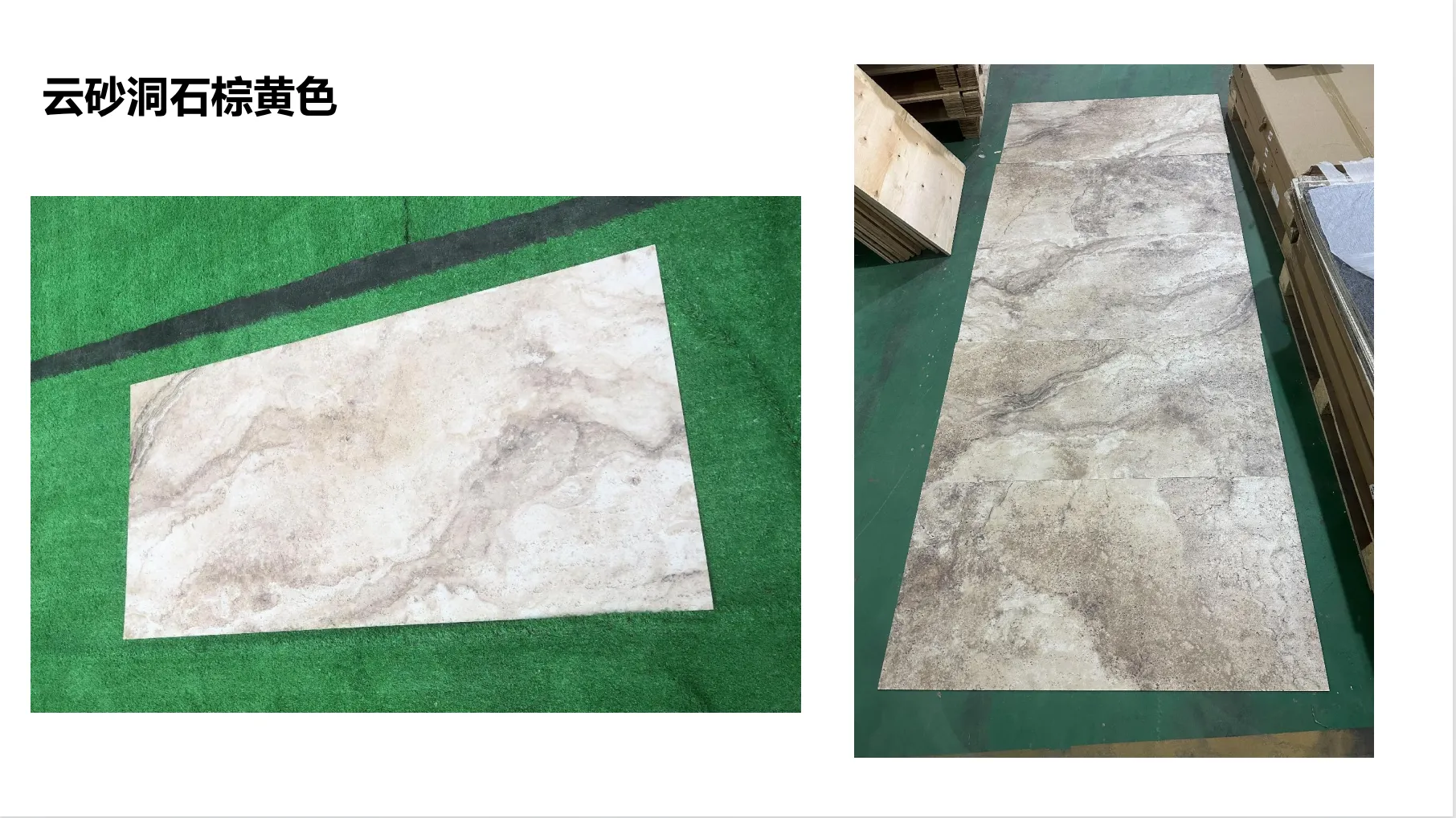
Construction has always been a story of evolution—of tools, techniques, and the materials that shape our built world. Today, that story is being rewritten by 3D printing, a technology that's breaking down traditional barriers and letting architects and designers dream bigger than ever. But even the most advanced printers need the right materials to turn those dreams into reality. Enter dolomitic travertine (claybank): a natural stone with a warm, earthy hue that's finding new life in 3D printed projects, thanks to innovations in Modified Composite Material (MCM) technology. Paired with MCM flexible stone and the versatility of 3D printing, this unassuming material is quietly revolutionizing how we build—blending the best of nature's beauty with the precision of modern engineering.
Before diving into its 3D printed applications, let's get to know the star of the show: dolomitic travertine (claybank). Unlike the stark whites or grays of traditional stone, this variety boasts a soft, inviting claybank tone—think sun-baked earth or the warm glow of aged terracotta. Its surface is gently textured, with subtle veining that hints at its geological origins, giving it a character that feels both timeless and alive. But it's not just about looks: dolomitic travertine is naturally durable, resistant to weathering, and surprisingly lightweight compared to denser stones like granite. These traits have long made it a favorite for flooring or accent walls, but when combined with MCM technology, it becomes something far more versatile.
MCM, or Modified Composite Material, is the unsung hero here. Developed to address the limitations of traditional stone—its heaviness, brittleness, and difficulty in shaping—MCM flexible stone takes natural materials like dolomitic travertine and bonds them with a lightweight, flexible substrate. The result? A material that retains the stone's authentic texture and color but can bend, curve, and even be printed into complex shapes. For 3D printing, this is a game-changer. Suddenly, that warm claybank travertine isn't just for flat surfaces; it can wrap around curved facades, form organic archways, or create intricate patterns that were once impossible with chisels and mortar.
3D printing in construction is often hailed for its speed, precision, and reduced waste—but it's also a canvas for creativity. Traditional building methods are constrained by what can be cut, lifted, or molded by hand; 3D printers, however, thrive on complexity. They can lay down layers of material with pinpoint accuracy, creating geometries that seem to defy gravity. But to truly make those structures feel "human," they need materials that don't scream "machine-made." That's where dolomitic travertine (claybank) steps in.
Imagine walking up to a 3D printed home. The facade, instead of looking like a cold slab of concrete, is covered in panels that ripple with the soft, natural texture of claybank travertine. The color shifts subtly in the sunlight, warm and inviting, like a structure that's grown from the earth rather than being built on it. This is the magic of pairing 3D printing with MCM flexible stone: it marries the precision of technology with the soul of nature. And when you scale up to the MCM big slab board series, you can cover entire walls or facades in these stone-like panels, creating a seamless, cohesive look that's both grand and grounded.
| Property | Traditional Natural Stone | MCM Dolomitic Travertine (Claybank) |
|---|---|---|
| Weight | Heavy (difficult to transport/lift) | Up to 70% lighter (ideal for 3D printing layers) |
| Flexibility | Brittle (prone to cracking in complex shapes) | Flexible (can bend without breaking during printing) |
| Printability | Limited (requires pre-cutting; no complex geometries) | Highly printable (adapts to 3D printer nozzles and layer bonding) |
| Aesthetics | Authentic but uniform (hard to customize texture) | Authentic texture with customizable patterns (veining, finish) |
| Sustainability | High waste (quarrying, cutting scraps) | Low waste (MCM production uses minimal raw material; 3D printing reduces offcuts) |
Let's step beyond theory and into the projects where dolomitic travertine (claybank) is already making waves. Take, for example, the "Claybank Courtyard" development in Portland, Oregon—a collection of 12 townhomes designed by local firm GreenSpaces Architecture. The team wanted a facade that felt both modern and rooted in the Pacific Northwest's natural landscape. Instead of traditional siding, they turned to 3D printed MCM flexible stone panels in dolomitic travertine (claybank), paired with accents of Lunar Peak Silvery for contrast. The result? Homes that blend into the surrounding trees with their earthy tones, while the 3D printed curves of the panels add a futuristic twist.
"We'd tried 3D printing with concrete before, but it felt cold," says lead architect Maya Chen. "Dolomitic travertine (claybank) changed that. When the first panel came off the printer, with that soft, textured surface, we knew we'd hit on something. Homeowners keep telling us the facade feels 'alive'—like the house is breathing with the environment."
Commercial spaces are embracing the trend too. The recently opened "Terra Nova" boutique hotel in Scottsdale, Arizona, features a lobby wall that's entirely 3D printed using MCM big slab board series panels in dolomitic travertine (claybank). The wall curves gently from floor to ceiling, mimicking the desert's natural dunes, and the claybank color echoes the surrounding landscape. "Guests often stop to touch it," says hotel designer Raj Patel. "They assume it's real stone, and they're shocked when we tell them it's 3D printed. It's a conversation starter—and that's exactly what we wanted: a space that feels luxurious but approachable."
Even public projects are getting in on the action. The new community center in Austin, Texas, uses 3D printed dolomitic travertine (claybank) panels for its outdoor amphitheater seats. The material's durability stands up to rain and sun, while its warm color makes the space feel welcoming for concerts and gatherings. "Traditional stone seats would have been heavy and expensive to install," notes project engineer Carlos Mendez. "With MCM flexible stone, we printed the seats on-site, cutting installation time by 40%. And they look better than we ever imagined."
In an era where "green building" is no longer a buzzword but a necessity, dolomitic travertine (claybank) and 3D printing are a match made in eco-heaven. Let's break it down: traditional stone quarrying is resource-intensive, often leaving large scars on landscapes and generating tons of waste. MCM technology, by contrast, uses a fraction of the raw stone—ground into a powder and bonded with eco-friendly resins—reducing quarrying impact. And 3D printing? It's inherently low-waste, as printers only deposit material where it's needed, cutting down on scraps.
"We calculated that using MCM dolomitic travertine (claybank) for the Terra Nova hotel's lobby wall saved over 3 tons of stone waste compared to traditional methods," Patel adds. "That's a huge win for sustainability, and it didn't compromise on beauty. In fact, it enhanced it."
Then there's energy efficiency. MCM flexible stone has natural insulating properties, which means buildings clad in it require less heating and cooling. For the Claybank Courtyard homes, this translated to a 15% reduction in energy bills compared to similar-sized homes with traditional siding. "Homeowners love that they're saving money while reducing their carbon footprint," Chen says. "It's a double win."
The innovation doesn't stop here. Material scientists are already experimenting with blending dolomitic travertine (claybank) with other MCM series—like foamed aluminium alloy boards (vintage gold) for metallic accents or Lunar Peak Black for dramatic contrast—to create even more dynamic designs. "Imagine a 3D printed office building where the base is claybank travertine, rising into Lunar Peak Golden panels as it reaches the sky," says materials researcher Dr. Elena Rodriguez. "It would look like the building is transitioning from earth to sun—all made possible by MCM technology."
Scalability is another frontier. While current projects focus on facades and accent walls, teams are working to 3D print entire load-bearing structures using MCM dolomitic travertine (claybank). "We're not there yet, but we're close," Rodriguez adds. "Within five years, I expect to see 3D printed homes where the walls themselves are made of this material—strong, beautiful, and sustainable."
Perhaps most exciting is the potential for customization. With 3D printing, every panel can be unique—veining patterns can be adjusted, colors can be blended, and shapes can be tailored to a client's vision. "A homeowner in Colorado recently asked for a 3D printed fireplace surround that mimics the texture of local sandstone," Chen recalls. "Using dolomitic travertine (claybank), we scanned the sandstone, adjusted the color to match their living room, and printed it. They cried when they saw it—it was exactly what they'd dreamed of, but better."
Dolomitic travertine (claybank) in 3D printed construction isn't just about a new way to build—it's about reimagining our relationship with the spaces we live, work, and play in. It's about creating buildings that don't just shelter us, but inspire us—spaces that feel connected to nature, even as they embrace cutting-edge technology. Whether it's a home in Portland, a hotel in Scottsdale, or a community center in Austin, this material is proving that the future of construction can be both innovative and deeply human.
As Maya Chen puts it: "At the end of the day, we build for people. And people don't connect with cold, sterile materials. They connect with warmth, texture, and stories. Dolomitic travertine (claybank) in 3D printing gives us the tools to tell those stories—to build spaces that feel like they have a heart."
So the next time you walk past a building with a facade that makes you pause and think, "That feels different," take a closer look. It might just be dolomitic travertine (claybank)—3D printed, MCM-enhanced, and quietly changing the face of construction, one panel at a time.
Recommend Products












