
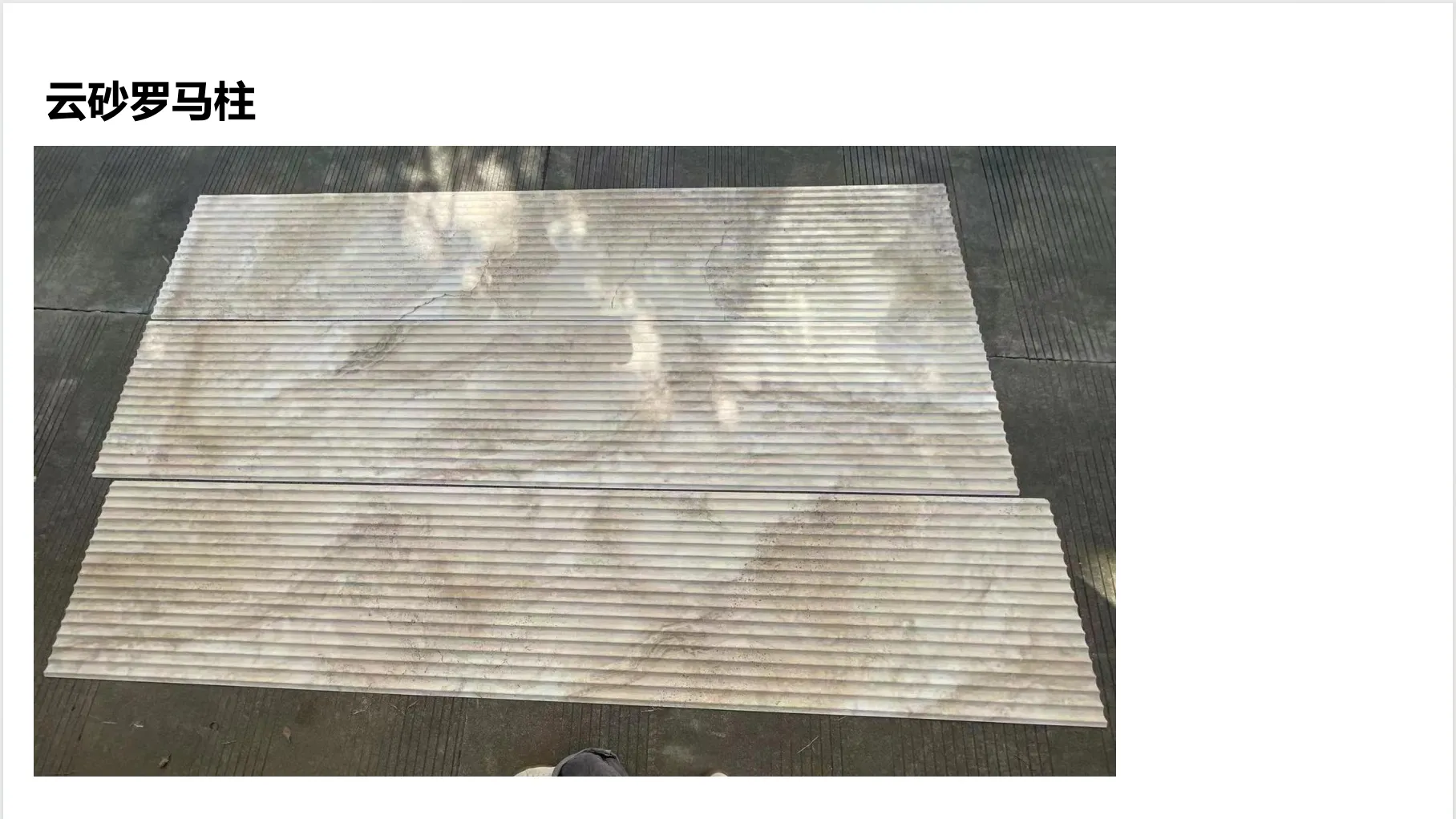
There's something uniquely satisfying about standing back and admiring a finished MCM marble pillar. It's not just a structural element—it's a statement, a blend of artistry and engineering that transforms a space from ordinary to memorable. But here's the truth: that "effortless" beauty doesn't happen by accident. Behind every stunning pillar you see in real photos lies a meticulous, step-by-step workflow that ensures durability, precision, and that all-important aesthetic appeal. Today, I'm pulling back the curtain to walk you through the professional process we follow on every project, from the first site visit to the final polish. Whether you're a fellow installer, a designer curious about the "how," or a homeowner planning a renovation, this guide will show you why the details matter—and how to get them right.
Before a single panel is lifted, we spend hours (sometimes days) in the planning phase. Think of it like baking a cake—skip a step, and the whole thing might collapse. Here's what we focus on first:
Every space is different, and pillars? They're often the center of attention, so we start by getting up close and personal with the installation area. We check for structural integrity: Is the substrate (the surface we're attaching to) solid? If it's an existing pillar, are there cracks, moisture issues, or uneven surfaces? Moisture is a silent enemy—even a small leak behind the panels can lead to mold or material warping down the line. We use moisture meters to test concrete or masonry substrates, and if we find red flags, we address them upfront (think waterproofing membranes or repairs) before moving on.
We also study the environment. Is the pillar indoors or outdoors? Sun exposure, rain, humidity—these factors dictate material choices. For example, a pillar in a high-moisture area like a bathroom might need extra sealing, while an outdoor pillar in a sunny climate calls for UV-resistant materials. And let's not forget aesthetics: How does the pillar interact with surrounding elements? If the room has warm wood tones, maybe a travertine (beige) finish would complement it better than a stark white marble. Real photos of similar projects help here—they let clients visualize the end result, but we always remind them: "Your space is unique; we'll tailor the materials to fit."
MCM materials are a game-changer for pillars, thanks to their lightweight nature and versatility. But with so many options—from MCM flexible stone to marble concrete board to boulder slab—choosing the right one requires balancing function and style. Let's break down a few go-tos and why we love them:
| Material | Key Features | Best For | Installation Notes |
|---|---|---|---|
| MCM Flexible Stone | Thin (3-5mm), bendable, lightweight (6-8kg/m²), resistant to impact and weathering | Curved pillars, outdoor use, or spaces where weight is a concern (e.g., upper floors) | Requires a smooth substrate; adhesive must be applied evenly to avoid air bubbles |
| Marble Concrete Board | Blends marble's elegance with concrete's durability; available in matte or polished finishes | Modern interiors, high-traffic areas (e.g., hotel lobbies) | Heavier than flexible stone (12-15kg/m²); ensure substrate can support the weight |
| Travertine (Beige) | Natural, porous texture with warm, earthy tones; classic look | Traditional or rustic spaces, indoor pillars (e.g., residential foyers) | Seal pores before installation to prevent staining; grout color should complement the stone's undertones |
| Boulder Slab | Thick (20-30mm), raw, organic edge profile; available in vintage silver, gold, or black | Statement pillars in industrial or minimalist designs | Requires heavy-duty mounting hardware; edges may need sanding for safety |
For example, last month we installed a curved pillar in a boutique hotel lobby. The client wanted something sleek but not fragile, so we went with MCM flexible stone in a marble-inspired pattern. Its bendability meant we could follow the pillar's curve without cutting awkward seams, and its lightweight design meant we didn't need to reinforce the floor. The result? A pillar that looks like solid marble but weighs a fraction of the real thing—you can see it in the real photos we shared with the client, and they still can't believe it's not natural stone.
You wouldn't paint a masterpiece with a toothbrush, right? The same goes for installing MCM pillars. We gather our toolkit days before, checking that everything is sharp, calibrated, and ready to go. Must-haves include:
Pro tip: We always bring backup blades and extra adhesive. There's nothing worse than stopping mid-installation because a blade dulls or a tube of adhesive runs out. Preparation = peace of mind.
Now, let's dive into the hands-on part. This is where the magic happens—or where mistakes can sneak in if you rush. We take it slow, focusing on one step at a time.
Even the best materials won't stick well to a dirty, bumpy surface. We start by cleaning the substrate thoroughly—sweeping away dust, scrubbing off grease or grime with a mild detergent, and letting it dry completely. For existing pillars with rough concrete, we might sand down high spots or fill low areas with a leveling compound (fair-faced concrete is a popular substrate here; its smooth, untextured finish provides the perfect base for MCM panels). Once the surface is clean and level, we apply a primer—this helps the adhesive bond better, especially on porous materials like concrete or masonry. Think of primer as double-sided tape for your substrate and panels: it creates a stronger, longer-lasting connection.
Here's a golden rule: measure twice, cut once . Pillars are often cylindrical or square, so we start by taking precise dimensions. For square pillars, it's straightforward—height, width, depth. For curved ones, we use a flexible measuring tape to capture the circumference, then create a template out of cardboard or thin plywood to map the curve. This template becomes our guide for cutting panels, ensuring they wrap around the pillar without gaps or overlaps.
We mark the substrate with chalk lines to indicate where each panel will go, using the laser level to keep lines straight. If the pillar has decorative elements (like a capital or base), we mark those too—we want the panels to align seamlessly with existing details. In real photos of our projects, you'll notice how the panel edges line up perfectly with moldings or trim; that's not luck—that's careful marking.
Once measurements are locked in, it's time to cut the materials. For MCM flexible stone, we use a circular saw with a diamond blade, setting the depth to just slightly more than the panel thickness to avoid damaging the work surface. We always cut outdoors or in a well-ventilated area—stone dust isn't something you want to breathe in! For boulder slabs or marble concrete boards, which are thicker, we might use a wet saw to reduce dust and prevent chipping. After cutting, we smooth edges with sandpaper—sharp edges not only look unprofessional but can also be a safety hazard.
Pro trick: When cutting panels for a curved pillar, we leave a little extra material on the edges. It's easier to trim off a mm here and there than to try to stretch a panel that's too short. We test-fit each cut panel against the template or substrate before applying adhesive—this "dry run" catches mistakes early, saving time and materials.
Adhesive is the glue that holds everything together (literally), so we don't skimp here. The type of adhesive depends on the material: for MCM flexible stone, we use a polymer-modified thinset mortar—it's flexible, water-resistant, and bonds well to both the substrate and the panel back. For heavier materials like boulder slabs, we might add a construction adhesive (like epoxy) for extra strength.
Application is key. We spread the adhesive with a notched trowel, holding it at a 45-degree angle to create even ridges. This ensures full contact between the panel and substrate—no air pockets allowed. We work in small sections (about 1m² at a time) to prevent the adhesive from drying out before we can place the panel. Once the adhesive is down, we lift the panel (using suction cups for heavier materials) and position it carefully, aligning it with our chalk lines. Then, we gently tap the surface with a rubber mallet, starting from the center and working outward—this pushes out any trapped air and ensures the panel bonds evenly. We check with the spirit level to make sure it's vertical, adjusting as needed before the adhesive sets.
Unless the pillar is tiny, you'll likely need multiple panels, which means seams. The goal? Make them disappear. For MCM flexible stone, we overlap panels by 2-3mm and then trim them together with a sharp utility knife—this creates a tight, invisible seam. For marble concrete board or travertine (beige), we might use color-matched grout to fill seams, tooling it with a grout float to smooth the surface. We wipe away excess grout with a damp sponge before it dries, taking care not to drag grout across the panel face (it can stain porous materials like travertine).
Edges are another detail that makes or breaks the look. If the pillar is freestanding (no adjacent walls), we might use bullnose trim or miter the panel edges at 45 degrees for a clean, finished look. For pillars attached to walls, we ensure the panel edges align flush with the wall surface—no overhangs, no gaps. In real photos, you'll see that these edges look intentional, like the pillar was carved from a single piece of stone; that's the power of careful seaming.
After the adhesive has cured (usually 24-48 hours, depending on humidity), we grout the seams. We choose grout color based on the panel: for travertine (beige), a warm ivory grout blends in; for dark boulder slab (vintage black), a charcoal grout keeps the look sleek. We mix grout to a "peanut butter" consistency—too runny, and it'll shrink; too thick, and it won't flow into seams. Using a rubber float, we press grout into the seams at a 45-degree angle, making sure every gap is filled. Then, we wait 15-20 minutes for the grout to set slightly before wiping the panels with a damp sponge, using circular motions to remove haze. We rinse the sponge frequently—dirty water will leave streaks, and trust me, you'll notice those in real photos.
Once the grout is fully dry (another 24 hours), we give the pillar a final clean with a pH-neutral stone cleaner. For porous materials like travertine, we also apply a sealer—this creates a barrier against stains, spills, and moisture. We let the sealer soak in for 10-15 minutes, then wipe away excess with a clean cloth. The result? A pillar that looks fresh, polished, and ready to stand the test of time.
Even after the grout is dry, we're not done. We walk through a checklist to ensure every detail meets our standards (and the client's expectations):
Only when we're 100% satisfied do we invite the client for a walkthrough. There's nothing better than seeing their reaction when they see the pillar in person—often, they'll flip through the real photos we took during installation and say, "I can't believe that's the same space!" That's the payoff for all the prep work.
A beautiful pillar shouldn't become a headache to maintain. We always share care tips with clients to help their investment last. Here's what we recommend:
We also share real photos of pillars we installed 5+ years ago, showing clients how well the materials hold up with proper care. It's a great way to build trust—and to remind them that a little maintenance goes a long way.
Installing MCM marble pillars isn't just a job—it's a craft. It requires patience, precision, and a willingness to sweat the small stuff. From the first site assessment to the final sealer application, every step plays a role in creating a pillar that's not only beautiful but built to last. And when you see the finished product in real photos, or better yet, in person, you realize why we do it: because great design isn't just about how something looks—it's about how it makes you feel. A well-installed pillar doesn't just support a structure; it supports the story of the space it's in.
So, whether you're planning your own pillar project or just curious about the process, remember this: the workflow matters. Invest in planning, choose materials wisely, and don't rush the details. The result? A pillar that turns heads—and stands the test of time.
Recommend Products












