

In the quiet hours of dawn, when the first light spills through your bedroom window, there's a subtle shift in the air—the kind that makes you pause and appreciate the space around you. Maybe it's the way the light catches the wall beside your bed, or how the texture under your fingertips feels less like "decor" and more like a gentle embrace. This is the magic of thoughtful interior design, where walls stop being mere boundaries and start telling stories. Today, we're diving into a material that's redefining this narrative: Bali Stone wall cladding, a gem from COLORIA GROUP's MCM (Modified Cementitious Material) collection. More than just a building material, it's a bridge between nature's raw beauty and the warmth of home—a reminder that our living spaces can feel as alive and breathing as the world outside.
Close your eyes for a moment and picture Bali. Not the bustling beaches or crowded markets, but the quiet villages nestled between rice terraces and volcanic slopes. The air there smells of frangipani and damp earth; the stone walls of traditional huts bear the marks of time, their textures softened by rain and sun. It's this essence—of age, of connection to the land—that inspired COLORIA's Bali Stone. Unlike mass-produced synthetic panels that mimic stone, Bali Stone isn't just a "lookalike." It's a love letter to the island's soul, translated into a material that fits seamlessly into modern homes.
At first glance, Bali Stone enchants with its understated palette. Think warm beiges and soft greys, swirled with veins of cream and the occasional hint of terracotta—colors that evoke sunbaked soil and weathered temple walls. But it's the texture that truly sets it apart. Run your hand over a Bali Stone panel, and you'll feel the gentle ridges of natural stone, the tiny pits where water might have pooled in a distant quarry, the smoothness of areas worn down by time. It's tactile, inviting, and surprisingly… warm. Unlike cold marble or harsh concrete, Bali Stone doesn't repel touch; it encourages it. It's the kind of wall you'll find yourself brushing your hand against as you walk by, a silent reminder of nature's imperfect perfection.
"When we designed Bali Stone, we wanted to capture the 'patina of life,'" says Maria Gonzalez, lead designer at COLORIA's European studio. "In Bali, even the oldest structures feel alive because they've been touched by people, by weather, by stories. We didn't just want to that texture—we wanted to preserve its spirit. That's why each panel has unique variations, just like real stone. No two are exactly alike, because no two moments in nature are exactly alike."
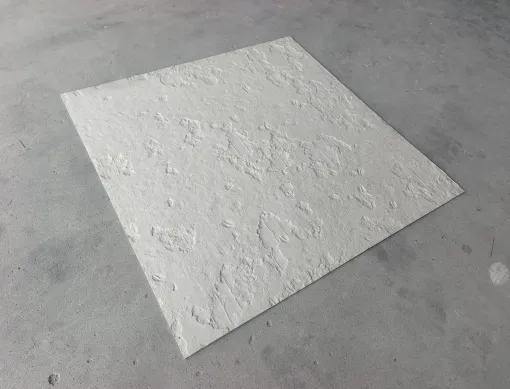
So how does a material this authentic stay lightweight, durable, and adaptable to interior spaces? The answer lies in COLORIA's proprietary MCM technology—and more specifically, its MCM Flexible Stone innovation. Traditional stone cladding is heavy, requiring reinforced walls and complex installation. It's also rigid, limiting its use to flat surfaces and making it prone to cracking if the building shifts. Bali Stone, however, is part of COLORIA's flexible stone range, a game-changer that marries the best of stone and flexibility.
Imagine a material that bends like fabric but wears like stone. That's MCM Flexible Stone in a nutshell. The secret is in the modified cementitious base, blended with natural minerals and reinforced with fibers that give it tensile strength without sacrificing pliability. This means Bali Stone can be applied to curved walls, arched doorways, or even ceiling accents—places where traditional stone would be impossible. It weighs a fraction of natural stone too, at just 3-5 kg per square meter, making installation a breeze for contractors and safe for residential buildings.
But flexibility doesn't mean fragility. COLORIA's MCM panels are engineered to withstand the rigors of daily life: they're water-resistant, fire-retardant, and scratch-proof (yes, even against rambunctious kids or playful pets). And because they're pre-finished at the factory, there's no messy on-site sealing or polishing. Just install, and enjoy—a relief for anyone who's endured the dust and delays of traditional stonework.
At 3-5 kg/m², Bali Stone panels can be installed on standard drywall without extra reinforcement. No heavy machinery, no structural overhauls—just simple, efficient application.
MCM materials use 70% recycled content and low-VOC binders, aligning with LEED and BREEAM sustainability standards. Even the pigments are derived from natural oxides, not harsh chemicals.
Need a specific shade to match your sofa? Or a unique size for a statement wall? COLORIA offers custom color matching and sizing, ensuring your Bali Stone wall feels uniquely yours.
Bali Stone isn't a one-trick pony. Its versatility shines in every room, adapting to different moods and functions while maintaining that core warmth. Let's explore how it transforms spaces, with a little help from some of COLORIA's other MCM stars—because great design is all about harmony.
The living room is where life unfolds: morning coffee chats, movie nights with friends, lazy Sundays with a book. It needs to feel welcoming, not sterile. Enter Bali Stone as a feature wall behind your sofa. Pair it with Wave Panels —sleek, undulating MCM panels in a complementary soft grey—to add movement. Imagine the scene: sunlight filters through floor-to-ceiling windows, hitting the Bali Stone wall and casting gentle shadows from the Wave Panels' curves. The effect is dynamic yet calm, like watching water ripple over stones in a stream. Add a wooden coffee table and a few potted plants, and suddenly your living room isn't just a "room"—it's a sanctuary where time slows down.
For those who love a touch of drama, try mixing Bali Stone with Travertine (Starry Green) accents. Travertine Starry Green is another MCM standout, with a deep emerald base dotted with tiny, reflective "stars" (actually mineral deposits that catch the light). Use it sparingly—say, as a fireplace surround or a niche for your TV—and let Bali Stone take center stage. The contrast of warm beige and rich green is striking but not overwhelming, like a forest clearing at dawn.
Bedrooms are intimate spaces, and Bali Stone here works best when it's soft and calming. Consider cladding the wall behind your headboard in Bali Stone, then adding subtle lighting—warm LED strips tucked along the edges—to highlight its texture at night. When you switch off the main lights, the stone glows gently, like moonlight on sand. It's a far cry from harsh overhead lighting or cold painted walls; it's a soft embrace that eases you into sleep.
For a bohemian twist, pair Bali Stone with Rust Square Line Stone in smaller panels. Rust Square Line Stone brings in deeper, earthy tones—think burnt sienna and rusted iron—with crisp geometric lines that contrast beautifully with Bali Stone's organic texture. Use it as a backdrop for a floating shelf holding your favorite books and trinkets, and suddenly your bedroom feels like a curated escape, full of personality and warmth.
| Room | Bali Stone Application | Complementary MCM Products | Ambiance Created |
|---|---|---|---|
| Living Room | Feature wall behind sofa | Wave Panels (grey), Travertine Starry Green (accent) | Dynamic yet calm; natural flow with subtle movement |
| Bedroom | Headboard wall with LED backlighting | Rust Square Line Stone (shelf backdrop) | Intimate, bohemian retreat with warm, glowing textures |
| Home Office | Full wall cladding (desks facing it) | None—let Bali Stone stand alone | Focused yet relaxed; reduces eye strain with soft colors |
| Dining Room | Wall behind dining table | Wave Panels (beige, horizontal installation) | Elegant and convivial; encourages lingering over meals |
In a world where we're increasingly disconnected from nature, materials like Bali Stone offer more than just beauty—they offer balance. COLORIA's MCM technology ensures that this balance extends beyond "feeling good" to "doing good," too. Let's break down why MCM matters, especially for eco-conscious homeowners.
First, sustainability. Traditional stone mining is resource-intensive, often leaving behind scarred landscapes and depleting finite resources. MCM, on the other hand, uses a blend of recycled stone dust, cement, and plant-based fibers, reducing waste and minimizing environmental impact. COLORIA's factories run on renewable energy, and their water recycling systems ensure that even production is gentle on the planet. For homeowners, this means choosing Bali Stone isn't just a design decision—it's a vote for a greener future.
Then there's durability. We've all had that moment of panic when a chair scrapes against the wall, or a glass of wine spills. With Bali Stone, those moments are less stressful. MCM panels are resistant to stains, scratches, and moisture, so even in high-traffic areas like kitchens or hallways, they hold up beautifully. And if a panel does get damaged? Unlike traditional stone, which requires professional repair, MCM panels are easy to replace—just pop off the old one and snap on a new. It's practical, yes, but it also means your walls will look as good in 10 years as they do today, saving you money and reducing waste in the long run.
Finally, there's the flexibility of design. MCM technology allows for customization that traditional stone can't match. Want Bali Stone in a custom size for a curved wall? Done. Prefer a slightly darker shade to match your existing decor? COLORIA's color-matching service can replicate it. This level of personalization means your home truly reflects you —not a generic "trend" or a one-size-fits-all aesthetic. It's design with intention, and that intention shines through in every corner.
Ever wondered how something so connected to nature makes its way into your living room? The journey of a Bali Stone panel is a story of care—for the environment, for craftsmanship, and for the people who will one day live with it. It starts with raw materials: recycled stone dust from local quarries (saved from landfills), natural pigments sourced from sustainable mines, and plant-based fibers that add strength without harsh chemicals. These ingredients are mixed in COLORIA's zero-waste factories, where every byproduct is repurposed or recycled.
Next comes the molding process, where the mixture is pressed into panels that mimic the texture of real Bali stone. Skilled artisans oversee this step, adjusting pressure and temperature to ensure each panel has that unique, organic feel. After curing, the panels are treated with a water-based sealant that protects them without altering their natural texture or color. Finally, they're packed in recycled cardboard and shipped to destinations around the world—including, perhaps, your home.
It's a process that prioritizes transparency and responsibility, and it shows. When you install Bali Stone, you're not just bringing home a wall panel—you're bringing home a piece of a larger mission: to make beautiful, sustainable design accessible to everyone. It's a small choice, but small choices add up. And in a world that often feels chaotic, knowing your home is built on care? That's a warmth no amount of decor can replicate.
At the end of the day, interior design is about more than "making things look nice." It's about creating spaces that nurture us, that reflect who we are, and that connect us to the things that matter. Bali Stone wall cladding, with its roots in nature, its innovative MCM technology, and its unwavering warmth, does exactly that. It turns walls into storytellers, spaces into sanctuaries, and houses into homes.
So the next time you walk into a room with Bali Stone walls, take a moment to pause. Feel the texture under your fingertips. Notice how the light plays on its surface. Breathe in, and let the warmth wash over you. This is the future of interior design—not cold, sterile perfection, but living, breathing spaces that feel like… well, home .
And isn't that the greatest magic of all?
Recommend Products












