
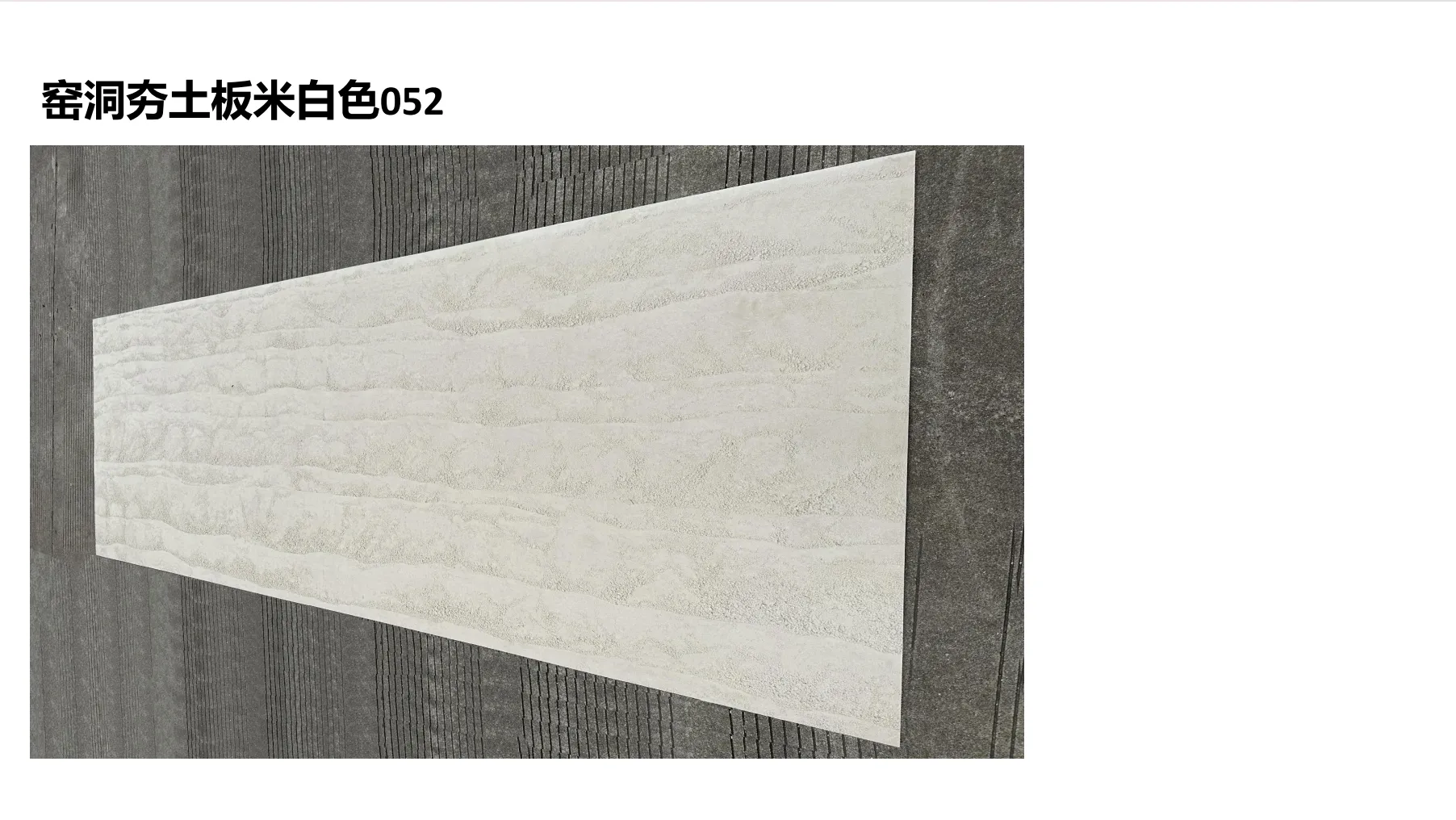
Minimalist design has long been celebrated for its "less is more" philosophy, but in recent years, it's evolved beyond stark white walls and cold austerity. Today's minimalism is warm, intentional, and rich with texture—think natural materials that tell a story, colors that breathe, and spaces that feel both calm and alive. Enter the unsung hero of this new wave: gradient color rammed earth boards. These earthy, tactile panels are redefining what minimalist spaces can be, proving that simplicity and depth aren't mutually exclusive. Let's dive into why they're capturing the hearts of designers and homeowners alike, how they're crafted, and how you can bring their magic into your own space.
Minimalism, at its core, is about stripping away the unnecessary to focus on what matters. But "unnecessary" doesn't mean "without character." In fact, the most memorable minimalist spaces are those that use texture and natural elements to create quiet drama. Gradient color rammed earth boards fit this bill perfectly. Unlike flat paint or uniform tiles, these boards feature soft, flowing color transitions—think warm terracottas melting into muted sage greens, or sandy beiges fading into gentle grays—all grounded in the earthy palette of the materials themselves.
What makes them so appealing? For starters, they're a love letter to nature. In a world where we're increasingly disconnected from the outdoors, gradient rammed earth brings the raw beauty of the landscape indoors. The colors evoke sunsets over desert plains, misty mountain valleys, or the quiet shift of seasons—subtle enough to keep the space calm, but vivid enough to spark emotion. They also add depth without clutter. A single gradient rammed earth accent wall can become the focal point of a room, eliminating the need for excessive decor. It's minimalism with soul.
Designers are also drawn to their versatility. Whether you're going for warm minimalism (think soft woods and natural fibers), industrial minimalism (exposed concrete and metal), or Japandi (the blend of Japanese and Scandinavian styles), gradient rammed earth boards adapt. They play well with other natural materials, complement modern finishes, and even hold their own against bold accents—like a pop of travertine (starry blue) for a touch of celestial whimsy.
To truly appreciate gradient color rammed earth boards, it helps to understand the craftsmanship behind them. Rammed earth itself is an ancient building technique—think of the Great Wall of China or traditional African mud-brick homes—where layers of earth, sand, gravel, and a binding agent (like lime or cement) are compacted into formwork to create solid, durable walls. Modern gradient rammed earth boards honor this heritage but add a contemporary twist: precision, consistency, and that showstopping gradient effect.
The magic starts with the materials. Artisans source high-quality, locally sourced earth (often clay, silt, and sand) to ensure a connection to the land. Then, they introduce natural pigments—iron oxides for rusty reds, copper for soft greens, for deep grays—to create the gradient. Here's where the skill comes in: instead of mixing pigments uniformly, they layer colored earth mixtures by hand, carefully compacting each layer to blend the colors at the edges. The result? A seamless transition that looks effortless but requires meticulous attention to detail. It's like painting with dirt, but with the patience of a sculptor.
Durability is another perk. Unlike traditional rammed earth, which can be porous, modern gradient boards are reinforced with eco-friendly binders and sealants, making them water-resistant and suitable for indoor use (and even some covered outdoor spaces). They're also surprisingly low-maintenance—no need for frequent painting or sealing, just an occasional wipe-down. For busy homeowners who want beauty without the hassle, this is a game-changer.
One of the best things about gradient color rammed earth boards is their ability to play well with others. They're the ultimate team player, enhancing the beauty of whatever they're paired with. Let's break down some winning combinations that will elevate your minimalist space:
| Material | Texture | Color Palette | Best For | Vibe |
|---|---|---|---|---|
| Gradient Color Rammed Earth Board | Organic, layered, slightly rough | Earthy gradients (terracotta, sage, sand, gray) | Accent walls, fireplaces, headboards | Warm, grounded, nature-inspired |
| Fair-Faced Concrete | Raw, matte, slightly porous | Cool grays, off-whites | Floors, walls, countertops | Industrial, modern, minimalist |
| Wood Grain Board | Smooth, linear, warm | Light oak, walnut, pine | Ceilings, shelves, furniture | Cozy, inviting, timeless |
| Travertine (Starry Blue) | Porous, with subtle pits and flecks | Soft grays with blue "star" accents | Fireplace surrounds, coffee tables | Whimsical, celestial, elegant |
| Lunar Peak Silvery | Sleek, metallic, smooth | Silver, chrome, cool metallic | Light fixtures, hardware, accents | Futuristic, modern, edgy |
Still not convinced? Let's take a look at how gradient color rammed earth boards have transformed real spaces, from cozy homes to trendy commercial spots.
The Minimalist Home Office: Imagine a small home office with fair-faced concrete floors, a sleek wood grain desk, and a gradient rammed earth accent wall in soft beige-to-sage. The wall behind the desk features a subtle gradient that shifts from warm sand at the bottom to cool sage at the top, mimicking the sky at dawn. A lunar peak silvery desk lamp casts a gentle glow, while a travertine (starry blue) pencil holder adds a pop of texture. The result? A space that feels calm enough for focus, but inspiring enough to spark creativity.
The Cozy Café: A neighborhood café wanted to feel minimalist but welcoming—no cold white walls, just warmth and community. They opted for gradient rammed earth boards in terracotta-to-soft-gray for the main wall, paired with wood grain board tables and fair-faced concrete countertops. The gradient walls reflect the café's morning light, shifting subtly as the sun moves, while travertine (starry blue) mugs and lunar peak silvery light fixtures tie the look together. Customers often comment on how "grounded" the space feels—like a hug from the earth, in the best way.
The Modern Bedroom: A couple wanted their bedroom to be a retreat from the chaos of city life. They chose a gradient rammed earth headboard wall in sandy beige-to-warm gray, paired with light wood grain floors and crisp white linens. A small travertine (starry blue) side table holds a vase of dried pampas grass, and lunar peak silvery picture frames hang above the bed. The room feels calm, but the gradient wall adds just enough interest to make it feel special—no need for clutter.
So, what makes gradient color rammed earth boards more than just a passing trend? For one, they align with two of the biggest shifts in design: a return to nature and a focus on sustainability. These boards are made from natural, locally sourced materials (no harsh chemicals or synthetic dyes), and their durability means they'll last for decades—no need for frequent replacements. In a world increasingly focused on eco-conscious living, this is a huge selling point.
They also cater to our desire for uniqueness. In an era of mass-produced everything, gradient rammed earth boards are inherently one-of-a-kind. Each panel is handcrafted, so no two are exactly alike—the color transitions, the texture, the subtle variations all tell a story. Homeowners and designers crave this authenticity; it's why "handmade" and "artisanal" are buzzwords that aren't going away anytime soon.
Finally, they're adaptable. As minimalism continues to evolve, gradient rammed earth boards will evolve with it. Want to go bolder? Try a gradient with more saturated hues (think rusty reds or deep greens). Prefer something softer? Stick to muted beiges and grays. They work in small apartments, sprawling homes, offices, and retail spaces—proving that good design transcends size or function.
Ready to embrace the trend? Here are a few tips to get started: Start small. If you're nervous about committing to a full wall, try a gradient rammed earth accent panel behind a TV or bed. Let the light work for you—gradient colors shift with natural light, so place your board where it'll catch morning or afternoon rays for maximum effect. Keep the rest of the space simple. Let the gradient board be the star, and pair it with neutral furniture and minimal decor. And don't forget texture—add a woven rug, a ceramic vase, or a wooden bench to complement the earthy feel.
In the end, gradient color rammed earth boards are more than just a design choice—they're a way to bring the outside in, to add soul to simplicity, and to create spaces that feel like home. In a world that often feels chaotic, they remind us that beauty lies in the quiet, the natural, and the intentional. So why not let your walls tell a story? After all, the best minimalist spaces aren't just empty—they're full of life.
Recommend Products












