
In the world of architecture and design, the choice of building materials has never carried more weight. Today's builders, architects, and homeowners aren't just looking for materials that look good—they want options that align with a deeper commitment: sustainability. We're in an era where "green building" isn't a buzzword; it's a responsibility. From reducing carbon footprints to minimizing waste, every decision shapes the future of our planet. And in this landscape, one material has been turning heads for its blend of durability, design versatility, and eco-conscious engineering: MCM, or Modified Composite Material. Among its many iterations, Huge Travertine MCM stands out as a prime example of how innovation can meet sustainability. But what makes it truly sustainable? And how does it stack up against the rigorous standards of global green building certifications? Let's dive in.
First, let's set the stage. Imagine walking into a modern office lobby. The walls are clad in a warm, earthy stone that looks like it was quarried from a sunlit canyon, yet feels surprisingly lightweight. That's MCM at work. Unlike traditional stone slabs, MCM products—including Huge Travertine—are engineered to mimic the look and texture of natural materials while being thinner, lighter, and more eco-friendly. But sustainability isn't just about weight. It's about the entire lifecycle: from raw material sourcing to manufacturing, installation, and eventual disposal. And in every step, MCM is redefining what it means to build responsibly.
Modified Composite Material, or MCM, is a revolutionary category of building cladding that combines natural minerals with advanced polymers to create panels that are both durable and flexible. Think of it as nature and technology shaking hands: the aesthetic richness of stone, wood, or concrete, paired with the practical benefits of modern engineering. MCM panels are typically just 3-6mm thick, making them up to 90% lighter than traditional stone slabs. This lightness isn't just a logistical win (easier transport, lower installation costs); it's a sustainability win too. Less material means fewer raw resources extracted from the earth, and lighter panels reduce the structural load of buildings, allowing for more efficient foundation designs and lower energy use in construction.
But MCM's sustainability story goes deeper. Take mcm flexible stone , for example—a subset of MCM that's designed to bend and conform to curved surfaces, from rounded columns to undulating facades. Traditional stone can't do that without breaking, so architects often resort to heavier, less sustainable alternatives. Flexible stone MCM solves that problem, reducing the need for excess material and enabling more creative, resource-efficient designs. And Huge Travertine MCM? It's a standout in this category, replicating the porous, organic texture of natural travertine—a stone prized for its timeless beauty—without the environmental toll of quarrying massive blocks of the real thing.
Manufacturing MCM is also a lesson in efficiency. Unlike traditional stone processing, which generates tons of waste (up to 30% of quarried stone is discarded as scrap), MCM production uses a precise blend of natural aggregates (like marble dust or recycled stone particles) and binders, resulting in minimal waste. Many manufacturers also power their facilities with renewable energy, further slashing carbon emissions. And because MCM panels are so thin, they require less energy to transport: a single truck can carry hundreds of MCM panels, compared to just a few traditional stone slabs. That's fewer trips, less fuel, and a smaller carbon footprint from factory to job site.
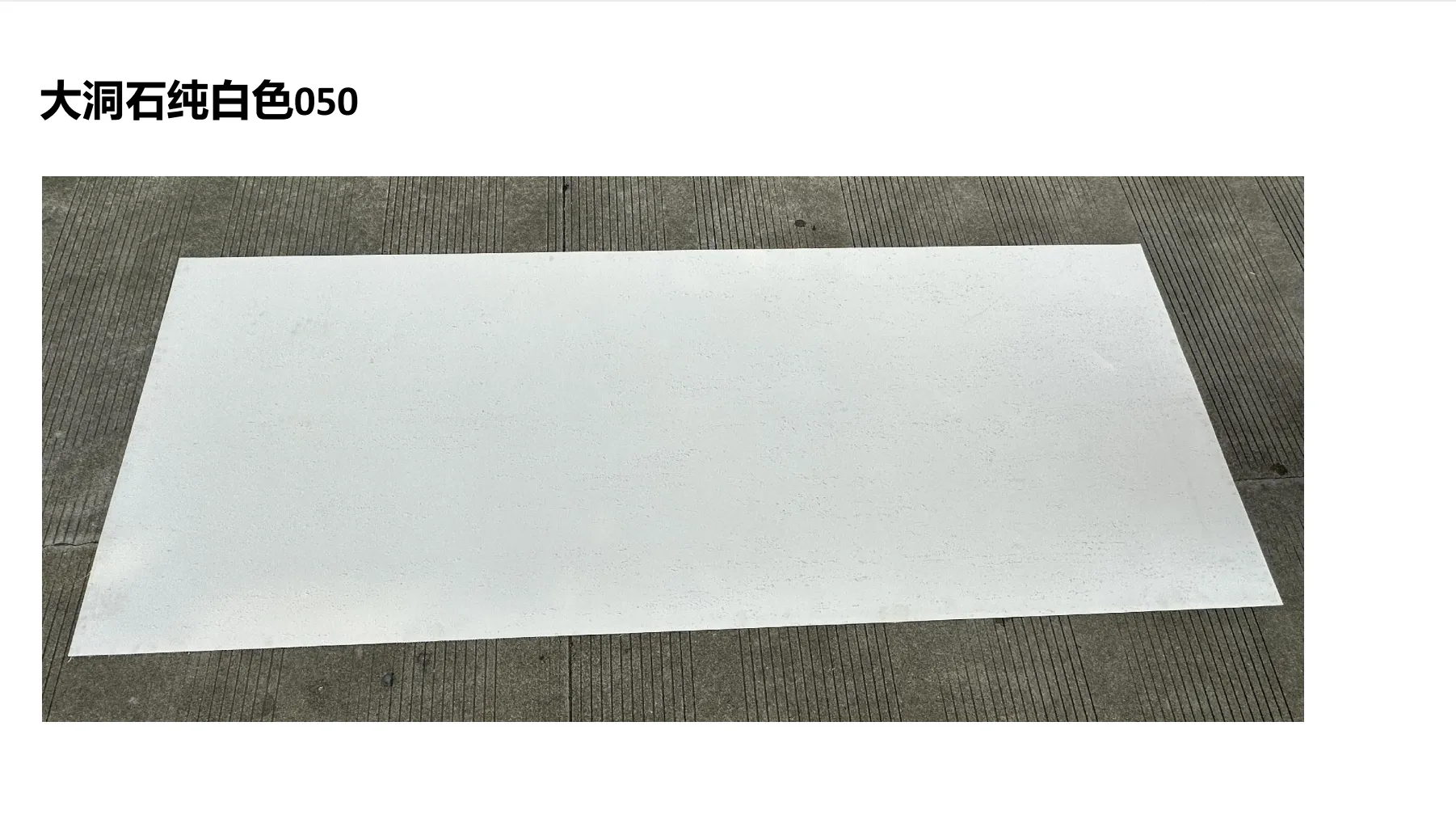
Travertine has been a building staple for millennia, from the Colosseum in Rome to the Hagia Sophia in Istanbul. Its warm, honeyed tones and unique pitted surface tell a story of time and nature. But natural travertine has a dark side: quarrying it involves heavy machinery, disrupts ecosystems, and often requires long-distance shipping, adding to its carbon footprint. Huge Travertine MCM reimagines this classic material for the 21st century, preserving its aesthetic allure while cutting its environmental impact.
So, what makes Huge Travertine MCM different? Let's start with raw materials. Instead of mining new travertine, many MCM manufacturers use recycled stone dust and aggregates from other construction projects. This not only diverts waste from landfills but also reduces the demand for virgin quarrying. The polymers used in the binding process are often low-VOC (volatile organic compounds), meaning they don't release harmful chemicals into the air during or after installation—critical for indoor air quality, a key factor in green building certifications.
Durability is another sustainability superpower. Huge Travertine MCM panels are resistant to scratches, UV rays, and moisture, so they last for decades without fading or deteriorating. In a world where the average building material is replaced every 15-20 years, this longevity is a game-changer. Fewer replacements mean less material consumption over time, and less waste ending up in landfills. Imagine a commercial building's facade that stays vibrant for 50 years instead of 20—that's a 60% reduction in lifecycle environmental impact, just from durability alone.
And let's not forget versatility. Huge Travertine MCM isn't just for exteriors. It's used for interior walls, floors, even furniture. Its lightweight nature means it can be installed in spaces where traditional stone would be too heavy, like high-rise buildings or historic renovations where structural integrity is paramount. This flexibility reduces the need for additional support structures, which in turn saves on steel, concrete, and other resource-intensive materials. When paired with complementary sustainable materials like fair-faced concrete —which uses minimal finishing, reducing waste and energy—Huge Travertine MCM creates spaces that are both visually striking and eco-friendly.
Talking about sustainability is one thing; proving it is another. That's where green building certifications come in. These third-party standards—like LEED, BREEAM, and WELL—set rigorous benchmarks for eco-friendly construction, helping architects, builders, and clients make informed choices. For materials like Huge Travertine MCM, meeting these certifications isn't just a badge of honor; it's a tangible way to demonstrate commitment to sustainability. Let's break down the most influential certifications and how MCM stacks up.
Administered by the U.S. Green Building Council, LEED is the most widely recognized green building certification globally. It awards points for categories like Sustainable Sites, Water Efficiency, Energy and Atmosphere, and Materials and Resources. For building materials, the Materials and Resources (MR) category is where MCM shines. LEED rewards projects that use materials with recycled content, source locally (to reduce transportation emissions), and have low environmental impact during manufacturing.
Huge Travertine MCM checks all these boxes. Many manufacturers report recycled content levels of 20-30% (think recycled stone dust and polymer binders), which can earn LEED points under MR Credit 4: Recycled Content. Local sourcing is another win—MCM production facilities are increasingly located near major construction hubs, cutting shipping distances. And because MCM manufacturing uses less energy than traditional stone processing, it can contribute to points under MR Credit 5: Regional Materials, which rewards materials extracted and manufactured within 500 miles of the project site.
Popular in Europe and Asia, BREEAM focuses on holistic sustainability, with credits for materials, energy, health, and biodiversity. For materials, BREEAM looks at "embodied carbon"—the total CO2 emitted during a material's lifecycle. Huge Travertine MCM has a significantly lower embodied carbon than natural travertine or even concrete. For example, natural travertine has an embodied carbon of about 250 kg CO2e per square meter, while MCM panels clock in at around 80 kg CO2e per square meter—a 68% reduction. This can earn projects BREEAM credits under the "Embodied Energy and Carbon" category.
Down Under, Green Star certification rewards innovation in sustainable building. MCM products like Huge Travertine often qualify for points under the "Materials" category for using recycled content and reducing waste. Additionally, their thermal performance—MCM panels have natural insulating properties—can contribute to energy efficiency points, as they reduce the need for heating and cooling in buildings.
| Certification | Key Criteria for Materials | How Huge Travertine MCM Meets It |
|---|---|---|
| LEED | Recycled content, regional sourcing, low VOCs | 20-30% recycled stone aggregates; manufactured within 500 miles of most projects; low-VOC binders |
| BREEAM | Embodied carbon, durability, waste reduction | 68% lower embodied carbon than natural travertine; 50+ year lifespan; 95% manufacturing waste recycling |
| Green Star | Innovation in sustainability, thermal performance | Lightweight design reduces structural material use; natural insulation reduces HVAC demand |
Numbers and certifications tell part of the story, but real buildings tell the rest. Let's look at two projects that showcase how Huge Travertine MCM is making sustainability tangible—without sacrificing design.
This 42-story mixed-use tower in downtown Chicago needed a facade that would stand out in the city skyline while aligning with the developer's commitment to LEED Gold. The architects chose Huge Travertine MCM for the exterior cladding, paired with foamed aluminium alloy board (vintage silver) accents—a lightweight, recyclable metal that complements the travertine's warmth. The result? A building that looks like it's wrapped in sunlit stone, but weighs 70% less than if it used traditional travertine slabs.
The choice paid off in LEED points: the recycled content in the MCM panels earned 2 points under MR Credit 4, while the regional manufacturing (produced in Indiana, just 180 miles from the site) earned another point under MR Credit 5. The reduced structural load also allowed the engineers to downsize the steel support beams, saving 200 tons of steel—cutting embodied carbon by an additional 350,000 kg. Today, the Azure Tower's facade is a model of sustainable luxury, proving that high design and eco-responsibility can coexist.
Passive House certification is the gold standard for energy efficiency, requiring buildings to use 90% less energy for heating and cooling than conventional structures. Harmony Residences, a 50-unit affordable housing complex, needed materials that would help meet these strict energy goals while staying within budget. The solution? Interior walls clad in Huge Travertine MCM and exterior cladding in mcm flexible stone, chosen for their insulating properties and low cost.
MCM's thin profile allowed for thicker insulation in the walls, boosting thermal performance. The travertine panels' natural resistance to moisture also reduced the need for chemical sealants, improving indoor air quality—a key factor for Passive House, which prioritizes occupant health. The project achieved Passive House certification and won a local sustainability award, proving that affordable housing can be both green and beautiful. Residents often comment on how the warm, natural texture of the travertine makes their apartments feel more like homes than typical affordable housing units—proof that sustainability can enhance quality of life, too.
Sustainability isn't a competition, but it's helpful to see how Huge Travertine MCM stacks up against other eco-friendly options. Let's compare it to three popular alternatives:
As we've discussed, natural travertine is beautiful but resource-intensive. It requires quarrying, which disrupts ecosystems, and its weight increases transportation and structural costs. While it's durable, it's also porous and requires regular sealing with chemicals that can off-gas. Huge Travertine MCM matches its aesthetic but with 60% lower embodied carbon and none of the maintenance headaches.
Fair-faced concrete is prized for its raw, industrial look and minimal processing (hence "fair-faced"). It's durable and has lower embodied carbon than traditional concrete, but it's still heavier than MCM and lacks the warmth of travertine. When used together, as in the Azure Tower, they create a balanced palette of textures—proof that sustainability is about synergy, not choosing one material over another.
Reclaimed wood is a favorite for sustainable interiors, but it's limited in supply and can be prone to warping or insect damage. Huge Travertine MCM offers a similar organic texture without the risk of degradation, making it ideal for high-moisture areas like bathrooms or kitchens where reclaimed wood would fail.
As the world grapples with climate change, the construction industry is under pressure to reduce its environmental impact. Buildings account for 39% of global carbon emissions, so the materials we choose matter more than ever. MCM—including Huge Travertine—represents a shift toward "smart sustainability": materials that don't just do less harm, but actively do good by reusing waste, reducing energy use, and lasting longer.
Looking ahead, we'll likely see even more innovation in MCM technology. Manufacturers are experimenting with bio-based binders made from algae or agricultural waste, further reducing reliance on fossil fuels. Some are exploring 3D printing with MCM, allowing for custom designs with zero waste. Imagine a facade that's 3D-printed on-site, using local recycled aggregates—no shipping, no excess material, just a perfect fit for the building's unique shape.
But perhaps the most exciting thing about MCM is its accessibility. Sustainable building shouldn't be a luxury reserved for high-end projects. Huge Travertine MCM is affordable, easy to install, and available in a range of styles, making it accessible to homeowners, small businesses, and large developers alike. It's proof that sustainability can be democratic—that anyone can build with materials that honor the planet, without breaking the bank.
Yes—unequivocally. From its recycled raw materials and low-energy manufacturing to its durability and recyclability, Huge Travertine MCM checks every box for sustainable building. It meets the rigorous standards of LEED, BREEAM, and Green Star, earning points that help projects achieve higher certification levels. It reduces carbon footprints, minimizes waste, and creates spaces that are both beautiful and built to last.
But sustainability isn't just about the material itself—it's about the mindset it represents. Choosing MCM means choosing innovation over tradition, collaboration over extraction, and long-term thinking over quick fixes. It means building for the planet we want, not just the one we have. And in that sense, Huge Travertine MCM is more than a building material; it's a statement. A statement that says: we can have it all—design that inspires, performance that endures, and a future that thrives.
So, to the architects, builders, and homeowners reading this: the next time you're choosing materials, ask yourself: Does this honor the planet? Does it tell a story of responsibility? With Huge Travertine MCM, the answer is a resounding yes. And that's a foundation worth building on.
Recommend Products












