
Navigating the unique challenges of coastal living—one material choice at a time
There's something undeniably magical about coastal living, isn't there? Waking up to the sound of waves, feeling the sea breeze on your skin, and enjoying unobstructed ocean views—these are the moments that make beachfront homes so coveted. But anyone who's lived near the coast knows the dark side of that beauty: the relentless assault of salt spray, the damp humidity that seeps into every corner, and the harsh UV rays that fade even the most vibrant materials. When it comes to building or renovating a coastal home, choosing the right materials isn't just about aesthetics—it's about survival.
For decades, homeowners and architects have grappled with this dilemma. Natural marble, with its timeless elegance, often tops the wishlist, but it's notoriously porous and prone to etching from salt. Wood warps and rots. Concrete cracks under the stress of coastal weather. So, when a new generation of building materials like MCM (Modified Composite Material) emerged, promising the look of luxury with the resilience of industrial-grade products, it's no wonder the coastal design community took notice. Today, we're diving deep into the MCM Marble Series—specifically asking: Is it truly suitable for the unforgiving conditions of coastal areas? Let's break it down, with insights from industry experts and real-world applications.
Before we judge whether MCM Marble Series is up to the coastal challenge, let's get clear on what MCM is. Short for Modified Composite Material, MCM is a revolutionary building material that blends natural minerals (like marble dust, stone aggregates) with high-performance polymers. The result? A material that mimics the look and feel of natural stone or marble but with a host of engineered advantages: it's lighter, more flexible, and far more durable than traditional options. Think of it as nature's beauty, reimagined with science.
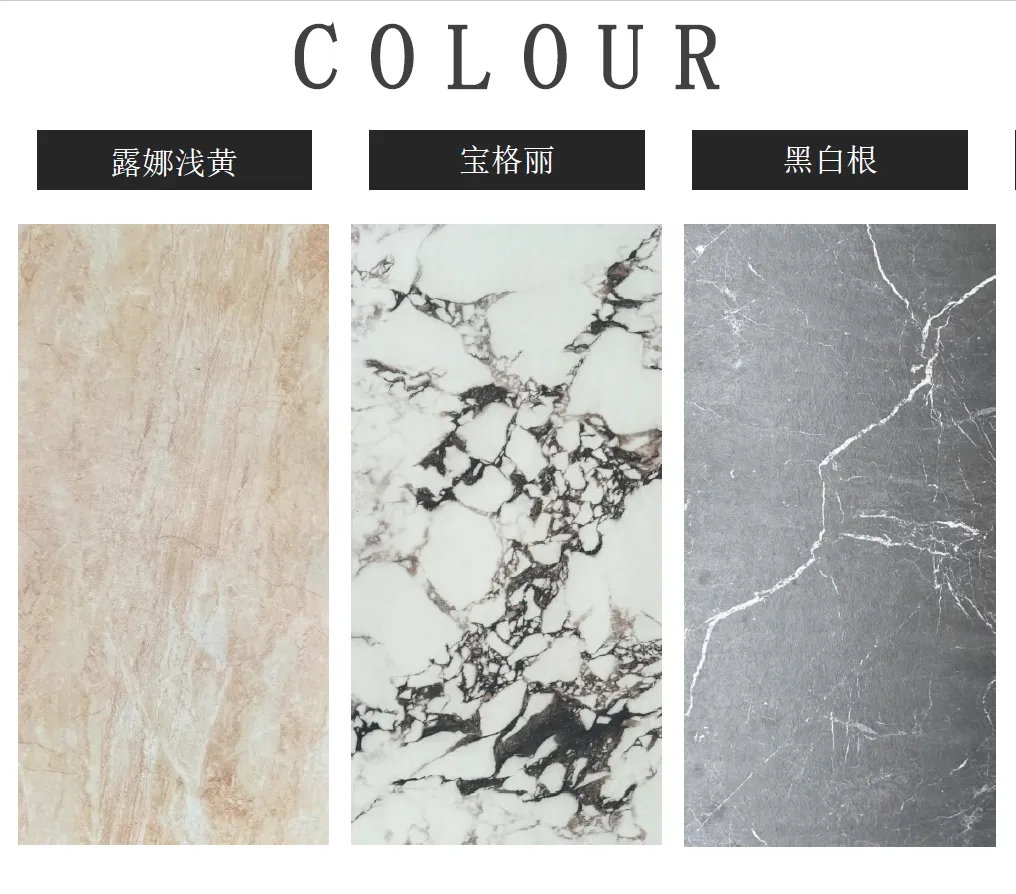
MCM panels are typically thin—often just 3-6mm thick—but don't let that fool you. Their layered construction (a mineral-rich surface bonded to a reinforced core) gives them strength without the weight of natural stone. This combination of lightness and durability has made MCM a favorite in commercial projects, but in recent years, residential applications—especially in challenging environments like coastlines—have skyrocketed. Now, the MCM Marble Series takes this technology a step further, offering designs that replicate the veining, texture, and color variations of premium marble, travertine, and limestone. But does that replication extend to performance in coastal conditions?
To answer whether MCM Marble Series works for coastal areas, we first need to outline the "coastal test"—the specific challenges a material must overcome. Coastal environments throw three main curveballs:
Add to that high winds (which can loosen poorly installed materials) and temperature fluctuations (hot days, cool nights), and you've got a perfect storm for material failure. So, how does MCM Marble Series stack up against these threats?
Let's cut to the chase: MCM Marble Series isn't just "suitable" for coastal areas—it's engineered for them. Here's why:
Natural marble is porous by nature, which means saltwater and moisture can seep in, leading to staining and degradation. MCM Marble Series, however, has a sealed, non-porous surface. The polymer binders in the composite material create a barrier that repels salt spray and prevents moisture absorption. "We've tested MCM panels in salt spray chambers for 1,000+ hours—simulating years of coastal exposure—and the results are remarkable," says Sarah Chen, a materials engineer with a leading architectural firm specializing in coastal projects. "Unlike natural marble, which showed pitting and discoloration after just 200 hours, MCM panels remained virtually unchanged. The salt simply beads up and washes away, no etching, no staining."
Coastal winds are no joke—hurricanes, nor'easters, and even daily sea breezes can exert significant force on building exteriors. Heavy materials like natural stone require robust (and often expensive) structural support, and in high winds, their weight becomes a liability if they loosen. MCM, by contrast, is up to 80% lighter than natural marble. A typical MCM panel weighs just 3-5 kg per square meter, compared to 20-30 kg for natural stone. This lightness reduces stress on walls and roofs, making installation safer and more efficient. "In hurricane-prone areas like Florida or the Carolinas, we're seeing MCM specified more and more," notes Chen. "Its light weight means less strain on the building envelope, and when properly installed with mechanical fasteners, it holds up incredibly well in high winds."
Coastal environments are dynamic—soils shift, foundations settle, and temperature swings cause materials to expand and contract. Rigid materials like natural stone or concrete often crack under this stress, creating gaps where water and salt can infiltrate. MCM Marble Series, however, is flexible. Its thin, layered structure allows it to bend slightly without breaking—a property known as "flexural strength." "We had a project in Cape Cod where the soil is notoriously sandy and prone to shifting," recalls Mike Torres, a contractor with 20+ years of coastal building experience. "We installed MCM big slab boards on the exterior walls. After two winters of freeze-thaw cycles and a nor'easter, there's not a single crack. Traditional concrete panels we used on the garage? Three cracks already. That flexibility makes all the difference."
Anyone who's left a wooden deck or a painted wall in direct coastal sun knows how quickly colors fade. UV rays break down pigments and weaken material bonds, turning vibrant hues into dull shadows. MCM Marble Series addresses this with UV-stabilized pigments and a protective topcoat. The result? Colors that retain their vibrancy even after years of direct sunlight. "We installed MCM travertine (starry blue) accents on a beach house in Malibu three years ago," says Torres. "The was worried the blue would fade to gray, but it still looks as vivid as the day we put it up. Compare that to the natural stone coping around their pool—those have faded so much, they're unrecognizable."
Not all MCM products are created equal, and within the MCM Marble Series, certain lines shine brighter for coastal applications. Let's highlight a few that experts recommend most:
Coastal homes often feature curved walls, rounded archways, or unique architectural details that break up the harshness of wind and waves. Traditional rigid materials struggle with these shapes, requiring custom cutting and often resulting in unsightly seams. Enter MCM Flexible Stone—a line designed to bend and conform to curved surfaces. "We used MCM flexible stone on a coastal home in Charleston with a circular sunroom," says Chen. "The panels curved seamlessly around the 12-foot radius, creating a smooth, continuous surface with no visible joints. Less joints mean less places for water to sneak in—critical for coastal areas." Beyond curves, MCM flexible stone is also easier to install on uneven substrates, a common issue in older coastal homes with settling foundations.
When it comes to exterior walls or large surfaces (like outdoor kitchens or pool surrounds), minimizing seams is key to preventing water and salt intrusion. The MCM Big Slab Board Series offers panels up to 1.2m x 2.4m—far larger than standard stone slabs. "Big slabs mean fewer grout lines," explains Torres. "Grout is porous, even when sealed, so every seam is a potential weak spot. With MCM big slabs, we covered a 400 sq ft patio with just 12 panels instead of 40+ smaller tiles. That's 28 fewer seams to worry about. It's not just about looks—it's about reducing maintenance and risk." The large format also enhances the illusion of luxury, mimicking the grandeur of natural stone slabs without the weight or cost.
Aesthetics still matter, even in tough environments. The Lunar Peak Silvery line within the MCM Marble Series is a favorite for coastal homes, offering a soft, silvery-gray base with subtle white veining—reminiscent of moonlit ocean waves. "It's the perfect neutral for coastal design," says interior designer Lisa Wong, who specializes in beachfront properties. "Lunar Peak Silvery complements both warm wood tones and cool blues, and because it's MCM, clients don't have to sacrifice style for durability. I recently used it on a home in Nantucket for the fireplace surround and outdoor kitchen backsplash. It looks like high-end limestone, but the loves that they can hose it down after a beach party without worrying about stains."
To really drive home MCM's coastal credentials, let's compare it side-by-side with traditional materials using the key coastal performance metrics we discussed earlier. The table below, compiled from industry testing data and expert input, tells the story:
| Material | Weight (kg/m²) | Salt Spray Resistance | Moisture Absorption | UV Stability | Flexural Strength | Maintenance Needs |
|---|---|---|---|---|---|---|
| MCM Marble Series (e.g., Lunar Peak Silvery) | 3-5 | Excellent (no etching/staining after 1000+ hours) | <0.5% (non-porous) | High (no fade after 5+ years) | High (bends without cracking) | Low (occasional rinsing with fresh water) |
| Natural Marble | 20-30 | Poor (etching/staining within 6 months) | 2-5% (highly porous) | Medium (fades over 2-3 years) | Low (brittle, prone to cracking) | High (sealing every 6-12 months) |
| Traditional Concrete | 22-25 | Fair (susceptible to spalling from salt) | 4-8% (porous) | Medium (fades, may develop efflorescence) | Low (rigid, cracks under movement) | Medium (sealing, patching cracks) |
| Wood (Teak, Ipe) | 6-10 | Fair (requires annual sealing/oiling) | Medium (absorbs moisture, prone to rot) | Poor (fades, warps in UV) | Medium (flexible but prone to warping) | Very High (annual maintenance, replacement every 10-15 years) |
The numbers speak for themselves: MCM outperforms traditional materials across nearly every coastal metric, from salt resistance to maintenance. The only area where it doesn't lead? Raw "luxury" appeal—but as designers like Wong note, MCM's ability to replicate natural stone aesthetics means even that gap is closing fast.
We reached out to Dr. James Lin, a materials scientist with the Coastal Construction Research Center, who has spent a decade studying building materials in marine environments. His take on MCM Marble Series? "It's a game-changer for coastal construction. For years, we advised clients to choose function over form—opt for concrete or vinyl siding if they wanted durability, even if it lacked character. MCM finally bridges that gap. Its resistance to salt spray, low moisture absorption, and UV stability make it suitable for even the harshest coastal zones, from the Florida Keys to the Pacific Northwest."
"The real breakthrough with MCM is its sustainability, too," Dr. Lin adds. "Natural stone mining is energy-intensive and environmentally damaging. MCM uses recycled stone dust and requires less energy to transport due to its light weight. For coastal communities increasingly focused on eco-friendly building, that's an added bonus."
Contractor Mike Torres echoes this optimism, citing real-world results: "In 20 years, I've never seen a material that combines beauty and coastal durability like MCM. I recently revisited a home in Rhode Island where we installed MCM fair-faced concrete panels (a complement to the marble series) on the exterior. Five years, two hurricanes, and countless nor'easters later, the panels look brand new. The told me they spend less than $100 a year on maintenance—just rinsing with a hose. Compare that to their neighbor, who re-seals their natural bluestone patio every year for $1,500. It's a no-brainer."
Numbers and expert opinions are great, but nothing beats seeing MCM Marble Series in action. Let's look at two coastal projects that put MCM to the test:
Nestled on a bluff overlooking the Pacific, this 4,000 sq ft home needed materials that could withstand salt spray, high winds, and intense sun. The architect specified MCM travertine (starry blue) for the exterior accent walls and Lunar Peak Silvery for the pool deck. "The starry blue panels have a subtle shimmer that mimics sunlight on water," says the homeowner, Maria Gonzalez. "We were worried the color would fade, but three years later, it's as bright as day one. And the pool deck? It stays cool underfoot even in direct sun (unlike natural stone, which gets scorching), and we've never had a slip issue—MCM's texture provides better grip when wet."
In a historic district of Charleston, where humidity and termites are constant threats, a renovated 1800s home used MCM Big Slab Board Series for the kitchen backsplash and outdoor shower walls. "We needed something that matched the home's historic charm but could handle the steam from the shower and the humidity," explains homeowner Thomas Wright. "The MCM panels look like aged travertine, but they're impervious to moisture. We've had zero mold or mildew, even in the shower—something we could never say with the original tile."
While MCM Marble Series is low-maintenance, it's not "no-maintenance." Even the most durable materials need a little care to thrive in coastal environments. Here's what experts recommend:
"It's really that simple," says Maria Gonzalez of the Malibu home. "We spend maybe 30 minutes a month maintaining our MCM surfaces. For the peace of mind and beauty it provides, that's nothing."
After diving into the science, expert insights, and real-world projects, the answer is a resounding yes. MCM Marble Series isn't just suitable for coastal areas—it's one of the best material choices available today. Its resistance to salt, moisture, and UV rays, combined with its lightweight flexibility and stunning aesthetics, makes it ideal for the unique challenges of coastal living.
Whether you're building a new beach house or renovating a historic coastal cottage, MCM offers the best of both worlds: the luxury look of marble, travertine, or limestone, with the durability to stand up to wind, salt, and sun. From the flexible stone panels that hug curved walls to the big slabs that minimize seams, and from the silvery elegance of Lunar Peak to the vibrant hues of travertine (starry blue), MCM Marble Series proves that coastal homes don't have to choose between beauty and resilience.
So, to all the coastal dreamers out there: Your perfect home—one that looks as good as it lasts—might just be a few MCM panels away. The ocean's beauty deserves a material that can keep up, and MCM is ready to rise to the challenge.
Recommend Products












