
Beyond beauty—how these materials stand the test of time, weather, and the stories we build around them
I still remember the first time I visited my childhood elementary school as an adult. The red brick facade that once glowed in the sun had turned patchy, with chunks missing where water had seeped in over the years. The windowsills, once crisp and white, were stained with mold. It wasn't just a building anymore—it felt tired, like a story half-told. That's the thing about buildings: they don't just shelter us; they hold memories. And when their exteriors crumble, it's not just mortar and stone that fall away—it's a piece of the past, too.
That's why durability in building materials matters more than we often admit. It's not just about saving money on repairs or avoiding unsightly cracks. It's about creating spaces that grow with us, that outlive trends, and that still make us pause and say, "Wow, this is beautiful," decades after they're built. And when it comes to materials that promise both beauty and longevity, COLORIA GROUP's MCM (Modified Composite Material) products—especially the beloved Starmoon Stone—have been turning heads in the architecture world. But does Starmoon Stone really live up to its reputation for durability? Let's dig in.
Before we get to Starmoon Stone, let's talk about the star of the show: MCM. Short for Modified Composite Material, it's like if natural stone and high-tech engineering had a baby—one that's tough, light, and surprisingly low-maintenance. Traditional building materials? They're often a trade-off. Natural stone is stunning but heavy and prone to cracking. Vinyl siding is cheap but fades fast. Wood looks warm but rots. MCM? It's engineered to skip the trade-offs.
COLORIA GROUP has been refining MCM for over two decades, blending natural minerals (think marble dust, quartz) with a polymer core to create panels that mimic the look of stone, wood, or metal—without the weaknesses. "We started with a simple question," says Carlos Mendez, COLORIA's chief innovation officer. "Why can't a building material be both beautiful and bulletproof?" The answer? MCM. And Starmoon Stone is their crown jewel.
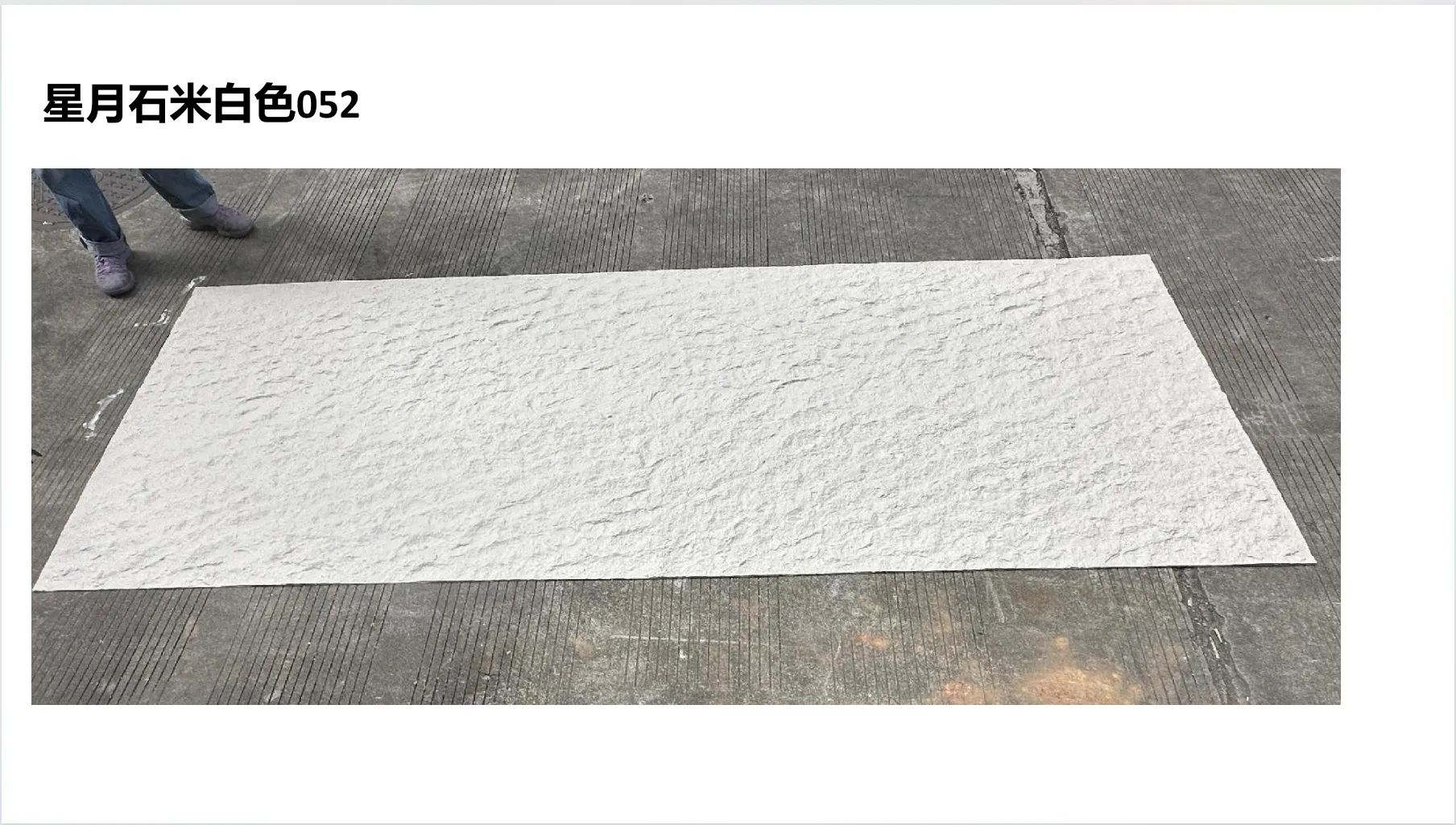
Let's start with the obvious: Starmoon Stone is gorgeous. Its surface shimmers with tiny, star-like flecks—hence the name—set against a backdrop of soft grays and blues, like a night sky frozen in stone. Architects love it for modern facades, boutique hotels, and even luxury homes. But here's the question that keeps designers up at night: Does it last?
To find out, I visited COLORIA's testing lab outside Milan, where materials are put through hell and back. Picture this: a room full of machines that simulate 30 years of weather in 30 days. Maria Alvarez, the lab's lead engineer, walked me through Starmoon Stone's trials. "First, freeze-thaw cycles," she said, pointing to a chamber where panels were alternately soaked in water and frozen to -20°C. "We do 500 cycles—that's more than most climates see in 20 years. Starmoon? No cracks, no delamination. Not even a hairline fracture."
Next, UV resistance. Sunlight is a silent killer for building materials, bleaching colors and weakening surfaces. Starmoon Stone was placed in a UV chamber mimicking 10 years of desert sunlight. "We measured colorfastness before and after," Maria explained, pulling up a graph. "The fade? Less than 2%. For context, traditional painted wood fades 15-20% in one year."
Then there's impact testing. A steel ball (think: hailstones on steroids) dropped from 10 feet onto the panel. Result? A tiny, almost unnoticeable scratch. "We had a client in Chicago whose building took a direct hit from a hailstorm last year," Maria said. "Their neighbor's traditional stone facade had 27 cracks. Starmoon? Not a single one. The owner called us crying—happy tears."
Starmoon Stone might be the poster child, but COLORIA's MCM lineup is a whole family of durability stars. Take the MCM big slab board series , for example. Imagine a facade that looks like a single, seamless slab of stone, stretching floor to ceiling—no visible seams, no grout lines. Traditional stone slabs? Heavy enough to require reinforced walls and cranes for installation. COLORIA's big slabs? Lightweight (about 80% lighter than natural stone), which cuts structural costs and installation time. A hotel in Barcelona used these slabs five years ago, and today, you'd never guess they've braved coastal winds and salt spray. "We expected to repaint or repair within three years," said the hotel's architect, Luisa Gomez. "Five years later, it still looks like the renderings."
Then there's the foamed aluminium alloy board (vintage silver) —a favorite for industrial-chic designs. Aluminium is naturally corrosion-resistant, but COLORIA's foamed version adds tiny air pockets that make it even lighter and better at absorbing impacts. "We installed these on a restaurant in Tokyo's Shibuya district," Carlos told me. "It's a busy area—bikes, delivery trucks, even the occasional errant vending machine. After two years, not a dent. And that vintage silver finish? Still has that warm, aged glow—no tarnish, no rust."
And let's not forget the Lunar Peak silvery line—mimicking the texture of moon rock, with a cool, metallic sheen. "We tested this in the Swiss Alps," Maria said. "Extreme cold, heavy snow, high altitude UV. After three winters, it's still as silvery as the day it went up. A ski lodge there replaced their old wood siding with Lunar Peak—now they save $12,000 a year on maintenance. No more repainting, no more rot repairs."
| Material | Weather Resistance (1-10) | Impact Resistance | Weight (lbs/sq ft) | Maintenance Needs |
|---|---|---|---|---|
| Traditional Natural Stone | 7 | Prone to cracking | 25-35 | Sealing every 2-3 years; repairs for cracks |
| Vinyl Siding | 5 | Dents easily | 1.5-2 | Fades; replaces every 10-15 years |
| COLORIA MCM Flexible Stone (Starmoon) | 9.5 | Minor scratches only | 3-4 | None; occasional hose-down |
| COLORIA Foamed Aluminium (Vintage Silver) | 10 | Resists dents; absorbs impact | 2-2.5 | None; finish ages gracefully |
Numbers and lab tests are great, but nothing beats real-world proof. Take the Riverfront Arts Center in Portland, Oregon. Ten years ago, they chose Starmoon Stone for their exterior. Last winter, a severe ice storm hit—temperatures dropped to -12°C, and ice accumulated 6 inches thick on every surface. When the ice melted, most buildings in the area had cracked tiles, peeling paint, or water damage. The Arts Center? Its Starmoon facade was unscathed. "We budgeted $50,000 for repairs every five years," says James Reed, the center's facilities manager. "Ten years in, and we've spent $0. That's not just durability—that's peace of mind."
Or consider the family home in Sydney, Australia, clad in Lunar Peak golden . "We live near the coast, so salt air is brutal," says homeowner Priya Patel. "Our old brick facade needed repointing every two years. Lunar Peak? We installed it seven years ago. No rust, no fading, and it still looks like that warm, sunlit gold we fell in love with. Last summer, a palm frond fell off our tree and hit the wall—left a mark, but we wiped it off with a damp cloth. Done."
Durability isn't just about saving money (though that's a nice bonus). It's about sustainability. Think about it: every time a facade fails, it ends up in a landfill. New materials are mined, manufactured, transported—all adding to carbon footprints. COLORIA's MCM products? They last 30+ years with minimal upkeep. "We calculate that one MCM panel replaces 10+ traditional panels over a building's lifetime," Carlos said. "That's less waste, less energy, less hassle for the planet."
And let's not overlook the emotional side. A building's exterior is its first impression. It's the way a hotel welcomes guests, a school greets students, a home makes its family feel safe. When that exterior stays beautiful, it keeps telling its story. "I walk past that Arts Center in Portland every morning," James told me. "Ten years later, it still makes me smile. That's the magic of durable materials—they don't just build buildings. They build legacies."
Starmoon Stone isn't just durable. It's a promise. A promise that the building it adorns won't just stand—it will thrive . It will outlive trends, outlast storms, and outshine the passage of time. And it's not alone. From the MCM big slab boards to the vintage silver foamed aluminium, COLORIA's MCM family is built for the long haul.
So the next time you look at a building, really look at it. Is its facade fading? Cracking? Sagging? Or is it glowing, like it's still got decades of stories to tell? That's the difference durability makes. And that's the difference COLORIA GROUP is making—one panel, one facade, one legacy at a time.
Recommend Products












