

Ever walked past a building and thought, "Wow, that stone wall looks stunning—but how on earth did they get it up there?" If you've ever been involved in construction or design, you know the struggle. Traditional stone cladding is beautiful, but it's heavy. Like, "need-a-crane-and-three-workers-per-panel" heavy. And heavy means slow installation, skyrocketing labor costs, and even structural stress on buildings. But what if there was a way to get that same natural, earthy vibe without breaking your back (or your budget)? Enter Bali Stone wall cladding—a game-changer in the world of architectural finishes.
Let's talk about the elephant in the room: traditional stone cladding. Marble, granite, even some concrete panels—they look amazing, but they're a nightmare to work with. Imagine a team of workers hauling 50kg slabs up scaffolding, not to crack them. Each panel takes 20 minutes to position, and if it's misaligned? You start over. By the end of the day, they've maybe installed 10 panels. And don't get me started on transportation—those slabs need special trucks, and one wrong turn could mean shattered stone and missed deadlines.
Then there's the cost. Heavy materials require more labor, bigger equipment, and longer project timelines. A 200 sqm stone wall might take a week with traditional materials, eating up your budget for other design elements. And let's not forget about the building itself—older structures or lightweight frames might not even support the weight, forcing you to compromise on aesthetics. It's a lose-lose: beauty that costs too much, takes too long, and limits your design options.
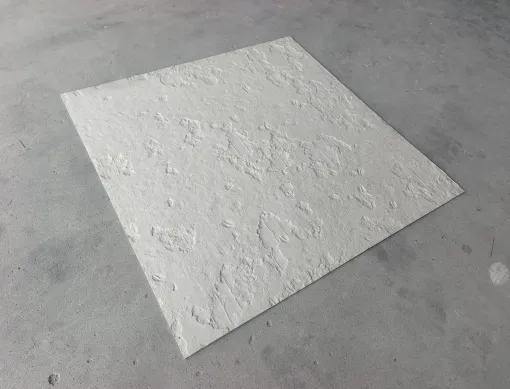
Now, picture this: a stone panel that weighs less than a bag of flour but looks like it was chiseled straight from a Balinese cliff. That's Bali Stone. Part of the innovative modified cementitious material (MCM) family, this cladding solution redefines what "lightweight" means. We're talking 8-12 kg per square meter —compare that to traditional granite at 30-40 kg/sqm. Suddenly, two workers can carry a stack of panels up a ladder. No cranes, no forklifts, no strained muscles. It's like switching from lifting dumbbells to carrying a yoga mat—same strength, way less effort.
But don't let the lightness fool you. Bali Stone is tough. Made with advanced MCM technology, it's engineered to withstand rain, wind, and even the occasional accidental bump. The secret? A blend of natural minerals and modified polymers that gives it flexibility (so it won't crack under stress) and durability (it'll outlast many traditional stones). Think of it as the "bulletproof vest" of wall cladding—lightweight protection with zero bulk.
Let's get down to numbers. Traditional stone cladding for a 100 sqm wall might take 5-7 days. With Bali Stone? 2-3 days tops . Why the difference? First, the weight. No more waiting for heavy machinery—workers can carry panels by hand, moving twice as fast. Second, the installation process is simplified. Unlike traditional stone, which often requires complex anchoring systems, Bali Stone uses a straightforward adhesive method. It's like sticking a large sticker to the wall—clean, quick, and precise.
And forget about custom cutting delays. Bali Stone comes in standard sizes, but it's also easy to trim on-site with basic tools. Need a curved edge for a circular window? Grab a saw, make the cut, and you're done in 5 minutes. No need to order custom-shaped panels weeks in advance. This flexibility is a lifesaver for tight deadlines—no more panicking when measurements are off by an inch.
Time is money, and Bali Stone saves you plenty of both. Let's break it down with a real-world example. Suppose you're cladding a 150 sqm commercial facade. With traditional stone:
With Bali Stone:
The result? You could save up to 40% on labor costs alone. Add in lower transportation fees (lighter loads mean cheaper shipping) and minimal waste, and the total savings often hit 30-35% compared to traditional stone. That's extra budget you can pour into lighting, landscaping, or upgrading other finishes.
| Aspect | Traditional Stone Cladding | Bali Stone Cladding |
| Weight (per sqm) | 30-40 kg | 8-12 kg |
| Installation Time (100 sqm) | 5-7 days | 2-3 days |
| Labor Required | 4-5 workers | 2-3 workers |
| Transportation Cost | High (specialized vehicles) | Low (standard trucks) |
| Structural Stress | High (requires strong framing) | Low (suitable for lightweight structures) |
Bali Stone isn't just about practicality—it's about unlocking creativity. Traditional stone often limits you to rigid, uniform looks, but Bali Stone comes in a range of textures and colors that mimic natural stone. Want the weathered look of a Balinese temple? There's a finish for that. Prefer something sleek and modern? Check out the smooth, matte options. And because it's part of the MCM family, you can even pair it with other flexible stone sheets for mixed-media designs—think Bali Stone panels next to 3D-printed accents for a truly unique facade.
One of our favorite projects? A beachfront café in Bali that used Bali Stone to recreate the look of local coral stone. The lightweight panels meant they could install it on the second floor without reinforcing the structure, and the natural texture blends seamlessly with the ocean views. "We wanted that 'lived-in' island vibe without the hassle of real coral stone," the architect told us. "Bali Stone gave us exactly that—and we finished two weeks early."
Bali Stone isn't just a lucky accident—it's the result of years of innovation in MCM technology. Modified cementitious materials are designed to combine the best of natural stone and modern engineering. Unlike traditional stone, which is mined and cut, MCM products are crafted in controlled environments, ensuring consistency in color, texture, and performance. This means no surprises on site—every panel looks exactly like the sample you approved.
And let's talk sustainability. Mining natural stone can be tough on the environment, but MCM production uses recycled materials and reduces waste. Bali Stone is also low-maintenance—no need for harsh chemical sealants every year. Just a quick wash with water, and it looks as good as new. It's beauty with a conscience—something every modern project deserves.
"We switched to Bali Stone for our boutique hotel project, and it was a game-changer. We saved over $15,000 on labor and finished the exterior a week early. Our guests can't believe it's not real stone!" — Sarah L., Hotel Developer
If you're tired of choosing between beauty and practicality, the answer is yes. Bali Stone works for almost any project: commercial buildings, residential homes, retail spaces, even outdoor patios. It's especially perfect for:
And because it's part of a larger family of MCM products, you can mix and match. Love Bali Stone but need a larger format? Pair it with big slab boards for a seamless look. Want to add 3D elements? Combine it with 3D-printed MCM accents. The possibilities are endless—and all under one roof.
At the end of the day, Bali Stone is more than a building material—it's a solution. It solves the age-old problem of "heavy beauty" by giving you the best of both worlds: the natural, timeless look of stone with the convenience of a lightweight, easy-to-install panel. It cuts installation time in half, slashes labor costs, and lets you design without limits.
So the next time you're planning a wall cladding project, ask yourself: Do I want to spend weeks wrestling with heavy stone, or days enjoying a stunning, durable finish? With Bali Stone, the choice is clear. Lightweight, affordable, and unbeatably beautiful—this is the future of architectural design. And the future? It's looking lighter, brighter, and a whole lot more cost-effective.
Recommend Products












