
Seaside Cove, a sun-bleached town where the ocean hums against weathered docks and salt-kissed breeze carries the scent of fresh seafood, isn't just a postcard-perfect destination—it's a battlefield for building materials. For decades, architects and builders here have waged a quiet war: constructing structures that can withstand the relentless assault of saltwater mist, humidity, and gale-force winds without succumbing to cracks, discoloration, or decay. "You design a beautiful facade, and within five years, the stone starts to crumble like old bread," says Sarah Chen, lead architect at Coastal Designs Studio, her voice tinged with the frustration of past projects. "We needed something that could keep up with the ocean's—strong, but not stiff."
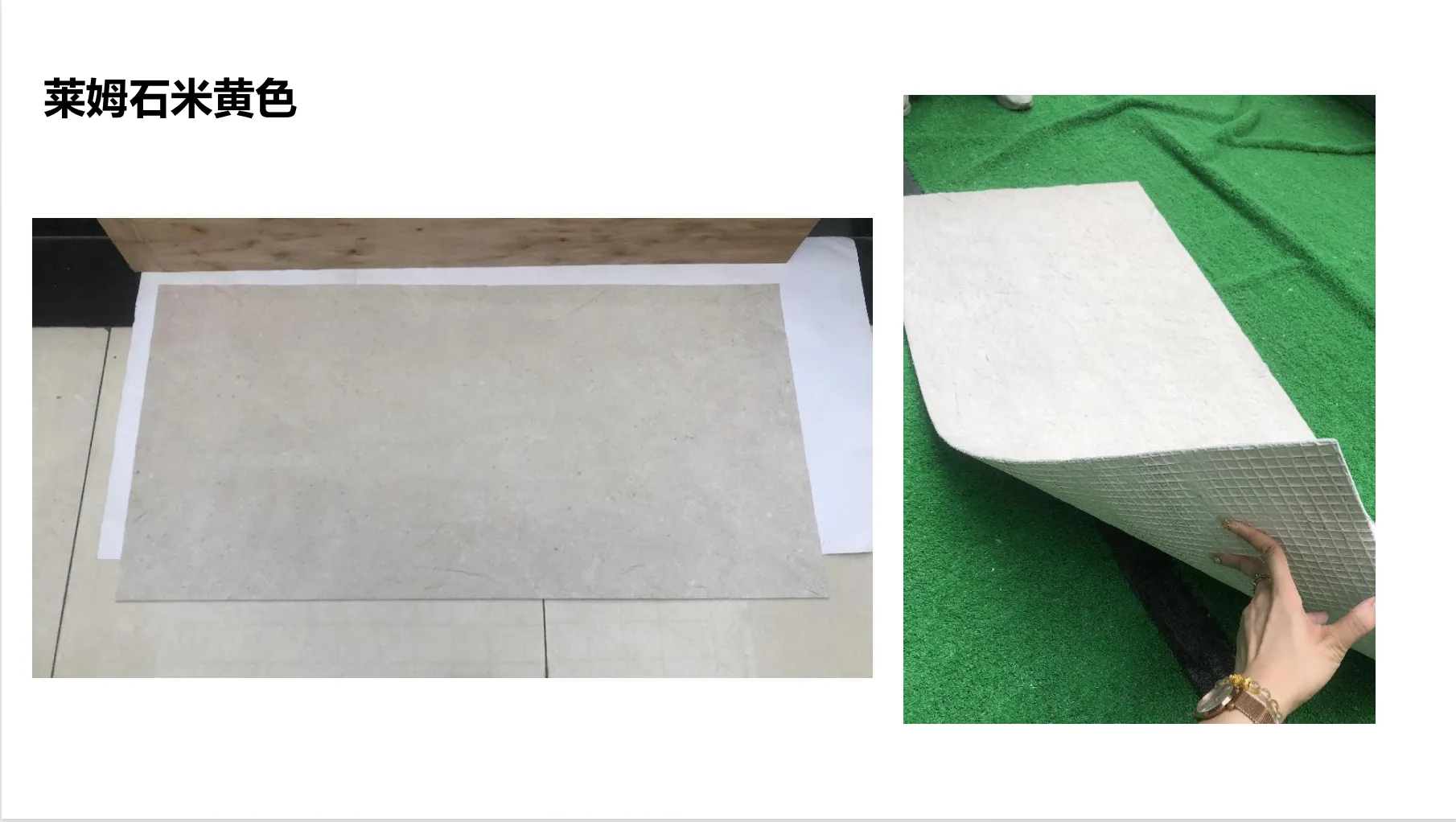
That search led them to a game-changer: MCM (Modified Composite Material) products. In 2023, when Chen's team took on the Harbor View Residences—a 12-unit apartment complex perched on a bluff overlooking Seaside Cove's harbor—they decided to bet on MCM's reputation for durability. The result? A building that, two years later, still stands as vibrant as the day it was finished, a testament to how materials like lime stone(beige) , MCM flexible stone , and even a splash of travertine (starry blue) can redefine coastal construction. This is the story of how that bet paid off.
To understand why Harbor View Residences almost didn't happen, you have to first understand the ocean's silent weapon: salt. When saltwater mist drifts inland, it settles on building exteriors, seeping into tiny pores in stone and concrete. As it dries, it crystallizes, expanding and weakening the material from the inside out—like ice cracking a sidewalk, but invisible and relentless. "We've seen marble facades turn chalky, concrete walls develop spiderweb cracks, even brick mortar dissolve into powder," says Mike Torres, project manager for Harbor View. "It's demoralizing. You pour your heart into a design, and nature erases it."
Traditional limestone, a staple in coastal architecture for its warm, earthy tones, was particularly problematic. "We loved the look of natural limestone—its soft beige hue blends so well with the sand and sky," Chen recalls. "But the local quarries' stone was porous. Within three years, we'd see pitting, where salt had eaten away at the surface. It looked like the building had chickenpox." Even fair-faced concrete , prized for its raw, industrial charm, struggled; in Seaside Cove's humidity, mold found a home in its rough texture, turning walls into patchworks of green and black.
| Material | Saltwater Resistance | Moisture Absorption | 5-Year Color Retention | Flexibility (Resistance to Cracking) |
|---|---|---|---|---|
| Natural Limestone | Poor (pitting after 2–3 years) | High (12–15% absorption rate) | 60–70% | Low (brittle, prone to cracking in wind) |
| Traditional Concrete | Moderate (cracks after 4–5 years) | Moderate (8–10% absorption rate) | 75–80% | Low (rigid, no give in temperature shifts) |
| MCM Lime Stone(Beige) | Excellent (no visible damage after 2+ years) | Low (<2% absorption rate) | 95%+ | High (flexible, bends with wind/settling) |
| MCM Travertine (Starry Blue) | Excellent (resistant to salt crystallization) | Low (<1.5% absorption rate) | 97%+ | High (ideal for curved surfaces) |
Chen first encountered MCM products at a 2022 (building materials expo) in San Francisco, where a sample of MCM flexible stone caught her eye. "It looked like real stone—same texture, same depth—but when I bent it, it didn't snap," she says, still marveling at the memory. "The rep told me it was made by bonding natural stone particles with a polymer matrix, making it lightweight, flexible, and impervious to moisture. I thought, 'This could be the answer.'"
Torres was skeptical at first. "I've heard 'miracle material' pitches before," he admits. "But Sarah brought back samples— lime stone(beige) panels that felt solid but light, travertine (starry blue) with these tiny, iridescent flecks that looked like sunlight on waves—and we put them through hell. We soaked them in saltwater for a month, left them out in the rain, even hit them with a pressure washer. They didn't budge. No swelling, no discoloration, no cracks."
That sealed it. For Harbor View Residences, Chen's team designed a facade that would marry durability with Seaside Cove's coastal aesthetic: lime stone(beige) MCM panels for the main exterior (mimicking the warmth of natural limestone without the porosity), MCM flexible stone for the curved corners of the building (where rigid materials often crack under wind stress), and travertine (starry blue) accents around windows and balconies (a nod to the ocean's ever-changing hues). For the ground-level walkways, they chose boulder slab (vintage silver) —a textured, metallic-hued MCM product that wouldn't grow slippery when wet, a critical safety feature for a town where rain and ocean spray mix.
By the time construction began in spring 2023, the team was cautiously optimistic. But nothing prepared them for how smoothly the MCM installation would go. "Traditional stone cladding is backbreaking work—each slab weighs 50–100 pounds, and you need a crew of four just to lift one," Torres says. "MCM panels? Two people could carry a stack. We cut installation time by 30%."
The flexibility of MCM flexible stone was another revelation. The Harbor View Residences feature a curved, wave-inspired facade on the harbor side—a design Chen had nearly scrapped for fear traditional stone would crack along the bends. "With MCM, we could bend the panels to a 3-foot radius without breaking," she says, still grinning at the memory. "The day we finished that curve and stepped back? It looked like the building was breathing, like it belonged there, not just plopped down."
But the real test came six months later, when Seaside Cove was hit by Hurricane Lila—a Category 2 storm with 100 mph winds and storm surges that flooded the ground floor of nearby shops. "I was up all night, staring at the weather radar, convinced we'd find the facade in pieces," Torres admits. "When dawn broke, I raced to the site. The lime stone(beige) panels were spotless, the travertine (starry blue) accents still shimmered, and the boulder slab (vintage silver) walkway? Not a single chip. Even the fair-faced concrete structural elements, paired with MCM's lightweight panels to reduce load, held firm. It was like the building had shrugged off the storm."
Fast-forward to summer 2025, and Harbor View Residences is a hit. Tenants rave about the "cool, calm vibe" of the interiors (thanks in part to MCM's natural insulation properties, which keep apartments cooler in summer) and the way the building "glows" at sunset, with the lime stone(beige) panels warming to gold and the travertine (starry blue) sparking like distant stars. But for Chen and Torres, the real victory is in the details.
"We did an inspection last month," Torres reports. "No cracks in the facade. The lime stone(beige) color is as rich as day one—no fading. The travertine (starry blue) hasn't lost its iridescence. Even the grout between panels is intact, which is unheard of around here. Saltwater mist? It beads up and rolls off the MCM panels like water off a duck's back."
Residents have noticed, too. "I used to live in an old building where the windowsills would leak every time it rained," says Maria Gonzalez, a Harbor View tenant and local artist. "Here? Nothing. And the outside still looks brand-new. It feels like the building's growing with the town, not falling apart with it."
What makes MCM's performance in Seaside Cove truly remarkable isn't just that it withstands the elements—it's that it does so without sacrificing beauty. Traditional coastal materials often force a trade-off: durable but drab (think gray concrete), or beautiful but fragile (marble, natural limestone). MCM, Chen argues, breaks that cycle.
"Look at the travertine (starry blue) ," she says, gesturing to a balcony. "In natural light, those flecks catch the sun and shift color—blue, then green, then purple—just like the ocean. Traditional travertine would lose that sparkle in a year, eaten away by salt. MCM locks it in." The boulder slab (vintage silver) walkways, too, have become a local landmark; kids love running their hands over the textured surface, and dogs (a common sight in Seaside Cove) haven't left a single scratch.
Sustainability is another win. MCM panels are made with recycled stone particles and require less energy to produce than traditional stone, which involves heavy quarrying and transportation. "We cut our carbon footprint by 25% just by switching to MCM," Chen notes. "And because the panels are lightweight, we used less steel in the building's frame—another eco bonus."
Seaside Cove's Harbor View Residences isn't just a building—it's a story of resilience. It's proof that in the face of nature's toughest challenges, the right materials can turn frustration into pride, and fleeting beauty into something lasting. For Sarah Chen, Mike Torres, and the residents who call Harbor View home, MCM products like lime stone(beige) , MCM flexible stone , and travertine (starry blue) have done more than build a structure—they've built trust.
"We're already using MCM on our next project—a community center down the road," Chen says, smiling. "And this time, we're not just thinking about durability. We're thinking about possibility. What if we use boulder slab (vintage silver) for the roof? Or fair-faced concrete paired with MCM's travertine (starry red) for a bold accent wall? The ocean's still out there, but now, we're ready to dance with it—not fight it."
In the end, that's the magic of MCM: it doesn't just survive coastal climates. It thrives in them, turning buildings into partners with the ocean, not prisoners of it. And in Seaside Cove, where the ocean has always been both enemy and muse, that's the greatest victory of all.
Recommend Products












