
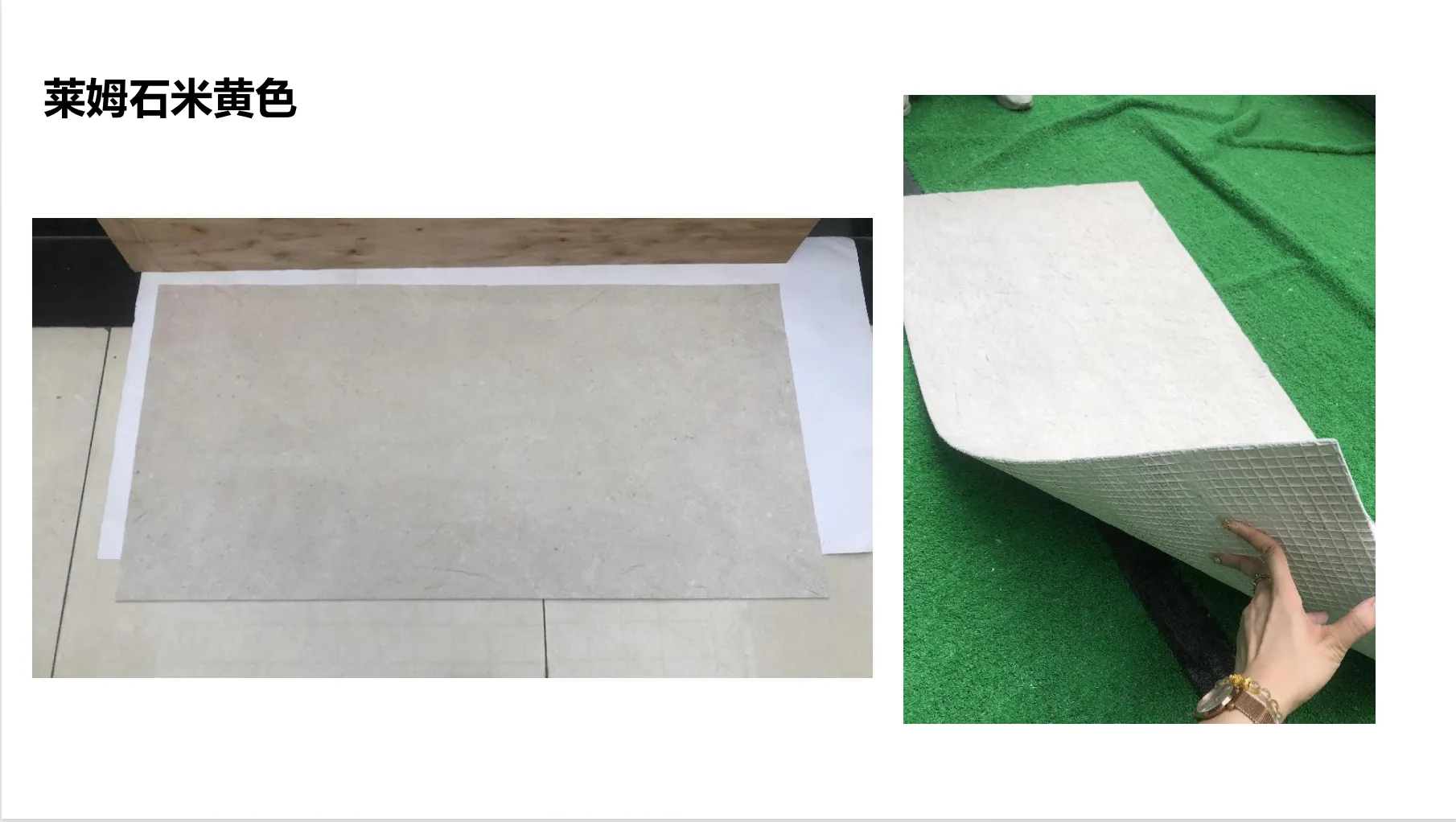
Choosing natural stone for your home or commercial project is like picking a piece of Earth's history to adorn your space. It's personal, it's permanent, and let's be honest—those glossy catalog photos can be tricky to trust. We've all been there: falling in love with a stone online, only to see it in person and wonder, "Is this even the same material?" That's where real photos come in. They're not just pretty pictures; they're windows into a stone's true character. Today, we're diving deep into lime stone, specifically lime stone(beige), and how real photos can help you unlock its unique traits. We'll also compare it to other popular options like travertine (beige), marble veil white, fair-faced concrete, and even wood grain board, so you can make a choice that feels as authentic as the stone itself.
First things first: let's get to know lime stone. It's not just a "stone"—it's a story written in sediment. Formed over millions of years from the compressed remains of marine organisms, coral, and algae, lime stone is a sedimentary rock rich in calcium carbonate. Think of it as Earth's way of preserving ancient oceans in solid form. Now, when we talk about lime stone(beige), we're focusing on one of its most versatile and popular varieties. Beige lime stone ranges from soft, warm ivory to deeper, sandier tones, and it's loved for how it brings a sense of calm and timelessness to any space.
But here's the catch: not all beige lime stone is created equal. Some has subtle pink or gold undertones; others lean more gray. Some is smooth as a polished pebble; some has a rough, almost sandy texture. And that's where real photos become your best friend. A stock photo might show a perfectly lit slab in a studio, but a real photo—say, from a kitchen renovation in Chicago or a bathroom in Barcelona—will show you how that stone looks at 9 a.m. sunlight, under warm evening lights, or even on a cloudy day. It's the difference between seeing a stone and experiencing it.
Let's break down the traits that make lime stone(beige) unique, and how real photos can highlight each one. Spoiler: it's not just about color.
"Beige" is a broad term, right? A real photo of lime stone(beige) will show you the nuances. Maybe in direct sunlight, it has a creamy, almost buttery hue; in shadow, it might warm up to a soft camel. Some slabs have subtle veining—thin lines of darker beige or even light brown—that add depth without overwhelming. Others are more uniform, like a blank canvas for your decor. Real photos also reveal how the stone interacts with its surroundings. For example, a photo of a lime stone(beige) wall next to a wooden bookshelf will show you how the stone's warmth complements natural wood, while a photo of it paired with white cabinetry might highlight its cooler, more neutral side.
Texture is where lime stone(beige) really shines—and where real photos are non-negotiable. Run your hand over a polished lime stone slab, and it might feel cool and silky, like a river stone. But a honed or tumbled finish? That's a different story. Honed lime stone has a matte, velvety texture with just enough grip to feel natural, while tumbled lime stone is rough around the edges, like it was pulled straight from a beach. Real photos capture this tactile quality in a way words can't. Look for close-up shots of the stone's surface: can you see the tiny pits or grooves? The way light catches on the edges? That's texture, and it matters. A rough-textured lime stone(beige) might be perfect for a rustic fireplace surround, but a smooth, polished one could be better for a kitchen countertop where you're wiping up spills daily.
Let's talk practicality. Lime stone is durable, but it's not indestructible. It's softer than granite, for example, and more porous than marble. So, can it handle a busy family kitchen? A high-traffic hallway? Real photos of lime stone(beige) in real homes can answer that. Look for photos of floors that have been down for 5 years—are there visible scratches? Stains? A photo of a lime stone(beige) countertop with a coffee mug ring (and how it cleaned up!) is worth a thousand product specs. Generally, lime stone(beige) works well for walls, backsplashes, and low-to-medium traffic floors. For countertops, it'll need sealing (more on that later), but many homeowners swear by it for the warmth it brings to a kitchen.
Porosity is a fancy word for "how much it absorbs liquids," and it's a big deal with natural stone. Lime stone(beige) is moderately porous, which means it can soak up spills if left unattended. A real photo might not show porosity directly, but it can hint at it. For example, a photo of a bathroom with lime stone(beige) shower walls might include a note about regular sealing, or a kitchen photo might show a trivet under a hot pan (since heat can also affect porous stones). Don't worry—it's not a dealbreaker! With the right care (we'll get to that later), porosity is just part of what makes lime stone feel alive and natural.
To really understand lime stone(beige), let's see how it stacks up against other materials you might be considering. We'll use a comparison table to break down key traits, but remember—these are generalizations. Real photos will always show the exceptions and unique quirks that make a stone special.
| Material | Color Range | Texture Notes | Porosity | Durability | Best For | Real Photo Tip |
|---|---|---|---|---|---|---|
| Lime Stone(Beige) | Warm ivory to deep sand; subtle undertones (gold, pink, gray) | Smooth polished, matte honed, or rough tumbled; may have fossil fragments | Moderate; needs sealing every 1-2 years | Good for walls, low-traffic floors, countertops (with care) | Bedrooms, living rooms, bathrooms (sealed), kitchen backsplashes | Look for photos in different lighting to spot undertones |
| Travertine (Beige) | Similar to lime stone but often with more golden or honey tones | Distinctive "holes" (voids) from gas bubbles; can be filled or left open | High; requires frequent sealing (every 6-12 months) | Good for walls, decorative accents; avoid high-moisture areas | Fireplace surrounds, accent walls, outdoor patios (covered) | Check if voids are filled—real photos show if they're smooth or textured |
| Marble Veil White | Crisp white with gray or gold veining; elegant, high-contrast | Ultra-smooth when polished; veining can be thin ("veil") or bold | High; prone to etching from acidic liquids | Soft; best for low-traffic areas or decorative use | Entryways, accent walls, formal dining rooms | Look for photos of veining consistency—some slabs have more dramatic patterns |
| Fair-Faced Concrete | Gray, off-white, or custom dyed; uniform color | Smooth, industrial finish; may have subtle trowel marks | Low (when sealed); dense and non-porous | Excellent; resistant to scratches, heat, and moisture | Modern kitchens, commercial spaces, outdoor countertops | Real photos show if it has a "cold" industrial look or warm, organic feel |
| Wood Grain Board | Browns, tans, grays; engineered to mimic wood tones | Consistent wood-look texture; smooth or embossed | Low; made from composite materials (water-resistant) | Good; resistant to warping, scratches, and moisture | Bathrooms, laundry rooms, budget-friendly wood-look projects | Check for photo "seams"—real installs show how boards align |
See the differences? Lime stone(beige) sits in that sweet spot between natural character and practicality. It's not as high-maintenance as travertine (beige), not as delicate as marble veil white, and has way more soul than fair-faced concrete or wood grain board. But don't just take our word for it—let's look at how real photos can guide your decision.
Let's say you're torn between lime stone(beige) and travertine (beige). Both are beige, both are natural stones—so what's the difference? A real photo of travertine will show those iconic voids (the little holes) that lime stone usually lacks. In a kitchen, those voids could trap crumbs; in a shower, they might hold onto moisture. A real photo of lime stone(beige), on the other hand, might highlight fossil fragments—tiny seashells or coral bits—that add a story travertine can't match. These details aren't just aesthetic; they affect how you live with the stone.
Or take marble veil white. It's stunning, but real photos often reveal how prone it is to etching (those dull marks from lemon juice or vinegar). A photo of a marble countertop after a year of use might show subtle wear that a brand-new slab in a catalog wouldn't. Lime stone(beige), while porous, is more resistant to etching, making it friendlier for busy households. Real photos of lime stone in real homes prove that—you'll see kids' toys on lime stone floors, coffee mugs on lime stone countertops, and the stone still looks beautiful, just with a little "lived-in" charm.
And let's not forget fair-faced concrete and wood grain board. They're great for modern, low-maintenance spaces, but real photos show their limitations. Concrete can feel cold and sterile without the right lighting, and wood grain board, while durable, lacks the depth of natural stone. A real photo of a lime stone(beige) wall next to a wood grain board accent wall will make the contrast clear: one feels organic and alive, the other feels… well, engineered.
Okay, so you're scrolling through real photos of lime stone(beige) online—now what? Here's how to decode them like a pro:
Now that you know how to spot a great lime stone(beige) from a real photo, let's talk about where to use it. This stone is surprisingly versatile, but it does have preferences—kind of like a diva with a heart of gold.
Living rooms and bedrooms: Lime stone(beige) floors or accent walls here are a no-brainer. The soft color creates a cozy, inviting vibe, and the low foot traffic means it'll stay looking great for years. Pair it with warm woods and neutral linens for that "cottage in Tuscany" feel.
Bathrooms (with sealing): Yes, you can use lime stone(beige) in bathrooms! Just make sure it's sealed properly, and avoid using harsh cleaners. A lime stone(beige) shower wall with a glass door? *Chef's kiss.* It feels spa-like and luxurious without being too cold.
Kitchen backsplashes: A honed lime stone(beige) backsplash adds texture and warmth behind white or gray cabinets. It's easy to clean (with mild soap and water) and won't show water spots as much as a polished stone.
High-traffic entryways: If you have kids, pets, or frequent guests, lime stone(beige) might scratch or stain more easily here. Consider a darker, more durable stone like granite instead.
Outdoor patios (unprotected): Rain, snow, and freeze-thaw cycles can damage lime stone over time. If you love the look outdoors, go for a sealed, tumbled variety and cover it during harsh weather.
Let's get real: natural stone needs love. But don't let that scare you—maintaining lime stone(beige) is totally doable, and real photos can even show you how. Here's the lowdown:
At the end of the day, choosing a stone is about more than aesthetics—it's about choosing a material that fits your lifestyle, your taste, and the story you want your space to tell. Lime stone(beige) isn't just a "safe" choice; it's a wise one. It's warm enough for a family home, elegant enough for a boutique hotel, and versatile enough to adapt to any style—from modern minimalist to rustic farmhouse. And real photos? They're the bridge between "I like this" and "I love this." They show you the stone's flaws, its quirks, and its beauty in a way no sales pitch ever could.
So next time you're hunting for the perfect stone, skip the filtered catalog shots. Seek out real photos from real people. Look for that lime stone(beige) slab in a messy kitchen, in a sunlit bathroom, in a cozy reading nook. Because when you choose a stone based on its real character, you're not just decorating a space—you're bringing a piece of Earth's history into your home, and that's something no stock photo can ever replicate.
Whether you pair it with travertine accents, contrast it with fair-faced concrete, or let it stand alone next to wood grain board, lime stone(beige) has a way of making a space feel like it's been there forever—and will be there for years to come. And isn't that the point? To create spaces that feel as timeless as the stones they're built with.
Recommend Products












