
Choosing the right stone material for a project can feel like navigating a maze—especially when clients are bombarded with technical terms, swatches that don't capture true color, and descriptions that fail to paint a clear picture. That's where real photos step in: not just as images, but as bridges between abstract ideas and tangible beauty. Today, we're diving into how MCM's diverse stone series, brought to life through real photos, become powerful tools for educating clients and turning their vision into reality. Whether it's the soft warmth of wood grain board , the industrial chic of fair-faced concrete , or the cosmic allure of travertine (starry green) , real photos transform "what if" into "I can see it now."
Walk into any design consultation, and you'll likely encounter client hesitancy rooted in uncertainty: "Will this travertine look too cold in my living room?" "Does the wood grain board feel cheap, or does it have that natural texture I want?" Swatches and samples help, but they're limited—they can't show how light dances across a surface at noon versus dusk, or how a material interacts with surrounding colors in a full-scale space. Real photos, however, tell the whole story. They capture the essence of a material: the way lime stone (beige) softens a hallway with its muted, earthy glow, or how marble interstellar gray adds depth to a minimalist kitchen with its subtle, galaxy-like veining.
For clients, real photos reduce anxiety. They turn vague preferences ("I want something modern but warm") into concrete choices. For designers, they're educational tools that translate jargon into visuals: instead of explaining "dolomitic travertine (dark grey)" as "a dense, matte stone with fine horizontal striations," you can show a photo of it cladding a restaurant bar, where the striations catch the light and create a cozy, intimate atmosphere. Real photos don't just sell materials—they build trust by proving that what's promised is what's delivered.
Let's explore some standout MCM series, using real photos as our guide to their unique personalities and applications. Each material has a "voice"—and real photos help clients hear it.
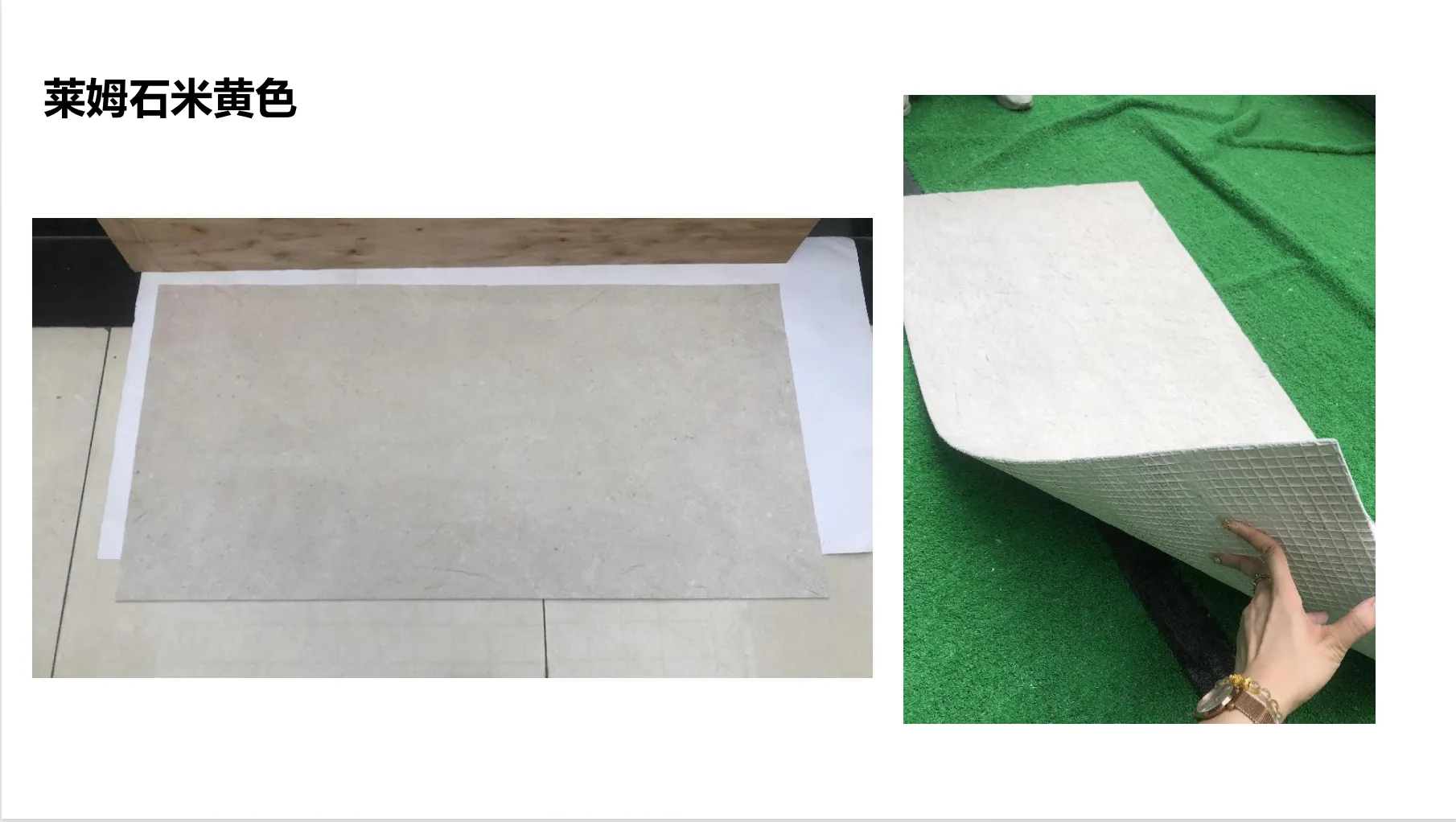
There's a reason lime stone (beige) is a staple in both traditional and contemporary design: it's versatile, warm, and quietly elegant. Real photos of this material showcase its soft, creamy base with delicate, feathery veining in shades of ivory and light taupe. One glance at a photo of a lime stone (beige) accent wall in a boutique hotel lobby, and you'll notice how it balances bold artwork without competing—its texture is subtle, almost powdery, like sun-baked sand. In residential spaces, real photos reveal its chameleon-like quality: paired with warm woods, it feels rustic; with sleek metals, it leans modern. Clients often worry beige will be "boring," but a real photo of it in a sunlit bathroom, where the veining mimics the flow of water, turns that concern into excitement.
If lime stone (beige) is the quiet classic, travertine (starry green) is the showstopper. This material is all about drama: a deep, forest-green base dotted with tiny, iridescent "stars" that catch the light like scattered emeralds. Real photos are crucial here because they capture the magic of those stars—swatches can't replicate how they shift from subtle sparkles in dim light to a galaxy-like glow under bright fixtures. Imagine showing a client a photo of a starry green travertine accent wall in a wine bar: the dark green backdrop makes the bottles pop, while the stars add a touch of whimsy that feels luxurious, not gaudy. Clients often say, "I didn't know stone could look like that!"—and that's the power of real photos: they expand possibilities.
Many clients crave the warmth of wood but fear its upkeep—scratches, water damage, fading. wood grain board solves that problem, and real photos prove it's not a "fake" wood alternative. These photos highlight the material's uncanny resemblance to real timber: the knots, the variation in grain density, even the slight "crackling" texture that mimics aged wood. A real photo of a wood grain board ceiling in a cozy café shows how it softens harsh overhead lighting, creating a space that feels like a cabin retreat. Another photo of it used as kitchen cabinet fronts reveals its durability—no warping, no discoloration, just that same rich, honeyed tone year after year. For clients torn between wood and stone, real photos of wood grain board say, "You can have both."
Fair-faced concrete is the poster child for "raw beauty." It's unpolished, with visible formwork lines and tiny air bubbles that give it character—but to some clients, "concrete" still screams "cold basement." Real photos change that narrative. A photo of a fair-faced concrete fireplace in a modern home shows how its rough texture contrasts beautifully with plush rugs and soft lighting, creating a space that's industrial yet inviting. Another photo of it used as exterior cladding on a bookstore reveals its weathered charm: rain streaks and sun exposure only deepen its patina, making the building feel like it's been part of the neighborhood for decades. Real photos capture the material's duality—tough yet tender—and help clients see beyond the label "concrete" to its artistic potential.
For clients seeking high-end drama, marble interstellar gray delivers. This material is a study in contrasts: a deep, storm-cloud gray base swirled with veins of silver, charcoal, and even hints of blue—like a slice of the night sky frozen in stone. Real photos are essential here because they showcase the uniqueness of each slab; no two pieces have the same veining pattern. A photo of a marble interstellar gray kitchen island, backlit by under-cabinet lights, reveals how the veins glow, turning the island into a functional art piece. In commercial spaces, real photos of it cladding a hotel reception desk exude luxury without being ostentatious—the gray tones keep it grounded, while the veining adds intrigue. Clients often worry marble is too fragile, but real photos of it in high-traffic areas (with proper sealing, of course) put those fears to rest.
To help clients compare these standout materials at a glance, here's a breakdown of their key traits, inspired by real photos:
| Material | Aesthetic Character | Best For | Texture Notes | Visual Vibe |
|---|---|---|---|---|
| Lime Stone (Beige) | Soft, creamy base with subtle ivory veining | Hallways, bathrooms, accent walls | Smooth, slightly powdery surface; warm to the touch | Timeless, calming, earthy |
| Travertine (Starry Green) | Deep green base with iridescent "star" flecks | Statement walls, bars, luxury retail | Matte with a slight sparkle; cool to the touch | Dramatic, whimsical, opulent |
| Wood Grain Board | Natural wood-like grain with knots and color variation | Kitchen cabinets, ceilings, residential living rooms | Warm, tactile texture; mimics real wood grain | Cozy, rustic, inviting |
| Fair-Faced Concrete | Raw, gray base with visible formwork lines and air bubbles | Fireplaces, exterior cladding, modern offices | Rough, industrial texture; cool, solid feel | Edgy, authentic, weathered |
| Marble Interstellar Gray | Dark gray base with silver/blue cosmic veining | Kitchen islands, hotel lobbies, high-end interiors | Smooth, polished surface; cool with a luxe sheen | Luxurious, mysterious, sophisticated |
Real photos are most effective when they're part of a conversation, not just a slideshow. Here are tips to make them work harder for you and your clients:
Selecting stone materials shouldn't be a guessing game. With MCM's real photos, it becomes a journey of discovery—for clients, who get to "try on" materials before committing, and for designers, who gain a powerful tool to educate and inspire. From the timeless charm of lime stone (beige) to the cosmic allure of marble interstellar gray , real photos capture the soul of each material, turning abstract ideas into concrete visions. So the next time a client says, "I'm not sure," pull out a real photo—and watch their eyes light up as they say, "That's it. That's exactly what I want."
After all, the best design decisions aren't just made—they're seen .
Recommend Products












