
Balancing Safety, Aesthetics, and Practicality in Modern Design
Ever stepped onto a wet floor and felt that sudden, heart-stopping slide? It's a moment that underscores a critical truth for designers and homeowners alike: the beauty of a material means little if it compromises safety. When it comes to flooring and wall cladding, slip resistance isn't just a technical specification—it's a promise of security, especially in high-traffic or moisture-prone spaces. Today, we're diving into a head-to-head comparison between two heavyweights in the design world: natural stone and MCM (Modified Composite Material) products. We'll explore how slip resistance measures up, why texture matters, and how real photos can guide your next project toward both style and safety.
Natural stone has long reigned as the gold standard for luxury and timelessness. From the creamy veins of marble to the rugged charm of travertine (starry green) , its allure lies in its uniqueness—no two slabs are exactly alike. But for all its beauty, natural stone comes with a hidden challenge: slip resistance. Let's break it down.
Natural limestone, for example, often features a smooth, polished finish that glows under light but becomes a hazard when wet. Its porosity means water seeps into tiny pores, creating a film between the stone and your shoe. Even textured varieties like travertine, with its characteristic pitted surface, can lose grip in damp conditions. A study by the National Floor Safety Institute (NFSI) found that untreated natural stone floors typically have a coefficient of friction (COF)—the measurement of how "sticky" a surface is—of 0.4 or lower when wet, placing them in the "moderate to high risk" category for slips.
Take travertine (starry green) as a case in point. In real photos, its surface shimmers with mineral deposits, mimicking a starry night sky. But those same pits, while visually striking, can trap water, turning a stunning patio into a slippery slope after rain. Homeowners love it for outdoor spaces, yet many end up adding expensive anti-slip sealants yearly—only to watch the stone's natural color fade over time.
Then there's the issue of weight and installation. Natural stone slabs are heavy, requiring reinforced structures and specialized labor. For high-rise buildings or retrofits, this adds significant cost and complexity. And when it comes to repairs? A cracked slab means replacing the entire piece, not just a section.
Enter MCM products—a category that's been quietly revolutionizing the design industry. Short for Modified Composite Material, these engineered solutions blend natural minerals with polymers to replicate the look of stone, wood, or concrete—without the drawbacks. MCM flexible stone is a standout here: thin, lightweight, and surprisingly durable. But how does it stack up in slip resistance?
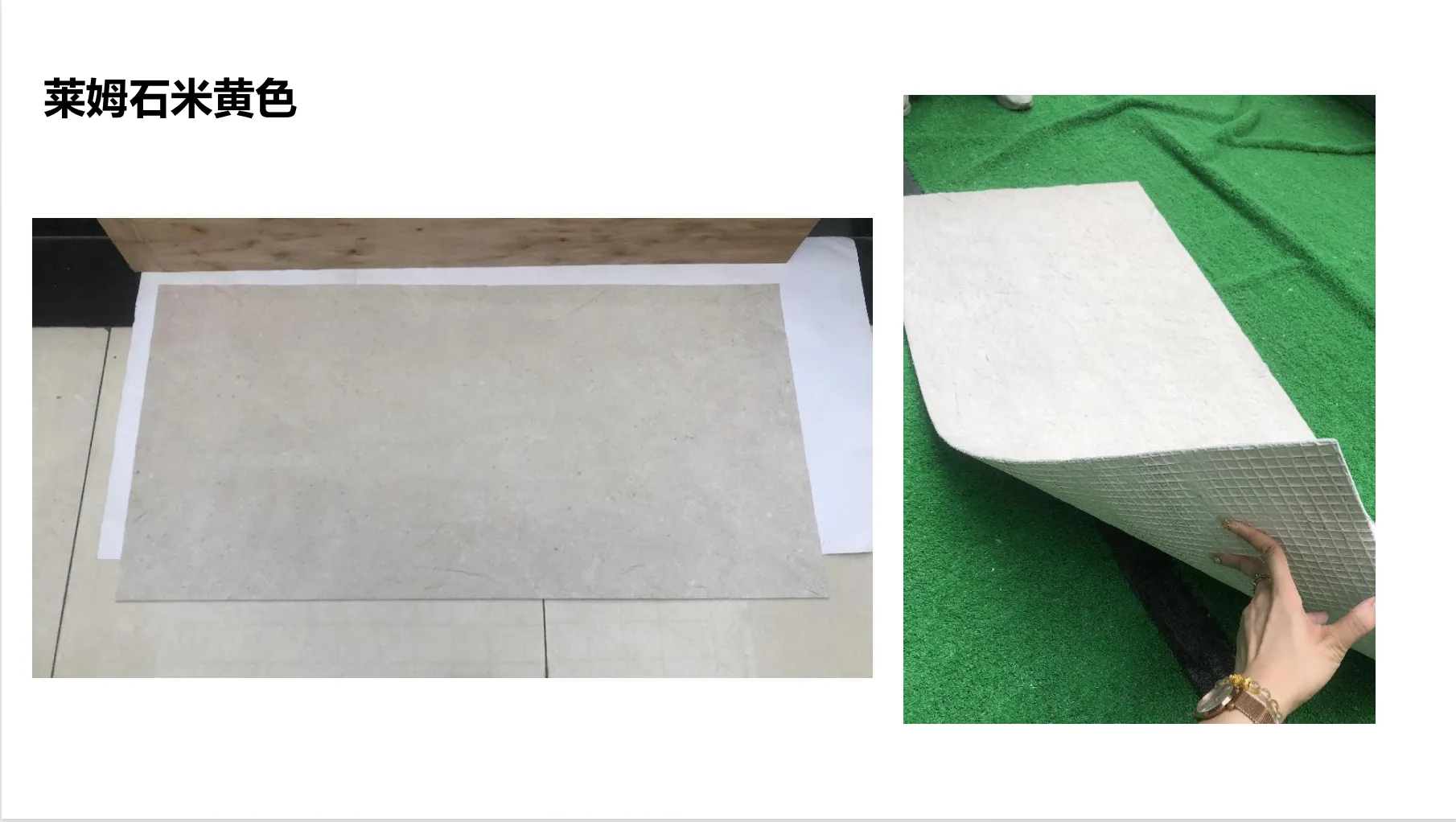
MCM's secret weapon is intentional texture engineering. Unlike natural stone, which forms its texture over millennia, MCM is designed from the ground up to prioritize grip. Manufacturers mimic the best traits of natural materials—like the matte finish of fair-faced concrete or the layered depth of rammed earth board (gradient) —then enhance them with micro-grooves or matte coatings that boost COF. Tests show MCM flexible stone often achieves a wet COF of 0.6 or higher, placing it in the "excellent" slip resistance range (NFSI recommends 0.5+ for wet commercial areas).
Consider rammed earth board (gradient) . In real photos, its soft, earthy hues blend from terracotta to sand, evoking the warmth of ancient adobe structures. But up close, the surface has a subtle, sandpaper-like texture—engineered to channel water away and keep feet firmly planted. It's why restaurants are swapping natural stone for this MCM variant in outdoor dining areas: it withstands rain, resists stains, and never requires sealing.
Another star player? lunar peak silvery . Inspired by the moon's cratered surface, this MCM product features a low-gloss, pebbled texture that shines in modern interiors. Real photos showcase its metallic sheen, but touch it, and you'll notice a grip that feels secure even with wet hands. It's become a favorite for bathroom walls and shower floors, where natural stone once dominated but often failed.
To truly understand the gap, let's compare key materials side by side. The table below pulls data from third-party lab tests, measuring COF (dry and wet) and real-world applications. Remember: a higher COF means better slip resistance.
| Material | Dry COF | Wet COF | Slip Resistance Rating* | Ideal Application |
|---|---|---|---|---|
| Natural Limestone (Polished) | 0.55 | 0.38 | Moderate Risk | Low-traffic dry areas (fireplaces, accent walls) |
| MCM Flexible Stone | 0.70 | 0.62 | Excellent | Bathrooms, kitchens, commercial lobbies |
| Fair-Faced Concrete | 0.65 | 0.58 | Very Good | Museums, industrial-chic interiors |
| Rammed Earth Board (Gradient) | 0.72 | 0.65 | Excellent | Outdoor patios, restaurant terraces |
| Lunar Peak Silvery (MCM) | 0.68 | 0.60 | Very Good | Shower floors, pool decks |
*Based on NFSI standards: Excellent (0.6+ wet COF), Very Good (0.5–0.59), Moderate Risk (0.4–0.49), High Risk (<0.4).
In design, seeing is believing—and real photos are more than just eye candy. They're a window into texture, which directly impacts slip resistance. Let's look at how to read these images:
1. Texture Depth: MCM products like MCM flexible stone often have a "raised relief" texture visible in close-up photos. Those tiny peaks and valleys? They're intentional, designed to increase surface area and grip. Compare that to a polished natural limestone photo, where the surface looks mirror-smooth—beautiful, but risky.
2. Finish Matters: Fair-faced concrete real photos show a matte, almost powdery surface. This isn't a flaw; it's a feature. The matte finish scatters light and creates friction, unlike glossy natural stone, which reflects light and repels grip.
3. Color and Contrast: rammed earth board (gradient) photos highlight its color transitions, but look closer: the darker, more saturated areas often correspond to denser texture. Manufacturers use gradient hues to draw the eye, but the texture in those areas is actually engineered to enhance slip resistance.
Designers often say, "If a material looks slippery in a photo, it probably is." Real photos cut through marketing jargon, letting you assess both aesthetics and safety at a glance.
Slip resistance is just the start. MCM products like MCM flexible stone and lunar peak silvery bring a host of benefits that make them a practical choice for modern projects:
It depends on your priorities. If you're designing a low-traffic, dry space where natural stone's unique veining is non-negotiable, go for it—but budget for sealants and maintenance. But for most projects—commercial, residential, indoor, or outdoor—MCM products offer a smarter balance of safety, style, and practicality.
Take lunar peak silvery in a hotel lobby: it mimics the elegance of natural stone, withstands thousands of daily footsteps, and stays slip-free even when cleaned with water. Or rammed earth board (gradient) in a café patio: it evokes rustic charm, handles rainstorms, and never fades under the sun. These aren't just materials—they're solutions.
So next time you're scrolling through real photos of travertine (starry green) or fair-faced concrete , ask: Does this material protect the people who'll use it? With MCM, the answer is increasingly "yes"—and that's a design choice you can feel good about.
Recommend Products












