
Walk into any thoughtfully designed space, and your eyes might first land on bold colors or sleek furniture—but it's the texture that lingers. The rough warmth of a stone wall, the subtle grain of a wooden table, the smooth coolness of marble—texture is the unsung hero of interior and exterior design, turning flat surfaces into stories. It's tactile, emotional, and deeply human. When it comes to texture, few materials evoke timelessness quite like limestone. For centuries, architects and designers have turned to its soft, porous surface, its earthy hues, and its organic veining to add depth to everything from ancient temples to modern homes. But in recent years, a new player has entered the ring: MCM flexible stone. Engineered to mimic natural textures with modern precision, it's challenging the status quo.
Today, we're diving into the world of limestone textures—natural and MCM—using real photos as our guide. We'll explore how these materials feel, look, and perform, so whether you're a designer hunting for the perfect finish or a homeowner dreaming of a textured accent wall, you'll walk away with a clear picture of which might suit your project best. Let's start with the classic: natural limestone.
Natural limestone is a love letter to the earth's slow, patient craftsmanship. Formed over millions of years from compressed marine sediments—shells, coral, and mineral deposits—it's a sedimentary rock with a texture as unique as a fingerprint. Run your hand across a slab of natural lime stone(beige), and you'll feel its story: tiny pits left by dissolved minerals, faint ridges from ancient tides, and veins of calcite that twist like rivers frozen in time. These aren't flaws; they're character. And in real photos, this character shines.
Take a close-up real photo of natural limestone, and you'll notice details that make each slab one-of-a-kind. Let's start with porosity. Limestone is inherently porous—those small, irregular holes (called vugs) are a result of water dissolving calcium carbonate over millennia. In photos, these pores look like tiny craters, some pin-sized, others large enough to fit a fingertip. They give the stone a "breathable" feel, as if it's still connected to the oceans and lakes where it formed. Then there are the veins: thin streaks of darker or lighter minerals that weave through the stone. In lime stone(beige), these veins might be soft gray or warm gold, meandering like paths on a map. No two veins are identical—one slab might have a thick, dramatic vein cutting diagonally, while the next has a spiderweb of delicate lines.
Color variation is another hallmark. Even within the same quarry, natural limestone can shift from pale cream to deeper beige, with patches of pink or gray depending on the minerals present. A real photo of a natural limestone wall might show a slab where the top half is lighter, the bottom half richer, as if the stone absorbed different amounts of sunlight during formation. This inconsistency is part of its charm. For example, historical pathfinders stone—a type of limestone with a weathered, timeworn texture—looks like it's been pulled straight from an ancient ruin, with rough edges and color gradients that tell of centuries of wind and rain. In photos, you can almost feel the grit under your fingers, the way it would catch the light at dawn, turning from muted to warm.
But this uniqueness comes with trade-offs. Natural limestone is heavy—so heavy that installing large slabs often requires reinforced structures, limiting where it can be used. Its porosity, while charming, makes it prone to staining; a spilled glass of red wine or a rainstorm with acid rain can leave permanent marks if not sealed regularly. And because each slab is a product of nature, consistency is hard to come by. Imagine ordering 10 slabs for a feature wall, only to find one is significantly darker, another has a large crack, and a third is too porous to polish evenly. Real photos of natural limestone installations often highlight these "happy accidents"—a kitchen backsplash where a particularly veiny slab becomes the focal point—but they can also be a source of frustration for designers aiming for a cohesive look.
Yet, for all its challenges, natural limestone remains a favorite for projects where authenticity is non-negotiable. A luxury hotel lobby might use huge travertine (a type of limestone) slabs to evoke grandeur, their unique textures telling guests this space is "one of a kind." A heritage home restoration would lean into historical pathfinders stone to honor the building's past, letting the weathered texture whisper stories of the people who walked its halls decades ago. In these cases, the texture isn't just a design choice—it's a narrative.
Enter MCM flexible stone: a modern material that borrows nature's best ideas and leaves the headaches behind. MCM, or Modified Composite Material, is exactly what it sounds like—a blend of natural minerals, polymers, and fibers engineered to mimic the look and feel of stone, but with a lightweight, flexible twist. And when it comes to limestone textures, mcm flexible stone doesn't just imitate; it elevates. Thanks to technologies like the mcm 3d printing series, manufacturers can replicate even the tiniest details of natural limestone—from the size of its pores to the curve of its veins—with pinpoint accuracy. The result? A material that looks and feels like natural stone, but behaves like a dream.
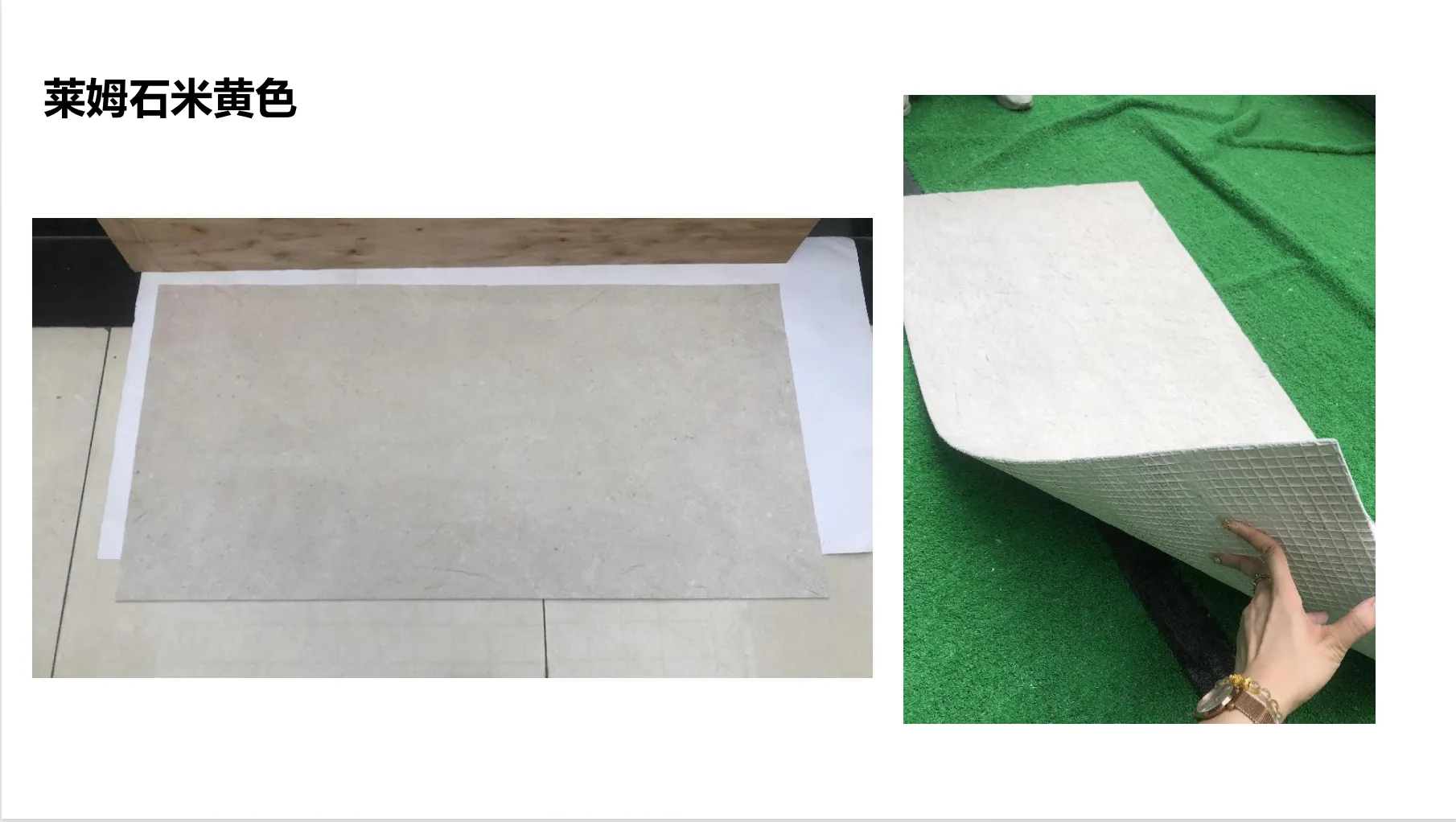
Let's start with the surface. A real photo of mcm flexible stone designed to mimic lime stone(beige) reveals a texture that's uncannily natural—at first glance, you'd swear it's the real thing. But lean in, and the differences emerge. The pores, for example, are there—small, evenly distributed dimples that catch the light just like natural limestone—but they're shallower, more consistent. No random gaping holes, no uneven pits; just a uniform pattern that looks organic without the risk of staining. The veins, too, are intentional. Using 3D printing, designers can map out vein patterns that flow seamlessly across multiple panels, ensuring that a 20-foot wall has a cohesive "river" of gray or gold running through it, rather than disjointed streaks.
MCM's flexibility adds another layer of texture possibility. Unlike rigid natural stone, MCM panels can bend slightly, allowing them to be installed on curved surfaces—a dome, a spiral staircase, or a rounded accent wall. In real photos, this flexibility is invisible in the texture itself (the surface still feels solid and stone-like) but obvious in the design possibilities. Imagine a café with a curved bar front clad in MCM lime stone(beige); the texture wraps around the curve smoothly, no cracks, no breaks, just a continuous wave of warm beige that invites you to run your hand along it.
Color consistency is another win. While natural limestone can shift dramatically between slabs, MCM is mixed in batches, ensuring that every panel in a series matches perfectly. A real photo of a mcm big slab board series limestone panel shows a uniform beige tone, with subtle variations (engineered to mimic nature, of course) but none of the jarring shifts that plague natural stone. This is a game-changer for large projects: a hotel chain can clad 50 rooms with the same limestone texture, and each room will feel cohesive, no surprises.
MCM's texture isn't just about looks—it's built to last. The composite material is resistant to scratches, stains, and moisture, meaning that even in high-traffic areas like lobbies or outdoor patios, the texture stays intact. A real photo of an MCM limestone wall after five years of rain, wind, and foot traffic would show the same crisp pores and veins as the day it was installed, whereas natural limestone might have faded or developed new stains. And because MCM is lightweight (about 1/5 the weight of natural stone), it can be installed on walls, ceilings, and even furniture without structural reinforcement. Imagine a home office with a ceiling clad in MCM limestone panels; the texture adds depth overhead, making the room feel cozy, but the panels are light enough that you don't need to worry about them sagging over time.
To truly understand the texture differences between natural limestone and MCM flexible stone, there's no better tool than real photos. Let's break down key texture aspects and what you'd see if you laid the two materials side by side, camera in hand.
| Texture Aspect | Natural Limestone (Real Photo Insights) | MCM Flexible Stone (Real Photo Insights) |
|---|---|---|
| Porosity | Visible, irregular pores of varying sizes; some large enough to see with the naked eye. In photos, these pores catch light unevenly, creating a "speckled" look in bright light. | Small, uniform pores engineered to mimic natural texture; consistent in size and distribution. In photos, pores look intentional, not random, with even light reflection. |
| Vein Patterns | Disjointed, unpredictable veins; may start and stop abruptly, vary in thickness. A photo of multiple slabs might show veins that don't align, creating a "patchwork" effect. | Seamless, flowing veins mapped across panels; consistent thickness and direction. A photo of a large wall shows veins that connect from one panel to the next, like a painted mural. |
| Color Variation | Significant shifts in tone (light to dark beige, with pink/gray undertones); "blotchy" patches. A photo of a natural limestone slab might have a cream top, beige middle, and gray bottom. | Subtle, controlled variations; uniform base color with engineered "highlights" (e.g., a slightly lighter edge here, a deeper beige spot there). A photo shows consistent tone across the entire panel. |
| Edge Texture | Rough, uneven edges; may have chips or "bites" from quarrying. In photos, edges catch shadows irregularly, looking hand-hewn. | Smooth, precise edges; can be finished to look rough (mimicking natural) or sleek. In photos, edges are straight or intentionally "weathered" but uniform in texture. |
| Tactile Feel (Inferred from Photos) | Looks porous and slightly gritty; you can almost feel the pits and ridges through the photo. May appear "softer" due to irregularities. | Looks smooth yet textured; the surface appears dense and solid, with a "polished" feel even in matte finishes. Pores are visible but feel less "deep" to the touch. |
One of the most striking differences in real photos is how MCM balances "naturalness" with control. A close-up of MCM flexible stone might fool you into thinking it's natural at first glance—the pores, the veins, the slight color shifts are all there—but zoom out, and the cohesion becomes obvious. Natural limestone, by contrast, looks wilder, more untamed, with a texture that feels like it has a life of its own.
Texture isn't just about aesthetics—it's about function, budget, and the story you want your space to tell. Let's look at real-world scenarios where natural limestone or MCM flexible stone would be the better fit, using texture as our guide.
Imagine restoring a 1920s cottage with original limestone walls. The goal is to preserve the home's character, so texture must feel authentically aged. Here, natural limestone—specifically historical pathfinders stone—is the way to go. Real photos of historical pathfinders stone show a weathered texture with deep grooves, uneven color, and a surface that looks like it's been touched by decades of hands. Installing this stone would make the cottage feel like it's continued to age gracefully, its walls holding onto the past. MCM, while convincing, might lack the "soul" of natural stone here; the texture, though similar, would feel too perfect, too new, disrupting the home's historical narrative.
A tech company wants a lobby that feels innovative yet warm, with a 30-foot curved wall as the focal point. The texture needs to be consistent (to keep the space feeling sleek) and lightweight (to avoid reinforcing the curved structure). MCM flexible stone is ideal here. Using mcm big slab board series limestone panels, the design team can create a seamless curve with uniform beige texture, veins that flow around the bend, and no worry about weight. Real photos of the finished wall would show a smooth, continuous texture that looks high-end and intentional, without the hassle of sourcing (and reinforcing for) natural limestone slabs. Plus, MCM's durability means the texture will stay crisp even with daily foot traffic and cleaning.
A restaurant owner wants an outdoor patio with a "rustic chic" vibe, using limestone texture to evoke a Mediterranean courtyard. The space will be exposed to rain, sun, and food spills, so durability is key. Here, MCM flexible stone shines. Unlike natural limestone, which would stain easily and require frequent sealing, MCM resists moisture and stains, keeping its texture intact. Real photos of the patio would show MCM lime stone(beige) panels with a weathered texture (engineered to look like natural stone that's been rained on for years) but no actual damage—no pitting, no discoloration, just a consistent, inviting surface that guests can lean against with a glass of wine without worry.
For a high-end villa, the client wants a fireplace surround that feels opulent and one-of-a-kind. Texture should be rich, with depth that catches the firelight. Here, natural limestone—perhaps a slab of golden travertine(white golden) with bold, irregular veins—would steal the show. In real photos, the travertine's porous surface would glow when the fire is lit, the veins turning from gold to amber, the pits catching and softening the light. The texture feels luxurious because it's imperfect; each vein, each pit, is a mark of nature's artistry. MCM could mimic this, but the fireplace is a focal point where "flaws" are celebrated, making natural stone the more emotional choice.
At the end of the day, choosing between natural limestone and MCM flexible stone comes down to what you value most: the wild, unpredictable beauty of nature, or the controlled, durable precision of engineering. Both have texture stories to tell—stories that real photos help bring to life.
Natural limestone is for the dreamers, the preservationists, the ones who believe that imperfection is perfect. Its texture is a conversation starter, a link to the earth's past, and a reminder that beauty takes time. MCM flexible stone is for the innovators, the problem-solvers, the ones who want the look of nature without the limitations. Its texture is a testament to human ingenuity, proving that we can honor the past while building for the future.
Whichever you choose, let real photos be your guide. They'll show you not just what the texture looks like, but how it feels—how it catches the light at dawn, how it interacts with other materials, how it will age over time. Because in design, texture isn't just seen—it's felt. And the right texture can turn a space from ordinary to unforgettable.
So, grab a sample, snap a photo, and let the texture tell you its story. Whether it's the rough, ancient whisper of natural limestone or the smooth, intentional hum of MCM flexible stone, your space deserves a texture that feels like home.
Recommend Products












