
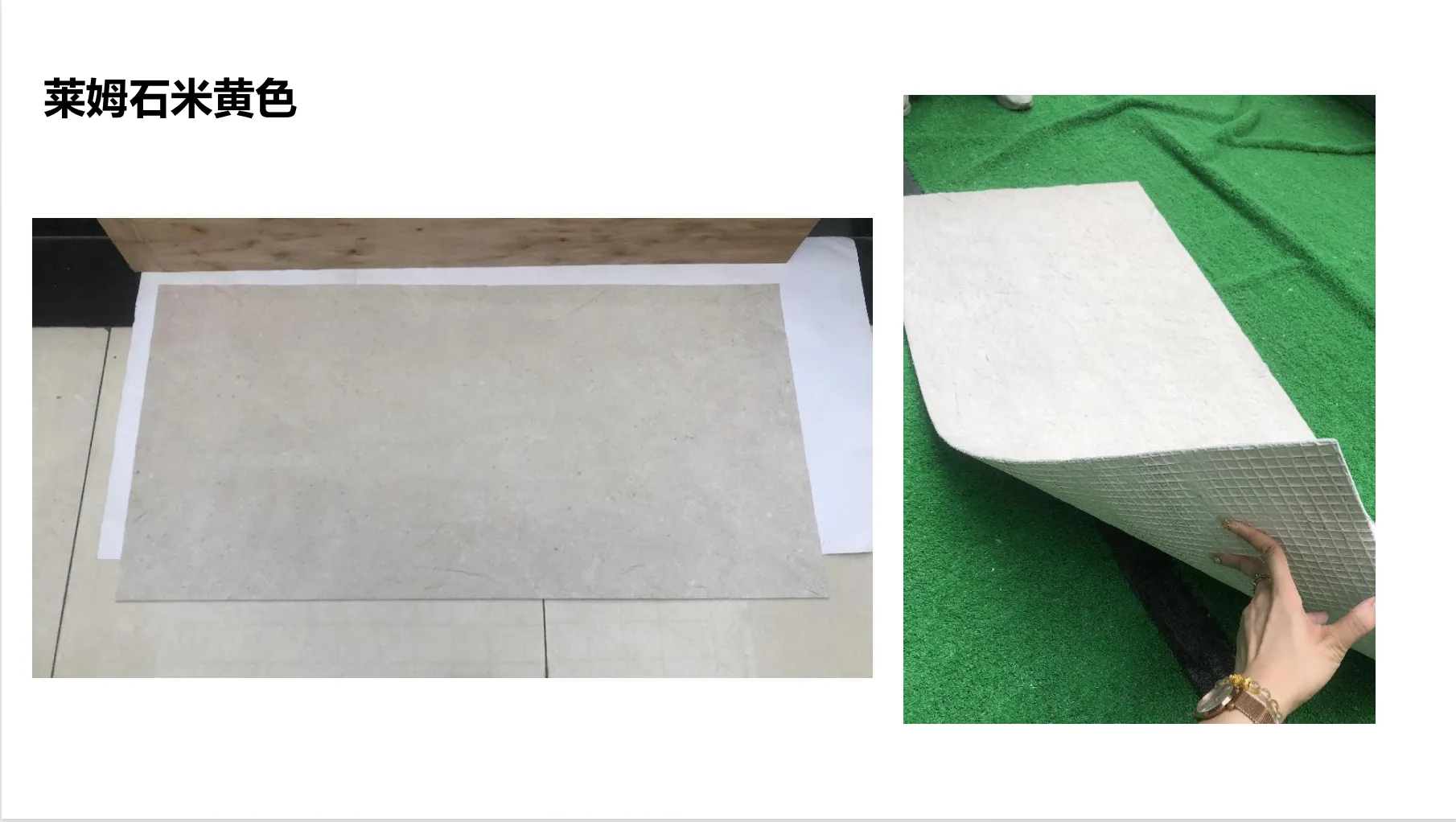
Let's start with a scenario we've all lived through, whether we're architects, contractors, or project managers: You're sitting at your desk, staring at a stack of construction tender documents. They all blend into one another—generic blueprints, recycled project descriptions, and stock photos that look like they were pulled from a 2005 catalog. One after another, they promise "high-quality materials" and "innovative design," but none of them make you feel confident. None of them make you think, "This team gets it. They understand what we need."
Now, imagine flipping to the next tender. Instead of a blurry stock image of a "natural stone wall," there's a crisp, sunlit photo of lime stone(beige) panels installed on a recent hospital lobby—you can see the subtle veining in the stone, the way the light catches its texture, even the faint shadow of a worker's tool left in the mortar. Next to it, a close-up of fair-faced concrete columns paired with the lime stone, showing how the materials complement each other in real life. Suddenly, this tender isn't just a document anymore. It's a story. And stories win tenders.
In an industry where trust is everything, authenticity sells. And when it comes to construction materials—especially statement pieces like lime stone, mcm flexible stone, or architectural big slab solutions—real photos aren't just nice to have. They're the difference between blending in and standing out. In this article, we'll dive into why lime stone real photos (and authentic visuals, in general) are non-negotiable for modern construction tenders, how to use them effectively, and why they're the secret weapon for winning over even the most skeptical clients.
Stock photos and 3D renderings have their place—they're quick, cheap, and easy to source. But in construction tenders, they're a liability. Here's why:
First, they're generic . A stock photo of "travertine tiles" could be from a bathroom in Paris or a kitchen in Peoria. It doesn't show your work, your craftsmanship, or how the material performs in your client's specific context. Clients don't want to hire a team that uses the same images as everyone else—they want to hire a team that has proof of their expertise.
Second, they're often misleading. Renderings, for all their polish, can overpromise. A 3D model might make lime stone(beige) look brighter or smoother than it does in reality, leading to disappointed clients when the final product doesn't match. Stock photos, too, are heavily edited—saturation cranked up, flaws airbrushed out—to the point where they no longer represent the material's true character. And in construction, character matters. The slight variations in lime stone's color, the natural pitting in its surface, the way it ages over time—these are the details that make a project unique. Hiding them with fake visuals erodes trust before the project even starts.
| Stock Photos/Renderings | Real Material Photos |
|---|---|
| Generic and impersonal—could belong to any project | Specific to your work—shows your craftsmanship and attention to detail |
| Often over-edited, hiding flaws or misrepresenting color/texture | Honest and authentic—highlights the material's true character |
| Fail to show material performance in real-world contexts (e.g., weathering, lighting) | Demonstrate how materials look/install in actual projects (e.g., lime stone in a sunlit vs. shaded area) |
| Read as "lazy" or "unprepared" to clients | Signal professionalism and confidence in your work |
Real photos, on the other hand, do the opposite. They're proof. They say, "We've done this before, and here's exactly how it turned out." When you include a photo of lime stone(beige) panels you installed on a school cafeteria, complete with the scuff marks from kids' backpacks and the way the stone has mellowed in the sun, you're not just showing a material—you're telling a story of durability, functionality, and real-world performance. Clients don't just see stone; they see a partner who's transparent, experienced, and proud of their work.
Before we dive into how to photograph lime stone, let's talk about why it's such a star material in the first place. Lime stone(beige) isn't just another construction material—it's a chameleon. It works in modern high-rises and historic renovations, in commercial plazas and residential homes. Its warm, neutral tone pairs seamlessly with bold accents (think rusty red metal trim or deep green landscaping) or other understated materials like fair-faced concrete. It's durable enough for high-traffic areas but elegant enough for lobbies and reception spaces. In short, it's a workhorse with style—and that makes it a staple in construction tenders.
But here's the thing: Lime stone(beige)'s beauty lies in its imperfection. No two panels are exactly alike. Some have deeper beige hues, others lean toward cream; some have thick, wavy veining, others have tiny, scattered flecks. These variations are what make it feel organic, alive, and real . But they're also hard to convey with words alone. A description like "natural beige lime stone with subtle veining" could mean anything to someone who hasn't seen it in person. That's where real photos come in.
Take, for example, a recent tender for a boutique hotel renovation. The client wanted a "timeless, earthy lobby" but was torn between lime stone(beige) and travertine (vintage gold). The contractor who won? They included side-by-side real photos: lime stone(beige) installed in a similar hotel lobby, with morning light streaming through floor-to-ceiling windows, highlighting its warm base and soft veining; and travertine (vintage gold) in a restaurant setting, showing its more golden undertones and porous texture. The client didn't just read about the materials—they saw how they'd look in their space, at different times of day, with different lighting. They could imagine guests walking across the lime stone floors, the way the stone would age gracefully over the years. The decision became easy.
That's the power of real photos for lime stone(beige): They turn abstract descriptions into tangible experiences. They let clients visualize the end result, which is half the battle in winning a tender.
Of course, no construction project relies on a single material. Lime stone(beige) might be the star, but it needs supporting players to shine. That's where other materials like mcm flexible stone, fair-faced concrete, and architectural big slab solutions come into play—and where their real photos become just as critical.
Let's say you're pitching a corporate office project that uses lime stone(beige) for the lobby floors and mcm flexible stone for the accent walls. Mcm flexible stone is a game-changer here: it's lightweight, easy to install, and can mimic the look of natural stone, brick, or even wood—all while being more durable and cost-effective. But again, words alone won't sell it. A client might wonder, "Is it really as flexible as they say? Will it match the lime stone's texture? How does it hold up in high-traffic areas?"
Enter real photos: A shot of mcm flexible stone being curved around a column (proving its flexibility), a close-up of its surface next to lime stone(beige) (showing texture harmony), and a photo of it installed in a busy office hallway (demonstrating durability). Suddenly, the client isn't just hearing about mcm flexible stone—they're seeing its value in action, paired with the lime stone they already love. It's a complete story, not just a list of materials.
Fair-faced concrete is another great example. It's raw, industrial, and modern—perfect for adding contrast to lime stone(beige)'s warmth. But "fair-faced concrete" can mean anything from ultra-smooth to rough and textured. A real photo of fair-faced concrete walls next to lime stone(beige) floors in a university lecture hall shows the contrast in textures: the stone's organic, natural feel against the concrete's sleek, uniform surface. It shows how the two materials balance each other—warmth and coolness, softness and hardness. Clients don't just see materials; they see design intent.
Architectural big slab solutions are another area where real photos make a difference. These large-format slabs (often 1200x2400mm or bigger) are trending in modern construction for their seamless, minimalist look—ideal for open-concept offices, luxury retail, or high-end residential projects. But their size can be intimidating to clients: "Will it look too monolithic? Can it really be installed without visible seams?" A real photo of architectural big slabs in a recent mall renovation—gleaming, joint-free, and spanning an entire wall—answers those questions instantly. It shows the scale, the finish, and the impact of the slabs in a real-world setting. Pair that with lime stone(beige) floors in the same photo, and you've got a cohesive design narrative that's hard to ignore.
When photographing material combinations, always shoot them in context. Don't just take close-ups of lime stone(beige) and mcm flexible stone side by side on a table—show them installed in a real project. Include people in the photo if possible (e.g., a worker installing the mcm stone, a client walking across the lime stone floor). Scale and human presence help clients visualize the materials in their own space. Lighting matters too: shoot at different times of day to show how materials look in natural light, artificial light, and shadow. The more context you provide, the more confident the client will feel.
Let's put this all together with a real-world example. In 2024, a leading construction firm in Dubai was competing for a $5M hospital renovation tender. The project required durable, low-maintenance materials for high-traffic areas (lobbies, corridors) and warm, calming materials for patient rooms. The firm's pitch centered on lime stone(beige) for the public spaces, fair-faced concrete for the corridors, and mcm flexible stone (mimicking wood) for patient room accent walls. But they knew their competitors were offering similar material packages—so they needed to stand out.
Their secret weapon? A 20-page "Material Storybook" filled with real photos from their past projects. Here's how they structured it:
The result? They won the tender. The client later said, "We didn't just see a list of materials—we saw a vision. The photos proved you understood our needs: durability for healthcare, warmth for patients, and attention to detail. We knew you could deliver because we'd already seen you deliver it."
This case study isn't an anomaly. It's a pattern. In competitive tenders, real photos turn "we can do this" into "we've done this, and here's proof." They build trust, reduce risk, and make the client's decision easier. And in a industry where margins are tight and projects are high-stakes, that's invaluable.
So, you're convinced: real photos are a must for your next tender. Now, how do you shoot and use them effectively? Here are actionable tips to make your photos work hard for you:
You don't need a $10,000 camera or a professional photographer (though both help). A modern smartphone with a good camera (iPhone 13+, Samsung Galaxy S22+) and natural light can produce stunning results. The key is to focus on clarity and authenticity. Avoid filters or heavy editing—you want the material to look like it does in real life. If you're shooting indoors, open the curtains or turn on soft, natural-looking lights (avoid harsh overhead bulbs that wash out color). For outdoor shots, shoot in the "golden hour" (early morning or late afternoon) for warm, even light that highlights texture.
Don't just shoot the material—shoot its purpose. For lime stone(beige) in a lobby, show people walking on it, a receptionist standing behind a lime stone desk, sunlight streaming across it. For mcm flexible stone on a wall, show how it's used to hide unsightly pipes or create a focal point. For architectural big slabs, show the seamless look they create in a large space. The goal is to answer the client's unspoken question: "What's in it for me?"
Clients care about the small stuff. For lime stone(beige), take close-ups of its veining, its edge profiles (beveled? straight?), and its finish (polished? honed?). For fair-faced concrete, show the quality of the formwork (no air bubbles, clean edges) and the sealant application (even, no streaks). For mcm flexible stone, show how it's cut to fit around corners or curves. These details prove you're meticulous—something clients value highly.
Don't just dump photos into your tender document. Organize them into a narrative: Start with the material alone (close-ups, texture), then show it in context (installed in a similar project), then show it paired with other materials (lime stone + fair-faced concrete), and finally, show the end result (the finished space, happy clients). This flow takes the client on a journey from "what is this material?" to "I need this material in my project."
Natural materials like lime stone(beige) have flaws—and that's okay! A small chip in a tile, a slightly uneven veining pattern, a spot where the mortar is visible—these aren't mistakes; they're signs of authenticity. Including photos of these "imperfections" shows the client you're transparent. You might even add a caption: "Note the natural veining variation in lime stone(beige) panels—each piece is unique, adding character to your space." Clients appreciate honesty; it builds trust that you won't hide problems down the line.
At the end of the day, construction tenders are about trust. Clients want to hire a team they believe can deliver on their promises, on time and on budget. Generic descriptions, recycled stock photos, and overhyped renderings erode that trust. Real photos—of lime stone(beige), mcm flexible stone, fair-faced concrete, and architectural big slab solutions—build it.
They show that you're proud of your work. That you pay attention to details. That you understand how materials perform in the real world, not just on paper. They let clients visualize the end result, turning abstract ideas into concrete plans (pun intended). And in a crowded field, that visualization is what makes you memorable.
So, the next time you're preparing a tender, skip the stock photos. Grab your camera, head to your job site, and start shooting. Capture the lime stone(beige) in the morning light, the mcm flexible stone curved around that tricky column, the fair-faced concrete walls that came out perfectly on your last project. Turn those photos into a story—your story. Because in construction, as in life, the best stories are the ones that feel real.
And when you win that tender? You'll know it wasn't just about the materials. It was about the trust you built—one real photo at a time.
Recommend Products












