
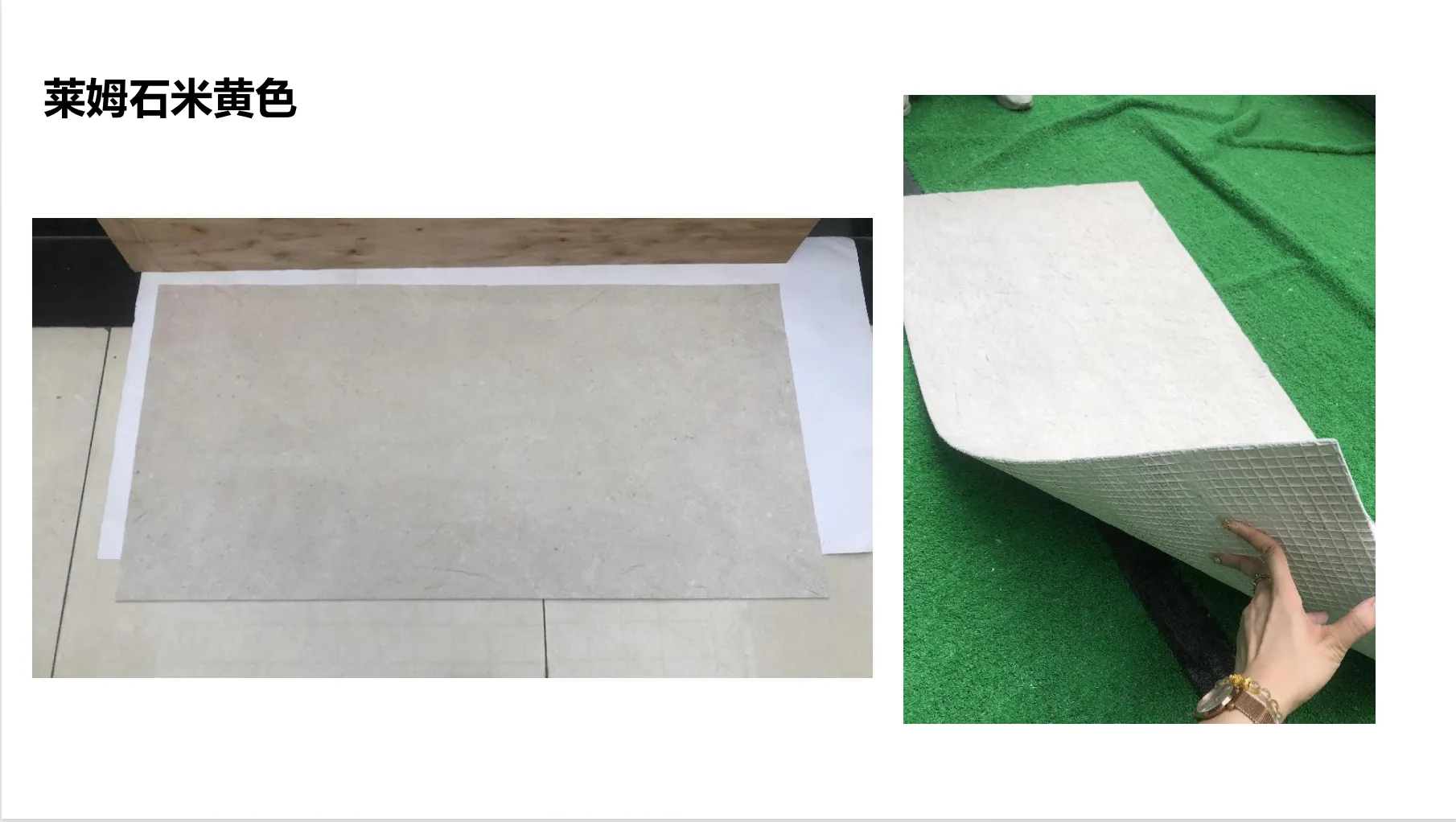
The sun dips low over Riyadh, casting a golden hue across the facade of the newly inaugurated Al-Madina Cultural Center. As I step through the main entrance, my hand brushes against a wall that feels both ancient and alive—rough yet warm, with tiny indentations that catch the light like scattered grains of sand. This isn't just any wall; it's a canvas of materials that tell a story of Saudi Arabia's past, present, and future. Today, we're diving into the heart of this project through the lens of COLORIA's real photos, focusing on the star of the show: lime stone(beige) . But it's not alone. Alongside it, historical pathfinders stone , fair-faced concrete , and masonry stone dance in harmony, proving that building materials are more than just structural—they're emotional, cultural, and deeply human.
Every great project starts with a vision, and the Al-Madina Cultural Center was no exception. "We wanted to create a space that feels like a hug from Saudi heritage," says Lina Hassan, the lead architect at Zaha & Partners, who collaborated with COLORIA on material selection. "The desert isn't just a backdrop here; it's a character. So when we chose materials, we asked: What would the desert choose? What would the ancestors approve of?"
That question led them straight to COLORIA's lime stone(beige) . Sourced from quarries in the Najd region, this stone carries the DNA of the Saudi landscape. Its beige tone—soft, not stark—echoes the color of the desert at dawn, while its subtle veining (visible in COLORIA's close-up photos) mimics the patterns of wind-blown sand. "It's not a stone that shouts," Hassan explains. "It whispers, and that's exactly what we needed for a space dedicated to storytelling."
But a whisper needs context to be heard. To ground the lime stone(beige) in history, the team paired it with historical pathfinders stone —a material designed to look like the weathered rocks that once guided traders along ancient caravan routes. "In the real photos, you can see how we used it for the center's outdoor walkways," Hassan points out. "Run your finger over it, and you'll feel the 'scars'—intentional textures that make you think of feet treading those paths for centuries. It's a tactile link to our past."
Let's zoom in on the star. COLORIA's real photos of the lime stone(beige) reveal a material that's equal parts practical and poetic. Close-up shots capture its surface: a matrix of tiny pores and fossilized fragments (remnants of ancient marine life, a nod to the region's prehistoric past) that give it a porous, breathable quality. "That porosity is key," says Khalid Al-Mansoori, COLORIA's Saudi Arabia project manager. "In Riyadh's harsh climate, where temperatures swing from scorching days to cool nights, the stone regulates humidity naturally. It breathes, so the building breathes."
But it's the color that steals the show. In the photos taken at midday, the lime stone(beige) glows with a warm, honeyed light, softening the harsh sun and making the center's outdoor plazas feel inviting even in summer. At sunset, as captured in COLORIA's dusk shots, it shifts—taking on the pink and orange tones of the sky, as if merging with the horizon. "We had a moment during construction where the workers stopped to watch that sunset effect," Al-Mansoori recalls with a smile. "One of them said, 'This stone isn't just on the building—it's part of the sky.' That's the emotional impact we chase."
The stone's versatility is another win. In the main hall, it's used as large slabs for the feature wall, polished just enough to reflect light buting enough texture to feel organic. In the children's exhibit area, smaller, irregularly shaped pieces are arranged like a puzzle, encouraging little hands to explore. "We didn't want it to feel precious," Hassan notes. "Lime stone(beige) is durable, yes, but it's also approachable. Kids can touch it, lean against it, and that's how memories are made."
A single material can't carry a project alone—and lime stone(beige) doesn't have to. The Al-Madina Center's magic lies in how it plays with contrasts, and COLORIA's photos highlight these pairings beautifully. Take the entrance hall: a wall of lime stone(beige) stretches 20 meters, interrupted only by vertical strips of fair-faced concrete . The concrete—raw, gray, and sleek—acts as a modern counterpoint, its smoothness emphasizing the stone's texture. "It's like a conversation between past and present," Hassan says. "The concrete says, 'We're moving forward,' while the stone replies, 'But we remember where we came from.'"
Then there's the masonry stone , used in the center's courtyard arches. Quarried from the Asir region, this stone is cut into irregular blocks, stacked with visible mortar joints that evoke the traditional Najdi architectural style. In COLORIA's photos, the arches frame the lime stone(beige) walls beyond, creating a layered effect that feels both protective and open. "Masonry stone is about craft," Al-Mansoori explains. "Each block is placed by hand, by artisans who've been doing this for generations. You can see their skill in the photos—the way the joints are uneven, but perfectly so. It's not about perfection; it's about personality."
And let's not forget the wild card: bali stone , used sparingly in the center's café area. With its rich, earthy reds and blacks, it adds a pop of color that nods to Saudi Arabia's diverse landscapes—from the red deserts of the south to the volcanic rocks of the west. "We wanted a touch of the unexpected," Hassan laughs. "In COLORIA's photos of the café, the bali stone backsplash next to the lime stone(beige) tables looks like a desert flower growing from sand. It's a reminder that beauty often comes from mixing things up."
Photos are powerful, but they can't always capture the full sensory experience. Still, COLORIA's real photos of the Al-Madina Center come close. Let's walk through a few moments that stand out:
"Materials don't just build spaces—they build feelings. When you walk into a room and feel at home, or curious, or inspired, that's the materials working. Lime stone(beige) here? It feels like home. It's warm, it's familiar, and yet it's new. That's the magic." — Lina Hassan, Lead Architect
| Material Name | Visual Characteristics | Application in the Project | Emotional Resonance |
|---|---|---|---|
| lime stone(beige) | Soft beige with porous texture, subtle veining, fossilized fragments | Main facade, interior feature walls, flooring | Warmth, connection to desert landscape, timelessness |
| historical pathfinders stone | Weathered, earthy tones, intentional "scars" and indentations | Outdoor walkways, seating benches | Nostalgia, link to ancient trade routes, storytelling |
| fair-faced concrete | Sleek, gray, smooth surface with visible formwork marks | Vertical accents, ceiling panels, modern art installations | Modernity, strength, forward-thinking |
| masonry stone | Irregular blocks, rough texture, visible mortar joints | Courtyard arches, decorative columns | Craftsmanship, tradition, community (handmade by local artisans) |
| bali stone | Rich reds and blacks, marbled pattern | Café backsplash, accent walls | Energy, diversity, celebration of Saudi Arabia's varied landscapes |
The Al-Madina Cultural Center isn't just a building—it's a statement. In a region rapidly embracing modernity, it asks: How can we build for the future without erasing the past? The answer, as COLORIA's photos show, lies in materials that honor both. Lime stone(beige), historical pathfinders stone, fair-faced concrete—these aren't just choices; they're commitments.
"Young Saudi architects often ask me, 'How do we make our buildings feel Saudi?'" Hassan says. "My answer is always: Look to the land. Look to the materials that have been here for millennia. COLORIA gets that. Their range isn't just about aesthetics; it's about identity. When you use lime stone(beige) from Najd, you're not just building a wall—you're building a sense of place."
Al-Mansoori agrees. "We're not just suppliers; we're storytellers," he says. "Our real photos don't just showcase materials—they showcase possibilities. A school in Jeddah using historical pathfinders stone to teach kids about their heritage. A hotel in Dammam pairing fair-faced concrete with masonry stone to welcome tourists with both modern comfort and local soul. That's the impact we want."
As I leave the Al-Madina Cultural Center, the sun has set, and the lime stone(beige) walls are now bathed in soft, artificial light. They look different now—warmer, more intimate—as if the stone itself is settling in for the night. I think of the photos COLORIA took here: the dawn shots, the midday glow, the sunset magic. Each one tells a part of the story, but the full story is in the experience—the way the stone feels, the way the light changes it, the way it makes you feel connected to something bigger.
Lime stone(beige), historical pathfinders stone, fair-faced concrete, masonry stone—these are more than materials. They're the words in a love letter to Saudi Arabia. And thanks to COLORIA's real photos, that love letter is now visible to the world. So the next time you walk past a building, take a moment to look closer. Touch the walls. Notice the materials. You might just find a story waiting to be told.
Recommend Products












