


In the heart of the Arabian Peninsula, where the desert sun meets ambitious skylines, Saudi Arabia's construction boom is rewriting the rules of architectural possibility. From Riyadh's glittering commercial districts to Jeddah's coastal cultural hubs, developers and architects aren't just building structures—they're crafting stories. And at the center of many of these stories lies COLORIA, a name synonymous with innovative building materials that blend durability, beauty, and soul. Today, we're diving into the real-world impact of COLORIA's creations, focusing on the lime stone(beige) that warms desert-inspired facades, the mcm flexible stone that bends to modern design dreams, and the historical pathfinders stone that breathes life into heritage sites. These aren't just materials; they're the quiet heroes behind Saudi Arabia's most transformative spaces.
Historical Pathfinders Stone: Restoring History, One Stone at a Time
Step into the courtyard of the Al-Madinah Heritage Fort, and you'll feel time slow down. The 19th-century structure, once a crumbling relic of Saudi Arabia's past, now stands tall, its walls whispering tales of caravans, traders, and the resilience of desert communities. But this revival wasn't easy. When the restoration team first assessed the fort in 2021, they faced a daunting challenge: the original stone, weathered by decades of sandstorms and sun, was too fragile to reuse. "We needed something that could mimic the fort's weathered texture—those tiny pits, the soft edges, the way the stone seems to hold the memory of every raindrop and sand grain," says Lina Hassan, the lead architect on the project. "That's when we turned to COLORIA's historical pathfinders stone."
Historical pathfinders stone isn't just a product; it's a collaboration. COLORIA's team spent weeks studying the original stone, taking samples, and analyzing its composition. The result? A custom-crafted material that the fort's unique patina—right down to the subtle variations in color that make each stone feel one-of-a-kind. "When we laid the first panel, I had to double-check," Hassan recalls with a laugh. "It looked so much like the original, I thought we'd accidentally reused a piece of the old wall. But this wasn't just about looks. The historical pathfinders stone is reinforced with modern polymers, so it's stronger than the original, but it still bends and weathers like natural stone. It's history, but smarter."
Today, the fort welcomes over 500 visitors daily, many pausing to run their hands over the walls. "Kids ask if these are the same stones the soldiers touched 200 years ago," Hassan says. "In a way, they are. COLORIA didn't just restore a building—they gave us back a piece of our identity."
MCM Flexible Stone: Modern Design, Unchained
If historical pathfinders stone is about honoring the past, mcm flexible stone is about reimagining the future. Nowhere is this clearer than at the Dammam Sky Tower, a 42-story commercial hub that juts into the city's skyline like a shard of polished obsidian. Designed by award-winning architect Omar Khalid, the tower's facade features a series of undulating curves—a bold choice that would have been impossible with traditional stone. "Natural stone is heavy, rigid, and unforgiving," Khalid explains. "To achieve those curves, we would have needed custom-cut blocks, months of labor, and a budget that would make any developer wince. Then we discovered COLORIA's mcm flexible stone."
MCM (Modified Composite Material) flexible stone is a game-changer: thin (just 3mm thick), lightweight (a fraction of the weight of natural stone), and surprisingly flexible. "It's like working with a high-end fabric, not stone," says Ahmed Rajab, the project's lead contractor. "We could roll it, bend it, even wrap it around the tower's curved corners without a single crack. Installation time? Cut in half. Labor costs? Down by 30%. And the result? Those curves—they're not just lines on a blueprint anymore. They're alive."
Two years after completion, the tower's mcm flexible stone facade still turns heads. "People stop and take photos all the time," Rajab grins. "They think it's marble or granite, but when I tell them it's this thin, flexible material? They don't believe me until I tap it—light as a feather, but tough as nails. Last summer, we had a sandstorm that peeled paint off neighboring buildings, but the mcm stone? Not a scratch. It's like it was made for Saudi's climate."
Lime Stone(Beige): The Warmth of Home
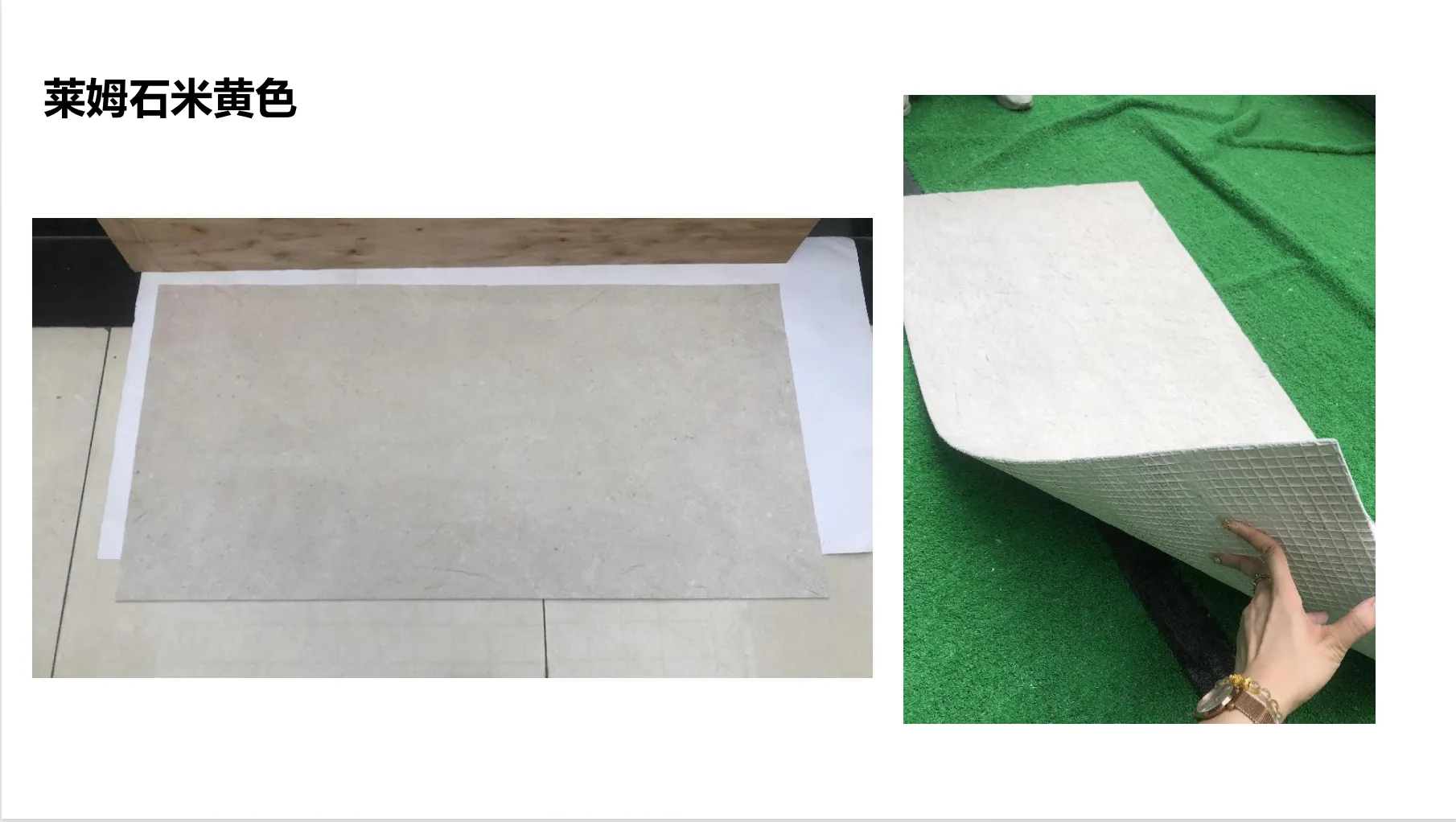
Not all of COLORIA's stories are about skyscrapers or fortresses. Some are about the quiet, everyday moments that make a house a home. Take the Al Khobar Residences, a 200-unit residential complex nestled between the city and the Red Sea. When developer Fatima Al-Sayed first envisioned the project, she wanted more than just apartments—she wanted a community that felt rooted in Saudi's landscape. "Too many modern developments feel cold, like they could be anywhere in the world," she says. "I wanted something that whispered 'this is home'—something warm, earthy, and connected to the desert."
Her answer? Lime stone(beige). "There's a reason the desert is called the 'golden sea'," Al-Sayed explains. "That warm beige hue, the way it shifts from honey to sand to amber as the sun moves—It's part of our DNA. COLORIA's lime stone(beige) captures that magic. It's not just a color; it's a feeling."
Walk through the complex today, and you'll see what she means. The lime stone(beige) clads everything from the exterior walls to the courtyard pathways, its subtle veining and soft texture inviting residents to touch, linger, and connect. "My daughter loves drawing on the patio floor with chalk," says resident Layla Muhammad. "The lime stone(beige) is smooth enough that the chalk glides, but not so polished that it feels sterile. And in the morning, when the sun rises over the sea, the walls glow like they're lit from within. It's not just a building material. It's why this place feels like family."
For Al-Sayed, the success is in the details. "We had a resident tell us they chose their unit because of the way the lime stone(beige) looked at sunset," she says. "That's the power of COLORIA's materials—they don't just build spaces. They build memories."
Fair-Faced Concrete & Epoch Stone: Where Industry Meets Art
In Jeddah's arts district, a new cultural center is challenging what a "cultural space" can be. The Al-Faisal Arts Pavilion, designed to host exhibitions, workshops, and performances, marries raw industrial edge with timeless elegance—thanks in no small part to COLORIA's fair-faced concrete and epoch stone. "We wanted a space that felt both grounded and aspirational," says lead architect Zainab Ali. "Fair-faced concrete gives that honest, unapologetic industrial vibe—no paint, no polish, just the beauty of the material itself. Then we layered in epoch stone for the accent walls—deep, rich, and full of character. Together, they tell a story: Saudi's industrial past and its artistic future, side by side."
Fair-faced concrete is a study in restraint. Unlike traditional concrete, which is often covered or painted, it's left exposed, its natural texture and slight imperfections celebrated. "It's not about being perfect," Ali explains. "It's about being real. When you run your hand over it, you can feel the grain of the wood formwork, the tiny air bubbles that make each panel unique. It's concrete with a soul."
Epoch stone, with its deep, earthy tones and subtle shimmer, acts as the perfect counterpoint. "We used it for the entrance hall's feature wall, behind the reception desk," says project manager Kareem Nasser. "It's a rich, dark gray with flecks of gold that catch the light. People walk in, and they stop. They don't just see a wall—they see art. A local artist even asked if she could base a painting on it."
Six months after opening, the pavilion has become a hub for Jeddah's creative community. "Artists love it because the space doesn't compete with their work—it elevates it," Ali says. "Fair-faced concrete and epoch stone don't scream for attention. They create a canvas. And that's the beauty of COLORIA's materials: they know when to lead and when to follow."
Project Spotlight: COLORIA's Impact in Numbers
Behind every story is data that tells its own tale. Here's a snapshot of how COLORIA's materials have transformed Saudi Arabian construction sites:
| Project Name | Location | Key Materials | Completion Year | Client Feedback |
|---|---|---|---|---|
| Al-Madinah Heritage Fort | Madinah | Historical Pathfinders Stone, Lime Stone(Beige) | 2023 | "COLORIA didn't just restore a building—they gave us back a piece of our identity." – Lina Hassan, Lead Architect |
| Dammam Sky Tower | Dammam | MCM Flexible Stone | 2022 | "Lightweight, durable, and stunning—exactly what we needed for our landmark project." – Ahmed Rajab, Lead Contractor |
| Al Khobar Residences | Al Khobar | Lime Stone(Beige) | 2024 | "The lime stone(beige) isn't just a material—it's why this feels like home." – Layla Muhammad, Resident |
| Al-Faisal Arts Pavilion | Jeddah | Fair-Faced Concrete, Epoch Stone | 2023 | "They create a canvas for creativity." – Zainab Ali, Lead Architect |
Beyond the Stone: COLORIA's Promise to Saudi Arabia
At the end of the day, COLORIA's success in Saudi Arabia isn't just about materials—it's about partnership. "We don't just sell products; we solve problems," says Malik Al-Zahrani, COLORIA's regional director. "An architect needs a stone that bends? We create mcm flexible stone. A developer wants to honor heritage? We craft historical pathfinders stone. A family wants a home that feels warm? We deliver lime stone(beige). It's about listening, adapting, and understanding that every project has a story."
As Saudi Arabia continues to grow—building cities, preserving heritage, and dreaming big—COLORIA is right there with it, one stone, one panel, one story at a time. "These real photos from construction sites? They're more than just documentation," Al-Zahrani says. "They're proof that building materials can be more than functional. They can be emotional. They can be part of the fabric of a nation."
So the next time you walk past a striking facade in Riyadh, a restored fort in Madinah, or a cozy home in Al Khobar, take a closer look. Chances are, you're looking at more than stone or concrete. You're looking at a COLORIA story—one that's still being written.










