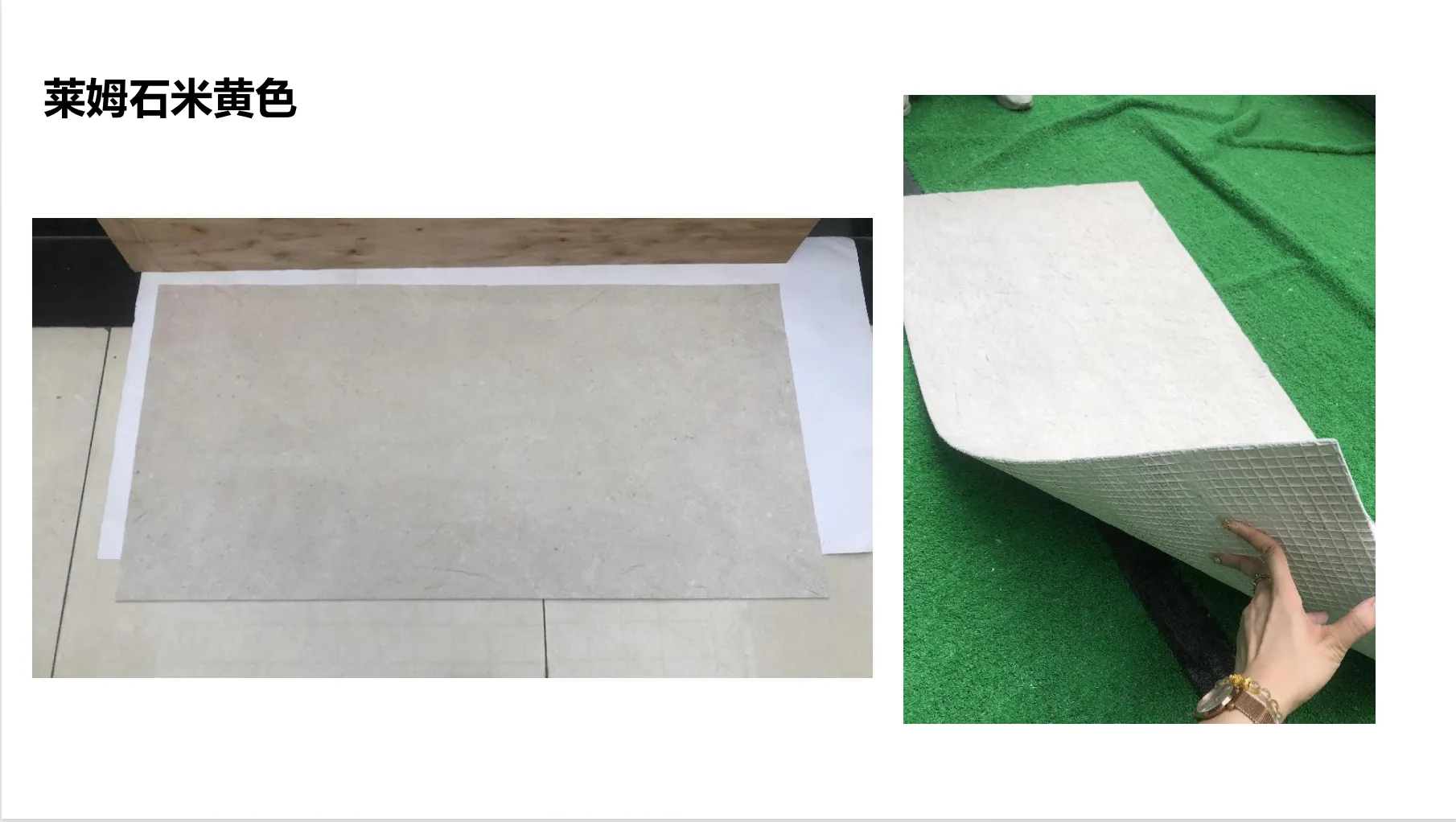
Stone has always been more than just a building material—it's a silent storyteller. For centuries, limestone has graced the walls of ancient temples, medieval castles, and colonial-era homes, each weathered crevice holding tales of time. Today, as we flip through real photos of these historical structures, we're struck by the raw, unpolished beauty of lime stone (beige)—its warm, earthy tones softening under sunlight, its porous surface bearing the marks of rain, wind, and human touch. But as architecture evolves, so too does our relationship with stone. Enter Modern Composite Materials (MCM), a revolution that marries the timeless allure of natural stone with the innovation of modern engineering. Let's journey through history and modernity, exploring how limestone's legacy lives on in MCM's cutting-edge designs.
Historical Limestone: The Texture of Time
Imagine standing before a 12th-century cathedral, your hand brushing against its exterior walls. The lime stone (beige) here isn't smooth or uniform—it's alive with texture. Tiny fossils, embedded millions of years ago, peek through the surface like hidden secrets. Rainwater has etched delicate grooves, turning corners into gentle curves, while centuries of foot traffic have worn the stone steps into a soft, inviting slope. Real photos of such buildings capture this intimacy: a close-up of a limestone column in Rome, where the stone has faded to a warm ivory, streaked with honey-colored veins; a snapshot of a French chateau's facade, where the stone has darkened in patches, as if blushing from the passage of time.
Limestone's charm lies in its imperfection. Unlike modern materials that strive for flawlessness, historical limestone wears its age proudly. A palace in Persia, its lime stone (beige) walls now cracked and pitted, tells of battles and sieges; a Greek temple, its columns chipped by earthquakes, stands as a testament to resilience. These real photos aren't just images—they're tactile experiences. You can almost feel the rough-hewn surface under your palms, smell the earthy scent of stone after rain, and hear the echo of footsteps that once traversed these halls.
The Modern Shift: MCM's Answer to Tradition
Yet, for all its beauty, traditional limestone has limitations. It's heavy, making it difficult to install on high-rise buildings; porous, requiring constant sealing to resist stains; and inconsistent, with natural variations that can disrupt a designer's vision. Enter MCM, a category of materials that reimagines stone for the 21st century. At the forefront is
MCM flexible stone
—a lightweight, durable alternative that captures the look and feel of natural stone but bends, cuts, and installs with the ease of a fabric.
Real photos of MCM applications reveal a striking contrast: a sleek, contemporary office building clad in
lunar peak silvery
, its metallic sheen glinting like moonlight on water; a boutique hotel featuring
travertine (starry blue)
, where the stone's surface shimmers with embedded glass particles, mimicking a night sky. These aren't just materials—they're design tools that let architects blend heritage with innovation. A restaurant might pair
lime stone (beige)
accents (echoing historical warmth) with
foamed aluminium alloy board (vintage gold)
panels (adding a modern, industrial edge), creating a space that feels both familiar and fresh.
|
Aspect
|
Historical Limestone (Beige)
|
Modern MCM (e.g., Lunar Peak, Travertine Starry Series)
|
|
Texture
|
Rough, porous, with natural fossils and weathered grooves; tells a story of age.
|
Controlled texture—can replicate limestone's roughness or offer smooth, uniform finishes; consistent across panels.
|
|
Durability
|
Prone to chipping, staining, and water damage over time; requires regular maintenance.
|
Water-resistant, fire-retardant, and scratch-proof; designed to withstand harsh climates with minimal upkeep.
|
|
Installation
|
Heavy and labor-intensive; requires structural support for large slabs.
|
Lightweight (up to 80% lighter than natural stone); can be installed on walls, ceilings, and even curved surfaces.
|
|
Aesthetic Versatility
|
Limited to natural hues (beige, ivory, soft gray); variations are unpredictable.
|
Wide color range:
lunar peak golden
,
travertine (starry red)
,
foamed aluminium alloy board (vintage silver)
, and more; custom colors available.
|
|
Environmental Impact
|
Quarrying can disrupt ecosystems; high carbon footprint due to transportation of heavy stone.
|
Recyclable materials, low VOC emissions, and energy-efficient production; reduces waste with precise panel sizing.
|
Spotlight: Lunar Peak Series—Where History Meets the Cosmos
One of MCM's most captivating innovations is the
lunar peak
line, which includes
lunar peak silvery
,
lunar peak golden
, and
lunar peak black
. Real photos of these panels showcase a surface that mimics the moon's cratered landscape—rough, uneven, and mysteriously beautiful. Yet, unlike natural stone, which takes millions of years to form,
lunar peak panels are engineered to be lightweight and strong. A recent project in Tokyo used
lunar peak golden
to clad a museum extension, its warm, metallic glow complementing the original limestone building next door. It's a dialogue between past and present: the old stone whispers of history, while the new panels shout of progress.
Starry Travertine: MCM's Love Letter to the Night Sky
If limestone is the stone of earth,
travertine (starry green)
,
starry red
, and
starry blue
are MCM's love letters to the cosmos. Real photos of these materials are breathtaking: under daylight, they resemble traditional
travertine, with creamy backgrounds and subtle veining. But as evening falls, embedded glass particles catch the light, turning the surface into a starry canvas. A rooftop bar in Barcelona, for example, used
travertine (starry blue)
for its bar counter, creating the illusion of sipping cocktails under a midnight sky.
What's remarkable is how these MCM materials honor
travertine's natural heritage.
Travertine, like limestone, is a sedimentary rock formed by mineral-rich water. MCM's starry series doesn't just copy its look—it captures its essence, then adds a twist. It's as if the stone itself has evolved, trading the constraints of the earth for the boundless possibilities of design.
Foamed Aluminium Alloy: MCM's Industrial Charm
For spaces that crave an industrial edge,
foamed aluminium alloy board (vintage silver)
and
vintage gold
are game-changers. Real photos of these panels reveal a matte, textured surface with a metallic luster—think aged metal that's been polished by time. Unlike traditional aluminium, which is cold and sterile, foamed alloy MCM has warmth. A coffee shop in Berlin paired
foamed aluminium alloy board (vintage gold)
with reclaimed wood and
lime stone (beige)
tiles, creating a space that feels both rugged and refined. It's a reminder that MCM isn't just about replacing stone—it's about expanding the palette of what "stone-like" can be.
In the end, real photos of historical limestone and modern MCM applications tell the same story: stone is, and always will be, a medium of expression. Historical limestone (beige) is the wise elder, carrying the weight of centuries in its texture. MCM—with its flexible stone,
lunar peak series, starry
travertine, and foamed aluminium—is the bold innovator, reimagining stone for a world that demands both beauty and function. Together, they prove that the future of architecture isn't about leaving the past behind—it's about taking its best lessons and weaving them into something new. So the next time you see a building clad in
lunar peak black
or
travertine (starry green)
, pause and look closer. You might just see the ghost of a limestone wall, smiling at how far its legacy has come.