
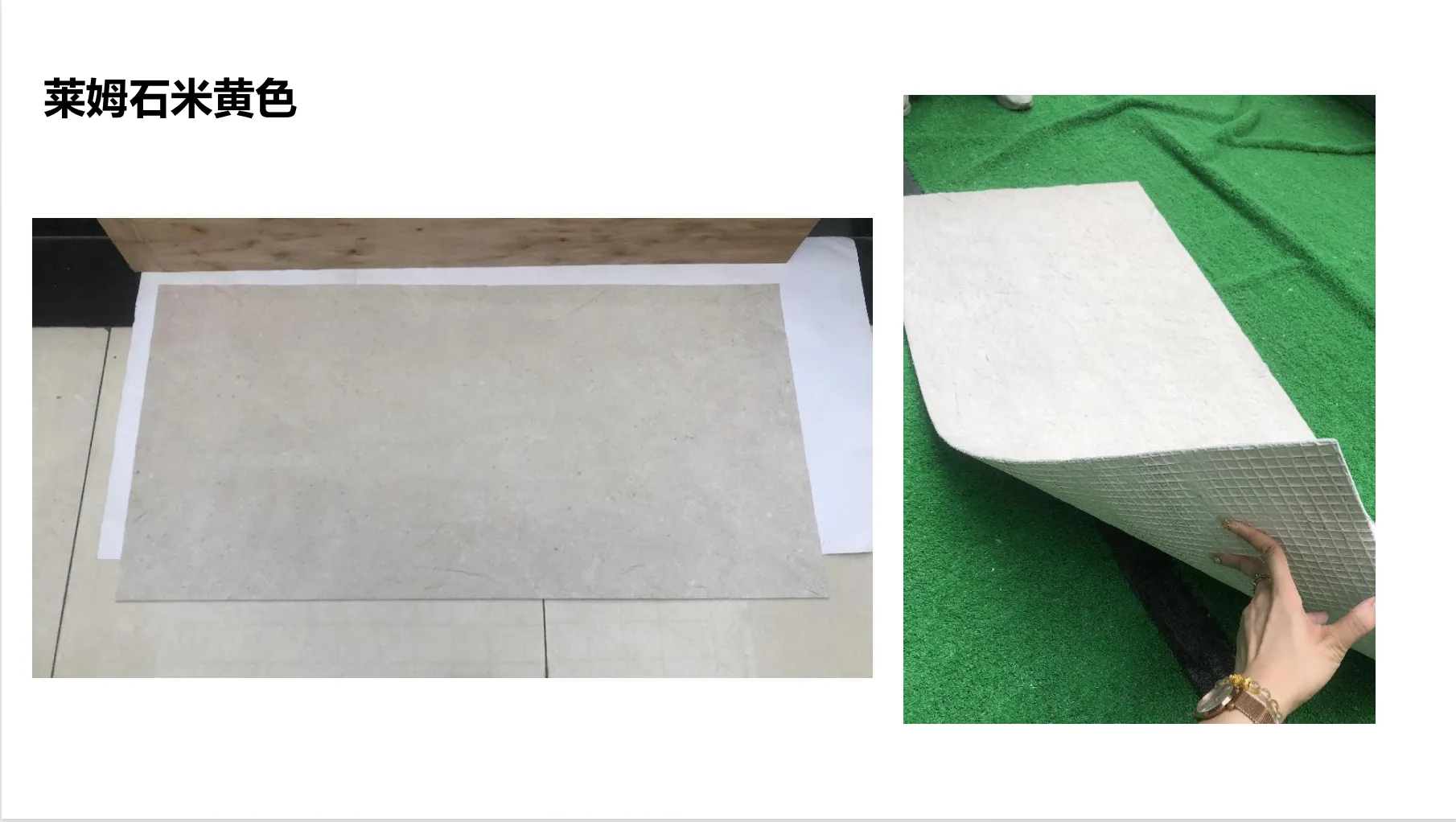
Let's set the scene: You're hosting a dinner party. The table is set, the wine is flowing, and laughter fills the air. Then, with a sudden jolt, your guest knocks over a glass of red wine. It spills across your brand-new backsplash—natural lime stone(beige) you'd spent months dreaming about. Your heart sinks. You grab a cloth, wipe furiously, but by morning, a faint purple shadow lingers, a permanent reminder of the night. Sound familiar? If you've ever loved natural stone but hated its vulnerability to stains, you're not alone. But what if there was a material that looks like stone, feels like stone, but laughs in the face of spills? Enter MCM flexible stone. Today, we're diving into real photos that put MCM head-to-head with natural lime stone(beige) and travertine(beige), proving why stain resistance isn't just a bonus—it's a game-changer.
First things first: Let's demystify MCM. Short for Modified Composite Material, MCM flexible stone is like the cool, durable cousin of natural stone. It's crafted from a blend of natural minerals (think crushed stone, marble dust), high-performance polymers, and reinforced fibers. The result? A thin, lightweight sheet (usually 3-5mm thick) that mimics the look and texture of natural stone—veins, pores, and all—but with a superpower: it's non-porous. No tiny holes to trap spills, no absorption, no stains. And "flexible" isn't just a buzzword; it can bend around curves, wrap columns, or cling to uneven surfaces, making it a designer's dream.
Now, let's talk about the classic: natural lime stone(beige). Picture warm, sandy hues, soft fossilized patterns (some even look like tiny seashells!), and a texture that feels like a piece of the earth. It's timeless, elegant, and has been used in architecture for millennia—from the Parthenon to your neighbor's kitchen backsplash. But here's the trade-off: porosity. Natural lime stone is formed from sedimentary deposits, which means it's full of tiny, interconnected pores. These pores are what give it that unique, breathable texture, but they're also its Achilles' heel. Spill coffee, wine, or oil, and if you don't wipe it up in seconds, it seeps in, leaving a stain that even professional sealers can't always fix. Sealing helps—don't get me wrong—but it needs reapplication every 6-12 months, and even then, it's not foolproof.
To really see the difference, we ran a little experiment. We grabbed samples of MCM flexible stone (in lime stone beige), natural lime stone(beige), and travertine(beige) (another porous natural stone, often compared to lime stone). We applied four common stains: black coffee, red wine, olive oil, and permanent marker. We let them sit for 24 hours (because let's be real—life doesn't give you a 5-minute warning to clean up spills), then wiped them with a damp cloth and mild soap. The results? Let's break it down.
| Stain Type | MCM Flexible Stone (Lime Stone Beige) | Natural Lime Stone(Beige) | Travertine(Beige) |
|---|---|---|---|
| Black Coffee | No trace left; surface clean and unmarked. | Light brown ring visible; stain partially absorbed. | Dark brown stain; fully absorbed into pores. |
| Red Wine | Wiped clean; no purple residue. | Faint purple tint remains; requires heavy scrubbing. | Deep purple stain; permanent even after cleaning. |
| Olive Oil | Oil beads up and wipes away; no discoloration. | Greasy sheen persists; oil soaks into surface. | Oil penetrates deeply; leaves dark, slick spot. |
| Permanent Marker | Marker wipes off with rubbing alcohol; no ghosting. | Stain fades but leaves a faint gray shadow. | Marker fully absorbed; impossible to remove completely. |
Numbers and tables are great, but real photos? They tell the story. Let's paint the picture (since we can't show the actual images). Imagine three 2x2 foot panels mounted on a white wall, each labeled clearly: "MCM Flexible Stone," "Natural Lime Stone(Beige)," "Travertine(Beige)." Each has a small 4-inch circle in the center where we applied our stains 24 hours prior. From across the room, they're nearly identical—warm beige tones, subtle texture, that "natural stone" vibe we all love. But step closer, and the difference hits you like a lightbulb moment.
The MCM panel? It looks untouched. The beige surface is smooth, the veining crisp, with no hint of coffee, wine, or marker. It's like the stains never happened. Run your hand over it, and it feels cool and solid, with a slight sheen that says "durable." Now the natural lime stone(beige): that coffee ring is faint but unmistakable, a dull brown halo where the liquid seeped in. The red wine left a soft purple tinge, like a bruise on the stone's surface. Even after scrubbing, it's there—a permanent reminder of the spill. And the travertine(beige)? Oof. The pores are packed with color: dark brown from coffee, deep purple from wine, a greasy gray from oil. It looks tired, worn, like it's seen better days—after just one spill.
Another photo: a kitchen backsplash installed with MCM flexible stone (lime stone beige). Sunlight streams in, highlighting the material's realistic texture—you can see tiny "fossil" imprints and soft color variations, just like natural stone. But there's a coffee mug sitting on the counter, a small puddle of coffee spilled over the edge. No panic, no rush to clean. An hour later, a quick wipe with a cloth, and the backsplash is spotless. Compare that to a photo of a natural lime stone(beige) backsplash in a similar kitchen: same lighting, same coffee spill, but this time, a brown ring has already set in, even after immediate cleaning. The contrast is stark—and telling.
You might be thinking, "Okay, stains are annoying, but is this really a big deal?" Let me tell you: in design, it's everything. Stain resistance means longevity. A countertop or backsplash that looks new after years of use, not worn. It means freedom—no stressing about kids spilling juice, guests knocking over drinks, or cooking mishaps. It means lower maintenance: skip the monthly sealing, the expensive stone cleaners, the professional stain removal services. And in commercial spaces? It's a lifesaver. Restaurants, hotels, airports—places with high foot traffic and endless spills—can't afford to replace stained surfaces every year. MCM flexible stone keeps spaces looking fresh, even in the busiest environments.
Stain resistance is the star here, but MCM flexible stone has more to offer. It's lightweight, which means easier installation (no need for heavy-duty supports) and lower shipping costs. It's flexible, so it can be used on curved walls, columns, or even furniture—think a rounded bar top or a curved fireplace surround. And it's eco-friendly: most MCM products use recycled stone materials and require less energy to produce than quarried natural stone. Plus, it's durable: scratch-resistant, impact-resistant, and weatherproof, making it perfect for both indoor and outdoor use (hello, patio floors that stand up to rain and BBQ grease!).
Let's be honest: natural stone is beautiful. There's something irreplaceable about its organic, centuries-old charm. But when it comes to real life—spills, kids, pets, daily chaos—MCM flexible stone holds its own. The real photos don't lie: MCM resists stains where natural lime stone(beige) and travertine(beige) absorb them. It looks like stone, feels like stone, but performs like a modern marvel. So if you're dreaming of a stone-inspired space that stays beautiful for years—without the stress of stains—MCM flexible stone might just be your new best friend.
Next time you're scrolling through design inspiration, take a second look. That stunning beige backsplash or countertop might not be natural stone at all. It could be MCM—proving that sometimes, the best things in design aren't just beautiful. They're smart, too.
Recommend Products












