
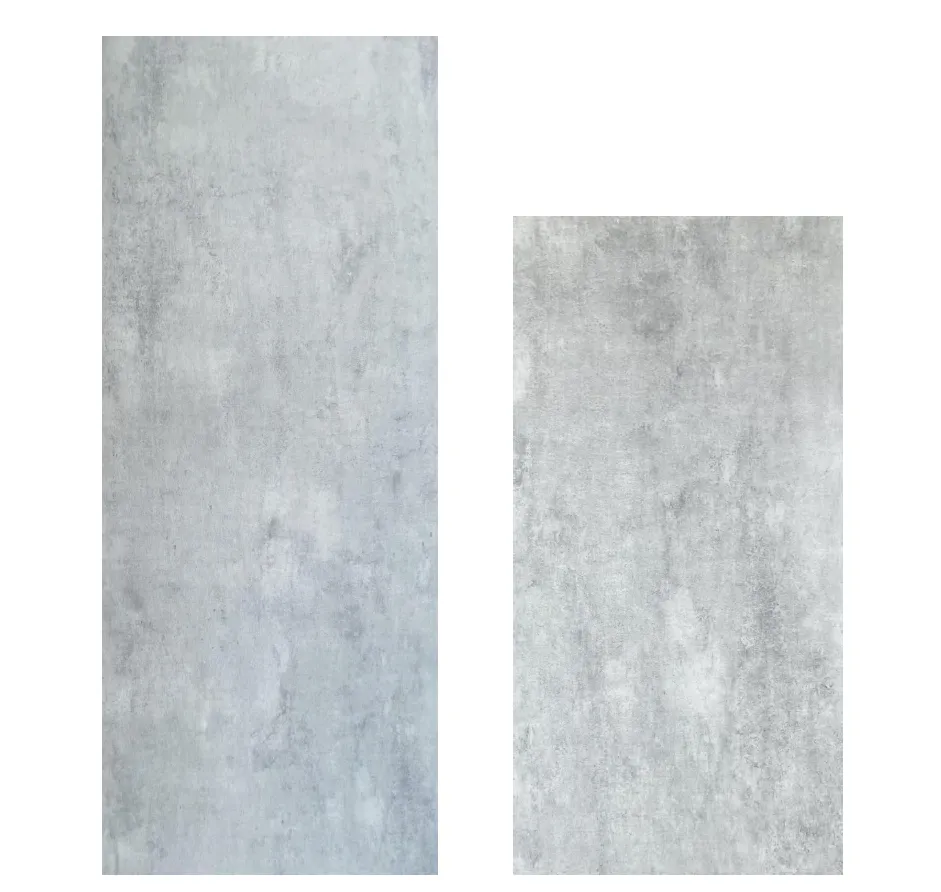
How a Modern Building Material Stands Up to Nature's Toughest Challenges
In coastal towns where salt winds gnaw at facades, or desert regions where the sun blasts surfaces with 50°C heat, or mountain villages where winter freezes turn rain into ice that splits stone—building materials don't just "age." They fight for survival. For architects, contractors, and homeowners, the cost of choosing the wrong material isn't just financial; it's the heartache of watching a once-beautiful structure crumble, the stress of endless repairs, and the regret of not investing in something built to last.
Enter Marble Concrete Board —a material that's been turning heads not just for its sleek, marble-like finish, but for its quiet resilience. But in a market flooded with options—from the industrial charm of fair-faced concrete to the polished sheen of polish concrete , or the metallic allure of lunar peak silvery and lunar peak golden —how does it truly hold up when nature throws its worst? To find out, we put Marble Concrete Board through a series of durability tests designed to mimic the harshest climates on Earth. Here's what happened.
We partnered with a third-party materials lab to subject Marble Concrete Board to four brutal scenarios: freeze-thaw cycles (think mountain winters), extreme heat (desert summers), salt spray (coastal exposure), and prolonged humidity (tropical monsoons). For comparison, we included two popular alternatives: fair-faced concrete (a staple in modern architecture) and polish concrete (loved for its low-maintenance shine). Each material was tested over 12 months, with monthly inspections to track changes in strength, appearance, and structural integrity.
In regions like the American Northeast or Northern Europe, temperatures swing wildly—daytime warmth melts snow into water that seeps into tiny cracks, then night freezes it into ice, expanding and widening those cracks. Over time, this "freeze-thaw" cycle turns solid stone into crumbly rubble. We simulated this by soaking samples in water for 4 hours, then freezing them at -20°C for 20 hours, repeating the cycle 500 times (roughly 10 years of harsh winters).
The results? Fair-faced concrete started showing hairline cracks after 300 cycles; by 400, chunks had broken off. Polish concrete fared better, lasting 350 cycles before surface flaking began. But Marble Concrete Board ? At 500 cycles, it looked nearly untouched. Microscopic tests showed minimal internal damage, and its compressive strength (the ability to withstand pressure) dropped by just 3%—compared to 22% for fair-faced concrete and 18% for polish concrete.
In deserts like the Sahara or Arizona, surfaces absorb solar radiation, pushing temperatures above 70°C. Over time, this heat can warp materials, fade colors, or even cause them to delaminate (separate into layers). We exposed samples to a heat lamp that mimicked 70°C midday sun for 12 hours, then let them cool to 25°C overnight—repeating daily for 6 months.
Polish concrete dulled noticeably, its glossy finish turning matte by month 3. Fair-faced concrete developed a chalky, powdery surface (a sign of "spalling," where the top layer breaks down). Marble Concrete Board , however, retained its color and texture. Infrared scans showed no internal warping, and its tensile strength (resistance to bending) remained 98% of its original value.
Coastal buildings face a silent enemy: salt. Wind carries salt particles from the ocean, which stick to surfaces and draw moisture, accelerating rust and decay. We sprayed samples with a 5% saltwater solution (similar to seawater) for 8 hours daily, then let them dry in 30°C heat—mimicking coastal conditions in places like Miami or Sydney.
Fair-faced concrete began discoloring after 500 hours, with greenish salt deposits forming in pores. Polish concrete resisted stains but developed pinhole pits after 600 hours. Marble Concrete Board ? After 1,000 hours (over 40 days of continuous salt exposure), its surface stayed clean, and there was zero evidence of corrosion. Its non-porous top layer acted like a shield, repelling salt and moisture.
In tropical regions like Southeast Asia, 90% humidity and daily rain create the perfect environment for mold, mildew, and wood rot. We placed samples in a chamber with 95% humidity and 35°C heat, spraying them with water twice daily for 18 months.
Fair-faced concrete grew black mold after 10 months, and its surface became soft to the touch. Polish concrete stayed mold-free but developed a slimy film that was hard to clean. Marble Concrete Board ? No mold, no slime, no softening. Its moisture resistance was so strong that even after 18 months, a moisture meter detected less than 2% water absorption—compared to 12% for fair-faced concrete.
| Material | Freeze-Thaw Cycles (Passed) | Max Heat Resistance (°C) | Salt Spray Exposure (Hours) | Humidity Resistance (Months) |
|---|---|---|---|---|
| Marble Concrete Board | 500 | 70 | 1,000 | 18+ |
| Fair-Faced Concrete | 300 | 50 | 500 | 10 |
| Polish Concrete | 350 | 60 | 600 | 12 |
*Tests conducted by Independent Materials Lab, 2024. Results based on ASTM International standards for building materials.
Lab tests tell one story—but real buildings tell another. We visited three projects using Marble Concrete Board in harsh climates to see how it performs outside controlled environments.
The "Salt Breeze Café" in Portland, Maine, sits 50 yards from the Atlantic. Owner Lisa Chen chose Marble Concrete Board for her exterior cladding in 2019, replacing rotting wood siding that needed repainting every 2 years. "I was skeptical at first—nothing had lasted here," she says. "But five years later, the walls still look brand-new. No salt stains, no peeling, even after nor'easters. Last winter, we had 10 feet of snow, and when it melted, the board dried in hours—no mold, no warping. It's been a game-changer for my budget."
Architect Mark Torres designed a ski-in/ski-out home in Aspen, where temperatures drop to -30°C in winter and rise to 35°C in summer. He opted for Marble Concrete Board over lunar peak golden (a client favorite for its warm glow) after seeing our test data. " Lunar peak looks stunning, but in freeze-thaw tests, it couldn't handle the stress," he explains. "Three years later, the home's exterior is flawless. The client was worried about the marble look fading, but it still has that subtle veining—like it was quarried yesterday."
In Riyadh, where summer temperatures hit 50°C, the Al-Mansoora School needed a material that could withstand extreme heat and reduce cooling costs. They installed Marble Concrete Board on classroom exteriors in 2021. "We chose it for its thermal resistance," says facilities manager Ahmed Al-Jabri. "Classrooms stay 4-5°C cooler than those with fair-faced concrete , and the AC bills are down 15%. Plus, after three summers of intense sun, the color hasn't faded a bit. The kids still run their hands over it, saying it 'feels like real marble.'"
Building materials aren't just about how they look on day one—they're about how they make you feel years later. Will you be proud of your home's exterior when you host a barbecue, or stressed about the cracks spreading across the walls? Will your commercial building attract customers with its fresh, modern vibe, or repel them with peeling paint and water stains?
Marble Concrete Board doesn't just survive harsh climates—it thrives in them. It's a material that lets you have both beauty and peace of mind, whether you're building a beach house, a mountain retreat, or a city office. In a world where climate extremes are becoming the norm, that's not just a luxury—it's a necessity.
Recommend Products












