
When you stand at the base of a modern high-rise, your eyes trace its ascent—glass, steel, stone, all reaching toward the clouds. But what you might not realize is that behind that striking facade lies a complex dance of engineering, aesthetics, and practicality. High-rise exteriors aren't just about looking good; they're about withstanding gale-force winds, resisting years of rain and UV rays, keeping structural loads in check, and even contributing to a building's energy efficiency. It's a tall order, and for decades, architects and builders have grappled with materials that too often feel like compromises—heavy stone that strains foundations, brittle cladding that chips, or generic panels that fade into the urban backdrop.
Enter the Marble Concrete Board Engineering Series—a collection of materials designed not just to meet these challenges, but to redefine what high-rise exteriors can be. Blending cutting-edge technology with natural beauty, this series marries durability with design freedom, offering solutions that feel both timeless and forward-thinking. In this article, we'll dive into why materials like Marble Concrete Board, MCM Flexible Stone, and Fair-faced Concrete are becoming the go-to choices for architects aiming to create high-rises that stand out for all the right reasons.
Let's start with the basics: why is choosing the right exterior material for a high-rise so critical? Imagine a 60-story tower in a coastal city. On any given day, its facade might face salt-laden (hǎifēng, sea breezes), driving rain, and temperatures that swing from freezing to sweltering. Over time, that wear and tear adds up. Traditional materials often struggle here—natural marble, for example, is stunning but heavy, requiring reinforced structural support that drives up costs. Brick, while classic, can absorb moisture and crack in freeze-thaw cycles. Even some modern composites lack the flexibility to adapt to a building's natural movement, leading to unsightly gaps or leaks.
Then there's the aesthetic pressure. In today's skyline, a high-rise is more than a workplace or home; it's a statement. Developers and architects want buildings that feel unique, that reflect a brand or a neighborhood's identity. A generic, cookie-cutter facade won't cut it. But beauty can't come at the expense of functionality. A material that looks incredible on day one but fades, chips, or warps after a few years is a failure—both for the building's appearance and its long-term value.
And let's not forget sustainability. Modern construction is increasingly focused on reducing carbon footprints, from production to installation to maintenance. Heavy materials require more energy to transport and install. Materials that need frequent replacement or chemical treatments add to environmental strain. The ideal high-rise exterior material, then, must check multiple boxes: strong yet lightweight, beautiful yet durable, and eco-conscious from cradle to grave.
At the heart of this engineering series is Marble Concrete Board—a material that feels like a love letter to both nature and innovation. Think of it as natural marble's smarter, more resilient cousin. It starts with crushed marble aggregates, sourced from sustainable quarries, mixed with a high-performance concrete matrix. The result? A panel that retains the veining, depth, and organic beauty of real marble but with a strength-to-weight ratio that's a game-changer for high-rises.
Let's talk numbers (but don't worry, we'll keep it simple). Traditional marble slabs can weigh upwards of 200 kg per square meter; Marble Concrete Board, by contrast, clocks in at around 45 kg/m². That's a 75% reduction in weight, which translates directly to lower structural stress. For a high-rise, that means smaller foundations, less steel reinforcement, and ultimately, lower construction costs. But don't mistake lightness for weakness: this material boasts a compressive strength of over 60 MPa (that's about 600 kg per square centimeter), making it resistant to impacts and cracking. It's also non-porous, thanks to a proprietary sealing process, so it won't absorb water or stain—perfect for rainy climates or buildings near the coast.
What really sets Marble Concrete Board apart, though, is its versatility. Unlike natural marble, which is limited by the stone's natural variations, this material can be customized in ways that let architects get creative. Want a matte finish that softens in sunlight? Done. A polished surface that mirrors the sky at dusk? Easy. Even textures that mimic weathered stone or smooth concrete are possible. And because it's cast in panels, it offers consistent color and pattern—no more hunting for matching slabs or dealing with unsightly seams.
Of course, Marble Concrete Board isn't the only star of the show. The Engineering Series includes a range of complementary materials, each with its own superpowers. To help you see how they compare, let's break down their key features, aesthetic vibes, and best-use scenarios:
| Material | Key Features | Aesthetic Appeal | Best For |
|---|---|---|---|
| Marble Concrete Board | 45 kg/m² weight, 60+ MPa strength, non-porous, customizable finishes | Natural marble veining with consistent color; available in polished, matte, or textured | Primary facade cladding for luxury residential or commercial high-rises |
| Lunar Peak Silvery | Metallic flecked finish, UV-resistant, lightweight (38 kg/m²) | Sleek, modern sheen with a subtle "moonlit" glow; pairs well with glass | Accent walls, crown moldings, or upper-floor cladding for a futuristic touch |
| Boulder Slab | Large-format (up to 1.8m x 3m), natural stone texture, impact-resistant | Rugged, organic look with deep color variations; like a slice of mountain stone | Lobbies, podium levels, or low-rise sections to add warmth and texture |
| MCM Flexible Stone | Thin (3-5mm), bendable, easy to install on curved surfaces | Real stone appearance with the flexibility to wrap columns or archways | Curved facades, decorative elements, or retrofits of existing buildings |
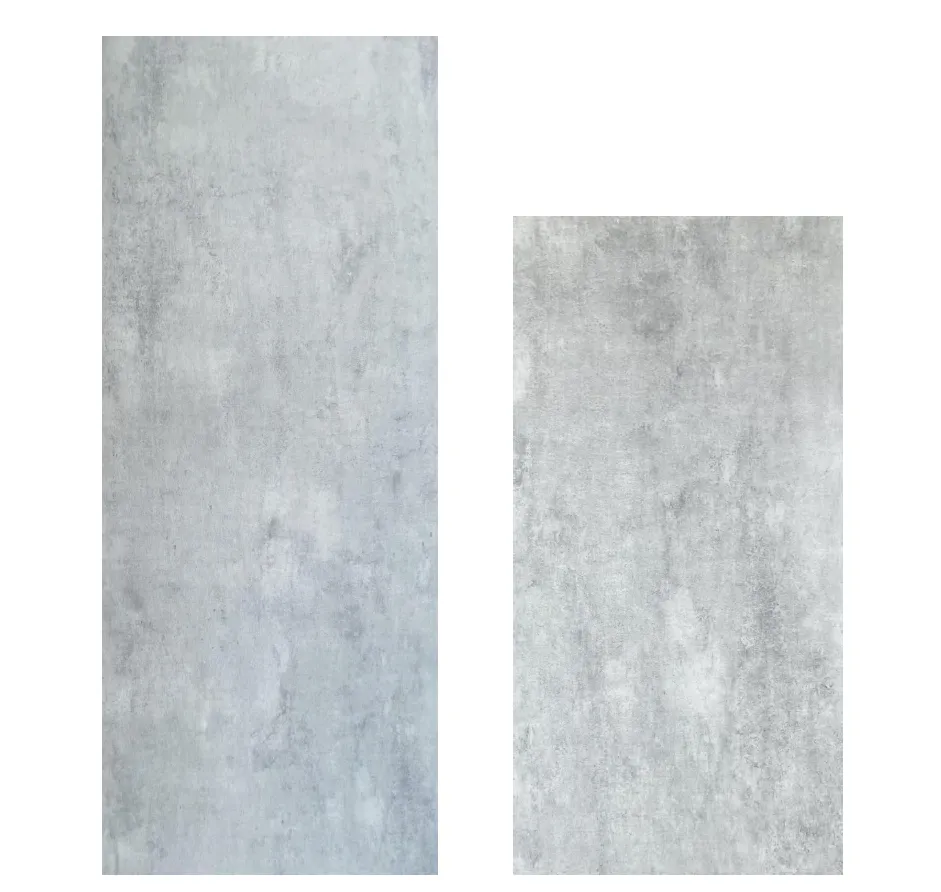
| Fair-faced Concrete | Raw, uncoated finish, high thermal mass, fire-resistant | Industrial-chic, minimalist look with visible aggregate and formwork textures | Modern office towers or cultural buildings aiming for an "honest" aesthetic |
As you can see, each material brings something unique to the table. Marble Concrete Board anchors the series with its balance of beauty and brawn, while Lunar Peak Silvery adds a touch of modern glamour, Boulder Slab brings nature's ruggedness, MCM Flexible Stone offers design flexibility, and Fair-faced Concrete leans into industrial minimalism. Together, they create a toolkit that lets architects mix and match, tailoring the facade to a building's personality.
Let's zoom in on MCM Flexible Stone for a minute—because if Marble Concrete Board is the workhorse, this material is the artist. MCM, or Modified Composite Material, is a thin, lightweight sheet (think 3-5mm thick) that mimics the look of natural stone but bends like a sheet of thick paper. It's a game-changer for high-rises with curved or irregular facades—those striking, futuristic designs that make you stop and stare.
Traditional stone or concrete panels are rigid; they can't curve without expensive, custom cutting that often results in waste. MCM Flexible Stone, though, can be wrapped around columns, arched windows, or even entire curved walls with minimal effort. Imagine a high-rise with a facade that gently tapers as it rises, softening the building's silhouette against the sky. With MCM, that's not just a concept sketch—it's a buildable reality. And because it's so thin (and lightweight, at just 8-10 kg/m²), it doesn't add significant load to the structure, making it ideal for retrofits or buildings where weight is a concern.
But flexibility doesn't mean fragility. MCM Flexible Stone is made by bonding stone particles with a polymer resin, creating a material that's resistant to scratches, stains, and impacts. It's also UV-stable, so that rich, earthy tone you chose won't fade to a dull gray after a few summers. And installation? It's a breeze compared to traditional cladding. Instead of heavy lifting equipment, crews can cut the sheets on-site with standard tools and adhere them directly to the substrate—saving time, labor, and hassle.
One of the most exciting things about MCM Flexible Stone is how it democratizes design. You don't need an unlimited budget to create a unique facade. Whether you're aiming for a subtle curve on a residential tower or a bold, sculptural statement on a cultural center, this material lets you push boundaries without breaking the bank.
For architects drawn to the raw, unpretentious beauty of industrial design, Fair-faced Concrete is a revelation. Unlike traditional concrete, which is often hidden behind paint or cladding, Fair-faced Concrete is left exposed, its natural texture and color on full display. It's a material that celebrates the process of building—you can see the marks of the formwork, the subtle variations in aggregate, the way light plays across its surface. In high-rises, it adds a sense of groundedness, a reminder of the building's structural bones beneath the glitz.
But don't mistake "raw" for "rough." Modern Fair-faced Concrete, especially in the Marble Concrete Board Series, is precision-engineered. The aggregates are carefully selected for color and size, the mix is optimized to avoid bubbles or discoloration, and the formwork is treated with special coatings to ensure a smooth, consistent finish. The result is a material that feels both industrial and refined—think of it as concrete with a tailored suit.
Functionally, Fair-faced Concrete shines in high-rises for a few key reasons. First, its thermal mass helps regulate interior temperatures, reducing the need for heating and cooling—a big plus for energy efficiency. Second, it's fire-resistant, adding an extra layer of safety. And third, it's low-maintenance: no need for repainting or sealing; a simple power wash every few years keeps it looking fresh. For busy building managers, that's a huge relief.
Pair Fair-faced Concrete with Marble Concrete Board, and you get a striking contrast of textures—smooth, polished stone against matte, industrial concrete. It's a combo that feels both modern and timeless, perfect for high-rises in urban areas where history and innovation collide. Imagine a tower where the lower floors are clad in rugged Boulder Slab, the midsections in sleek Marble Concrete Board, and the upper levels in Fair-faced Concrete, gradually lightening in color as they rise. It's a narrative in stone and concrete, telling the story of the building's place in the city.
Let's ground this in real (hypothetical) scenarios. Take, for example, the "Azure Tower," a 45-story residential building in Seattle. The architect wanted a facade that felt connected to the city's natural surroundings—think the gray of Puget Sound, the green of the Olympic Mountains—while still looking modern. The solution? A mix of Marble Concrete Board in a soft, veined gray (echoing local slate) and Lunar Peak Silvery accents on the balconies and crown. The Lunar Peak's metallic sheen catches the rain and reflects the sky, making the building feel dynamic, like it's shifting with the weather. And because both materials are lightweight, the structural engineers were able to reduce the size of the foundation, saving the developer millions in construction costs.
Then there's the "Innovation Hub," a 30-story tech office building in Austin. Here, the goal was to create a facade that felt forward-thinking and collaborative, mirroring the companies inside. The design team opted for MCM Flexible Stone in a warm, terracotta hue for the building's curved entrance canopy, paired with Fair-faced Concrete panels for the main facade. The MCM's flexibility allowed the canopy to sweep upward, welcoming visitors, while the Fair-faced Concrete kept the look clean and uncluttered—no fussy details, just honest material. Employees often comment on how the building "feels alive" at different times of day, with the concrete absorbing light in the morning and the terracotta glowing at sunset.
And let's not overlook smaller touches that make a big difference. A luxury hotel in Dubai used Boulder Slab in its lobby, creating a dramatic feature wall that stretches from the ground floor to the mezzanine. The large-format slabs (1.8m x 3m) minimize seams, giving the wall the appearance of a single, massive stone outcropping. Guests often stop to run their hands over the texture, remarking on how it feels like stepping into a desert oasis—proof that even in the heart of a concrete jungle, natural materials can evoke a sense of calm.
In 2025, sustainability isn't a buzzword—it's a requirement. Developers and cities alike are setting strict targets for carbon neutrality, and building materials are under scrutiny like never before. The Marble Concrete Board Engineering Series rises to this challenge, with sustainability woven into every step of the process.
Start with production: Marble Concrete Board uses recycled marble aggregates from quarry waste, diverting tons of material from landfills. The concrete matrix is optimized with supplementary cementitious materials (like fly ash or slag), reducing the need for Portland cement—a major source of CO2 emissions. MCM Flexible Stone, too, relies on recycled stone particles, and its thin profile means less raw material is used overall.
Installation is another green win. Lightweight materials mean fewer truck trips to transport them, and faster installation reduces on-site energy use. MCM Flexible Stone, for example, can be installed with minimal adhesive, and its thinness means less waste during cutting. Even the packaging is designed to be recyclable or reusable—no plastic wrap here, just biodegradable or recycled materials.
Then there's the long-term picture. These materials are built to last 50+ years with minimal maintenance, reducing the need for replacements. When they do reach the end of their life, many are recyclable: Marble Concrete Board can be crushed and reused as aggregate, while MCM Flexible Stone's polymer resin is inert and non-toxic. Compare that to traditional vinyl cladding, which often ends up in landfills, or natural stone, which requires energy-intensive quarrying and transportation.
For developers, this isn't just about doing the right thing—it's about adding value. Green buildings command higher rents, attract more tenants, and sell faster. A high-rise clad in sustainable materials like those in the Marble Concrete Board Series isn't just a building; it's a statement that the developer cares about the planet. In today's market, that matters.
As we look ahead, the Marble Concrete Board Engineering Series is poised to evolve with the needs of the industry. One exciting trend is the integration of smart technology: imagine Marble Concrete Board panels embedded with sensors that monitor temperature, moisture, or even structural stress, sending real-time data to building managers. Or MCM Flexible Stone with built-in LED strips that can change color, turning the facade into a canvas for art or public messaging—all while remaining energy-efficient.
Another area of growth is customization. Thanks to advanced 3D printing (a key part of the MCM 3D Printing Series), architects will soon be able to create one-of-a-kind textures or patterns on demand. Want a facade that mimics the ripples of a river? Or a pattern inspired by local art? 3D printing makes it possible, without the waste of traditional custom cutting.
And let's not forget biophilic design—the idea that connecting people with nature improves well-being. The series already includes materials like Boulder Slab and Bali Stone that evoke natural landscapes, but future iterations could incorporate living elements, like panels that support vertical gardens or moss growth. Imagine a high-rise where Marble Concrete Board provides the structure, and MCM Flexible Stone acts as a substrate for greenery, turning the building into a vertical forest. It's a vision that blends technology and nature, creating exteriors that don't just look good, but actively improve air quality and mental health.
At the end of the day, the Marble Concrete Board Engineering Series is about more than selling materials. It's about empowering architects and builders to dream bigger, to create high-rises that don't just fill space in the skyline, but enrich the cities they call home. It's about proving that durability and beauty don't have to be enemies, that sustainability and luxury can go hand in hand, and that even the tallest buildings can feel human-centered.
So the next time you find yourself gazing up at a high-rise, take a closer look. If the facade feels alive—shifting with the light, weathering gracefully, telling a story—chances are, it's built with materials that put people and practicality first. And in a world where we spend so much of our lives surrounded by buildings, that's a difference we can all appreciate.
Marble Concrete Board, MCM Flexible Stone, Fair-faced Concrete, Lunar Peak Silvery, Boulder Slab—these aren't just names on a spec sheet. They're the building blocks of the next generation of high-rises: structures that rise high, but stay grounded in what matters.
Recommend Products












