
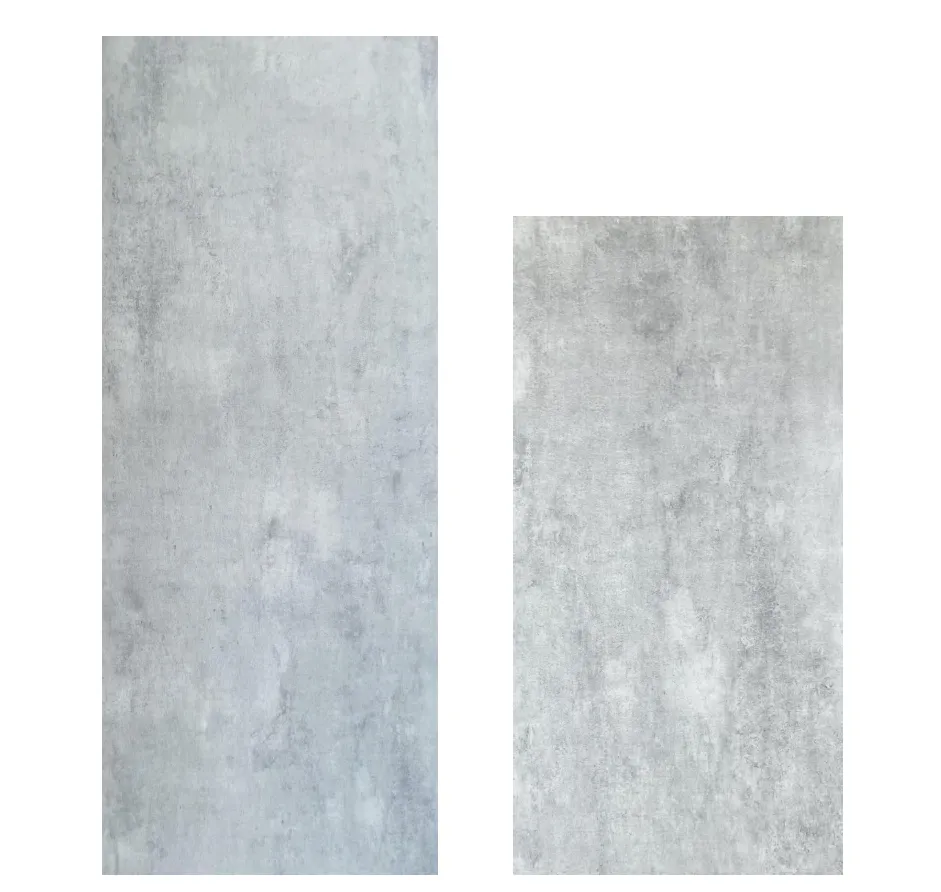
In the world of commercial architecture, every material choice is a balancing act. We want spaces that inspire—lobbies that welcome, offices that energize, retail floors that captivate—yet none of that matters if the building can't stand firm when disaster strikes. Fire, in particular, is a silent threat that looms over every design decision. Enter marble concrete board: a material that doesn't just check the box for aesthetics, but wraps those beautiful spaces in a layer of protection that could mean the difference between chaos and calm when flames ignite.
Let's start with the basics. Marble concrete board is exactly what it sounds like—but so much more. Imagine the timeless elegance of marble, crushed into fine aggregates, blended with high-strength concrete, and reinforced with fibers to create panels that are both tough and tactile. It's a marriage of nature's luxury and engineering's reliability, designed to mimic the veining of natural stone while offering the durability of concrete. Architects love it for its versatility: it can be polished to a high sheen for a modern lobby, left matte for an industrial-chic café, or even embossed with textures to add depth to feature walls.
But here's the kicker: beneath that sophisticated surface lies a core built for resilience. Unlike wood, which ignites at just 300°F, or vinyl, which melts and releases toxic fumes, marble concrete board stands its ground when temperatures rise. It's not just a pretty face—it's a material with a mission: to keep people safe without making them sacrifice style.
Fire safety in commercial buildings isn't optional—it's the law. From office towers to shopping malls, restaurants to hospitals, building codes like the International Building Code (IBC) and standards from the National Fire Protection Association (NFPA) set strict rules for how materials should perform under fire conditions. These regulations exist for a reason: commercial spaces are hubs of human activity, packed with people, equipment, and often flammable materials (think furniture, curtains, electronics). A single spark can turn into a tragedy if the building's materials don't slow the spread of fire and smoke.
Consider this: in a fire, the first 10–15 minutes are critical. If a material resists ignition and slows flame spread, it buys time—time for sprinklers to activate, time for alarms to alert occupants, time for people to evacuate. That's where fire resistance ratings come in. They're not just numbers on a sheet; they're a promise that the material will behave predictably when tested, giving first responders and building occupants a fighting chance.
Fire safety ratings can feel like a alphabet soup of acronyms—ASTM, UL, NFPA—but let's break them down simply. The two most important metrics for building materials are the Flame Spread Index (FSI) and Smoke Development Index (SDI) , measured using ASTM E84, the Standard Test Method for Surface Burning Characteristics of Building Materials. Here's what they tell us:
So where does marble concrete board stand? Let's compare it to common alternatives, including fair-faced concrete and polish concrete (two materials often mentioned in the same breath for commercial projects), to see how it stacks up:
| Material | Flame Spread Index (FSI) | Smoke Development Index (SDI) | Fire Resistance Rating |
|---|---|---|---|
| Marble Concrete Board | 0–5 (Class A) | 10–20 | 2+ hours (ASTM E119) |
| Fair-Faced Concrete | 0–10 (Class A) | 15–30 | 1–3 hours (varies by thickness) |
| Polish Concrete | 5–15 (Class A) | 20–40 | 1–2 hours |
| Standard Drywall | 50–75 (Class B) | 100–200 | 30–60 minutes |
The numbers speak for themselves. Marble concrete board doesn't just meet Class A standards—it exceeds them, with an FSI so low it's nearly non-combustible. Its smoke development is minimal, too, meaning in a fire, the air stays clearer longer. And that 2+ hour fire resistance rating? That's the time it takes for the material to fail under extreme heat—plenty of time for sprinklers to do their job and for everyone to get out safely.
Numbers on a page are one thing; real stories are another. Take the case of a 12-story office building in Chicago that renovated its lobby with marble concrete board in 2022. A year later, a small electrical fire broke out in a janitor's closet on the ground floor. The flames spread to the adjacent wall, which was clad in marble concrete board. By the time firefighters arrived 10 minutes later, the fire had self-extinguished—unable to spread beyond the closet, thanks to the board's resistance. The lobby walls? They showed charring around the edges, but the structural integrity held, and the damage was limited to repainting a small section. "That material didn't just save the lobby," the building manager later told local news. "It saved us from a full-blown evacuation and weeks of downtime."
Or consider the retail complex in Austin, Texas, where marble concrete board was used for interior partitions and exterior cladding. During a 2023 kitchen fire at a restaurant on the ground floor, the board acted as a barrier, preventing the fire from spreading to upper floors. Firefighters noted that the smoke was significantly less dense than in similar fires they'd responded to in buildings with vinyl or wood paneling. "Less smoke means we can find people faster," one captain said. "That's invaluable."
"We don't just design buildings—we design escape routes, too. Marble concrete board lets us do both without choosing between safety and style." — Maria Gonzalez, Principal Architect, Urban Edge Designs
Fire resistance is the star here, but marble concrete board isn't a one-trick pony. Let's talk about durability. Unlike natural marble, which etches easily with acid and scratches with heavy use, these panels are built to withstand the chaos of commercial life. Coffee spills? Wipe them up. Scuff marks from rolling carts? Buff them out. They're moisture-resistant, too, making them ideal for kitchens, bathrooms, or humid climates—no warping, no mold, no rot.
Then there's sustainability. As green building materials become more than a trend—they're a responsibility—marble concrete board checks that box, too. It's made with locally sourced aggregates (reducing carbon footprints from transportation), contains recycled content in many formulations, and lasts for decades, reducing the need for frequent replacements. "We're seeing more clients ask for materials that align with LEED or WELL certifications," says Jake Miller, a construction project manager in Seattle. "Marble concrete board fits because it's durable, low-maintenance, and non-toxic—no off-gassing, no harmful chemicals."
And let's not forget cost. While marble concrete board may have a higher upfront price tag than drywall or plywood, the long-term savings add up. Lower insurance premiums (thanks to fire resistance), minimal repair costs, and a lifespan that outlasts most alternatives mean it pays for itself over time. "Builders used to see fire safety as an extra expense," Miller adds. "Now they see it as an investment. One that could save lives—and their reputations."
You might be thinking: If it's this tough, does it require a team of specialists to install? The answer is no. Marble concrete board is designed to be contractor-friendly. It cuts with standard tools (think circular saws with diamond blades), adheres to walls with mortar or mechanical fasteners, and fits together like puzzle pieces. Most contractors familiar with installing cement board or stone veneer can handle it with minimal training. "We had a crew new to the material install 2,000 square feet in a week," Miller recalls. "They were impressed by how lightweight the panels are compared to solid stone—no need for extra structural support."
As building codes evolve and clients demand more from their materials, marble concrete board is poised to become a staple in commercial design. Innovations are already in the works: manufacturers are experimenting with additives to boost fire resistance even further, while maintaining the material's natural look. Some are exploring thinner panels without sacrificing strength, making it easier to integrate into tight spaces. And as 3D printing technology advances, we might soon see custom-shaped marble concrete board panels that push the boundaries of what's possible in design—all while keeping fire safety front and center.
Green building materials will continue to drive this trend, too. As more cities adopt net-zero energy goals, materials that are both durable and low-impact will become non-negotiable. Marble concrete board, with its long lifespan and recycled content, is well-positioned to lead the charge.
At the end of the day, commercial buildings are more than bricks and mortar—they're spaces where people live, work, and connect. We shouldn't have to choose between making those spaces beautiful and keeping them safe. Marble concrete board proves we don't have to. It's a reminder that the best design decisions are the ones that care as much about the people inside as they do about the way the walls look.
So the next time you walk into a sleek lobby or a bustling restaurant, take a closer look at the walls. If they're clad in marble concrete board, know that someone made a choice—one that says, "We want you to feel inspired here… and we want you to get home safely tonight." In the end, that's the most beautiful thing a building can be: a place that protects as fiercely as it impresses.
Recommend Products












