
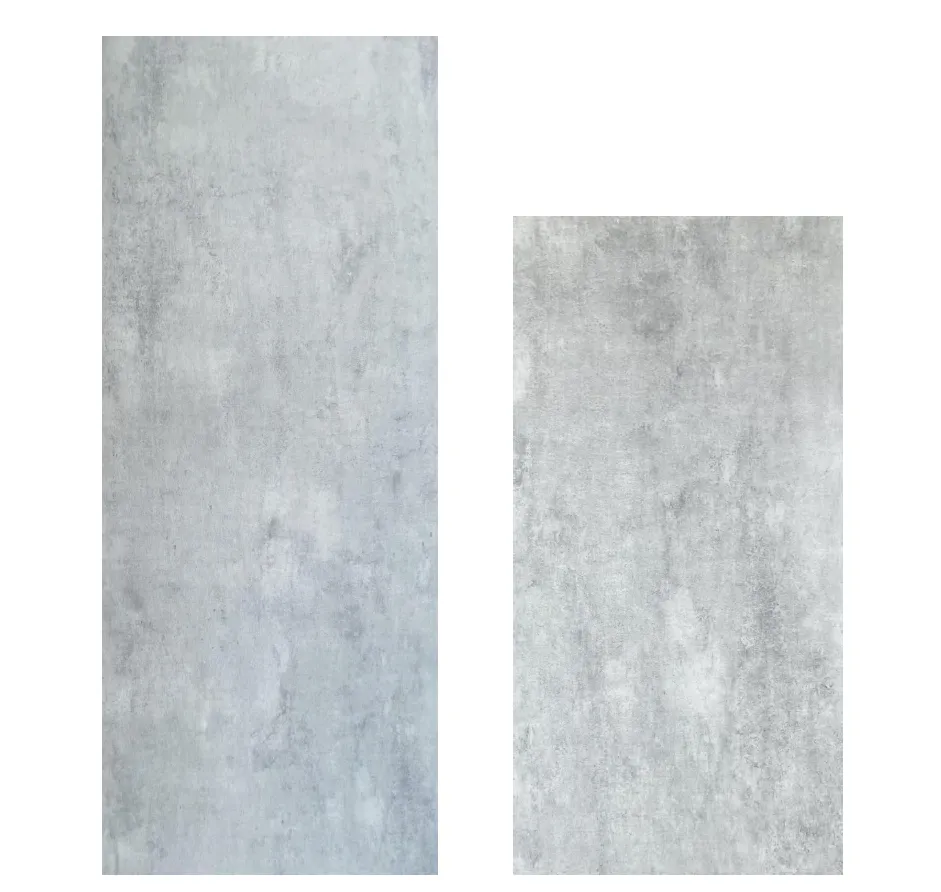
How MCM's innovative materials are turning architectural dreams of fluid, curved spaces into tangible reality
For architect Mia Chen, the moment came during a client meeting in 2023. She'd spent weeks refining renderings of a boutique hotel lobby—a space centered around a sweeping, 25-foot curved wall that would wrap guests in warmth as they entered. The client loved the design, but when the conversation turned to materials, Mia's excitement dimmed. "We discussed traditional options," she recalls. "Fair-faced concrete is durable, but it's heavy and unforgiving—bending it to that curve would require complex, costly forms. Natural marble? Stunning, but brittle. One wrong move during installation, and the slab cracks. We walked away stuck, staring at a design that felt just out of reach."
Mia's frustration is a familiar story in architecture. Curved walls, with their ability to soften spaces, guide movement, and evoke a sense of flow, have long been a hallmark of visionary design—from the organic curves of Antoni Gaudí's Sagrada Família to Zaha Hadid's futuristic parametric structures. Yet for most designers, the materials to bring these curves to life have remained stubbornly rigid. Stone, concrete, even some woods: they excel at straight lines and sharp angles, but bend them too far, and they break. The result? Countless designs get watered down, curves flattened into gentle slopes, or abandoned entirely.
That is, until the rise of MCM's marble concrete board—a material that's not just redefining what's possible for curved walls, but rekindling the joy of design without compromise. "It was like finding a missing puzzle piece," Mia says now, smiling. "Finally, a material that didn't make me choose between beauty and function."
At first glance, MCM's marble concrete board feels deceptively familiar. Run a hand over its surface, and you'll find the cool, smooth texture of natural marble, with subtle veining that mimics the organic patterns of stone quarried from the earth. But pick up a panel, and the first surprise hits: it's lighter than you expect. "Traditional marble slabs can weigh 15-20 pounds per square foot," explains Carlos Mendez, MCM's lead materials engineer. "Our marble concrete board? Just 5-7 pounds. That weight difference alone changes everything for installation—but the real magic is in the bend."
Carlos demonstrates by lifting a 4x8-foot panel of marble concrete board and gently curving it into a U-shape. The material bends smoothly, no cracks, no stress marks—just a fluid arc that holds its form. "Most rigid materials have a breaking point around 1-2 degrees of flex," he says. "Ours can bend up to 15 degrees without losing structural integrity. That's the difference between a wall that looks 'sort of curved' and one that feels alive."
The secret lies in MCM's proprietary manufacturing process, which blends natural marble aggregates with a flexible polymer matrix. Unlike traditional concrete, which relies on rigid cement binders, this matrix acts like a "molecular cushion," allowing the material to flex while maintaining its strength. "Think of it as a ballet dancer versus a bodybuilder," Carlos laughs. "Both are strong, but one moves with grace." This balance of suppleness and durability is what makes the board ideal for curved applications—whether it's a gentle archway, a spiral staircase wall, or a sweeping facade that wraps a building like a ribbon.
If the material itself is the dancer, MCM's 3D printing series is the choreographer. Traditional stone-cutting methods rely on molds and saws, which limit customization—especially for curved surfaces, where each panel needs to fit a unique arc. 3D printing changes that, allowing MCM to craft panels with microscopic precision, tailored to the exact curvature of a designer's vision.
"We start with the architect's 3D model," explains Sofia Lee, head of MCM's digital fabrication team. "Our software slices that model into individual panels, each with its own curvature radius, thickness, and texture. Then, our 3D printers lay down the marble-concrete mixture layer by layer, building up the panel with internal reinforcement that follows the curve's stress lines. It's like printing a (skeleton) that's optimized for bendability." The result? Panels that snap together seamlessly, creating a curved surface with no visible seams—just a continuous flow of stone-like beauty.
This precision isn't just about aesthetics; it's about practicality. On a recent project in Barcelona, a team installing a curved facade using MCM's 3D-printed marble concrete board reported cutting installation time by 40% compared to traditional stone. "No more on-site cutting, no more wasted material from ill-fitting panels," says project manager Juan Ruiz. "Each piece arrived labeled, pre-cut to the exact curve we needed. It was like assembling a giant, beautiful puzzle."
| Feature | Traditional Stone | MCM Marble Concrete Board (3D Printed) |
|---|---|---|
| Weight (per sq ft) | 15-20 lbs | 5-7 lbs |
| Maximum Bend Angle | 1-2 degrees | Up to 15 degrees |
| Custom Curvature | Limited by mold costs | Unlimited (3D model-driven) |
| Installation Time | 5-7 hours per panel (on average) | 2-3 hours per panel |
In the mountain town of Aspen, Colorado, the Lunar Peak Hotel wanted its lobby to reflect the surrounding Rockies—majestic, fluid, and timeless. Architect Raj Patel envisioned a curved wall that would rise 18 feet, mimicking the slope of a snow-capped peak, with a finish that shimmered like moonlight. "I'd tried fair-faced concrete, but it looked industrial, not ethereal," Raj says. "Then I saw MCM's lunar peak silvery marble concrete board, and I knew it was perfect."
The wall, which curves at a 12-degree angle, required 36 custom 3D-printed panels. Each panel was printed with a subtle metallic sheen, evoking the glow of the moon on snow. During installation, Raj watched as the panels were lifted into place, their edges fitting together so precisely that the seam lines vanished. "The first time I stood back and saw the light hit it at sunset—golden rays catching the silver finish, the curve flowing like a wave—I got chills," he recalls. "Guests now stop and take photos there. It's not just a wall; it's a moment."
For hotel manager Elena Torres, the wall has become a selling point. "People book rooms just to see it," she laughs. "But beyond the aesthetics, it's durable. We've had kids leaning against it, luggage bumping into it—and it still looks brand new. That's the beauty of MCM: it's not just pretty. It works."
While flexibility is its star feature, MCM's marble concrete board doesn't stop there. Designers rave about its versatility, with a range of finishes that rival natural stone. Want the warm beige of lime stone (beige) ? The deep drama of granite portoro ? The rustic charm of wood grain board ? MCM's color palette includes over 50 options, each crafted to mimic the look of natural materials—without the environmental impact of quarrying.
Sustainability is another key draw. Traditional marble mining disrupts ecosystems, while concrete production is carbon-intensive. MCM's process uses recycled marble dust (from quarry waste) and low-VOC polymers, cutting carbon emissions by 30% compared to traditional stone manufacturing. "We're not just building walls; we're building a future where beauty and responsibility go hand in hand," says environmental engineer Dr. Leila Hassan, who consulted on MCM's sustainability initiatives.
Then there's the tactile experience. Unlike cold, sterile fair-faced concrete, MCM's marble concrete board has a subtle warmth—thanks to its natural marble content—that invites touch. "I had a client who insisted on running her hand along the curved wall every time she visited the site," Mia Chen recalls. "She said it felt 'alive.' That's the human connection materials often miss. MCM doesn't just look good; it feels good."
As more architects discover MCM's marble concrete board, the boundaries of design are expanding. From residential homes with curved accent walls to commercial buildings with undulating facades, the material is proving that curves don't have to be a luxury—they can be standard. "I used to think curved walls were for 'iconic' projects only," Raj Patel admits. "Now, I include them in every design. Why not? MCM makes it easy."
For Mia Chen, the material has reignited her creativity. "I recently finished a home with a spiral library, where the walls curve upward like a seashell," she says. "The client cried when she saw it. That's the power of design that doesn't compromise. MCM didn't just give me a material. It gave me my imagination back."
In the end, architecture is about more than buildings. It's about creating spaces that make us feel—connected, inspired, alive. Curved walls, with their softness and flow, do that. And MCM's marble concrete board? It's the tool that lets designers finally build those feelings into reality. As Carlos Mendez puts it: "We don't just make materials. We make moments."
Recommend Products












