
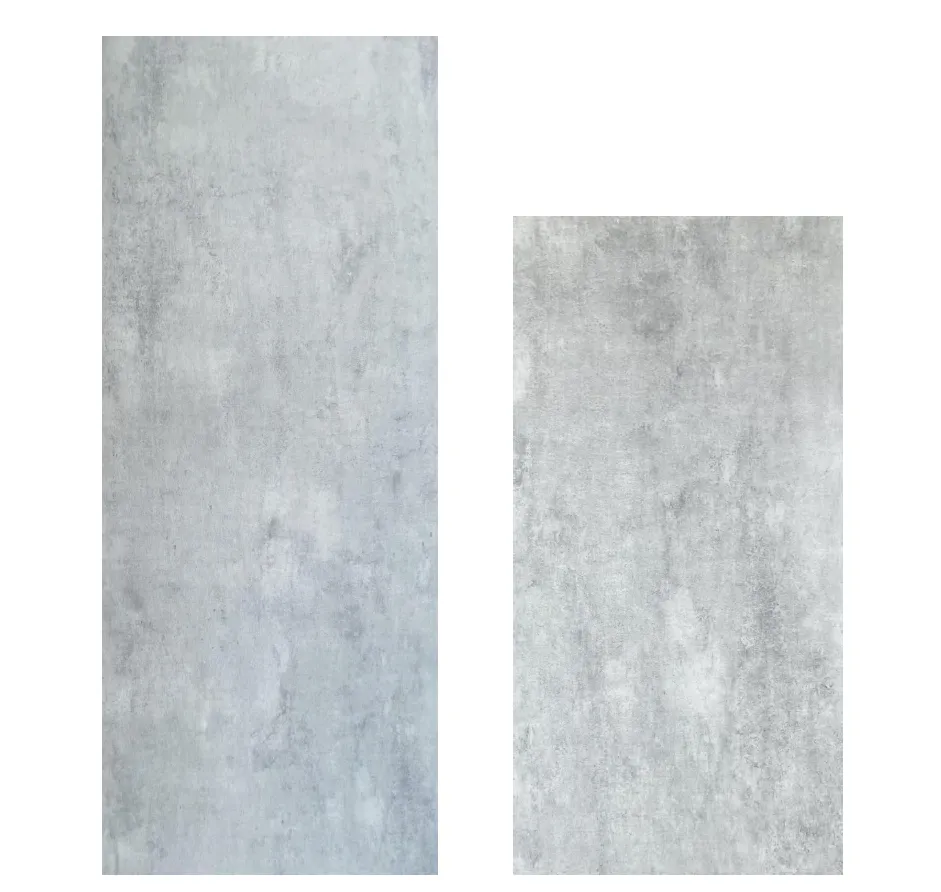
Walk into any older building, and you'll spot the telltale signs of time on its surfaces—scratched marble floors that once gleamed, stained concrete walls that now look tired, or granite countertops chipped from years of use. These spaces weren't designed to fade; they were built with the best materials available at the time. But here's the thing: "best" doesn't always mean "longest-lasting." In construction and design, longevity isn't just a buzzword. It's about creating spaces that don't just survive the years—they thrive in them. It's about reducing the stress of constant repairs, cutting down on replacement costs, and designing with the future in mind. Enter Marble Concrete Board —a material that's quietly redefining durability in decorative surfaces. But how does it stack up against the traditional options we've relied on for decades? Let's take a closer look.
Before we dive into why it lasts longer, let's get clear on what Marble Concrete Board actually is. It's not your average concrete slab, and it's not natural marble either. Think of it as a hybrid—engineered to combine the best of both worlds: the luxurious look of marble and the rugged strength of high-performance concrete.
At its core, it's made by blending crushed marble aggregates (often recycled from leftover natural stone processing) with a specialized concrete mix that includes polymer additives and fiber reinforcement. The polymers add flexibility, so the material can handle minor shifts in a building's structure without cracking. The fibers—usually glass or carbon—boost tensile strength, making it resistant to bending or breaking under pressure. The result? A dense, non-porous panel that looks like polished marble but acts like a tank.
And it's versatile. Manufacturers can mold it into various textures—from smooth, high-gloss finishes that mimic polished marble to matte, textured surfaces that look like weathered stone. It comes in large slabs (up to 4x8 feet), which means fewer seams in installation, and it's lighter than natural marble (around 8-10 lbs per square foot, compared to 15-20 lbs for natural stone), making it easier to transport and install.
But the real star here? Its ability to stand up to the kinds of abuse that would leave traditional materials gasping for breath. Let's break down why that matters.
For decades, we've turned to materials like natural marble, granite, fair-faced concrete , and polish concrete for decorative surfaces. They're familiar, they look good, and we've built entire industries around them. But here's the dirty little secret: they weren't designed for the demands of modern life. Let's take them one by one.
Natural marble is stunning—there's no denying that. Its veining, its warmth, its timeless elegance have made it a staple in luxury spaces for centuries. But beauty, in this case, comes with a price: fragility. Marble ranks just 3-4 on the Mohs hardness scale (for context, your fingernail is a 2.5, and a steel knife is a 5.5). That means everyday wear—foot traffic, furniture dragging, even a dropped keys—can leave permanent scratches.
It's also porous. Spill a glass of red wine, a splash of olive oil, or even a cup of coffee, and if you don't wipe it up immediately, the liquid seeps in, leaving a stain that's nearly impossible to remove. And let's not forget about etching: acidic substances like lemon juice or vinegar eat away at the surface, leaving dull, cloudy marks. To keep it looking good, you need to seal it every 6-12 months—a tedious, costly process that adds up over time.
Outdoors? Even worse. UV rays fade its color, rainwater seeps into pores and freezes in winter, causing cracks, and salt air (near coasts) can corrode it. By the 20-year mark, most natural marble surfaces are either badly worn or have been replaced entirely.
Granite is often billed as "indestructible," and it's true that it's harder than marble (6-7 on the Mohs scale). It resists scratches better and holds up to heat (hello, hot pans on kitchen countertops). But it's still porous—just less so than marble. That means it still needs sealing every 1-3 years to prevent stains. And while it's tough, it's not unbreakable. A heavy object dropped on a granite slab can chip the edge, and over time, constant impact (like in a busy restaurant kitchen) can wear down the surface, making it look dull.
Plus, natural granite has inconsistencies. Two slabs from the same quarry might have different patterns or densities, leading to uneven wear. And because it's quarried from the earth, it's heavy—installing it requires reinforced structures, adding to construction costs.
Fair-faced concrete —that raw, unfinished look—has exploded in popularity for its minimalist, industrial vibe. But while it looks tough, it's surprisingly vulnerable. Traditional concrete shrinks as it cures, which can lead to hairline cracks. Over time, water seeps into those cracks, freezes (in cold climates), and expands, making the cracks worse. Oil, grease, and even dirt can stain it, and once a stain sets, it's hard to lift without harsh chemicals.
It's also prone to spalling—when the surface flakes off due to moisture and temperature changes. In high-traffic areas like retail stores or airports, the constant foot traffic wears down the top layer, leaving it looking rough and uneven. And let's not forget color fading: uncoated fair-faced concrete exposed to UV rays will gradually turn a dull gray, losing that rich, earthy tone it had when first installed.
Polish concrete takes regular concrete and grinds, polishes, and seals it to a glossy finish. It's popular in commercial spaces for its modern look and low initial cost. But that "low cost" is misleading. The polished layer is thin—just a few millimeters thick. Over time, heavy traffic (like forklifts in a warehouse or rolling suitcases in a hotel lobby) wears through that layer, revealing the rough, unpolished concrete underneath. To fix it, you have to re-grind and re-polish the entire surface—a messy, expensive process that can cost thousands of dollars and shut down a space for days.
It's also slippery when wet, which is a safety hazard in areas like bathrooms or entryways. And like fair-faced concrete, it's porous unless sealed regularly—meaning stains from spills or even tire marks can ruin its sleek appearance.
Now that we've covered the shortcomings of traditional materials, let's talk about why Marble Concrete Board lasts longer. It's not just one feature—it's a combination of engineering choices that add up to serious durability.
Remember how natural marble and granite are porous? Marble Concrete Board isn't. Thanks to its dense, engineered structure and polymer additives, its water absorption rate is less than 0.5% (compared to natural marble's 1-3%). That means liquids—coffee, wine, oil, even bleach—sit on the surface instead of seeping in. Wipe them up with a damp cloth, and there's no trace left behind.
This is a big deal for high-traffic areas. Think of a restaurant kitchen: spills happen daily. With natural marble, a single grease spill could stain permanently. With Marble Concrete Board? A quick wipe, and it's like nothing ever happened. Or a hotel lobby, where guests track in mud and rain. No more scrubbing for hours to remove stains—just a simple mop, and the surface stays pristine.
With a Mohs hardness rating of 8 (that's higher than granite!), Marble Concrete Board laughs off scratches. Furniture legs, high heels, even pet claws won't leave marks. drop a heavy pot in a kitchen? It might chip the edge, but the damage is minor and easy to repair with a matching filler. Compare that to natural marble, where a dropped mug could leave a deep scratch that ruins the entire slab.
The fiber reinforcement also makes it resistant to impact. In commercial spaces with heavy equipment—like airports with luggage carts or retail stores with pallet jacks—the material holds up without cracking or chipping. It's even used in some outdoor sports facilities (think: indoor rock climbing walls) because it can handle repeated impact without wearing down.
Outdoor durability is where Marble Concrete Board really shines. Its low water absorption rate (less than 0.5%) means it doesn't absorb moisture, so it won't crack in freeze-thaw cycles. UV rays? No problem. The color is integrated into the material, not just a surface coat, so it won't fade even after years of direct sunlight. Salt air near the coast? It's resistant to corrosion, so it won't pit or discolor like natural stone.
This makes it ideal for outdoor spaces: patios, pool decks, building facades, even sidewalks. Imagine a beachfront restaurant with outdoor seating—the tables and floors made of Marble Concrete Board. After years of salt spray, rain, and sun, they still look as good as the day they were installed. Traditional materials would be faded, stained, or cracked by then.
Let's talk about the elephant in the room: maintenance. Traditional materials require constant upkeep—sealing, polishing, repairing, replacing. Marble Concrete Board ? It's the opposite. Because it's non-porous, it doesn't need sealing. A quick wipe with soap and water is all it takes to clean up spills. No harsh chemicals, no expensive sealants, no annual maintenance bills.
Even in high-traffic areas, it stays looking good. A study by a leading construction materials lab tested Marble Concrete Board in a simulated high-traffic environment (equivalent to 50 years of foot traffic in a busy mall). The result? Minimal wear, no scratches, and the color remained consistent. Compare that to natural marble, which showed significant scratching and dulling after just 10 years of simulated traffic.
To really drive home the longevity difference, let's put Marble Concrete Board head-to-head with traditional materials. The table below compares key factors that affect how long a material lasts:
| Material | Durability (1-10) | Maintenance Needs | Stain Resistance | UV Resistance | Expected Lifespan | Installation Weight (lbs/sq ft) |
|---|---|---|---|---|---|---|
| Marble Concrete Board | 9 | Low (soap and water only) | Excellent (non-porous) | Excellent (color integrated) | 50+ years | 8-10 |
| Natural Marble | 5 | High (seal every 6-12 months) | Poor (porous, stains easily) | Moderate (fades over time) | 20-30 years | 15-20 |
| Granite | 7 | Moderate (seal every 1-3 years) | Moderate (porous, stains with oils) | Good (slow fading) | 30-40 years | 18-25 |
| Fair-Faced Concrete | 6 | Moderate (seal every 2-3 years) | Moderate (stains from oil/dirt) | Moderate (fades to gray) | 25-35 years | 12-15 |
| Polish Concrete | 6 | High (re-polish every 3-5 years) | Moderate (seal every 1-2 years) | Moderate (top layer wears thin) | 15-20 years | 12-15 |
| MCM Flexible Stone* | 8 | Low (soap and water only) | Excellent (non-porous) | Excellent (colorfast) | 40+ years | 5-7 |
* MCM Flexible Stone is a related material in the same family, designed for curved surfaces with similar durability benefits.
Numbers are great, but real-world examples tell the best story. Let's look at a few projects where Marble Concrete Board has proven its longevity.
In 2018, a major international airport in the U.S. renovated its main terminal, replacing worn natural marble floors with Marble Concrete Board . The terminal sees over 20 million passengers annually—think rolling suitcases, strollers, food carts, and even the occasional spilled soda or coffee. Five years later, the floors still look brand new. No scratches, no stains, and the color hasn't faded a bit. "We used to have to polish the old marble floors every 6 months and replace stained slabs yearly," says the airport's facilities manager. "With Marble Concrete Board, we just mop them nightly, and they stay perfect. It's saved us over $100,000 in maintenance costs alone."
A beachfront restaurant in Florida installed Marble Concrete Board on its outdoor patio and facade in 2015. The area is exposed to salt air, heavy rain, and intense UV rays—conditions that would have destroyed natural stone or fair-faced concrete within a few years. Today, the patio tables and facade panels still have their original color and texture. "We thought we'd have to replace the outdoor surfaces every 3-4 years, like we did with the old wooden decking," says the restaurant owner. "Eight years later, we haven't done a single repair. Even after hurricanes, they just need a quick rinse, and they're good as new."
If you've ever been in a high-school cafeteria, you know it's a war zone for surfaces. Spilled milk, ketchup, backpacks dragged across floors, and constant foot traffic. In 2013, a school district in Texas replaced its chipped polish concrete floors with Marble Concrete Board . Ten years later, the floors are still scratch-free and stain-free. "We used to resurface the old concrete every 3 years, which cost $50,000 and closed the cafeteria for a week," says the school's principal. "Marble Concrete Board was more expensive upfront, but it's paid for itself ten times over in saved repairs and downtime."
Longevity and sustainability go hand in hand. Materials that last longer need to be replaced less often, which means less waste in landfills and fewer resources used in manufacturing and transportation. Marble Concrete Board checks this box, too.
First, it often uses recycled materials. Many manufacturers incorporate crushed marble waste from natural stone processing, which would otherwise end up in landfills. This reduces the need for new quarrying—a process that's environmentally destructive (think deforestation, soil erosion, and greenhouse gas emissions from heavy machinery).
Second, its light weight reduces transportation emissions. Shipping 1,000 square feet of natural marble (which weighs 15,000-20,000 lbs) requires more fuel than shipping the same amount of Marble Concrete Board (8,000-10,000 lbs). Less fuel = fewer carbon emissions.
Third, it's low-VOC (volatile organic compound). Unlike some traditional sealants used on natural stone or concrete, Marble Concrete Board doesn't release harmful chemicals into the air, improving indoor air quality—a big plus for schools, hospitals, and homes.
Finally, because it doesn't need harsh cleaning chemicals (just soap and water), it reduces the amount of toxic runoff into waterways. For businesses trying to meet green building standards (like LEED), this is a major win.
Let's be honest: Marble Concrete Board is often more expensive upfront than materials like fair-faced concrete or polish concrete . But here's the thing: when you factor in longevity and maintenance costs, it's almost always cheaper in the long run.
Take natural marble, for example. It might cost $15 per square foot installed, but with annual sealing ($2/sq ft/year) and replacement every 25 years, the total cost over 50 years is $15 (initial) + (25 years x $2) (sealing) + $15 (replacement) = $75 per square foot.
Marble Concrete Board, on the other hand, might cost $20 per square foot installed, but with zero maintenance and a 50+ year lifespan, the total cost over 50 years is just $20 per square foot. That's a savings of $55 per square foot over time. For a 1,000-square-foot space, that's $55,000 in savings—enough to fund other upgrades or cut down on a building's operating budget.
And let's not forget the intangible benefits: spaces that look better for longer, fewer headaches from repairs, and the peace of mind that comes with choosing a material built to last.
In a world where we're increasingly focused on fast fixes and quick results, Marble Concrete Board is a reminder that some investments are worth taking the time to get right. It's not just a surface—it's a commitment to building spaces that grow with us, that don't just survive the years but thrive in them.
Whether you're designing a home, a commercial building, or a public space, the materials you choose matter. Traditional options have their charm, but they often fall short when it comes to standing up to the demands of daily life. Marble Concrete Board , with its blend of durability, low maintenance, and sustainability, offers a better way forward.
So the next time you're choosing decorative materials, ask yourself: "Will this still look good in 10 years? 20? 50?" If the answer is yes, you're probably looking at Marble Concrete Board. And if not? Well, you now know what to replace it with.
Recommend Products












